
Home Weird World Mayan 2012 2012 Mayan Doomsday prediction – explained!

2012 Mayan Doomsday prediction – explained!

0
68

The 2012 Mayan Prophecy: What We All Got Wrong About the “End of the World”

Remember the feeling? That electric hum in the air as 2012 approached. It was a countdown. A global obsession. A date circled in red on the calendars of believers and skeptics alike: December 21, 2012.

It was more than just another year. It was supposed to be the year. The end. The beginning. The great reset. Hollywood made blockbuster movies about it. Documentaries flooded the airwaves. Internet forums buzzed with frantic energy, trading “evidence” and survival tips. It was the ultimate conspiracy, baked into the very stone of an ancient civilization.

But what was it all really about? Was it a genuine prophecy from a people who could see through time? A cosmic warning from otherworldly visitors? Or was it the greatest misunderstanding in modern history?

The dust has long settled. The doomsday bunkers are gathering cobwebs. But the questions remain, and the story is far stranger and more fascinating than you remember. Forget what you think you know. We’re going back to the source, to the jungle pyramids and the cryptic carvings, to figure out what the Maya actually said about the end of their calendar—and why the entire world got it so fantastically, terrifyingly wrong.

mayan

A Doomsday Clock That Wasn’t a Clock

First, let’s get one thing straight. The Maya were not some primitive tribe stumbling through the jungle. They were brilliant. They were master astronomers, jaw-dropping architects, and mathematicians whose calculations could make your head spin. Their cities, like Tikal and Chichen Itza, were sprawling metropolises filled with towering pyramids that aligned with celestial events with pinpoint accuracy. They developed a complex writing system and created art that still speaks to us across the centuries.

And they were obsessed with time. Not in a ticking-clock, “I’m late for a meeting” kind of way. For the Maya, time was cyclical. It was a living, breathing entity. It was sacred. They developed multiple calendars to track its different rhythms, but the one that grabbed the world’s attention was the Long Count.

Deep Dive: The Odometer of the Gods

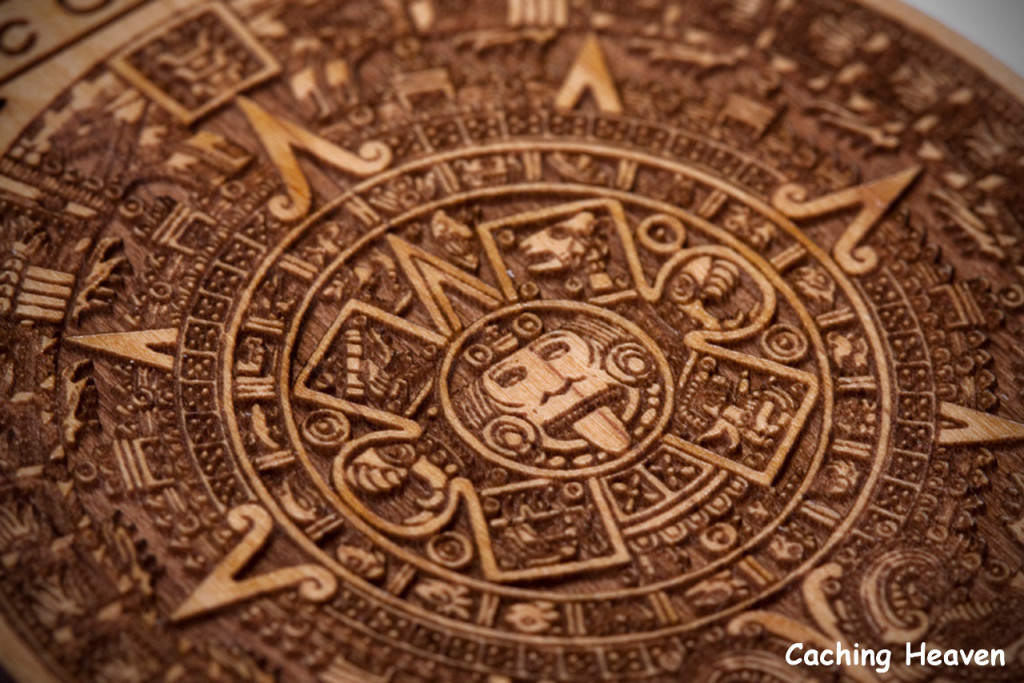
Forget thinking of the Long Count as a calendar you hang on your wall. It’s not. A better way to picture it is like the odometer in an old car. It just keeps ticking over, marking the total distance traveled. It doesn’t predict when the car will crash or run out of gas. It just… counts.

The Mayan system was ingeniously simple in its structure, built on a base-20 system (they counted on their fingers and toes). Here’s the breakdown:

  • 1 K’in = 1 Day
  • 1 Winal = 20 K’in (20 days)
  • 1 Tun = 18 Winal (360 days)
  • 1 K’atun = 20 Tun (7,200 days, or about 20 years)
  • 1 B’ak’tun = 20 K’atun (144,000 days, or about 394 years)

The “Great Cycle” of the Long Count calendar lasts for 13 B’ak’tuns. That’s a whopping 1,872,000 days, or roughly 5,125 years. According to the most accepted correlation, this massive cycle began on a date equivalent to August 11, 3114 BCE. You do the math, and the 13th B’ak’tun clicks over from 12.19.19.17.19 to 13.0.0.0.0 on… you guessed it. December 21, 2012.

So the calendar “ends” on that date in the same way your car’s odometer “ends” when it rolls over from 99,999 to 100,000. It’s not an ending. It’s a reset. A new chapter. A really, really big New Year’s Day.

But if it was just a cosmic odometer rolling over, where did all the fire, brimstone, and world-ending tidal waves come from?

A Prophecy Without a Prophet? The “Evidence” We Clung To

Here’s the dirty little secret of the 2012 phenomenon: there was almost zero actual Mayan text predicting any kind of apocalypse. Almost. The entire global panic was built on a handful of misinterpreted fragments and a whole lot of modern imagination.

Tortuguero Monument 6: The Only Real Clue?

The single, solitary piece of concrete evidence comes from a place called Tortuguero in Mexico. There, archaeologists found a stone tablet, now known as Monument 6. It was carved around 669 CE, and it’s badly eroded. Damaged. Hard to read. But the parts that are legible mention the 13.0.0.0.0 date.

And what does it say will happen? World destruction? A fiery cataclysm? Not exactly. The surviving text says that on this date, the deity Bolon Yokte K’u will “descend.”

That’s it. That’s the smoking gun. A god will show up.

Who is this god? Bolon Yokte K’u is a mysterious and powerful figure in the Mayan pantheon, often associated with both creation and war. He’s a god of transitions, of beginnings and endings. So his arrival could mean anything. It could mean the start of a new, glorious age. It could mean conflict. It was deeply ambiguous, and that ambiguity was the fertile soil in which the entire doomsday industry grew.

The Whispers of Ancient Astronauts

The lack of actual evidence didn’t stop people from filling in the blanks. And the most popular theory? Aliens. Of course.

The idea, popularized by authors like Erich von Däniken, is that the Maya couldn’t possibly have developed such a sophisticated understanding of astronomy and mathematics on their own. Their knowledge must have been a gift. A gift from technologically advanced beings from another world. Beings who visited Earth thousands of years ago.

In this narrative, the Long Count calendar wasn’t just for tracking seasons. It was a warning. A message in a bottle left for a future civilization (us!) to find. The ancient astronauts knew a cosmic disaster was coming—a solar flare, a planetary alignment, a galactic energy wave—and they taught the Maya how to build a calendar that would count down to that very day. The carvings on Mayan sarcophagi weren’t kings, they were spacemen in rocket ships. The pyramids weren’t tombs, they were landing pads.

It’s a thrilling story. It’s exciting. But is it true? There’s no hard proof. Not a single alien artifact, not one unambiguous carving of a spaceship. Just patterns that we, in our modern world, interpret through a science-fiction lens.

Hollywood and the Internet Pour Gasoline on the Fire

While ancient astronaut theorists were laying the groundwork, pop culture was building a skyscraper on top of it. In 2009, director Roland Emmerich released the disaster film “2012,” a CGI-fueled spectacle where the Earth’s crust destabilizes and John Cusack has to outrun the apocalypse in a limo.

The movie was a massive hit. And it cemented a very specific, very visual idea of what the “end of the Mayan calendar” meant in the public consciousness. It meant California falling into the ocean. It meant Yellowstone erupting. It meant tidal waves washing over the Himalayas.

Suddenly, the 2012 prophecy wasn’t some niche conspiracy theory anymore. It was everywhere. The internet exploded. YouTube videos went viral, connecting the Mayan date to every doomsday scenario imaginable:

  • Planet X / Nibiru: The theory of a mysterious, undiscovered planet in our solar system on a long, elliptical orbit. This rogue planet was supposedly on a collision course with Earth, set to arrive in December 2012. Astronomers everywhere said, “No, it’s not there. We’d see it.” But that just proved they were part of the cover-up!
  • Geomagnetic Reversal: The idea that the Earth’s magnetic poles would suddenly and violently flip. This would shut down our power grids, expose us to deadly solar radiation, and trigger massive earthquakes. While pole shifts are a real geological phenomenon that happens over thousands of years, the “instant flip” scenario was pure fiction.
  • The Galactic Alignment: This was a big one. The theory was that on the winter solstice of 2012, the Sun would align perfectly with the center of the Milky Way galaxy for the first time in 26,000 years. This alignment would supposedly create a massive gravitational pull or energy beam that would wreak havoc on Earth. While a loose alignment does occur during this era, astronomers confirmed it wouldn’t have any noticeable effect on our planet.

Each theory was easily debunked by mainstream science. But that didn’t matter. The stories were more powerful than the facts. They fed a growing distrust of authority and a deep-seated anxiety about the state of the world.

So, What Actually Happened on December 21, 2012?

The day finally arrived. All over the world, people held their breath.

In the snowy mountains of Bugarach, France—a village rumored to be a sacred place that would be spared by the apocalypse—UFO watchers and journalists gathered, massively outnumbering the local residents. In Mexico and Guatemala, thousands of tourists and spiritual seekers flocked to ancient Mayan sites like Chichen Itza and Tikal to witness the “end” firsthand, chanting and drumming as the sun rose.

Doomsday preppers sealed themselves in their underground bunkers, surrounded by canned goods and shotguns, ready to inherit the Earth. And millions of other people just went about their day, occasionally checking the news with a smirk, wondering if anything would actually happen.

And then… nothing. Absolutely nothing.

The sun rose. The sun set. The stock market didn’t crash. No rogue planets appeared in the sky. The Earth’s poles stayed exactly where they were. The world kept spinning, just as it had the day before, and just as it would the day after. The great, terrifying, world-ending prophecy turned out to be a complete and utter dud.

The next day, the internet was flooded not with tales of survival, but with jokes and memes. The 2012 phenomenon became a punchline. But was everyone laughing?

The Aftermath: An End, or a Beginning?

For those who had invested so much belief—and in some cases, their life savings—in the prophecy, the aftermath was a strange and empty place. But for others, the non-event was not a failure. It was proof of a different kind of prophecy.

A Shift in Consciousness?

The New Age community had a different take all along. For them, December 21, 2012, was never about a physical apocalypse. It was about a spiritual one. A transformation. They believed the date marked the end of a dark, materialistic age (the Age of Pisces) and the dawn of a new, enlightened one (the Age of Aquarius).

It wasn’t the end of the world, but the end of the world *as we know it*. A collective leveling-up for humanity. A moment when our consciousness would shift, leading to an era of peace, collaboration, and spiritual awareness. The Galactic Alignment wasn’t meant to destroy us with gravity, but to bathe us in an enlightening energy from the galactic core.

Did it happen? Look around. The world is still a messy, complicated place. But followers of this belief will tell you that the seeds planted on that day are still growing. That the shift is a slow, gradual process, not a sudden flip of a switch. They see the growing awareness of environmental issues, social justice, and mental health as evidence that humanity is, slowly but surely, waking up.

The Real Mayan Message We Ignored

Perhaps the most important voice in the whole debate was the one we listened to the least: the voice of the living Maya themselves. Millions of Mayan descendants still live in Mexico and Central America, and for them, the end of the 13th B’ak’tun was a cause for celebration, not fear.

They watched the global panic with a mixture of amusement and frustration. Mayan elders and scholars repeatedly told the media that the “end of the world” interpretation was a Western invention, a projection of our own culture’s apocalyptic fears onto their calendar. For them, it was a time of renewal. Of ceremony. A moment to reflect on the past cycle and set intentions for the new one beginning. It was a monumental anniversary, a time for hope.

They weren’t preparing for the end. They were preparing for the future.

The Lingering Mystery: Why Do We Crave the Apocalypse?

The 2012 prophecy has faded into memory, a quirky footnote in the history of the 21st century. But the questions it raises are more relevant than ever. Why did we, as a global society, become so obsessed with it? What does it say about us that we were so ready—and in some cases, eager—to believe the world was about to end?

Maybe it’s because our own world often feels like it’s on the brink. We face very real threats: climate change, political instability, economic uncertainty. The idea of a single, dramatic event that wipes the slate clean can be strangely comforting. It’s an escape from the slow, grinding anxiety of modern life. It offers a clear ending, a final answer to all our problems.

The Mayan prophecy was never about the stars or ancient gods. It was a mirror. It reflected our deepest anxieties, our distrust of institutions, our hunger for meaning in a chaotic world, and our secret hope for a fresh start.

The Maya gave us a magnificent clock. We turned it into a time bomb. The real mystery isn’t what’s written in the stones of Palenque. It’s what’s written in our own hearts. And that’s a puzzle we’re still trying to solve, long after the world was supposed to have ended.

Originally posted 2016-02-18 04:27:52. Republished by Blog Post Promoter









