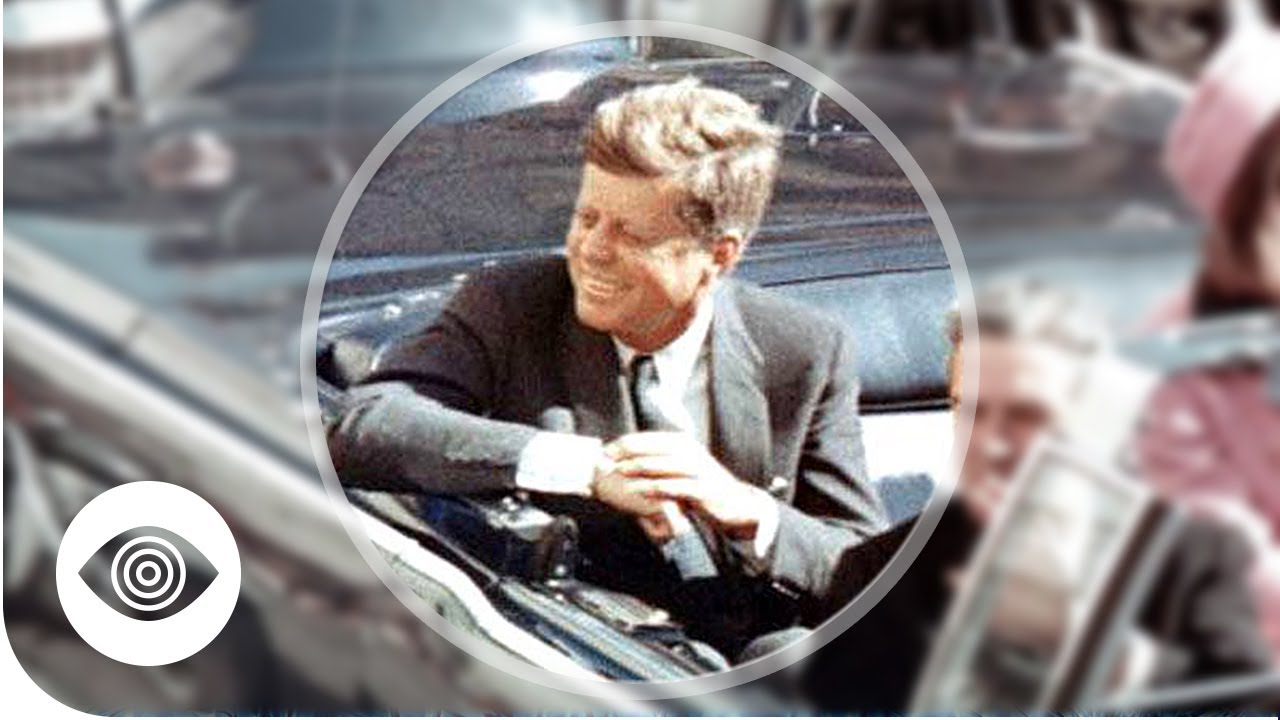
The Kremlin’s Shadow: Was the KGB Behind the Shot That Shook the World?
November 22, 1963. A sunny day in Dallas, Texas. A presidential motorcade, a waving crowd, and then… everything changed. The official story is etched into our collective memory: a lone gunman, a deeply disturbed ex-Marine named Lee Harvey Oswald, fired from a sixth-floor window of the Texas School Book Depository. Case closed.
But is it?
For decades, that tidy explanation has felt… wrong. Too simple. Too clean. The threads of the story, when you start to pull them, don’t just unravel; they lead to a dark and freezing place. They lead straight to the heart of the Cold War. Straight to Moscow.
Forget the Mafia. Forget Castro. Forget rogue CIA elements, for just a moment. Let’s talk about the bear in the room. Let’s talk about the Committee for State Security. The KGB.
The man who pulled the trigger, this supposed “lone nut,” wasn’t just any ex-Marine. He was a man who voluntarily defected to the Soviet Union at the absolute height of the Cold War. A man who lived there, worked there, and married a Russian woman with family ties to Soviet intelligence. And then, just as strangely as he left, he came back.
Coincidence? Or was Lee Harvey Oswald a pawn in a much bigger, much deadlier game? Was he a Soviet asset, a sleeper agent activated for the most audacious political hit in history? The answer isn’t a simple yes or no. It’s a labyrinth of spies, defectors, and lies wrapped in a matryoshka doll of deception.
The Man Who Walked Into the Cold
To understand the Soviet connection, you have to understand Oswald. And understanding Oswald is like trying to nail fog to a wall.
On paper, he was a failure. A high school dropout with a troubled youth. He joins the Marines, a bastion of American patriotism. But what does he do there? He learns Russian. He becomes a radar operator at a U-2 spy plane base in Japan—Atsugi Air Base. A place where America was watching the Soviets with its most advanced technology. And Oswald, the future communist sympathizer, had access.
Think about that. The man who would later try to renounce his U.S. citizenship was sitting in a critical nerve center of American military intelligence pointed squarely at the USSR.
Then, in 1959, he makes his move. He gets a hardship discharge, claiming his mother is ill (a claim that was flimsy at best), and promptly books a ticket. Not to go home and care for mom. No. He travels through Europe and shows up at the U.S. Embassy in Moscow, throwing his passport on the desk and declaring his allegiance to the Soviet Union.
Deep Dive: Oswald’s Soviet “Vacation”
So, what happens to an American ex-Marine, a former spy plane radar operator, when he defects to the USSR in 1959? Do they throw him in the Gulag? Interrogate him for months in a Lubyanka basement?
Not Oswald. Not at first.
After a brief, staged suicide attempt when it seemed they might reject him, the Soviets suddenly rolled out the red carpet. They sent him to Minsk, a city off-limits to most foreigners. They gave him a relatively high-paying job in a radio and television factory. They handed him a fully furnished, state-subsidized apartment that was luxurious by Soviet standards. He was a celebrity. A propaganda piece. The American who chose communism.
But was that all he was?
For two and a half years, Oswald lived this strange life. And it was here he met Marina Prusakova. A beautiful Russian pharmacist. Within six weeks of meeting, they were married. Marina’s uncle, it was later discovered, was a colonel in the MVD, the Soviet Ministry of Internal Affairs, a sister organization to the KGB. Another coincidence?
The KGB files, opened decades later, show they had a thick file on him. Code name: “Likhoy” (an old Russian word with multiple meanings, including “dashing,” “daring,” or even “one-eyed evil”). They watched him. They bugged his apartment. They knew his every move. Or so they claimed. Their official line was that they found him unstable, uninteresting, and of no intelligence value. They were just keeping tabs on him.
But what if they weren’t just watching? What if they were training him? Minsk was home to a major KGB training school. Was the factory job a cover? Was he learning tradecraft? Was Marina a “honeypot,” a handler assigned to keep him in line and report back on his progress?
The idyllic life soured. Oswald grew bored. Disillusioned. He complained about the lack of bowling alleys and the bland food. The man who renounced America suddenly wanted to go home. And, just as mysteriously as they accepted him, the Soviets let him go. And they let him take his Soviet wife and child with him. A process that was nearly impossible for ordinary citizens.
Why? Why would the KGB let a man they had invested so much in, a man who knew *something* (even if just about their methods of monitoring defectors), simply walk away and return to the enemy?
Unless that was the plan all along.
Panic in the Kremlin
When the news from Dallas hit Moscow, the reaction wasn’t celebration. It was sheer, unadulterated panic. Top Soviet officials were terrified. According to high-level defectors and CIA intelligence reports compiled later, the Kremlin leadership was convinced of one thing: the assassination was a coup by a rogue faction of the U.S. military or intelligence, and they were going to use Oswald’s Soviet past to frame the USSR and start World War III.
The KGB went on high alert. They immediately ran a full-scale investigation into Oswald’s time in Minsk. They interrogated everyone who had ever known him. They were desperate to prove to themselves, and to the world, that they had nothing to do with it.
This raises a chilling question. If they were innocent, why the extreme fear? An innocent party might be confused, or concerned. But pure terror suggests something more. It suggests they knew Oswald was a volatile element they had once touched. A firecracker they had played with, and now it had gone off in the worst possible way. Maybe they didn’t order the hit, but their fingerprints were all over the weapon.
Or perhaps their panic was a brilliant performance. The ultimate act of misdirection.
The Defector and the Double-Cross
Just two months after the assassination, a man named Yuri Nosenko walked into the CIA station in Geneva. He was a KGB officer. And he had a story to tell.
He claimed he was the officer who had personally handled Oswald’s file in Moscow. He swore on his life that the KGB had never, ever tried to recruit Oswald. They saw him as mentally unstable, a nuisance, and had zero interest in him as an agent. He was the perfect witness for the “lone nut” theory, a voice from inside the enemy camp clearing them of all wrongdoing.
The CIA should have been thrilled. But they weren’t. They were suspicious.
Especially one man: James Jesus Angleton, the CIA’s legendary and deeply paranoid chief of counterintelligence. Angleton believed the KGB was a master of deception, a “wilderness of mirrors.” He didn’t see Nosenko as a godsend; he saw him as a Trojan horse. He believed Nosenko was a fake defector, a plant sent by the KGB with a carefully crafted script. A script designed to convince America that the Soviets were clean, to shut down any further investigation into the Oswald-Moscow link.
What if Angleton was Right?
If Nosenko was a plant, the implications are staggering. It would mean the KGB was actively engaged in a massive cover-up operation in the immediate aftermath of the assassination. And you only cover up something you’re guilty of.
The CIA broke Nosenko. They held him in solitary confinement for more than three years. They subjected him to brutal interrogations, sensory deprivation, and psychological torture. They were determined to prove he was lying. Yet, through it all, Nosenko stuck to his story. He never changed a single detail about the Oswald file.
Was his consistency proof of his innocence? Or was it proof that he was an incredibly well-trained agent, drilled to withstand exactly this kind of pressure? The CIA itself was torn apart by the Nosenko affair for years. To this day, experts are divided. But the very existence of this controversy shows just how deep the Soviet connection ran. It was a wound the American intelligence community couldn’t stop picking at.
The Ghost in Mexico City
If the story wasn’t murky enough, let’s go to Mexico City. In late September 1963, just seven weeks before the assassination, a man identifying himself as “Lee Harvey Oswald” made a series of bizarre visits to both the Cuban and Soviet embassies there.
He was agitated. Desperate. He was trying to get a visa to travel to Cuba, and then onward to the Soviet Union. He met with consular officials, including a man named Valeriy Kostikov. This is important. Kostikov was not some lowly paper-pusher. He was a known KGB agent from Department 13—the section for “wet affairs.”
Assassinations.
The CIA had the Soviet embassy bugged. They had photos. They had audio recordings. But here’s the twist that blows the whole case wide open. When the CIA officials who had seen the real Lee Harvey Oswald in person were shown the surveillance photos from Mexico City, they said it wasn’t him. The man in the photos was older, heavier. The voice on the tapes, according to native Russian speakers, spoke broken, terrible Russian—something the real Oswald, after two and a half years in Minsk, would not have done.
There was an impostor. A “Second Oswald.”
Who was this man? And what was he doing?
The theories explode in every direction.
- Scenario A: The KGB Setup. Was this the real Oswald, meeting with his KGB handler Kostikov to finalize the plot? And were the photos and tapes of an impostor later planted by the KGB to create confusion and deniability?
- Scenario B: The Anti-KGB Setup. Was the impostor an agent of a different power—say, a rogue CIA faction or the Mafia—impersonating Oswald to *create* a fake trail leading to the Soviets? Were they setting the KGB up to take the fall?
- Scenario C: The Oswald Double Game. Was the real Oswald playing games with everyone, trying to create his own escape route through Cuba and the USSR after the deed was done? And was the man he met with, Kostikov, his direct contact for the assassination?
No matter which scenario you choose, the conclusion is the same: the official story of Oswald as a lone actor makes no sense. The Mexico City incident is a gaping hole in the narrative, a piece of high-stakes spycraft that points to a conspiracy. A conspiracy that goes straight through the doors of the Soviet embassy.
The Verdict That Never Came
So, did the KGB kill JFK?
The answer is almost certainly not a direct “yes.” Soviet Premier Nikita Khrushchev was reportedly a genuine admirer of Kennedy. They had just navigated the Cuban Missile Crisis and established a hotline. The last thing Khrushchev wanted was a nuclear war, and assassinating a U.S. President was the surest way to start one. A direct order from the top is highly unlikely.
But that’s not the only possibility, is it?
Could a rogue KGB faction, furious at the humiliation of the missile crisis, have acted on its own? Could Department 13 have taken matters into its own hands?
Or is the truth more subtle? Did the KGB train an unstable but capable man like Oswald, fill his head with ideology, and then simply… let him go? Did they wind up the toy soldier, point him back toward America, and let him march on his own, knowing he would eventually cause chaos? That would give them perfect plausible deniability. They never gave the order. They just created the weapon and left it lying around.
The evidence remains tantalizingly incomplete. The files released in recent years show the immense scale of the investigation, the paranoia, the dead ends. But many key documents, especially those related to Mexico City and the Nosenko interrogations, remain redacted or completely classified.
Why? After all these years, what is still so dangerous that it must be hidden from the public?
Perhaps the truth is that Oswald wasn’t a pawn of just one side. Perhaps he was the ultimate loose cannon, a man who touched the worlds of American intelligence, Cuban revolutionaries, and Soviet espionage, taking something from each and weaving his own twisted destiny.
But the shadow of the Kremlin hangs over Dallas. It’s in Oswald’s strange defection, his privileged life in Minsk, his impossible return, and his desperate meetings in Mexico City. The KGB may not have pulled the trigger. But their fingerprints are all over the man who did. And that, perhaps, is the most terrifying conspiracy of all. The one that tells us the shot that day was not the end of a man’s life, but one move in a global game so dark and complex we may never see the whole board.
Originally posted 2013-11-19 22:08:13. Republished by Blog Post Promoter