India has a number of conspiracy theories. It is always good to hear a conspiracy theory. Now a thing to note here is that these are justtheories based on loose facts. While these can totally or partially be true, they can also be totally false. So here are 10 More Indian Conspiracy Theories.
10. Rajiv Gandhi Survived His Assassination
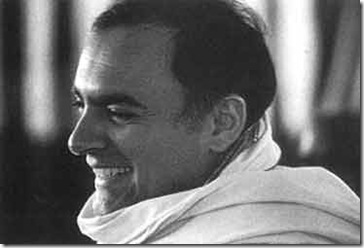
Just for the sake of conspiracy theorists, this had to be included because every time I ask someone of a popular Indian conspiracy theory, this is their first response. Since his assassination there have been theories floating around that Rajiv survived his assassination. Just to burst the bubble, how really is someone supposed to survive a blast of such close proximity that killed at least 14 other bystanders?
9. Sanjay Gandhi’s Death
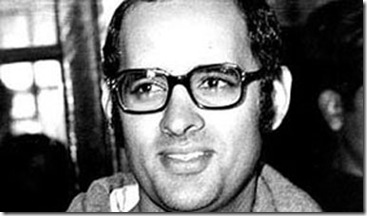
In the 1970s Sanjay was one of the most important political figure, around whom most of the power was concentrated and dispensed. Many believed Sanjay wielded more power than Indira Gandhi herself and that he had a lot of indifferences with his mother. He died flying a new aircraft that lost control and crashed near Safdarjung Airport in New Delhi. It is just suffice to say that the single-member enquiry commission headed by Mr. M. L. Jain, which was formed to study the circumstances that lead to the plane crash, has never submitted any report whatsoever to the government in three decades. There have been different theories of CIA/Russian Intelligence/Opus Dei/Indian Intelligence having a hand in his death, but to what extent, it remains unclear. After his death, his widow, Maneka Gandhi and his son were sidelined and thrown out of Prime Minister’s residence.
8. Kasab Succumbed to His Illness?
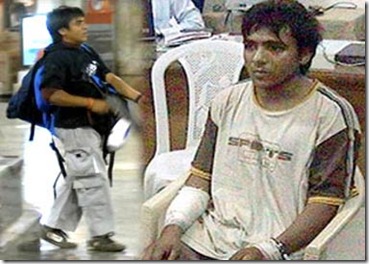
On the morning of November 21, 2012, Home Ministry brought forth the news of the execution of Ajmal Kasab before Indian media. No one in jail premises except jail superintendent knew, who he was until the time of execution. Due to the secretive nature of his execution, severalconspiracy theories were hinted. One among them is that his execution came barely a month ahead of Gujarat elections. Was this a deliberate attempt to revive the dwindling popularity of Indian government to woo Indian voters? Another more interesting one is that Kasab succumbed to dengue that he contracted while in jail. So did Indian government take advantage of his death to play vote bank politics? Also another unrelated yet interesting conspiracy theory about Kasab is that his accent resembled that of a Delhiite. So perhaps either he received good training or he was an Indian.
7. Kumari Kandam
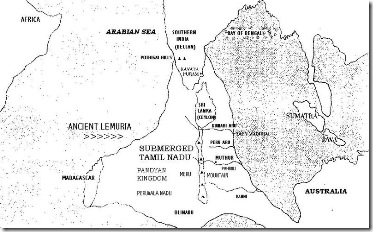
This is more of a geographical theory than a conspiracy theory, but an important one. Kumari Kandam is a supposed lost continent or a land mass that was part of Indian subcontinent. There are scattered references in Tamil Sangam literature of how sea took over a sizable portion of Pandiyan Kingdom following which they conquered more lands to compensate for the lost land. Silappadhikaram, another great epic of Tamil Literature of first century mentions of the rivers and mountains that adorned this landmass. According to references given in various ancient Tamil Literatures, the land lost could have varied in size from about just a few villages to 7000 sq. miles. In the last couple of centuries, Kumari Kandam has come to be associated withLemuria (a hypothetical “lost land” that probably existed in the Indian or Pacific Ocean). The concept of Lemuria came into existence in 19th Century in an attempt to explain the discontinuities in biogeography in places like Madagascar. As of now, there is no known geological formation under the Indian Ocean that corresponds to Kumari Kandam.
6. 2004 Indian Ocean Tsunami
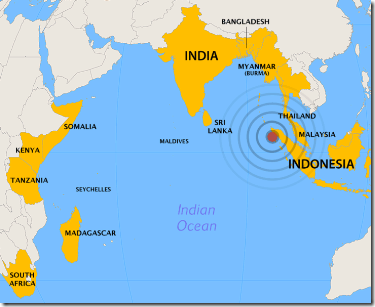
Following the Indian Ocean tsunami of 2004, newspapers in Egypt and Middle East were abuzz with articles that this tsunami was in fact a man-made disaster. They alleged that the tsunami was the result of an underwater nuclear detonation. The newspapers blamed this tsunami to be a conspiracy concocted by USA, Israel and India to bring destruction to heavily populated Muslim regions of Southeast Asia. Now, it is to be known that USA has been working on Tsunami bomb since World War II. The newspapers never gave any clear reason as to why India would cook up such a nonsensical conspiracy where it risked the death of its own citizens. India officially reported 16000+ causalities (death + missing). Media in the Middle East has had an absurd tendency to blame any natural tragedy in Asia on either India/Israel/USA or all three of them.
5. Aaadhaar Card Conspiracy

AADHAAR program was launched by Government of India in 2010 with the primary goal of providing a form of identity to every Indian. UID is a 12-digit number unique to each Indian that will be linked to his/her demographic and biometric information. Now this does sound beneficial for a developing country like India, but can this have negative implication? First and foremost with a centralized database (managed by government GOI itself), it is going to be hell of a task to defend it from cyberpunks. This data will be priceless at the hands of multinationals entering India as this will provide them with statistics on regional and national demographics like no other. So the threat to such database will be all time high. China recently hacked into Google and FBI servers, so only time will tell how well our databases will fare against hackers (websites of Indian government are frequently hacked by Chinese). Aadhar Card lacks the appreciation for the role of privacy in India and amongst Indians. Aadhaar cards have already faced problems with fake ids and stolen databases. There are theories ranging from multinationals forcing the hand of GOI to impose this project, to this project being just another scandal for politicos to embezzle money. The only country other than India that has similar kind of a program in place is Chile. Now UID should not be confused with Social Security Number used in USA. Unlike UID, SSN is not a centralized database of authentication information and therefore does not pose a significant risk.
4. 2012 India Blackout
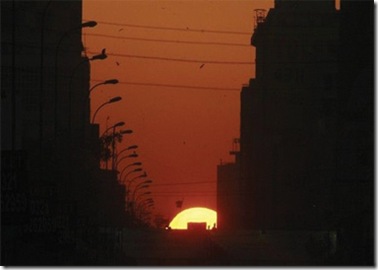
The power blackouts of July 2012 was the biggest power blackout in the word, affecting over 62 Crore people across 22 states. The norther grids failed on 30th and 31st July. The failure was attributed to poor infrastructure and incompetency of the regional power stations. The main reason behind blackout was overloading of the grid, but in the month of July it was way past summer and monsoon had already set in. But what really happened behind the scenes? Team Anna sat on an indefinite hunger strike on 25th July demanding to pass Jan Lokpal Bill and Anna Hazare joined this fast on 29th July 2012 (just a day ahead of blackouts). It was at that point that crowd started gathering in heavy numbers. Team Anna blamed the blackouts as a conspiracy by the government to weaken the movement. The blackouts caused the Delhi Metro to suspend its services and thereby caused thinning of the crowd during the movement.
There was also theory of a Chinese hand behind this blackout. Part of India’s grid equipments are imported from China. This could have been a test run or cyber-attack by the Chinesegovernment to disable Indian infrastructure to stimulate the effects if both countries were at war. There are also theories floating around about redirection of power to some secret experiment.
3. Purulia Arms Drop Case

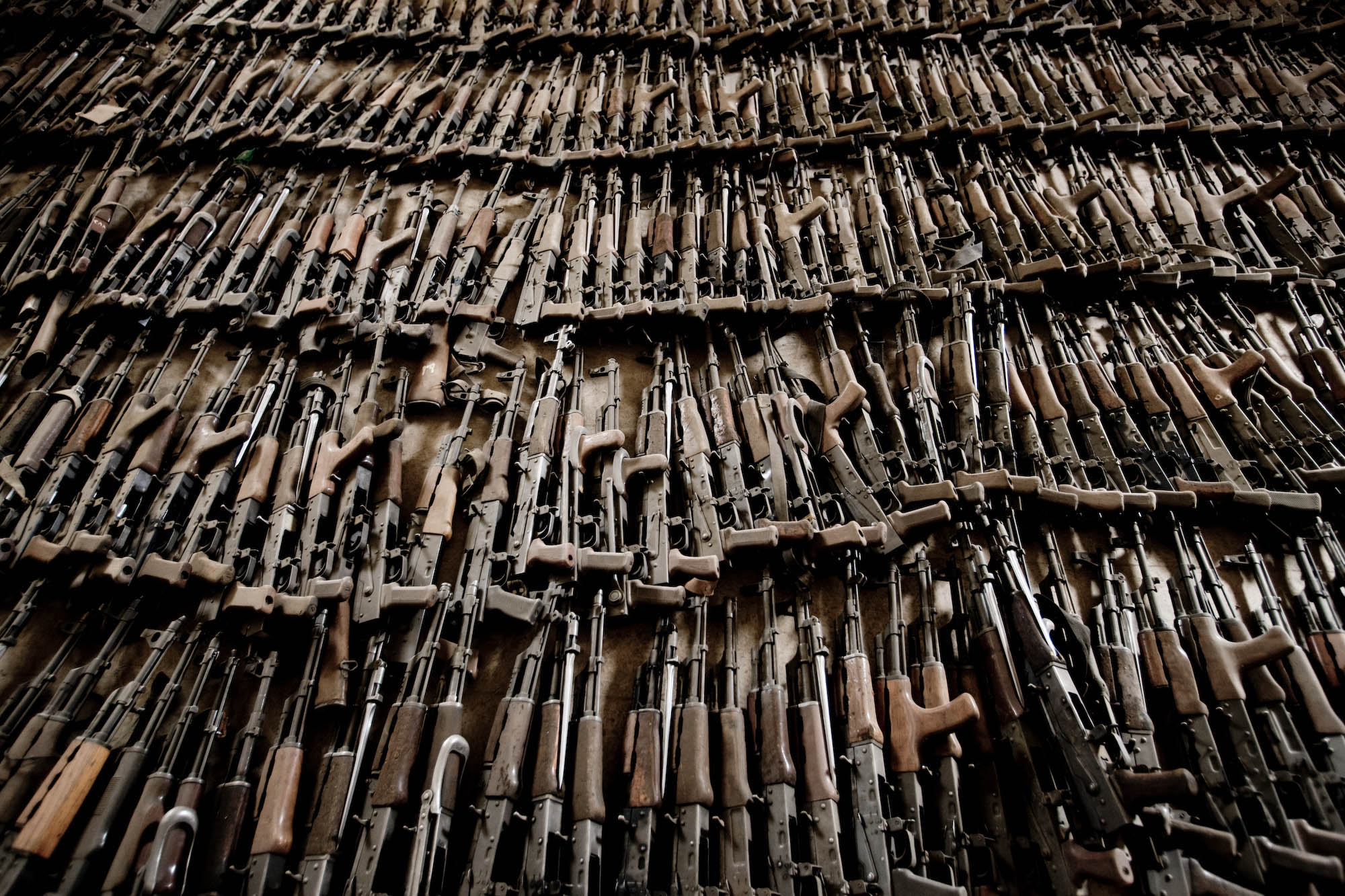
On the night of December 17, 1995, a Latvian aircraft (Antonov An-26 Aircraft) dropped a huge consignment of arms consisting of hundreds of AK-47 rifles and more than a million rounds of ammunition over several villages of Purulia district of West Bengal. The crew of the aircraft consisted of five Latvian citizens and one British citizen. They were arrested and sentenced to life imprisonment. Following the intervention of Russian authorities and British government, they were later pardoned and released. The chief accused was “Kim Davy,” who claimed that it was a conspiracy of the Indian government in collaboration with RAW and MI5 to overthrow the communist government of West Bengal. He alleged that Indian Government assured him of his safe return to Denmark. Some certificates submitted by CBI to Kolkata High Court remarked that those weapons were really meant for Bangladeshi Army. The real motive behind this massive arms drop still remains unknown.
2. Was Bhagat Singh Shot Dead?
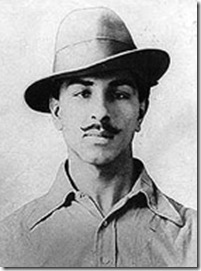
According to a book that came out around 2005-06, “Martyrdom of Shaheed Bhagat Singh,” our knowledge concerning the death of Bhagat Singh has been heavily skewed. The alleged source of information for this book comes from notes of Dalip Singh Allahabadi, an Indian, who was the most trusted and loyal secret agent of British government. The author of the book Kulwant Singh Kooner is his adopted godson. As per the book, frustrated with the rising popularity of Bhagat Singh and to appease the family members of J P Saunders (whom Singh assassinated), “Operation Trojan Horse” was brought into effect by British government. According to the plan, Bhagat Singh and two of his associates were hung by noose as planned, but were removed before their souls parted. Their hangman was immediately killed and put in truck with unconscious bodies Singh and his associates. All four of them were transported to outskirts of Lahore. There Bhagat Singh, Rajguru and Sukhdev were shot dead by a death squad that consisted of relatives of Saunders. This theory is given credence by the fact that Singh’s body was neither given to his family members nor had a mandatory postmortem.
1. Opus Dei’s Influence on India’s Current Political Scenario

A little while ago, I did an article on secret societies of the world and Opus Dei was one among them. Long story short, Opus Dei is an organization of the Catholic Church with its headquarters based in Rome, Italy. Opus Dei has long been associated with allegations of secretiveness and portrayed in popular culture as a sinister secret organization. But what has that got to do with Indian political system? According to a blog “purportedly” written by an ex-intelligence analyst of an Indian Intelligence Agency, he was part of a 5 member analyst team that investigated assassination of Rajiv Gandhi. He discusses in detail how four scenarios perfectly lined up in the timeline of Sonia Gandhi’s life that guided her to become the most powerful person in India. To begin with, he talks about Sonia Gandhi’s mysterious uncle who worked for Opus Dei and that this uncle funded Sonia Gandhi’s education in Cambridge in the 1960’s. Furthermore, Rajiv-Sonia hookup at Cambridge Uni was not entirely a chance event. The characters that brought them together later were absorbed by the Vatican’s intelligence wing. Moving forward, he discusses in detail how the death of Sanjay Gandhi, Indira Gandhi and Rajiv Gandhi was in a major way linked to Opus Dei. You can read his very detailed post here. It is rather peculiar to note that the author of the blog promised to follow up with more info on Rajiv Gandhi’s assassination, but the blog has been dead for a better part of the year now.