Home Weird World Space Common star might have two liveable worlds

Common star might have two liveable worlds

0
62

You look up at the night sky. It’s dark. It’s quiet. Maybe a little too quiet.

For decades, we’ve been told that Earth is special. A rare jewel. A freak accident of cosmic chemistry. We were told that the odds of a rocky, watery world forming at just the right distance from a star were akin to winning the lottery ten times in a row. But what if that was wrong? What if we aren’t the exception?

What if we are the rule?

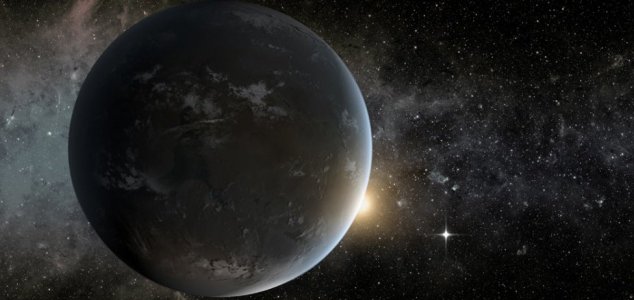
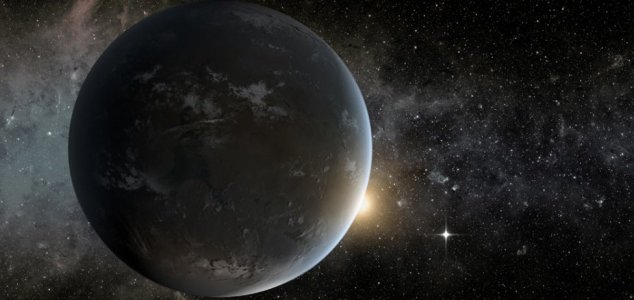
Super Earth Exoplanet Concept

The Cosmic Real Estate Boom

Hold onto your hats. The universe might be a lot more crowded than the textbooks say. We are talking about a total paradigm shift in how we view our place in the galaxy.

Scientists in Australia have dropped a bombshell theory that changes everything. Based on their models, Earth-like planets are not just “out there.” They are prone to be commonplace. We aren’t looking for a needle in a haystack anymore. We are looking for a needle in a stack of needles.

The search for extraterrestrial life usually goes hand in hand with the seek for extrasolar planets. Specifically, the hunters are looking for the “Goldilocks Zone.” Not too hot. Not too cold. Just right. These are the worlds with the right measurement and distance from their guardian star to assist the circumstances wanted for all times as we all know it to outlive.

But for years, the math was fuzzy. We didn’t know if these Goldilocks worlds were one in a million or one in a hundred.

One of many largest questions scientists have been making an attempt to answer is what number of such worlds actually exist on the market. Is Earth a lonely outpost in a dead galaxy? Or is the Milky Way teeming with lush, green, water-rich worlds just waiting to be found?

The Ghost Rule: Resurrection of Bode’s Law

Here is where things get weird. Really weird.

To find the answer, modern astrophysicists had to look backward. Way back. We are talking about a mathematical ghost story from the 18th century. Now scientists in Australia, together with Professor Charley Lineweaver and PhD student Tim Bovaird, believe they could have come up with the answer by making use of a centuries-old astronomical rule referred to as Bode’s Law.

Let’s break this down. Johann Elert Bode. 1772. He notices a pattern in the solar system. A spooky mathematical rhythm. The planets in our own neighborhood aren’t spaced randomly. They follow a specific, predictable sequence based on their distance from the Sun. It predicted Uranus before we found it. It predicted the asteroid belt (Ceres) before we saw it.

But then? It stopped working. Neptune broke the rule. Pluto ignored it. Astronomers threw Bode’s Law in the trash bin. They called it a coincidence. A fluke. Numerology masquerading as science.

But Lineweaver and Bovaird pulled it out of the trash.

They applied this ancient “ghost rule” to the massive data collected by the Kepler Space Telescope. Kepler has been staring at thousands of stars, watching for the tiny dip in light that happens when a planet crosses in front. It found thousands of worlds.

But Kepler is limited. It can only see planets that pass directly in front of their star from our perspective. It misses the ones that are tilted slightly up or down. It’s like looking through a keyhole.

The Missing Worlds

This is the genius part. The Australian team used Bode’s Law to fill in the blanks. They looked at the solar systems Kepler did find, saw the spacing of the planets, and realized the pattern holds up. The “coincidence” wasn’t a coincidence.

When they applied the math to the empty spaces where Kepler couldn’t see anything, the results were staggering.

Their findings suggest that there are, on average, two Earth-like worlds in orbit around every single star. Read that again.

Two. Per star.

Look at the night sky again. Pick a star. Any star. Chances are, there are two rocky worlds circling it. Maybe they have oceans. Maybe they have clouds. Maybe they have snow-capped mountains. This figure would seem to be far higher than anyone could have ever guessed.

The Math is Terrifying

Let’s do some quick napkin math. It’s mind-bending.

The Milky Way galaxy—our home turf—has somewhere between 100 billion and 400 billion stars. If this Australian study holds water, and we take the conservative estimate of 100 billion stars, and multiply that by two…

That is 200 billion Earth-like planets. Just in our galaxy.

200,000,000,000 possible homes.

And that’s just one galaxy. There are two trillion galaxies in the observable universe. The numbers become meaningless. They are too big to hold in a human brain. The potential for life is not just probable; it is practically inevitable. It screams at us from the data.

So… Where Is Everybody?

This brings us to the dark side of the discovery. The chilling part.

If the galaxy is a crowded apartment building with 200 billion units, why haven’t we bumped into the neighbors? Why are our radio telescopes picking up nothing but static? No greetings. No encoded math problems. No alien reality TV shows beamed across the void.

Nothing.

Whether or not life actually exists on these worlds still remains a matter of some debate. But the silence is becoming a problem. It’s called the Fermi Paradox, and this new data makes the paradox ten times worse.

“The universe isn’t teeming with aliens with human-like intelligence that can build radio telescopes and spaceships,” said Prof Lineweaver. “Otherwise we’d have seen or heard from them.”

He’s right. If just one civilization had a head start on us by a measly million years (a blink of an eye in cosmic time), they should have colonized the galaxy by now. Their probes should be everywhere. We should be seeing their Dyson Spheres blocking out starlight.

But we don’t. We see empty stars. We see two Earths per star, spinning in silence.

The Great Filter: Are We Doomed?

Why is the sky silent? Lineweaver offers a sobering thought. A warning.

“It could be that there’s some other bottleneck for the emergence of life that we haven’t worked out yet. Or intelligent civilizations evolve, but then self-destruct.”

This is the theory of the “Great Filter.” The idea is that there is a wall. A hurdle in evolution that is almost impossible to jump over.

Option A: The Filter is behind us. Maybe the jump from single-celled slime to complex animals is the hard part. Maybe we are the lottery winners who made it past the hurdle. We are the first. We are the elders of the galaxy. It’s lonely, but it’s safe.

Option B: The Filter is ahead of us. This is the nightmare scenario. This suggests that life evolves all the time. Planets get covered in jungles and lizards and monkeys. Intelligent species rise up. They build cities. They split the atom.

And then they die.

Maybe technology always outpaces wisdom. Maybe every civilization discovers nuclear weapons, or bio-engineered plagues, or creates an Artificial Intelligence that wipes them out before they can leave their home planet. Maybe the galaxy is a graveyard of 200 billion Earths, covered in the ruins of civilizations that didn’t make it.

Alternative Theories: The Zoo and The Dark Forest

Of course, there are other possibilities. Theories that conspiracy theorists and sci-fi writers love to throw around.

The Zoo Hypothesis: They are out there. They are watching us. But we are primitive. We are the uncontacted tribe in the Amazon rainforest of the galaxy. They have a “Prime Directive” not to interfere until we reach a certain level of maturity. Or maybe we are just an entertainment channel for them. Reality TV on a planetary scale.

The Dark Forest Theory: This one will keep you up at night. Imagine the universe is a dark forest at night. Every civilization is a hunter with a gun, creeping through the trees. If you make a noise, if you light a fire, another hunter will see you and shoot first to ensure their own survival. Maybe the universe is silent because everyone is hiding. Everyone is terrified. And here we are on Earth, blasting radio waves into space, screaming “HERE WE ARE! COME VISIT!” like an idiot with a megaphone in a war zone.

A Universe of Possibilities

The Australian study using Bode’s Law has opened a door we can’t close. It has taken the “Goldilocks” planet from a rare gem to a common commodity. The hardware is there. The planets are there. The water is likely there.

But the software—life, consciousness, intelligence—that remains the mystery.

Are we the first to wake up in this vast, dark room? Or are we the last ones left alive?

The next time you look at the stars, remember: You aren’t looking at empty space. You are looking at a sea of worlds. Two for every point of light. Billions of sunrises. Billions of oceans. Billions of possibilities.

We just need to find out if anyone is home.

Originally posted 2015-11-02 16:27:53. Republished by Blog Post Promoter