We are surrounded by objects. Everyday things. A chair. A mirror. A wooden box. usually, they are just “stuff.” Inert. Lifeless. But what if they aren’t? What if emotions—rage, sorrow, betrayal—are so powerful they can burn an imprint into physical matter? We aren’t talking about bumps in the night. We are talking about cursed vessels that have absorbed the absolute worst of the human experience.
History is full of these dark artifacts. They sit in museums, behind velvet ropes, or in the corners of dusty attics, waiting. Waiting for the right moment to move. To speak. To kill. Today, we are ripping the cover off three of the most notorious haunted objects in American history. These aren’t just ghost stories. These are tragedies frozen in time.
Buckle up. It gets dark from here.
The Dancing Wedding Dress of Anna Baker

In the mid-1800s, Altoona, Pennsylvania, was dominated by one man: Elias Baker. He was an iron master. A titan of industry. He built a fortune that most people couldn’t even dream of. But money, as we so often find out, is a poor substitute for happiness. Elias was a man obsessed with image, status, and control. And right in the center of his controlling web was his daughter, Anna Baker.
Anna wasn’t like her father. She was a free spirit. A romantic. She had the money to buy the world, but she didn’t want the world. She wanted love.
The Forbidden Romance
The trouble started when Anna did the one thing a wealthy heiress in the 19th century was absolutely forbidden to do. She fell in love with “the help.” He was a low-paid steelworker at her father’s blast furnace. He had dirt under his fingernails and empty pockets, but to Anna, he was everything. They met in secret. They whispered promises in the dark corners of the massive Baker estate. It was a classic fairy tale setup.
But Elias Baker was no fairy godmother. He was the villain.
When Elias found out, he didn’t just say no. He exploded. In his mind, Anna was a commodity. She was meant to marry a man of equal social standing—a banker, a politician, another tycoon. Marrying a blast furnace worker? It would ruin the family name. Elias issued a crushing decree: the marriage was forbidden. The worker was fired, run out of town, and Anna was locked in a cage of gold.
A Life of Silence and Spite
Most people would eventually move on. Not Anna. Her heart didn’t just break; it calcified. To spite her father, she made a vow that likely sent chills down the old man’s spine. She promised she would never marry. If she couldn’t have the man she loved, she would die an “old maid.”
And she kept that promise.
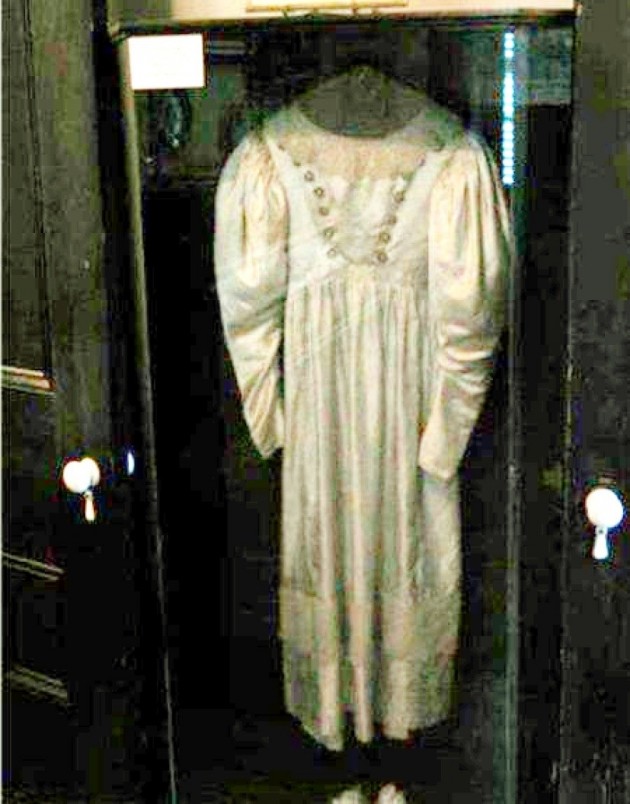
Anna lived out the rest of her days in that massive mansion, bitter, angry, and alone. But before the romance was crushed, she and her mother had secretly purchased a wedding dress. It was a beautiful gown. Expensive silk. Intricate lace. It was the dress she intended to wear while walking down the aisle to her true love. Instead, it sat in a closet. Unworn. Unseen. A symbol of a dead future.
The Ghost in the Glass Case
Anna died in 1914. But the story didn’t end there. The Baker Mansion eventually became the headquarters of the Blair County Historical Society. They turned Anna’s old bedroom into a museum exhibit. And the centerpiece? That tragic, unworn wedding dress.
They placed it in a sealed glass case to protect the fabric from dust and decay. But visitors started noticing something impossible. The dress wouldn’t stay still.
On nights when the moon is full, or sometimes in the dead quiet of a Tuesday afternoon, the dress moves. We aren’t talking about a little shudder from a drafty window. Witnesses claim the dress sways. The fabric ripples as if an invisible chest is heaving with sobs. The skirt puffs out and twists from side to side.
Skeptics have tried to debunk it. They blamed floor vibrations from passing trucks. They blamed drafts. They checked the stability of the floorboards. But the movement is distinct. It looks like a slow dance. Many believe Anna’s spirit has returned to claim the one thing she was denied in life. She is finally wearing her dress, dancing in front of the mirror, spinning for a groom who never arrived.
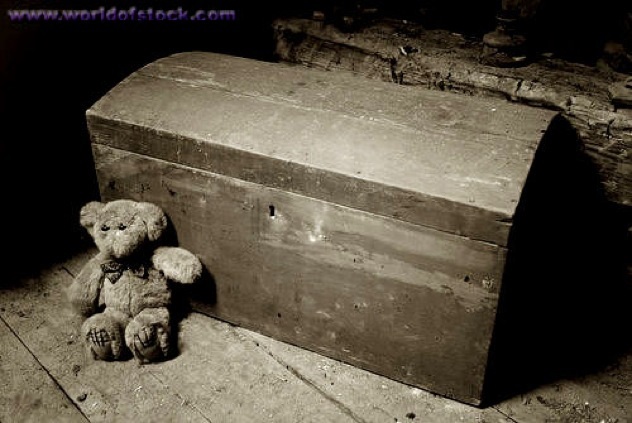
The Conjure Chest: A Box of Death

If Anna’s dress is a tragedy, this next object is a weapon. Pure and simple. This is the story of the Conjure Chest, and it is easily one of the most terrifying artifacts in the American South.
The year was roughly 1853. The setting: Kentucky. Jacob Cooley was a wealthy landowner, but by all accounts, he was a monster of a man. Harsh. Unforgiving. Cruel. When his wife announced she was pregnant with their first child, Cooley decided he wanted a magnificent chest built for the nursery. A place to keep baby clothes and heirlooms.
He turned to one of his enslaved craftsmen, a talented woodworker named Hosea. Hosea was known for his skill, and he poured his heart into the project. He selected the wood, carved the joints, and built a sturdy, beautiful chest. He presented it to his master with pride.
The Crime
Jacob Cooley looked at the chest. And then he looked at Hosea. For reasons that history has never fully explained—perhaps a minor imperfection, or maybe just because he was in a foul mood—Cooley flew into a rage. He didn’t just yell. He beat Hosea. The beating was so severe, so savage, that Hosea died from his injuries.
A man was murdered over a wooden box.
The other enslaved people on the plantation were devastated. Hosea was their friend. Their brother. They couldn’t fight Cooley physically—he had the guns and the law on his side. So, they fought him with the only weapon they had left: Magic.
The Ritual of the Owl
They turned to a “Conjure Man”—a practitioner of ancient traditions brought over from Africa and blended with Southern folklore. The avengers sought a curse. A specific, bloody revenge.
The legend says they caught an owl. In many cultures, owls are harbingers of doom, messengers of the underworld. They sacrificed the bird and sprinkled its dried blood inside the chest. The Conjure Man stood over the box, chanting words of retribution, binding a spirit of vengeance to the wood. The curse was simple: Death to those who use this chest.
The Body Count Rises
Cooley, oblivious to the ritual, put the chest in his child’s nursery. His firstborn infant died almost immediately. The doctors couldn’t explain it. It was just… gone.
But the chest was just getting started. Over the next several decades, the chest was passed down through the family. It became a magnet for tragedy. One by one, people close to the chest dropped dead. We aren’t talking about accidents. We are talking about sudden, inexplicable deaths.
A deeper look at the family history reveals a shocking timeline. In total, seventeen deaths have been attributed to the Conjure Chest. Seventeen! That is a serial killer’s scorecard. It wiped out generations. It didn’t matter if you were young or old. If you put your clothes in that chest, your days were numbered.
Breaking the Hex
The family eventually realized the pattern. This wasn’t bad luck. It was a hit list. In a desperate attempt to stop the killing, they contacted a “Conjure Woman”—a healer. She told them the only way to break the hex was to offer the chest back. But since Hosea was dead, they had to perform a cleansing ritual.
The curse was reportedly lifted, but the family wanted nothing to do with the blood-soaked box. Today, it sits in the Kentucky History Museum in Frankfort. It’s behind glass. Silent. Still. But visitors often report a heavy feeling when they stand near it. A pressure in the chest. Is the curse really gone? or is it just dormant, waiting for someone to open the lid one more time?
The Mirror That Remembers: Myrtles Plantation

Now we travel to the Deep South. St. Francisville, Louisiana. The Myrtles Plantation. If you ask any paranormal investigator to list their “Top 5 Scariest Places,” The Myrtles is always on the list. It is built on top of a Tunica Indian burial ground (strike one). It has been the site of 10 murders (strike two). And it is home to one of the most terrifying mirrors in existence (strike three).
The plantation is a stunning 200-year-old home surrounded by ancient oak trees draped in Spanish moss. It looks like a postcard. But when the sun goes down, the atmosphere changes. They say at 3:00 AM—the witching hour—the house comes alive. At least 15 distinct entities haunt the grounds. But the most famous, and the most heartbreaking, is the saga of Chloe.
The Legend of Chloe
In 1817, Clark Woodruff and his wife Sara Mathilda lived at the Myrtles. Clark was a man with a wandering eye and a cruel temper. The story goes that he forced a young house slave named Chloe into a non-consensual relationship. Chloe, terrified of being sent to work in the brutal heat of the cotton fields, tried to make herself indispensable to the family.
She began eavesdropping on Clark’s business meetings, trying to learn news that might protect her position. One day, Clark caught her listening at a keyhole. His punishment was medieval. He grabbed her and cut off her left ear. To hide the disfigurement, Chloe began wearing a bright green turban. She wore it every single day.
The Poisoned Cake
Chloe was desperate. She needed to win back the family’s favor. She hatched a risky plan. She would bake a birthday cake for the Woodruff’s eldest daughter. But she added a secret ingredient: Oleander leaves. Oleander is a beautiful flower that grows all over Louisiana, but it is highly toxic. Even a small amount can stop a heart.
Chloe’s plan wasn’t to kill them. She wanted to make them sick. Just sick enough that she could nurse them back to health. She wanted to be the hero who saved the family with her herbal remedies. She wanted redemption.
She got the dosage wrong.
Sara Mathilda and two of her daughters ate the cake. They didn’t just get a stomach ache. They died in agony. Chloe watched in horror as her plan turned into a massacre. The other enslaved workers, terrified that Clark Woodruff would blame them all and burn the cabins down, took justice into their own hands. They grabbed Chloe, dragged her to a nearby tree, and hanged her. Afterward, they weighed her body down with rocks and threw it into the Mississippi River.
Trapped in the Reflection
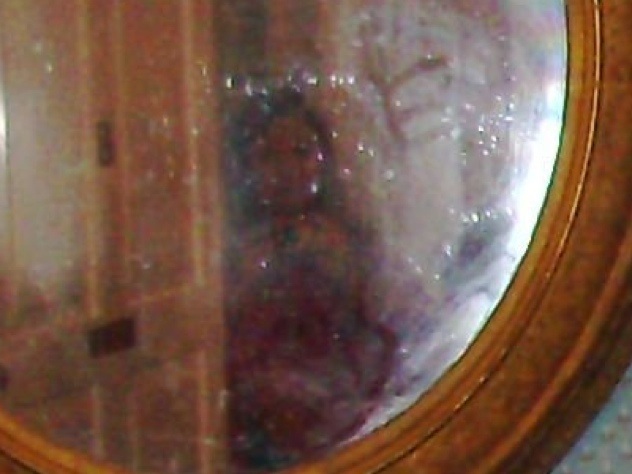
This is where the mirror comes in. In the old South, there was a strict superstition. When someone died in a house, you had to cover every single mirror with a black cloth immediately. The belief was that the soul is vulnerable right after death. If a spirit sees its own reflection before passing to the other side, it gets confused. It gets trapped inside the glass forever.
In the chaos following the poisoning of Sara and the children, the house was in panic. Mirrors were covered. But one large, ornate mirror in the hallway was missed. Just one.
Internet theories and modern ghost hunters believe the souls of Sara and her two children were snatched by that mirror. They never crossed over. They are still in the hallway.
Visitors to the Bed and Breakfast today report chilling phenomena. You can take a picture of the mirror, and when you develop it, you see things that weren’t there. Strange, dark smudges. Drips that look like condensation but are dry to the touch. But the most terrifying evidence? Handprints.
Small, child-sized handprints appear on the glass. The staff cleans them with Windex. They scrub until the glass is sparkling. An hour later? The handprints are back. And here is the kicker: the residue is on the inside of the glass. You can’t wipe it off. They are pressing against the barrier, trying to get out.
Sometimes, guests claim to see a woman in a green turban standing behind them in the reflection. But when they turn around… the hallway is empty.
Why Do We Keep Them?
Why do we keep these objects? Why not burn the chest? Why not smash the mirror? Perhaps we are fascinated by the idea that death isn’t the end. Or maybe, deep down, we know that destroying the object won’t destroy the energy. It might just set it free.
So, the dress dances. The chest waits. And the mirror watches. Sleep tight.
Originally posted 2018-03-29 07:16:15. Republished by Blog Post Promoter