Staring into the Abyss: The Silent Watchers of the Kimberley
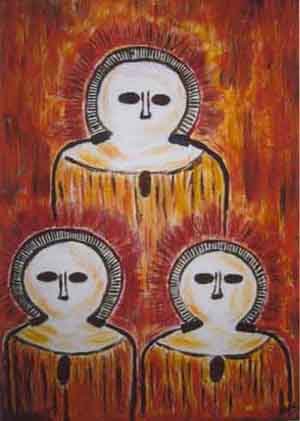
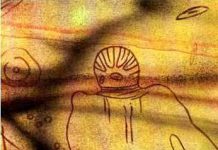
Look at that image above. Really look at it. What do you see? Is it a stylized representation of an ancestor? A cloud spirit? Or does your mind immediately jump to something else? Something… extraterrestrial?
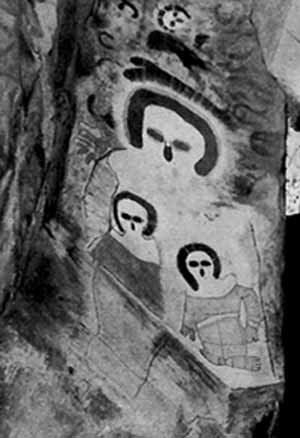
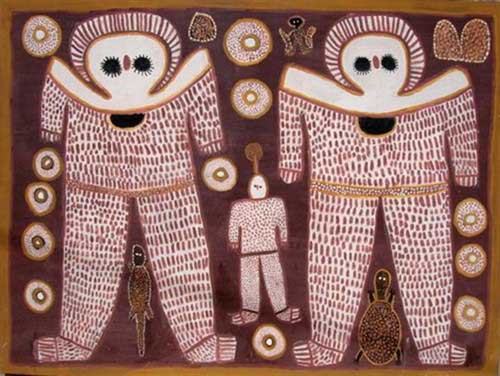
For decades, these haunting, mouthless faces have stared down from the sandstone overhangs of the Kimberley region in Western Australia, sparking furious debates, wild conspiracies, and a profound sense of unease. These are the Wandjina. And they might just be the most baffling ancient artworks on the face of the planet.
We are talking about a mystery that stretches back not just centuries, but tens of thousands of years. While the rest of the world was arguably still figuring out fire and sharp sticks, the indigenous people of Australia were documenting their reality. But was that reality strictly terrestrial? That’s where things get messy. That’s where the lines between mythology, history, and the impossible start to blur.
Welcome to the deep end. We’re about to crack open one of the strangest chapters in human history.
The Face Without a Mouth: A Warning or a Memory?
The first thing that hits you is the eyes. Huge. Black. Soul-sucking voids that seem to follow you. Then, the head. It’s bulbous, often surrounded by what looks like a halo, or perhaps—if you ask the ancient astronaut theorists—a helmet.
But the most disturbing detail? No mouth.
Why would an artist, meticulously painting ochre on rock, deliberately leave out the mouth? Every other feature is there. The nose, the eyes, the structural shape of the skull. But where the mouth should be, there is only smooth, terrifying silence.
According to ancient Australian Aboriginal mythology, this isn’t an artistic mistake. It’s a survival mechanism. The Wandjina are the supreme spirits of the rain and clouds. They are the creators, the movers of the weather systems that can bring life or utter destruction.
The legend is specific, and frankly, it’s chilling. If the Wandjina were depicted with mouths, the rain would never stop. It would pour endlessly. A deluge without relief. The world would drown. By painting them without mouths, the ancient artists were essentially putting a lock on the floodgates, keeping the destructive power of the universe in check. It’s a form of spiritual engineering.
The “Grey Alien” Connection: Coincidence or Contact?
Let’s address the elephant in the room. Or rather, the alien in the cave. You can’t talk about the Wandjina without acknowledging the massive internet theory that refuses to die.
Erich von Däniken, the guy who basically invented the “Ancient Aliens” genre with Chariots of the Gods, looked at these paintings and saw one thing: space suits. And he’s not alone. Thousands of observers have noted the uncanny resemblance between the Wandjina figures and the modern pop-culture depiction of “Grey Aliens.”
Think about it. Large, bulbous heads? Check. Giant, black, wrap-around eyes? Check. Pale skin? Check. A complete lack of visible nose bridges or ears? Check.
Is it possible that these “Cloud Spirits” descending from the sky weren’t mythological metaphors, but literal descriptions of beings coming down in ships? The Aborigines say the Wandjina brought law, culture, and the “Dreamtime.” If you swap the word “Spirit” for “Extraterrestrial,” the stories sound suspiciously like a First Contact event.
Of course, mainstream archaeologists hate this theory. They scream “context!” and “cultural appropriation!” And they might be right. But when you stand in those caves, sweating in the Australian heat, looking up at those giant obsidian eyes, it’s hard not to feel a shiver crawl down your spine. What did the ancients actually see?
The Living Paint: A Nightmare for Carbon Dating
Here is where the science gets incredibly frustrating. If you want to know how old a painting is, you usually scrape off a flake of paint and run it through a mass spectrometer. Simple, right?
Wrong.
The Wandjina paintings are a nightmare for dating. Why? Because they are alive. Aboriginal culture is the oldest continuous culture on Earth. We aren’t talking about a dead civilization like the Egyptians or the Mayans. The descendants of the original artists are still here.
For thousands of years, it has been the sacred duty of the “current oldest living descendant” to trek to these caves and refresh the paintings. They paint over the old lines. They brighten the ochre. They keep the spirit explicitly alive.
This means if you date the paint, you might find it was applied in 1980. Or 1850. Or 1400. But the image underneath? The original layer? That could be 4,000 years old. Or 40,000. We just don’t know.
This tradition suggests that “Dreamtime” isn’t just a story about the past. It is cosmological time. It is the principal order of existence. The past, present, and future are folded on top of each other, layer by layer, just like the paint on the walls.

The Mystery of the Ochre
Let’s get technical for a second. The paint itself is a puzzle. It’s ochre. Basically, iron oxide. Rust and clay. It’s inorganic. You cannot carbon date a rock. You can only carbon date things that were once alive (organic matter).
This is a huge hurdle. Significant early cave paintings found in Kakadu and across the Kimberley defy precise dating. Archaeologists have to get creative. They look for:
- Wasp Nests: Mud wasps sometimes build nests on top of the art. If you can date the pollen inside the fossilized nest, you know the painting is at least that old.
- Torch Soot: Did the artist drop ash from their torch into the mix? If so, we can date the charcoal.
- Blood and Fat: Sometimes, ceremonial paint was mixed with animal fat or even human blood. That we can date.
But without these lucky accidents, we are left guessing. And the guesses are getting wilder every year.
Monsters Among Men: The Genyornis Discovery
Just when you thought it couldn’t get cooler, let’s throw in some megafauna. We tend to think of dinosaurs and humans as being separated by millions of years. But in Australia, humans lived alongside absolute nightmares.
A red ochre painting discovered at the center of the Arnhem Land plateau shocked the scientific community recently. It depicts two emu-like birds. But they aren’t emus. Their necks are too long. Their legs are too thick. Their bodies are massive.
A paleontologist identified them not as modern birds, but as the megafauna species Genyornis. These were “Thunder Birds.” Giant, flightless beasts that could look a tall man in the eye and then stomp him into the dust.
Here is the kicker: The Genyornis was thought to have gone extinct more than 40,000 years ago. If an Aboriginal artist painted one from memory—or from life—it implies one of two things:
- The painting is over 40,000 years old (making it some of the oldest art in the world).
- The giant monsters survived way, way longer than science admits, terrorizing the outback while humans tried to survive them.
This single painting throws a wrench into the timeline of extinction. It suggests a world where humans were not the top of the food chain. They were sharing the landscape with biological tanks.

The Abstract Enigma of the Whitsundays
Now, let’s move from the terrifying faces of the Kimberley to the stunning coasts of the Whitsunday Islands. You’d think this paradise was just about beaches, but hidden in the caves of Hook Island is another anomaly.
The sea-faring Ngaro people left something behind that doesn’t fit the mold. While most Aboriginal art is figurative (turtles, hunters, spirits, hands), the Ngaro art is largely non-figurative. It’s abstract.
Circles. Lines. Grids. Oval shapes that don’t look like animals or people.
Why? What does it mean? Some researchers think these are maps of the stars. Others think they represent currents and tides—vital information for a sea-faring culture. But there is a fringe theory that these are representations of portals or energy grids. When you look at the complexity of the abstract shapes, it feels less like “art” and more like “data.”
Their significance remains a total mystery. The Ngaro people were decimated by colonization, and much of the oral history that could have cracked the code of these abstract paintings was lost. We are left staring at geometric riddles painted on rock walls by the ocean.
The Bradshaw / Gwion Gwion Controversy
We cannot talk about Australian rock art without mentioning the “Bradshaws” (Gwion Gwion). These are found in the same region as the Wandjina but look completely different. They are thin, elegant, mulberry-colored figures with tassels, headdresses, and sashes.
They look… different. Some early explorers claimed they looked Egyptian. Or African. Or Spanish. This sparked a firestorm of controversy. The current consensus is that they are definitely Aboriginal, but they represent a different epoch—a different time in the deep history of the continent, perhaps during a climatic shift that changed the culture entirely.
The Wandjina (the big-headed cloud spirits) seem to have been painted over the Bradshaws in some places. It suggests a changing of the guard. A new power arriving. A new religion? Or maybe, the arrival of the “Cloud Spirits” changed everything.
Why This Matters Today
So, why should you care about paint on a rock in the middle of nowhere?
Because these aren’t just doodles. They are records. They are the hard drives of the ancient world. They tell us that human history is longer, stranger, and more complex than the textbooks want to admit.
Whether you believe the Wandjina are ancient astronauts, stylized weather gods, or memories of a lost civilization, one thing is undeniable: They are watching. They have been watching for 50,000 years. And with the climate changing, and the rains becoming unpredictable again, maybe it’s time we started paying attention to the mouthless warnings of the past.
Keep your eyes on the skies. You never know what might descend next.
Originally posted 2016-04-21 12:28:01. Republished by Blog Post Promoter