Friday, May 15, 2026
HomeWeird WorldScienceWhat happens if we lost our moon ?

What happens if we lost our moon ?

Moon, please don't go!
Moon, please don’t go!

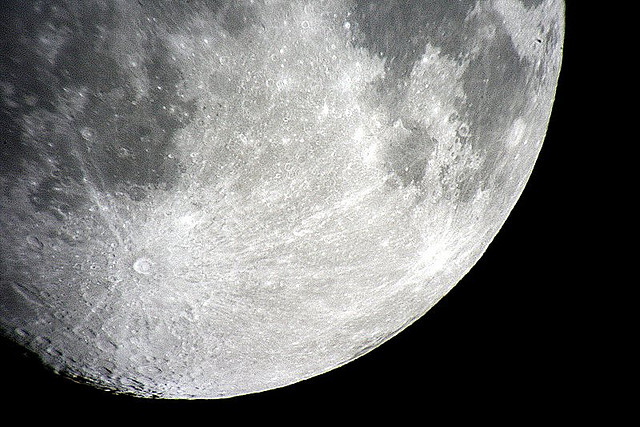
Imagine this. It’s a Tuesday night. You’re taking out the trash, glancing up at the sky, expecting that familiar, glowing white orb. The cosmic nightlight. But it’s not there.

I don’t mean it’s a New Moon, where it’s hiding in the shadows. I mean it’s gone. Poof. Erased from existence. Or maybe stolen.

If the Moon were dragged off and completely removed, we wouldn’t just be losing a pretty view. We would be losing the gravitational anchor that has defined our biological and geological history for billions of years. There would be none of its mass left to tug gravitationally on the Earth. The immediate silence would be deafening. The panic? Absolute.

But after the screaming stops, the physics kicks in. And that is where things get really, really weird.

The Death of the Surfer’s Dream

First things first. The water. We take the tides for granted. In, out. High, low. Clockwork. But that clock is powered by the Moon. Without it, you could basically throw out the tide tables for good.

Does the ocean just go flat? Not entirely. But it changes. Drastically.

The ocean tides would still happen, but the driving force would shift entirely to the sun. The sun is massive, sure, but it’s 93 million miles away. Its tidal pull is weak compared to the Moon, which is right in our backyard. Without the lunar gravity, the tides would shrink by about two-thirds. They would become “solar tides.”

The bulge of water would follow the sun, so you could expect high tides around noon everywhere, everyday. Predictable? Yes. Boring? Absolutely. The surfing industry dies overnight. But I know some fishermen who would appreciate this. No more calculating phases. Just look at your watch. If it’s lunchtime, the water is up.

However, think about the stagnant water. The churning of the tides cleans our coastlines. It mixes nutrients. Without that massive lunar sloshing, estuaries could stagnate. Marine ecosystems that rely on that violent flushing? They might suffocate. The smell of rotting seaweed would likely become the new perfume of the coast.

The Planetary Groan: Earthquakes and Volcanoes

Here is where the conspiracy theorists start sweating. We talk about the Earth as a solid rock, but it isn’t. It’s elastic. It stretches. It breathes.

Since the solid Earth flexes tidally—literally bulging up and down as the Moon passes overhead—it makes sense that there might be some internal grumbling when Earth loses the Moon. Think of a rubber band that has been stretched for 4.5 billion years suddenly snapping back.

Earthquakes. Maybe a few volcanoes getting rowdy. That kind of stuff. The tectonic plates, finally released from that constant tidal stress, might adjust their seating position. We aren’t talking about the apocalypse, probably. There’s no reason to worry (or hope) that California will fall into the Pacific. Sorry New York. Sorry Las Vegas.

But consider the deep magma. We don’t fully understand how tidal friction heats the Earth’s interior. Some fringe theories suggest the Moon helps keep our core molten and spinning, generating the magnetic field that protects us from solar radiation. If the Moon leaves, does the dynamo slow down? Do we lose our shield? That’s a question mainstream science tries to dodge, but it keeps me up at night.

The Great Wobble: Chaos in the Sky

Forget the tides. Forget the earthquakes. Those are nuisances. The greater concern would be in the long-term, regarding the Earth’s wobbling spin axis. This is the killer.

Right now, the spin axis of the Earth very slowly wobbles over 26,000 years, like a slowing wobbling top, because of the tug of the sun. It’s called precession. This wobble causes true north to not always point at Polaris, a.k.a., the North Star. But it’s stable. It’s predictable. It’s safe.

Why is it safe? Because we have a bouncer. The Moon.

Experts agree that the Moon acts sort of like a shock absorber to this wobble — keeping it from getting out of hand (see the nitty gritty details in this SETI talk). The Moon is huge relative to Earth. Much bigger than other moons relative to their planets. That massive weight stabilizes our spin. It locks us at that nice, comfortable 23.5-degree tilt that gives us summer, autumn, winter, and spring.

The Mars Scenario

It’s possible that Earth without a moon would wobble wildly, sort of like Mars does. Mars has two tiny, pathetic potato-shaped moons, Phobos and Deimos. They are useless for stabilization.

The Red Planet’s wobble is so extreme that it may be the cause of some cycles of climate change there. The poles on Mars wander. Sometimes the ice caps are at the top, sometimes they point at the sun. If the same thing happened here, Earth might wobble so much that seasons would become inhospitably extreme and Earth would be a much less stable and habitable planet.

We are talking about a planet that can’t make up its mind. Imagine a world where the North Pole suddenly decides to move to the Equator. This isn’t science fiction. This is orbital mechanics without a stabilizer.

The Tea Party of Doom

Let’s play out the worst-case scenario. The stabilizer is gone. The top starts to shake.

Without the Moon, the tilt of the Earth’s axis could go from its current wobble of 22 to 25 degrees to a wild ride of zero to 85 degrees.

Let’s break that down. Zero degrees means no tilt. No tilt means no seasons. Every day is the same. The poles freeze permanently. The equator burns. Climatic stagnation. It would be a biological dead end. Agriculture would collapse because we rely on seasonal cycles for planting and harvesting.

But go the other way. 85 degrees. That is basically the Earth leaning over on its side. Think about Uranus. It spins on its side. If this happened here, the current crisis we call global warming would be a very pleasant tea party by comparison.

At an 85-degree tilt, the North Pole would point directly at the sun for six months. Six months of scorching, unceasing daylight. The temperatures would boil the oceans. Meanwhile, the South Pole is in six months of absolute darkness and deep freeze. Then, half a year later, it flips. The entire planet would be a chaotic hellscape of freezing and boiling. Nothing could survive that. Maybe bacteria. Maybe cockroaches. But certainly not us.

The Biological Clock Meltdown

We forget how much life is synced to the lunar cycle. It’s not just werewolves.

Coral reefs spawn based on the moon. Sea turtles wait for the full moon to lay eggs. Birds migrate using celestial cues. Moths navigate by moonlight. If you delete the Moon, you break the GPS of the animal kingdom.

Millions of years of evolution, wiped out in a single night. We would see mass confusion. Insects flying in circles until they drop. Predators that hunt at night stumbling around in pitch blackness, starving. The food chain would snap.

And what about us? Humans? There are plenty of theories about the lunar effect on human psychology. Emergency room doctors and police officers swear that people go crazy during a full moon. If the Moon is gone, do we calm down? or do we lose a fundamental rhythm that keeps our sanity in check? Without the monthly marker in the sky, does our perception of time begin to blur?

The “Hollow Moon” Theory Connection

I have to bring this up. We can’t talk about the Moon disappearing without asking: Why was it there in the first place?

There is a persistent theory in the alternative history community that the Moon is artificial. That it’s a hollow spacecraft. Why? Because the mathematical coincidences are too perfect. The Moon is exactly 400 times smaller than the Sun, but the Sun is exactly 400 times further away, making them appear the exact same size in the sky during an eclipse. The odds of that happening naturally are astronomical.

If the Moon is an ancient construct brought here to stabilize the Earth—to terraform it, to make it habitable by stopping that wild wobble—then its removal implies something terrifying. It implies the owners came back to pick it up. Or maybe the experiment is over.

If the Moon vanished, it would prove the “Spaceship Moon” theory instantly. Natural rocks don’t just walk away. Engines do.

A Slow-Motion Catastrophe

Let’s step back to reality for a second. If the Moon vanished today, we wouldn’t all die tomorrow.

Luckily, the wobbling would not affect things right away but over many millions of years. The Earth is a big, heavy object. It carries momentum. It wouldn’t flop over on its side instantly. It would be a slow, agonizing drift into chaos.

We would have time to adapt. Maybe. Or maybe technology would save us. But the night sky—that beautiful, terrifyingly vast blackness—would be forever changed. We would be a lonely rock, spinning a little too fast, shaking a little too much, drifting through the dark without our partner.

So next time you see that white rock hanging up there, give it a nod. It’s doing a lot of heavy lifting. It’s keeping the water moving, the ground steady, and the seasons sane. We really, really don’t want it to go.

Source: Discovery News Read More

Amit Ghosh
Amit Ghoshhttps://coolinterestingnews.com
Aloha, I'm Amit Ghosh, a web entrepreneur and avid blogger. Bitten by entrepreneurial bug, I got kicked out from college and ended up being millionaire and running a digital media company named Aeron7 headquartered at Lithuania.
RELATED ARTICLES
- Advertisment -

Most Popular

Recent Comments

Warren Pan Abbott on The legend of the Devil Monkey !
chris davies on The McPherson Tape Mystery
Reed Reedly on ET has Internet!
Bea Houseoffashion on Proof Of Time Travellers – Gallery
Marcus2012 on ET has Internet!
Reed Reedly on ET has Internet!
LaughsAtConspiracyNuts on The 9/11 Conspiracy – Myths and Facts
Alex Sliverman on Did the ancients fly?
Doctor Wholigan on Time Traveler in 1938 film
chris davies on The McPherson Tape Mystery
Archie1954 on 10 secret UFO hideouts
chris davies on Ghosts of flight 401
Marcus2012 on ET has Internet!
jason Macdonald on Proof of Time Travel? – China
chris davies on Long-Lost Pyramids Found?
Reed Reedly on ET has Internet!
Milkman on Connected Universe
Tenmiles on Baigong Pipes Mystery
Simon Foster on Sirius – The Documentary
From the 1st April on 2013 – Alien Contact date ?
SkyWatcher on Is ET ignoring us?
I Come From The Future on Obama to make UFO Alien disclouser soon ?
Just another person on 2013 – Alien Contact date ?
Malcolm Windowcleaner on The strange case of Rudolph Fentz
Mason Servio on Strange Things on Mars
Marke Wisdom Seeker on What will we find as arctic melts?
Andrea A Elisabeth Levyne on Aliens Captured in Varginha, Brazil
Mitch Grouyeki on Amazing Space Shuttle pictures