Home Unexplained Mysteries Modern Mysteries What happened to the Carroll A. Deering?

What happened to the Carroll A. Deering?

0
49

The Ghost Ship of Diamond Shoals: What Happened to the Carroll A. Deering?

The sea doesn’t keep secrets. It swallows them whole.

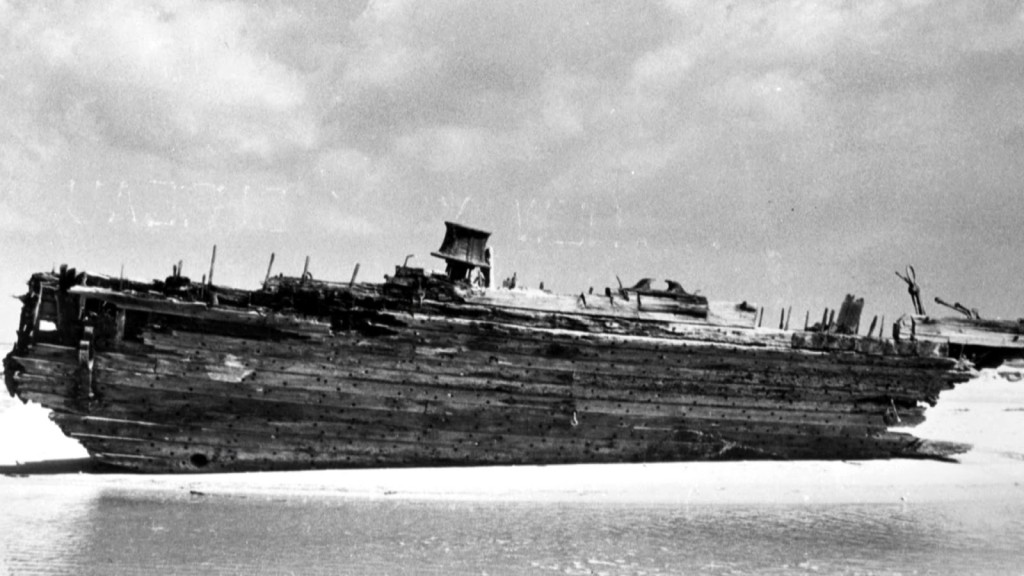
Imagine the scene. January 31, 1921. Off the jagged, unforgiving coast of Cape Hatteras, North Carolina—a place sailors call the Graveyard of the Atlantic—a massive ship lies broken. Its five towering masts are splintered, its sails ripped to shreds by a furious wind. It’s the Carroll A. Deering, a majestic schooner, hard aground on the treacherous Diamond Shoals, being hammered into pieces by the relentless surf.

But the real horror wasn’t the wreck. It was the silence.

The ship was empty. Utterly, terrifyingly empty. Its eleven-man crew? Gone. Vanished as if plucked from the deck by an unseen hand, leaving behind only half-cooked meals in the galley and a deafening, echoing quiet. No logbook. No navigation equipment. No lifeboats. No S.O.S.

Nothing.

The story of the Carroll A. Deering isn’t just a maritime mystery; it’s a gaping hole in history, a century-old question mark that has spawned a thousand theories. Was it a simple case of mutiny gone horribly wrong? A brazen act of piracy on the high seas? Or was it something else? Something that defies easy explanation, pulling the Deering into the dark, swirling vortex of legends like the Bermuda Triangle.

Forget what you think you know. We’re going deep. We’re going to board this ghost ship and walk its haunted decks, examining every clue, every whisper, every impossible detail. Because somewhere between a drunken threat in a Barbados port and a cryptic message from a red-haired stranger, lies the truth of what really happened to the eleven lost souls of the Carroll A. Deering.

Carroll A. Deering

A Voyage Cursed from the Start

Every great mystery has a beginning, a point where the timeline shifts from normal to… something else. For the Deering, that moment came before it even left American shores.

Built in 1919 in Bath, Maine, the Carroll A. Deering was a modern marvel of its time. A five-masted schooner, a true giant of the sea designed for one purpose: hauling cargo across the globe. She was the property of the G.G. Deering Company, named with pride after the owner’s son. In the summer of 1920, she was prepped for a routine, profitable journey: carry a massive load of coal from Norfolk, Virginia, all the way to Rio de Janeiro, Brazil.

Her captain was a seasoned pro, William H. Merritt. His own son, Sewall Merritt, served as his first mate. A solid command structure. The ten-man crew they hired was composed almost entirely of Scandinavians, mostly Danes, known for their skill and hardiness at sea. Everything looked perfect.

And then the curse began.

Just days into the voyage, as they sailed down the coast, Captain Merritt was struck down by a sudden, debilitating illness. He was so sick that the voyage had to be aborted. The Deering pulled into port at Lewes, Delaware, where Captain Merritt and his son were forced to disembark, their journey over before it had truly begun. A strange and ill-timed omen.

Deep Dive: The New Command

The Deering Company scrambled. A ship in port makes no money. They needed a replacement, and they needed one fast. They found Captain W. B. Wormell, a 66-year-old veteran of the sea, coaxed out of retirement for one more voyage. To fill the first mate position, they hired a man named Charles B. McLellan.

On paper, it worked. A seasoned captain and an experienced first mate. But a ship’s crew is a delicate ecosystem. The original captain and his son, who knew the crew, were gone. In their place stood two strangers, an aging captain and a new first mate, tasked with commanding ten foreign sailors on a long and arduous journey. The seeds of discord were planted.

On September 8, 1920, the Deering, under its new command, set sail once again. The journey south to Rio was, by all accounts, smooth. They delivered their cargo of coal without a single reported incident. But beneath the calm surface, tensions were simmering.

While in Rio, Captain Wormell met up with an old friend, a Captain Goodwin. Wormell confessed something unsettling. He didn’t trust his crew. He spoke of them with disdain, calling them a lazy, troublesome lot. The only man he seemed to have any faith in was the engineer, Herbert Bates. It was a stunning admission. A captain who openly distrusts his entire crew is a man sitting on a powder keg.

Barbados: The Boiling Point

The voyage home began on December 2, 1920. The ship was empty of cargo, light in the water, and sailing toward its next stop: Barbados, for supplies. It was here, in this tropical port of call, that the powder keg finally ignited.

First Mate McLellan, a man who already felt the pressure of the journey, hit the town. And he hit the bottle. Hard. Drunk and belligerent, he began complaining to anyone who would listen, including another sea captain named Hugh Norton. McLellan ranted that Captain Wormell was interfering with his duties, that he couldn’t properly discipline the “foreign” crew. He made another shocking claim: he had to do all the difficult navigation himself because Captain Wormell’s eyesight was failing him.

Was it true? A 66-year-old captain with bad vision navigating one of the busiest and most dangerous sea lanes in the world? It was a terrifying thought.

But then, McLellan’s drunken complaints turned into something far more sinister. Later that night, in the Continental Café, in front of three other captains, Charles McLellan was heard to say it. The words that would hang over this entire mystery like a funeral shroud.

“I’ll get the captain before we get to Norfolk, I will.”

A direct, unambiguous threat against his commanding officer. McLellan was arrested by the local authorities for his drunken tirade. This should have been the end of it. He should have been fired, thrown in jail, and left behind. But Captain Wormell, in a decision that remains baffling to this day, did the opposite. He forgave his first mate. He went to the jail, paid his bail, and brought him back aboard the ship.

Why? Was it a foolish act of kindness? A desperate attempt to maintain a command structure, even a broken one? Or was he intimidated, already losing control of his ship? We will never know. On January 9, 1921, the Carroll A. Deering, with a pardoned first mate and a deeply divided crew, set sail from Barbados, heading directly into the arms of its doom.

The Final, Baffling Clues

For weeks, the Deering was just another ship at sea, a silent silhouette on the horizon. Then, on January 28, 1921, it reappeared, hailing the Cape Lookout Lightship off the coast of North Carolina.

This is the last known communication with the Deering. And it is deeply, deeply weird.

The lightship’s keeper, Captain Jacobson, reported the encounter. It wasn’t Captain Wormell or First Mate McLellan who hailed his ship. It was a man he didn’t recognize. A thin man with reddish hair, who spoke with a distinct foreign accent. Likely one of the Danish crewmen. This man, an ordinary crew member, was the one speaking for the ship.

Where were the officers?

The red-haired man’s message was simple: the Deering had lost both of its anchors in a storm. A serious but not catastrophic problem. Jacobson logged the information, but his radio was out of order, so he couldn’t pass the message along. As the Deering sailed past, Jacobson noticed something else that struck him as odd. The crew, he later reported, were “milling around” on the foredeck of the ship, a place where they were not normally allowed. There was no order. No discipline. It looked, he thought, chaotic.

This wasn’t a ship operating under normal maritime protocol. This was a ship that was fundamentally broken. Something had already happened. The chain of command was shattered. Just three days later, it would be found wrecked on Diamond Shoals.

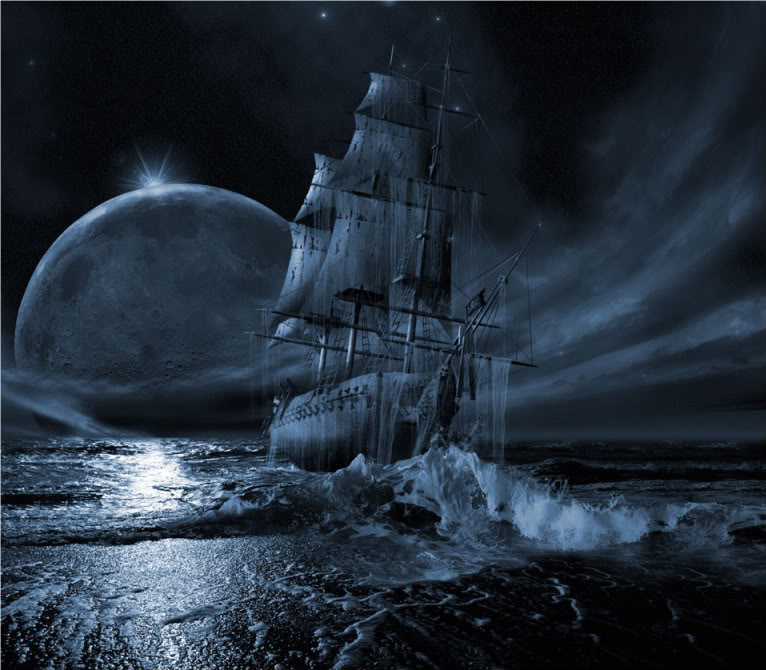
ghost-ship-art1

The Wreck on the Shoals

Diamond Shoals. Even the name sounds sharp, dangerous. It’s a shifting maze of sandbars that extends for miles from Cape Hatteras, a notorious ship-killer. When the Deering was spotted there on January 31, it was already a lost cause. Vicious storms and treacherous seas made any immediate rescue attempt impossible. For days, rescue crews could only watch as the Atlantic battered the ship’s hull.

It wasn’t until February 4 that a boarding party was finally able to set foot on the deck. What they found was a scene of perfect, eerie abandonment.

Deep Dive: The Evidence Onboard

The scene on the ship was a mess of contradictions. On one hand, the damage from the storm and the grounding was immense. On the other, the signs of human life were profoundly strange.

  • The Missing Equipment: The ship’s logbook, the crucial record of its journey, was gone. The navigation equipment—the sextant, the chronometer—also vanished. The ship’s wheel was damaged, and key steering mechanisms were broken.
  • The Missing People (and their things): All eleven crew members were gone. Not a soul was found. Crucially, their personal belongings were also missing. So were the ship’s two lifeboats. This wasn’t a panicked, sudden abandonment in a storm. It suggests the crew, or whoever was left, took the time to pack their things and leave in an orderly fashion.
  • The Eerie Galley: In the ship’s kitchen, they found the most haunting clue of all. Food was laid out, being prepared for the next meal. A pot of stew was on the stove. Bread was ready for the oven. This directly contradicts the idea of an orderly departure. It suggests that whatever happened, it happened suddenly, interrupting the most mundane of daily tasks.
  • A Lone Survivor: Some reports from the time, repeated in local lore, claim there was one sign of life: a six-toed cat, the ship’s mouser, found hungry but alive in the galley.

The ship itself was too damaged to be saved. The Coast Guard tried to tow it off the shoals, but the hull was too compromised. On March 4, 1921, to prevent the wreck from becoming a navigation hazard, the Carroll A. Deering was dynamited. The explosion sent its splintered timbers into the depths, officially ending the ship’s life but giving birth to an undying legend.

The Theories: Mutiny, Mayhem, or a Monster from the Triangle?

With the crew gone and the ship destroyed, all that was left was speculation. An intense investigation was launched by five different departments of the U.S. government. They chased down every lead, and what they found only deepened the mystery, leading to several powerful, competing theories.

Theory 1: The Mutiny

This is the official, most logical explanation. The evidence is compelling. You have a disgruntled first mate, Charles McLellan, who openly threatens his captain’s life. You have a captain who described his crew as untrustworthy. You have the final, bizarre sighting from the lightship, with a crewman giving orders and the rest of the crew “milling around” in a restricted area. It paints a clear picture.

The Scenario: Led by McLellan, the crew mutinies sometime after January 9th. They either kill Captain Wormell and the engineer, or set them adrift. Now in control of the ship, the mutineers are triumphant but incompetent. McLellan may have been a good first mate, but he wasn’t a captain. Without Wormell’s experience, they become lost. They lose their anchors in a storm. Confused and panicked, they hail the lightship with a flimsy story. As the weather worsens, they realize they can’t save the ship. They gather their belongings, launch the lifeboats, and try to make for shore. But the Graveyard of the Atlantic lives up to its name. Their small lifeboats are no match for the violent seas, and they are all lost, swamped by the same storm that wrecked the Deering.

Theory 2: Pirates and Bolsheviks

It sounds like something from a movie, but piracy was a real concern, even in 1921. Prohibition had just begun, and the seas were becoming a hunting ground for rum-runners and criminals. Another theory posits that the Deering was overtaken by another vessel.

The Scenario: Pirates board the ship, murder the crew, and claim it as their prize. They intend to sail it to a hidden port, but like the mutineers, they are caught in the powerful storm off Cape Hatteras. Unable to control the massive schooner, they strip it of anything valuable—the logbook, the navigation gear—and abandon it in the lifeboats, leaving the Deering to wreck on the shoals.

This theory got a strange boost when the government investigated a known criminal and suspected pirate, Christopher Columbus Gray. They even looked into whether the ship had been seized by Bolshevik agents as part of a plot against the U.S. It was the height of the Red Scare, and paranoia was rampant. While it seems far-fetched today, it shows just how seriously the government took the possibility of foul play.

Theory 3: The Wrath of the Bermuda Triangle

Here’s where the story leaves the realm of the rational and enters the twilight zone. The Carroll A. Deering‘s disappearance is a cornerstone case for believers in the paranormal mysteries of the Bermuda Triangle. The ship’s route took it directly through this legendary stretch of ocean, an area infamous for swallowing ships and planes without a trace.

The Deering‘s story fits the pattern perfectly. A sudden, inexplicable disappearance of the crew. A lack of any distress call. A ship found derelict. This was just a few years after the massive U.S. Navy collier, the USS Cyclops, vanished with 306 souls aboard along a similar route. Were they connected?

The Scenario: What if the threat wasn’t human? Proponents of this theory point to freak weather events like rogue waves or massive waterspouts that could have swept the deck clean in an instant. Others suggest more esoteric forces—magnetic anomalies that scrambled compasses and drove the crew mad, or something even stranger. What if the ship wasn’t abandoned? What if it was… emptied?

A Final, Faint Echo

Months after the wreck, a bottle washed ashore in North Carolina. Inside was a note, seemingly from one of the Deering’s crew. It told a chilling tale of being captured by another vessel, a pirate ship flying a black flag. It was signed by a crewman. For a moment, it seemed the mystery was solved.

But then, handwriting analysis proved the note was a forgery. It was a cruel, elaborate hoax, penned by a local man who later confessed to faking it for a bit of attention. The lead turned to dust.

The dynamite silenced the groaning timbers of the Carroll A. Deering, but it couldn’t silence the questions. A century later, the waves over Diamond Shoals still hold their secrets. The puzzle’s pieces lie scattered on the ocean floor, refusing to form a coherent picture. Was it betrayal from within, or violence from without? Was it a simple tragedy of human error, or a brush with the unknowable? What really happened to the eleven lost souls?

The ocean, as always, isn’t talking.

Originally posted 2016-03-01 12:28:33. Republished by Blog Post Promoter