Do you remember where you were in 2012? Not just geographically. I mean mentally. Spiritually. Because if you talk to enough people in the darkest corners of the internet—the forums where sleep is optional and the truth is buried deep—they will tell you something feels… off about the world since then. The timeline feels fractured. Reality feels glitchy.
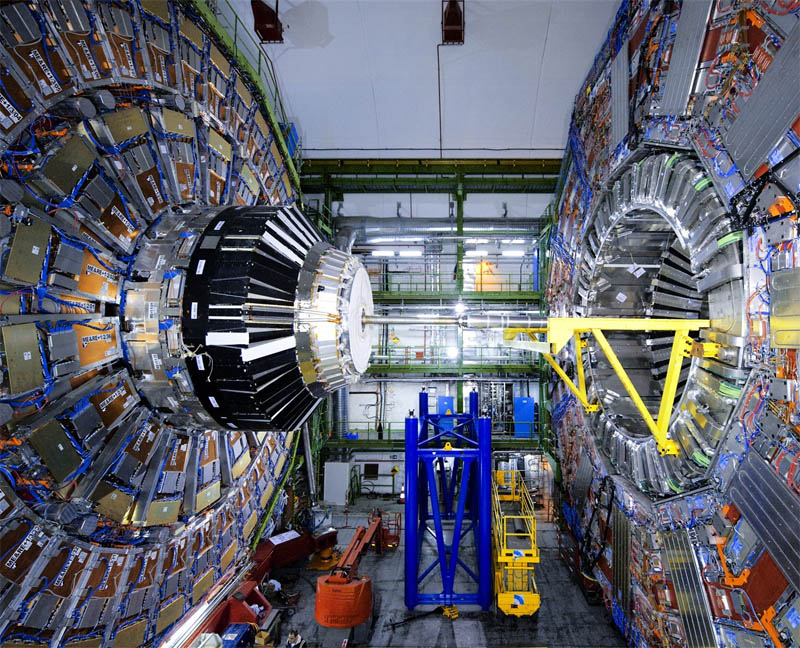
And right at the center of that uneasy feeling sits a machine. A massive, seventeen-mile ring buried beneath the border of France and Switzerland. The Large Hadron Collider.
July 4, 2012. Independence Day in the States. But in Geneva, fireworks weren’t exploding in the sky. They were exploding at the subatomic level. This was the moment everything changed. This was the moment humanity reached out with the most complex machine ever built and touched the face of the universe’s architecture. Or, as some fear, the moment we broke it.

The Day the Physics Books Were Rewritten
Let’s rewind. It’s been years since the news of high-energy particle demolition inside the detectors of the Large Hadron Collider (LHC) first broke. Were physicists on the verge of announcing one of the most significant discoveries of our time? If you saw the headlines back then, the answer was a screaming, all-caps YES. But in typical quantum physics style, where nothing is real until you look at it, we had to wait for the smoke to clear. We needed definitive proof for the elusive Higgs boson.
On that Wednesday, scientists heading two major experiments at the LHC—ATLAS and CMS—stepped onto the stage at a physics conference in Australia, with accompanying meetings in Geneva, Switzerland. The atmosphere was thick. Tension? Absolutely. Senior scientists at the European Organization for Nuclear Research (CERN) had been dropping breadcrumbs for weeks. They were hinting that there was strong evidence in their data suggesting the Higgs boson wasn’t just a ghost story.
It was real.
For the year leading up to it, we had “hints” of a Higgs detection. Then those hints morphed into “potential evidence.” It was a slow burn. A tease. Then, finally, we got the word of a bona fide discovery.
“I agree that any reasonable outside observer would say, ‘It looks like a discovery,’” CERN physicist John Ellis told The Associated Press at the time. “We’ve discovered something which is consistent with being a Higgs.”
Consistent. That’s science speak for “We found it, but we’re terrified to admit we might be wrong.” But they weren’t wrong. They had found the God Particle. And in doing so, they may have opened a door that can never be closed.
What on Earth is the “God Particle”?
Let’s break this down. No jargon. No textbooks. Imagine the universe is a massive party. The guests are particles. Some particles, like photons (light), zip through the room effortlessly. They have no mass. They don’t weigh anything. They are the social butterflies that never stop moving.
But then, there’s the Higgs field. Imagine the Higgs field as a room filled with thick, sticky honey. Or maybe a room crowded with paparazzi. When a celebrity particle enters (like an electron or a quark), the paparazzi (the Higgs field) swarm around it. They slow it down. They give it “weight.” That resistance? That drag? That is mass.
Without the Higgs boson, which is the physical manifestation of this field, nothing would have mass. You wouldn’t exist. Stars wouldn’t burn. Atoms wouldn’t hold together. The universe would just be a cold, dark soup of particles zipping around at the speed of light, never touching, never forming anything real.
The Higgs boson is the last piece of the physics Standard Model, a collection of theories that underpin all modern physics. It was the keystone. The one thing holding the arch of reality together. The Higgs particle is theorized to mediate mass—like a photon (also a boson) mediates the electromagnetic force, i.e., light—and creates the “Higgs field” that must pervade the entire Universe, endowing matter with mass.
The “Nightmare Scenario”
Here is where it gets interesting. And dark. If the LHC didn’t detect signs of the Higgs particle back in 2012, its non-discovery would have turned modern physics on its head. It would have meant we were wrong about everything. Gravity? Wrong. Mass? Wrong. Reality? A lie.
Physicists are an inquisitive bunch, so a non-discovery would have been exciting. Chaos is fun for people with PhDs. But for all the Higgs doubters out there, the data crushed their skepticism. The Higgs does exist. The Standard Model is as robust as physicists always thought.

But there is a catch. There is always a catch.
Some scientists argue that finding the Higgs was actually the worst-case scenario. Why? Because of a little thing called Vacuum Decay. Stay with me here.
The Stephen Hawking Warning
Before he passed, the legendary Stephen Hawking issued a warning that chilled the scientific community to the bone. He suggested that the Higgs boson could be “metastable.”
Think of it like a ball resting on a ledge on the side of a mountain. It looks stable. It’s sitting there. It’s been there for billions of years. That’s our universe right now. But if you poke it? If you give it just enough energy? The ball rolls off the ledge and crashes down to the valley floor.
In physics terms, if the Higgs field were to “collapse” to a lower energy state, it would create a bubble of “true vacuum.” This bubble would expand at the speed of light. It would rewrite the laws of physics as it grew. Chemistry would fail. Atoms would dissolve. And because it moves at light speed, you wouldn’t see it coming. One second you’re reading this article, and the next—blink. Existence gone.
Hawking warned that at extremely high energy levels—levels we are pushing toward with the LHC and future colliders—we might accidentally nudge that ball off the ledge.
The Alternative History: Did We Shift Timelines?
Now, let’s step away from the mainstream science and look at the internet’s favorite obsession: The Mandela Effect.
Thousands of people online swear that the world changed around 2012. They remember the children’s book bears being spelled “Berenstein,” not “Berenstain.” They remember a cornucopia in the Fruit of the Loom logo that apparently never existed. They remember Nelson Mandela dying in prison in the 80s, not in 2013.
Why 2012? Why does that year keep coming up?
The Mayan Calendar predicted the end of an age in December 2012. The LHC ramped up to its highest power levels to find the Higgs earlier that same year. Is it a coincidence?
The theory goes like this: When CERN smashed those particles together at near-light speed, hunting for the God Particle, they didn’t just find a boson. They fractured reality. Some speculate we shifted into a parallel timeline—a darker, weirder, more chaotic version of Earth. The “Old Earth” was destroyed or left behind, and our consciousness merely slid over to this new track. This is why politics feels more polarized, why weather patterns are bizarre, and why pop culture feels like a simulation.
Is it true? Probably not. But can you prove it isn’t? That’s the beauty of high-energy physics. It borders on magic.
The Shiva Connection
You can’t talk about CERN without mentioning the statue. If you walk into the courtyard of the CERN facility in Geneva, you aren’t greeted by a statue of Newton or Einstein. You are greeted by a massive statue of Shiva.
In Hindu mythology, Shiva is the Destroyer. He is the cosmic dancer who dances the universe into destruction so it can be reborn. CERN claims it was a gift from the Indian government, celebrating the metaphor of the “cosmic dance” of subatomic particles.
But conspiracy theorists see it differently. They see it as a statement of intent. A signal. “We are here to break the world.”
Add to this the mock ritual that was filmed on CERN grounds a few years ago—people in cloaks staging a fake human sacrifice under the Shiva statue. CERN dismissed it as a prank by bored scientists. But for those watching the shadows, it was a glimpse behind the curtain. Why would the world’s smartest people “prank” the world with occult imagery?
Beyond the Higgs: What Are They Looking For Now?
You might think, “Okay, they found the Higgs in 2012. Job done. Pack it up.”
Wrong. They are just getting started. The LHC has recently undergone massive upgrades. They call it the High-Luminosity LHC (HL-LHC). They are cranking up the brightness of the beams. They are increasing the number of collisions by a factor of ten.
What are they hunting for now?
1. Dark Matter
Everything you see—your phone, your dog, the stars, the galaxies—makes up only about 5% of the universe. The rest? It’s “Dark Energy” and “Dark Matter.” We can’t see it. We can’t touch it. But we know it’s there because its gravity is holding the galaxies together. If the LHC can produce Dark Matter particles, it would be the first time humans have ever touched the “invisible” universe.
2. Extra Dimensions
This isn’t sci-fi. String Theory suggests there are at least 10 or 11 dimensions. We only experience three (plus time). Gravity is surprisingly weak compared to other forces (a tiny magnet can pick up a paperclip against the pull of the entire Earth). Why is gravity so weak? Some physicists think gravity is “leaking” into extra dimensions.
Sergio Bertolucci, a former Director for Research and Computing at CERN, once famously said that the LHC might open a door to another dimension. He said, “Out of this door might come something, or we might send something through it.”
Read that again. “Out of this door might come something.”
He clarified that the door would only be open for a tiny fraction of a second. But when you are dealing with entities or forces we don’t understand, how long is long enough?
The “God Particle” was Just the Beginning
The discovery of the Higgs boson was hailed as the final victory of the Standard Model. It was supposed to be the period at the end of the sentence. Instead, it turned into a question mark.
The mass of the Higgs boson they found—about 125 gigaelectronvolts (GeV)—is weird. It sits right on the edge of stability. It’s not quite heavy enough to make the universe totally stable, and not quite light enough to make it totally unstable. It exists in a “Goldilocks zone” of potential doom.
It’s almost as if the universe is balancing on a knife’s edge.
So, as we look back at the headlines from July 2012, we shouldn’t just see a scientific victory. We should see a turning point. We poked the fabric of reality. We found the glue that holds us together. And now, deeper underground, with more power than ever before, we are poking it again.
Are we unlocking the secrets of creation? Or are we essentially monkeys playing with a loaded gun, unaware that the safety is off?
The next run of the LHC is scheduled to reach energy levels never seen in human history. If the conspiracy theorists are right, and 2012 was a shift, what happens next? Maybe nothing. Maybe just more data on a computer screen.
Or maybe, just maybe, we’ll finally see what’s looking back at us from the other side of the glass.