The Seven Minutes of Hell: The Insane Gamble to Land a Nuclear Rover on Mars
They called it the most complex landing in human history. A $2.5 billion, car-sized, nuclear-powered science lab hurtling toward another world at 13,000 miles per hour.
And for seven agonizing minutes, nobody on Earth would know if it was a triumph or a twisted, smoking wreck 150 million miles away.
Seven minutes.
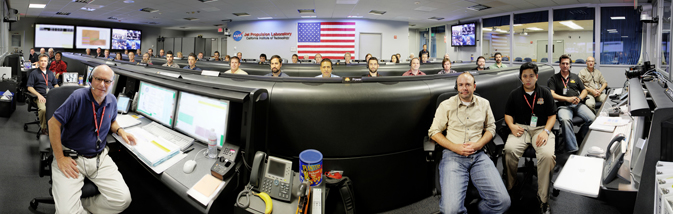
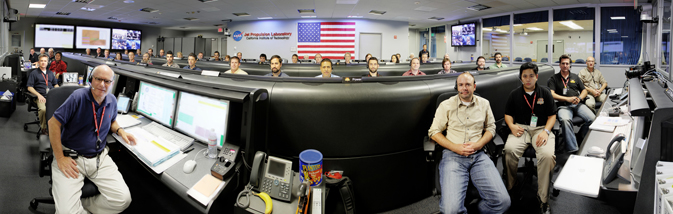
That’s the time it takes for a radio signal to cross the void between Mars and Earth. By the time the anxious engineers at NASA’s Jet Propulsion Laboratory received the signal that the rover, Curiosity, had hit the Martian atmosphere, the landing was already over. The rover was either safely on the surface or it was a crater. There was no in-between. No second chances. No rescue mission.
This wasn’t just another mission. This was a monster. A behemoth. It was too big, too heavy for the airbag-bouncing landings of its plucky little predecessors, Spirit and Opportunity. This time, NASA had to invent something completely new. Something that sounded like it was ripped from the pages of a wild science fiction novel.
Something insane.
They came up with a plan so audacious, so complex, it was nicknamed the “Seven Minutes of Terror.” And for good reason. It was a sequence of events so perfectly choreographed, so dependent on every single part working flawlessly, that even the engineers who designed it admitted it was nuts.
It was the biggest gamble in the history of planetary exploration. And on August 5, 2012, the entire world held its breath, waiting for a signal from the silent, red world.
A Sky Crane, A Supersonic Parachute, and A Prayer
So how do you land a one-ton rover on another planet? You don’t. You do something much, much crazier. Let’s break down this ballet of fire and physics, this sequence that had to work perfectly or end in catastrophe.
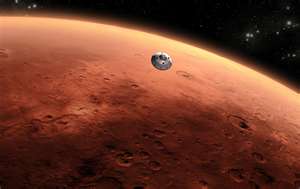
First, the entry. The spacecraft carrying Curiosity slams into the thin Martian atmosphere like a meteorite. The friction heats its protective shield to over 3,800 degrees Fahrenheit—hotter than lava. The vehicle is literally a fireball screaming across the alien sky. Inside, the rover is being subjected to G-forces that would crush a human being.
That’s the easy part.
Next, traveling at twice the speed of sound, the lander deploys a parachute. But not just any parachute. This is the largest supersonic parachute ever built. It has to withstand 65,000 pounds of force as it whips open, slowing the descent from Mach 2 to a leisurely 200 miles per hour. A single tear in the fabric, and it’s game over.
The heat shield is jettisoned. It falls away, revealing the rover tucked beneath its descent stage. For the first time, a camera on the rover can see the Martian ground rushing up to meet it.
But the parachute can only do so much. The Martian atmosphere is just too thin. The rover is still falling way too fast. So, about a mile above the ground, the lander cuts itself free from the parachute and fires up eight powerful retrorockets. It’s now a flying, rocket-powered platform, actively steering itself to the perfect landing spot, dodging boulders and cliffs identified by its onboard brain.
And now for the grand finale. The part that made everyone think NASA had finally lost its mind.
The Sky Crane Maneuver
The rockets can’t land directly on the surface. They would kick up a massive cloud of dust and debris that could sandblast and destroy the rover’s sensitive instruments. So, with about 60 feet left to go, the rocket-powered descent stage does something unbelievable.
It lowers the rover on a set of three nylon cables, like a spider dropping on a thread of silk.
For a few terrifying seconds, a one-ton nuclear robot dangles from a flying rocket platform, suspended in the alien air. Once the rover’s wheels touch the ground, the connection is severed. Explosive charges fire, cutting the cables. The descent stage, its job done, then flies off and crash-lands a safe distance away.
Curiosity was on Mars.
Alone.

The entire sequence, from atmospheric entry to touchdown, involved 76 pyrotechnic explosions, a supersonic parachute, a heat shield, a rocket-powered jetpack, and a sky crane. If any one of those things failed, the mission was lost. This is why they called it terror.
Chasing Martian Ghosts: A History of Failure
Why was this landing so nail-biting? Because Mars eats spacecraft for breakfast. For decades, the Red Planet has earned a sinister reputation. A place where our best technology goes to die. They call it the “Mars Curse” or the “Great Galactic Ghoul,” a mythical space monster that feeds on Martian probes.
Sounds silly, right? But look at the numbers. Of all the missions sent to Mars by any space agency, roughly half have failed. They’ve crashed, burned up, missed the planet entirely, or simply vanished without a trace.
The Soviet Union felt the Ghoul’s hunger most acutely. They tried again and again in the 1960s and 70s, only to be met with devastating failure. Their Mars 2 and Mars 3 missions in 1971 both reached the planet, but the Mars 2 lander crashed, and the Mars 3 lander touched down safely only to cease transmission after 14.5 seconds. Just long enough to send a ghostly, partial image of… something. Then, silence.
Even NASA isn’t immune. In 1999, the agency lost two probes in a matter of months. The Mars Climate Orbiter burned up in the atmosphere because of a catastrophic mix-up between metric and imperial units. A simple math error. A $125 million mission lost. Weeks later, the Mars Polar Lander was lost, presumed to have crashed during its descent.
So when Curiosity was plummeting towards the surface, it wasn’t just a rover. It was a symbol. It was humanity’s best shot at breaking the curse, at conquering the terror, and at finally getting a solid foothold on this mysterious and hostile world.
What is This Nuclear-Powered Beast?
Curiosity isn’t your average rover. It’s a different class of explorer entirely. About the size of a Mini Cooper and weighing 2,000 pounds, it dwarfs its predecessors. But it’s what’s inside that truly sets it apart.
A Laser on its Head
Perched on its mast is an instrument called ChemCam. It’s a rock-zapping laser. Seriously. Curiosity can fire a powerful laser beam at a rock up to 23 feet away, vaporizing a tiny piece of it into a glowing plasma. A telescope then analyzes the light from that spark to determine the rock’s chemical composition. It’s a geology lab that can do its work from a distance, without even having to touch the target.
A Belly Full of Science
Inside the rover’s body are two sophisticated laboratories, SAM and CheMin. Curiosity can scoop up Martian soil and drill into rocks, then deliver these samples into its internal ovens and analysis chambers. It can bake the soil, sniff the gases, and identify the minerals with a precision never before possible on another planet. Its purpose? To answer one of the biggest questions of all: Did Mars ever have the right conditions to support life?
The Nuclear Heartbeat
Unlike previous rovers that relied on solar panels, Curiosity is powered by a Radioisotope Thermoelectric Generator (RTG). In simple terms, it has a nuclear battery. It’s a box containing about 10.6 pounds of plutonium-238. As the plutonium naturally decays, it generates a constant, reliable source of heat, which is then converted into electricity. This gives Curiosity a huge advantage. It isn’t dependent on sunlight. It can operate in the dark, through planet-encircling dust storms, and during the harsh Martian winter. Its nuclear heart gives it the power and longevity to explore for years.
The Real Question: What Are They *Actually* Looking For?
The official line was that Curiosity was searching for “habitable environments” and the “chemical building blocks of life.” Carbon, hydrogen, oxygen, nitrogen. The stuff we’re all made of.
But let’s be real. When you send a $2.5 billion nuclear-powered science tank with a laser on its head to another planet, you’re looking for more than just microbes.
For decades, the internet has been on fire with theories about Mars. Researchers poring over grainy images from previous missions claimed to see things that shouldn’t be there. The infamous “Face on Mars” in the Cydonia region, which looked uncannily like a massive humanoid carving. Nearby, structures that looked like pyramids. Strange tubes or tunnels crisscrossing the landscape. Most have been dismissed by scientists as tricks of light and shadow—a phenomenon called pareidolia, where our brains see familiar patterns in random shapes.
But the questions linger.
Could Mars have hosted an intelligent civilization, long ago? A civilization that vanished, leaving only faint, eroded ruins that we can barely recognize? Maybe a global catastrophe wiped them out, leaving the planet the cold, dead desert it is today.
Curiosity’s mission was to drill into the past. Literally. By analyzing the layers of rock in its landing site, Gale Crater, it could read the planet’s history book, chapter by chapter. Was there ever an ancient ocean? A thick atmosphere? Was there a time when life didn’t just exist, but thrived?
The rover wasn’t just looking for chemicals. It was looking for a story. And some believe it was sent to either confirm, or finally put to rest, the whispers of the Martian ghosts that have haunted our imagination for a century.
Since the Landing: The Whispers Get Louder
The original post you read was from 2012, a moment of anticipation. But now, we have the benefit of hindsight. So, what has the beast found in its decade-plus of roaming the red dust?
The discoveries have been mind-bending. And they only deepen the mystery.
Curiosity confirmed, without a doubt, that its landing site, Gale Crater, was once a giant lake. It found evidence of ancient streambeds, with smooth, rounded pebbles that could only have been shaped by flowing water. It found mudstone, formed in the calm waters of a long-vanished lakebed. The water was fresh, not too salty or acidic. You could have drunk it.
It was a habitable environment. Check.
Then, it found the building blocks. Curiosity’s SAM instrument detected complex organic molecules—the carbon-based compounds that are the foundation of life as we know it—preserved in 3-billion-year-old mudstone. This is not proof of life. These molecules can be formed by non-biological processes. But finding them in the one place we’ve looked closely is a huge, tantalizing clue.
And then there’s the methane.
Curiosity has detected strange spikes in methane gas in the Martian atmosphere. Here on Earth, most methane is produced by living organisms. Again, it’s not proof. Geological processes can also produce methane. But the methane on Mars behaves weirdly. It appears in plumes, then vanishes. It follows a seasonal cycle that scientists still can’t fully explain. It’s another whisper. Another strange signal from the underground.
The official findings are groundbreaking. But for the internet sleuths and anomaly hunters, the real story is in the thousands of raw images Curiosity sends back. They see things. A “thigh bone.” A “Mars rat.” A “statue” that looks suspiciously like an Assyrian god. Even strange, distant lights on the horizon.
Are they all just rocks? Every single one? Or is it possible that in this vast, ancient crater, Curiosity has stumbled upon something more? Something that hasn’t been officially announced?
The truth is out there, as they say. And with every rock it zaps and every inch of ground it covers, Curiosity is getting closer to it. The landing was just the beginning of the story. The real terror might be in what it ultimately finds.