Home Films & Documentaries Was Heath Ledger Murdered?

Was Heath Ledger Murdered?

20
72

The Official Story of Heath Ledger’s Death is a Lie

January 22, 2008. A bitter cold day in New York City. The world woke up to news that felt impossible. Unreal. Heath Ledger was dead.

Gone.

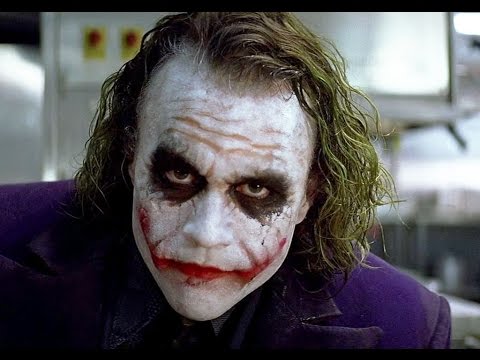
At just 28 years old, he was a supernova. A talent so raw, so incandescent, that he was on the verge of conquering the entire world. His performance as the Joker in the not-yet-released *The Dark Knight* was already the stuff of whispered legend. He was a new father, a celebrated artist at the absolute zenith of his powers.

And then, nothing.

The official story landed quickly. It was neat. Tidy. An accidental overdose, the medical examiner said. A tragic cocktail of prescription medications. A story of a tortured artist who simply went too far, exhausted from his craft, unable to sleep. The media ate it up. The public accepted it. The case was closed.

But what if the official story is just that… a story? A well-crafted narrative designed to cover up something far more sinister? What if Heath Ledger didn’t just die, but was silenced? What if his death wasn’t an accident, but an execution?

Because when you start pulling at the threads of that official narrative, the entire thing begins to unravel. And what you find underneath is a chilling world of secret societies, financial predators, and a conspiracy so vast it could only hide in one place.

Hollywood.

Enter the “Star Whackers”

Picture this. A frantic, respected actor, his face etched with fear, fleeing the country. He’s not running from the law. He’s running for his life. This isn’t a movie script. This was the reality for Randy Quaid.

Yes, *that* Randy Quaid. Cousin Eddie from the *Vacation* movies. A celebrated character actor with a Golden Globe and an Oscar nomination to his name. In 2010, he and his wife Evi fled to Canada, seeking asylum. Their reason was so bizarre, so outlandish, that most people dismissed it as a drug-fueled meltdown.

They claimed they were being hunted by a shadowy cabal they called the “Hollywood Star Whackers.”

In a handwritten note they showed to the press, they pleaded: “Yes we are requesting asylum from Hollywood ‘STAR WHACKERS.’”

Quaid claimed this sinister group was systematically murdering his friends and colleagues. Their motive? To seize control of their multimillion-dollar estates. He wasn’t just paranoid. He had a list.

And near the top of that list was Heath Ledger.

A Predator’s Playbook

According to Quaid, the Star Whackers’ method was a work of diabolical genius. They were not common thugs. They were business managers, lawyers, and financial advisors who would first indebt a celebrity, entangling their finances in a hopeless knot. Once the star was isolated and their fortune compromised, the group would arrange for their “accidental” death. A drug overdose. A strange suicide. A freak accident.

With the star gone, the cabal would cash in on life insurance policies and consolidate their control over the deceased’s lucrative image rights and legacy. It was the perfect crime, disguised as Hollywood tragedy.

Is it a madman’s rant? Maybe. But Quaid wasn’t the only one on that list. He also named David Carradine, the *Kill Bill* actor found dead in a Bangkok hotel room closet in 2009. The official cause was auto-erotic asphyxiation. Another convenient, embarrassing death that discourages too many questions. Chris Penn, dead at 40 from an enlarged heart and a mix of prescription drugs. Brittany Murphy, dead at 32 from pneumonia and anemia, with her husband dying from the exact same causes just five months later in the same house. The pattern of strange, premature deaths is there if you’re willing to look.

What if Randy Quaid wasn’t crazy? What if he was just the only one brave enough, or desperate enough, to say the quiet part out loud?

Deconstructing the “Accident”

Let’s go back to that SoHo apartment. The official report says Ledger died from “acute intoxication by the combined effects of oxycodone, hydrocodone, diazepam, temazepam, alprazolam, and doxylamine.”

It sounds simple. But think about it. That is a potent, complex, and very specific cocktail. The narrative sold to the public was that he was suffering from a respiratory illness and insomnia, and simply mixed the wrong pills in a state of exhaustion.

But does that really make sense? His family and closest friends were adamant. He was not a drug abuser. He was not suicidal. He was tired, yes. He was under pressure, of course. He was a perfectionist. But he was also a doting father who spoke to his family in Australia the night before he died, full of energy and plans for the future. He was excited to see them. He was excited about his daughter, Matilda.

This was not a man giving up. This was a man with everything to live for.

So where did the lethal combination of drugs come from? Toxicology reports confirmed that the individual levels of each drug were low. It was the *combination* that was deadly. A combination so precise, some experts have argued, it would be difficult to create by accident. It looks less like a groggy mistake and more like a carefully designed chemical weapon.

The official story requires you to believe that a man, in a single moment of carelessness, managed to accidentally assemble a poison that would perfectly mimic the profile of a tragic overdose. Is that tragedy? Or is that a setup?

The Joker Curse: A Perfect Smokescreen

Of course, there’s another story you know. The one the media *loved*. The story of the Joker.

It’s a seductive myth. The dedicated actor who went too deep. Who locked himself in a hotel room for a month to find the soul of a psychopath. He kept a disturbing diary, a collage of chaos filled with images of hyenas, clowns, and Alex DeLarge from *A Clockwork Orange*. The role consumed him, they said. The darkness of the Joker followed him home and never let go.

This narrative is cinematic. It’s romantic. It’s also, according to those who knew him best, complete nonsense.

His sister, Kate Ledger, has repeatedly and forcefully rejected this myth. “It was the absolute opposite,” she said. “He had an amazing sense of humor, and I guess only his family and friends knew that. But he was having fun. He wasn’t depressed about the Joker.”

He was an artist exploring a character, not a man being possessed by a demon. He was a professional doing his job, and by all accounts, doing it brilliantly and joyfully.

So why did the “Joker Curse” story stick? Because it was the perfect distraction. It provided a simple, self-contained explanation for his death that required no further investigation. It satisfied the public’s desire for a tragic Hollywood tale and, most importantly, it drew everyone’s attention away from more uncomfortable questions.

It was, perhaps, the greatest misdirection in modern celebrity history. While everyone was looking at the Joker diary, were they missing the real clues?

The Scientology Connection You’re Not Supposed to Know About

This is where the rabbit hole gets truly deep. In the murky background of Ledger’s final year, there’s another thread. A dangerous one. It involves Hollywood’s most powerful and controversial religion: Scientology.

The story, pieced together from hushed internet forums and insider whispers, goes like this: Heath Ledger was being heavily courted by the Church of Scientology. High-ranking celebrity members, including John Travolta, were allegedly tasked with bringing the rising star into the fold. Ledger, a fiercely independent and free-thinking spirit, wasn’t interested. He politely, but firmly, declined their advances.

That would be dangerous enough. But the theory goes further.

The Film That Never Was

It’s rumored that Ledger was preparing for a film that would have blown the lid off Scientology’s deepest secrets. Some say he had obtained a script based on the life of L. Ron Hubbard. Others claim he was fascinated by the story of a high-ranking member who managed to escape, and wanted to bring that story to the big screen.

The most explosive version of this rumor involves an audition tape. An incredible piece of footage that has never been seen. On this tape, Ledger allegedly performs a scene not just *about* a Scientologist, but as a searing parody of its most famous celebrity member: Tom Cruise. He was said to have perfectly mimicked Cruise’s intense, wide-eyed proselytizing style from his infamous leaked Scientology interview.

If such a tape existed, it would have been dynamite. It would have been a global laughingstock for the Church, and a profound humiliation for its most powerful ambassador.

The Church of Scientology has a long, documented history of aggressively silencing its critics through a policy known as “Fair Game.” This policy, penned by Hubbard himself, states that anyone deemed an enemy of the church can be “tricked, sued or lied to or destroyed.”

Was Heath Ledger declared an enemy? Was he a threat that needed to be neutralized? His death came just weeks before the anonymous “Project Chanology” protests against Scientology kicked off globally, a movement sparked by the leak of that very Tom Cruise video. The timing is, to say the least, unnerving.

Imagine the scenario: a beloved, globally famous actor is about to star in an exposé, potentially armed with a devastatingly effective piece of mockery. Could an organization with a history of “Fair Game” allow that to happen? Or would they arrange for a tragic “accident” to ensure the project—and the star—were buried forever?

A Grand Unified Conspiracy

Maybe you think these theories are mutually exclusive. The Star Whackers. The Joker’s Curse. The Scientology angle. But what if they’re not? What if they are all pieces of the same horrifying puzzle?

Let’s put it all together. What if the “Star Whackers” that Randy Quaid feared so much aren’t just one single group, but a network of powerful Hollywood insiders—managers, lawyers, and financiers—some of whom are also high-ranking, devout Scientologists?

It makes a terrifying kind of sense.

Here’s how it could have played out:
1. **The Threat:** Heath Ledger decides to move forward with his anti-Scientology film. He becomes a major ideological and public relations threat. He is declared a suppressive person—an enemy.
2. **The Cover:** The cabal uses his known exhaustion and insomnia from his intense work on *The Dark Knight* as the perfect cover story. They know the media will leap on the “Joker Curse” narrative, creating an instant smokescreen.
3. **The Mechanism:** A “fixer,” someone trusted, gains access to his apartment or his prescriptions. They don’t use a gun or a knife. They use a sophisticated, untraceable combination of legal drugs. A dose carefully calibrated to kill, but to look like a confused, accidental ingestion.
4. **The Aftermath:** Heath Ledger is found dead. The medical examiner rules it an accident. The “Joker Curse” becomes the official, romanticized media story. And anyone who dares to suggest otherwise, like Randy Quaid, is publicly discredited, smeared as insane, and driven into exile. The perfect crime.

It’s a chilling scenario. But in a town built on illusion, is it really that far-fetched?

The Questions That Won’t Go Away

More than a decade has passed. Heath Ledger’s legacy is cemented. His performance as the Joker earned him a posthumous Academy Award and a place in cinematic history. The world has moved on.

But the questions remain, echoing in the shadows.

Why did a healthy, happy, forward-looking man suddenly die from such a specific and lethal combination of pills? Why did a respected actor like Randy Quaid risk his entire career and reputation to scream about a conspiracy to murder Hollywood stars?

And why does the simplest explanation—that it was all a terrible accident—feel so hollow, so incomplete?

We may never know the full truth. The powers that be in Hollywood are experts at keeping secrets. But Heath Ledger was more than just an actor; he was a force of nature. A bright light extinguished far too soon. His death left a void that has never been filled. And in that void, the questions linger.

Was it a simple tragedy? Or was he a casualty in a secret war for the soul of Hollywood? The final cut on Heath Ledger’s story may have been released, but the director’s cut—the real story—is still out there, waiting to be told.

Originally posted 2015-07-24 17:27:36. Republished by Blog Post Promoter