
Home Weird World Strange Stories Strange Things That Happened on Friday the 13th

Strange Things That Happened on Friday the 13th

0
61

Friday the 13th: The Real, Terrifying History Behind the Unluckiest Day

You feel it, don’t you? A tiny, cold knot in the back of your mind when you glance at the calendar and see it. Friday. The 13th.

Most people laugh it off. A silly superstition. A relic from a less enlightened time. They’ll tell you it’s just another day. They’ll tell you you’re being irrational.

But are you?

Strange Things That Happened on Friday the 13th

What if that unease isn’t just a coincidence? What if it’s a deep, primal echo of a historical trauma so profound it has rippled through centuries? What if the fear is justified? Because when you peel back the layers of history, you find that this date isn’t just randomly unlucky. It’s cursed. It’s stained by betrayal, collapse, and cosmic oddities that defy simple explanation.

Forget what the debunkers say. We’re not talking about black cats or walking under ladders. We’re talking about a timeline of chaos, a pattern of disaster that always seems to find its focus on this one, dreaded day. Let’s pull the thread and see just how deep this rabbit hole goes.

The Ancient Roots of a Modern Fear

Why this number? Why this day? The dread didn’t just appear out of thin air. Its origins are woven into the very fabric of Western culture, hiding in our most sacred stories and ancient myths.

Think about it. Twelve is the number of order and completion. 12 months in a year. 12 signs of the zodiac. 12 gods of Olympus, 12 tribes of Israel, 12 apostles of Jesus. It’s a number that feels whole, stable, and divine. So what happens when you add one more?

Thirteen. The intruder. The breaker of perfection. The number that tips the scales into chaos.

In Norse mythology, the story is chillingly specific. A grand dinner party was held in Valhalla for twelve gods. It was a joyous occasion. Perfect. Until a thirteenth guest showed up uninvited. That guest was Loki, the god of mischief and evil. His arrival led directly to the death of Baldur, the most beloved of all the gods, and plunged the world into darkness and mourning. The first “unlucky thirteen” at a dinner table.

This theme echoes with even greater power in Christian tradition. At the Last Supper, there were thirteen people seated at the table—Jesus and his twelve apostles. The thirteenth guest to take his seat? Judas Iscariot, the betrayer who would sell Jesus out for 30 pieces of silver. The next day, a Friday, Jesus was crucified. The combination was seared into the cultural psyche: thirteen at a table, followed by betrayal and death on a Friday.

For centuries, these were just simmering anxieties. But it took one catastrophic, world-altering event to fuse them together and forge the legend we know today. An event of such epic treachery that its anniversary would be forever marked by blood and bad fortune.

The Templar Curse: The Betrayal That Ignited the Legend

Let’s travel back. The year is 1307. The Knights Templar are the most powerful organization in the world. They are more than just warrior monks. They are the world’s first multinational corporation. A banking empire. They hold the fortunes of kings and popes, command a massive army, and own vast swaths of land across Europe and the Middle East. They answer to no one but the Pope himself. They are untouchable.

Or so they thought.

King Philip IV of France was deeply, cripplingly in debt to the Templars. He was a ruthless and ambitious king who saw their power not as a holy shield for Christendom, but as a direct threat to his own authority. He couldn’t pay them back. So he devised a plan to erase them from existence.

Working in secret with a Pope he controlled, Philip laid a trap of monstrous proportions. Sealed orders were sent to his agents across the entire kingdom, to be opened at the exact same time on the exact same day.

That day was Friday, October 13th, 1307.

At dawn, the doors of every Templar preceptory in France were smashed in. Knights were dragged from their beds, bewildered and confused. Thousands were arrested in a single, brutal, coordinated strike. They were accused of heinous crimes—heresy, spitting on the cross, worshipping a demonic idol named Baphomet, and all manner of unspeakable acts. The charges were lies, a smear campaign designed to turn the public against them and justify the King’s greed.

What followed was years of horrific torture. Confessions were extracted through unimaginable pain. Men who had faced down armies in the Holy Land were broken on the rack. Hundreds died in dungeons or were burned at the stake. It was the complete and utter destruction of the most powerful order of the age.

The Grand Master, Jacques de Molay, was burned alive in Paris in 1314. As the flames licked at his body, legend says he issued a final, terrifying curse. He summoned both King Philip and Pope Clement to meet him before God’s judgment within the year. The curse worked. Pope Clement died just one month later. King Philip died in a hunting accident before the year was out.

That day—that Friday the 13th—wasn’t just unlucky. It was the day the world order was violently upended through greed and betrayal. It was an act of such profound evil that many believe it left a permanent stain on the calendar, a day when the veil between order and chaos is thin. The curse wasn’t just on a king and a pope. It was on the date itself.

A Cascade of Chaos: A Timeline of Unfortunate Fridays

Was the Templar takedown a one-off event? Or did it open a dark doorway? As you look through history, the pattern is hard to ignore. The date seems to attract disaster, from the fall of empires to strange, modern-day calamities.

The Aztec Empire Collapses

Friday, August 13th, 1521. For months, the magnificent city of Tenochtitlán—a marvel of engineering with floating gardens and towering pyramids, larger than any city in Europe—had been under siege. Conquistador Hernán Cortés and his allies had cut off all food and water. Disease and starvation ravaged the Aztec defenders. On this fateful Friday, the final assault came. The city fell. The last Aztec ruler, Cuauhtémoc, was captured. An entire civilization, a vibrant and complex world, was effectively extinguished, paving the way for the brutal colonial era. It all ended on Friday the 13th.

Hitler’s Bombs Find Buckingham Palace

Friday, September 13th, 1940. The Blitz was terrorizing London. Night after night, the Luftwaffe rained fire and death upon the city. But on this day, the war came directly to the heart of the British Empire. Five German bombs slammed into Buckingham Palace, destroying the Royal Chapel. King George VI and Queen Elizabeth were nearly killed. The attack was meant to shatter British morale, to prove that no one, not even the Royal Family, was safe. It was a direct, audacious strike against a symbol of defiance, and it happened on the unluckiest of days.

A Cold War Mystery in the Sky

Friday, June 13th, 1952. At the height of the Cold War, a Swedish military DC-3 aircraft, packed with surveillance equipment and carrying a crew of eight, vanished over the Baltic Sea. It was on a top-secret mission, spying on Soviet radar installations. It just… disappeared. Two days later, a Swedish Catalina rescue plane sent to search for the missing aircraft was attacked and shot down by a Soviet MiG-15 fighter jet. The Soviets denied everything for decades, claiming the Swedish planes had violated their airspace. It wasn’t until 2003, after the wreck of the original DC-3 was found, that the truth came out. A Russian general finally admitted that the Soviets had shot down the unarmed surveillance plane, too. A Cold War secret buried for 50 years, all stemming from a disappearance on Friday the 13th.

The Storm That Wiped Out a Million People

Friday, November 13th, 1970. This wasn’t just a storm; it was an apocalypse. The Bhola cyclone, one of the deadliest natural disasters in human history, made landfall in what is now Bangladesh. With winds topping 115 miles per hour, it drove a catastrophic storm surge across the low-lying Ganges Delta. Entire islands were submerged. Villages were wiped off the map. The initial death toll was estimated at 300,000, but the subsequent flooding, disease, and starvation pushed the final number of dead to as high as one million people. The scale of the horror is almost impossible to comprehend. And it struck with full force on a Friday the 13th.

The Digital Plague is Unleashed

Friday, January 13th, 1989. The personal computer was still a new and mysterious thing for most of the world. The idea of a “computer virus” was the stuff of science fiction. Until it wasn’t. The “Friday the 13th Virus” (also known as the Jerusalem virus) was one of the first to cause a global panic. It was designed to lie dormant in infected IBM computers, doing nothing until the calendar flipped to a Friday the 13th. On that day, it would activate, slowing machines to a crawl and, in some cases, deleting every single program file on the infected computer. In an age before backups were common, this was a digital death sentence. It created widespread anxiety and introduced the world to the terrifying concept of malicious code waiting for a specific, cursed day to strike.

Wall Street’s Mini-Crash

Friday, October 13th, 1989. The stock market is built on logic, but it runs on emotion. And on this day, the emotion was pure fear. The spectacular collapse of a massive buyout deal for UAL Corp, the parent company of United Airlines, sent a shockwave of panic through Wall Street. Traders, spooked by the news, began selling. And selling. And selling. The Dow Jones Industrial Average plunged 190 points, the second-largest drop in its history at the time. It became known as the “Friday the 13th mini-crash,” a stark reminder of how quickly confidence can evaporate and fortunes can be wiped out when bad news hits on a day everyone already fears.

The Cosmic Winks and Strange Synchronicities

Not every event is a world-ending catastrophe. Sometimes, the universe just seems to have a dark sense of humor on this day, leaving behind bizarre footnotes in the historical record.

  • Friday, Nov. 13, 1789: Founding Father Benjamin Franklin, in a letter, writes his most famous and enduring quote: “…in this world nothing is certain but death and taxes.” A rather grim observation for a grim day.
  • Friday, June 13, 1986: The world is introduced to a future pop culture phenomenon with the birth of twins Mary-Kate and Ashley Olsen.
  • Friday, Aug. 13, 1999: A day that would have been the 100th birthday of Alfred Hitchcock, the undisputed Master of Suspense. A fitting tribute from the cosmos.
  • Friday, March 13, 2009: The brand new “SAW – The Ride” at a British theme park, based on the popular horror movie franchise, breaks down on its opening day due to “teething problems,” trapping riders and causing a shutdown. You can’t make this stuff up.

The Curse in the Modern Age

The fear of this day, known as paraskevidekatriaphobia, isn’t just a quirky belief. It has real-world consequences. Studies have shown that millions of dollars in business are lost on this day because people avoid traveling, making big purchases, or closing deals. Hospitals have even reported fewer people scheduling appointments.

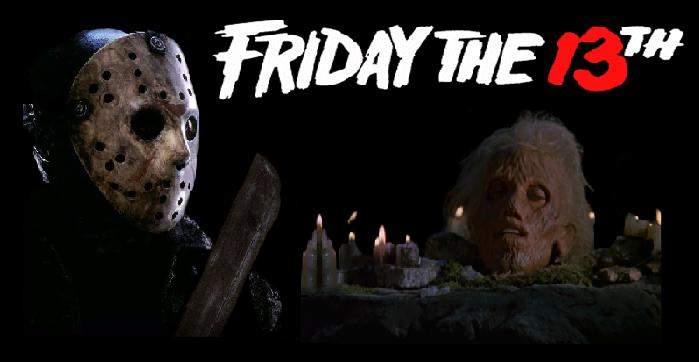
And then there’s Hollywood. In 1980, a low-budget slasher film named *Friday the 13th* was released. Its villain, the hockey-mask-wearing, machete-wielding Jason Voorhees, became a cultural icon. The film franchise didn’t invent the fear, but it absolutely cemented it in the modern mind. For generations now, the date is inextricably linked with that terrifying musical cue: *Ch-ch-ch… ah-ah-ah…*

So what are we to make of it all? Is it a collection of random, unconnected tragedies that our pattern-seeking brains have mistakenly linked together? A self-fulfilling prophecy where our own anxiety makes us more prone to accidents?

Or is it something more? Is it possible that the sheer weight of belief, a collective psychic energy focused on a single day for centuries, can actually influence events? Did the betrayal of the Templars leave a genuine scar on the timeline, a weak point where bad things are more likely to slip through?

Maybe it’s just a day on the calendar. But the evidence is unsettling. The patterns are strange. The history is dark. The next time you see it looming, perhaps a little extra caution isn’t so irrational after all. The next one is always just around the corner. Waiting.

Originally posted 2016-03-08 20:28:10. Republished by Blog Post Promoter