The Professor, The Prostitute, and The Missing Body: Cracking Open Boston’s Most Disturbing Cold Case
Some stories don’t just report the news. They poison the well. They twist a tragedy into a tawdry headline, leaving the truth to rot somewhere deep underground. This is one of those stories.
It starts with a respected professor from a prestigious university. A family man. A pillar of the community. It ends with a 21-year-old art student, a two-and-a-half-pound sledgehammer, and a body that vanished off the face of the earth. Gone. Forever.
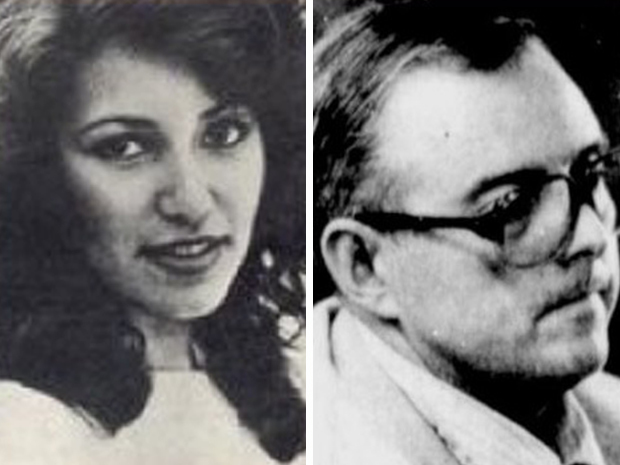
The official story is that of William Douglas and Robin Benedict. The press in 1983 called it the case of “the prostitute and the professor.” A simple, demeaning label for a story so tangled with obsession, deceit, and a calculated evil that it still chills the bone decades later. Douglas confessed. He served his time. But what if his confession was the single greatest lie in a life built on them? What really happened in that suburban home on March 5, 1983? And the most haunting question of all… where is Robin Benedict?
A Tale of Two Bostons: The Scholar and The Combat Zone
To understand the collision, you have to understand the two worlds, spinning on the same axis but existing in different universes. One was a world of ivy-covered walls and academic prestige. The other was a gritty landscape of neon sin and whispered transactions.
The Scholar: Who Was William Douglas?
On paper, Dr. William Douglas was the definition of success. At 41, he was a professor of cellular physiology at the esteemed Tufts University School of Medicine. He wasn’t just teaching; he was a researcher, a man of science, respected by his peers. He lived in the quiet, leafy suburb of Sharon, Massachusetts. A wife. Three children. His life was a carefully constructed fortress of normalcy and achievement.
But behind the placid exterior, something was cracking. Colleagues would later describe him as arrogant, a man who felt the rules didn’t quite apply to him. He was a man with an appetite, one that his comfortable suburban life apparently couldn’t satisfy. He was looking for something else. Something dangerous. He found it on a street corner in the darkest part of the city.
The Artist: Who Was Robin Benedict?
The newspapers did their best to erase the real Robin Benedict. They reduced her to a single, sordid word. A caricature. They were wrong.
Robin was 21 years old. She was a student of graphic design. An artist. Friends described her as bright, beautiful, and maybe a little lost, trying to find her way in a tough city. She worked as a prostitute in Boston’s infamous “Combat Zone,” but that was her job, not her identity. It was a means to an end, a part of a life she was trying to build, not the sum of it. She had dreams that had nothing to do with the grimy streets of downtown Boston. She was a daughter. A sister. A person. A fact that would become tragically inconvenient for her killer.
A Collision Course in the Combat Zone
In April 1982, these two worlds slammed into each other. Good Time Charlie’s on LaGrange Street. The heart of the Combat Zone. This wasn’t a place for quiet academic discourse. It was a district of peep shows, adult theaters, and street-level survival. A place where men like William Douglas could shed their respectable skins and pay for a fantasy.
He met Robin. And the obsession began. It wasn’t a one-time transaction. It was an immediate, all-consuming fixation. The respectable professor was hooked.
The Spiral: From Infatuation to Deadly Obsession
What followed wasn’t a relationship. It was a hostile takeover of a young woman’s life, funded by stolen money and fueled by a terrifying possessiveness.
Bleeding the University Dry
Douglas didn’t just pay Robin for her time. He tried to buy her life. By the summer of 1982, he was seeing her almost daily, paying a staggering $100 per hour for her companionship. Where did a professor get that kind of cash? He stole it.
He began systematically embezzling from Tufts University. Forgery. Phony invoices for lab equipment that never existed. He siphoned a fortune, more than $67,000. In today’s money, that’s well over $200,000. He wasn’t just breaking the law; he was torching his entire career, his reputation, his family’s security, all to feed this insatiable need to be with Robin. This wasn’t love. It was ownership.
The Stalker in the Shadows
When the money wasn’t enough to control her, he turned to something far more sinister. The obsession curdled into stalking. He wasn’t just her client; he was a shadow she couldn’t shake. He followed her. He harassed her.
In a move of stunning cruelty, he even went to the police in January 1983, telling them she had solicited him. It was a power play, a twisted attempt to punish her for having a life outside of him. His complaint got Robin fired from a legitimate job she held at a health spa. If he couldn’t have her, he would make sure no one else could. He was isolating her, cutting her off, making her more dependent on the very money he held over her head. The fortress of his life was crumbling, and he was determined to drag her down with him.
The Night She Vanished Forever
March 5, 1983. The day it all came to a head. The day Robin Benedict was erased.
The phone records tell a chilling story of desperation. Douglas called Robin’s apartment twelve times that day. He spoke to her four times. The conversations must have been frantic, demanding. He lured her to his home in Sharon, miles away from the city, miles away from anyone who could help her. She went. And she was never seen again.
Deep Dive: The Professor’s Version of the Truth
A year later, facing a mountain of circumstantial evidence, William Douglas confessed. But his confession wasn’t an act of remorse. It was a masterpiece of self-serving fiction, designed for one purpose: to save himself.
Here’s the story he sold the police:
He claimed Robin showed up at his house that night uninvited. He said she was the one who was aggressive. He alleged that *she* brought a 2.5-pound sledgehammer with her, intending to kill him if he didn’t give her $5,000. He painted a picture of a desperate, violent woman trying to extort him. In his telling, he was the victim. He said she tried to strike him, and in a life-or-death struggle, he managed to wrench the hammer away from her and hit her two or three times in the head. He killed her, he admitted, but only in self-defense.
Think about that. Just for a second. A 21-year-old graphic design student, confronting a 41-year-old man in his own home, decides her weapon of choice is a sledgehammer? The story is absurd on its face. It’s a narrative crafted to play on the public’s worst prejudices about sex workers. It was a lie designed to make the victim the villain.
The Unspoken Truth: A More Likely Scenario
The truth is likely far simpler and more brutal. He lured her to his home. The argument was almost certainly about his obsession and her desire to escape it. Maybe she was ending it. Maybe she was threatening to expose his embezzlement. He was losing control, and he snapped.
The sledgehammer? It was almost certainly his, a tool from his garage, a weapon of convenience in a moment of uncontrollable rage. There was no struggle for his life. There was only a vicious, one-sided attack on a young woman he could no longer possess. He didn’t just kill her. He bludgeoned her to death.
The Grisly Aftermath: A Calculated Cover-Up
What Douglas did next proves this was no crime of passion or self-defense. It was the cold, methodical work of a man determined to erase his crime completely.
He bundled up their blood-soaked clothes and dumped them in a trash barrel five miles from his house. He put Robin’s body in the trunk of her own car. He drove to a shopping mall in Providence, Rhode Island—an entirely different state—and callously threw her body into a commercial dumpster, as if she were a piece of trash. A final, horrific act of dehumanization.
Then, he drove her car all the way to New York City and abandoned it, a final red herring to throw investigators off the trail. This wasn’t panic. This was a plan. This was the work of a cold, calculating mind trying to commit the perfect murder.
The Investigation: A Bodyless Murder Case
The walls began to close in. A missing person report was filed. The bloody clothes were discovered. The trail of embezzled money from Tufts led directly to him. The police knew he was their man. But they had a huge problem.
They had no body.
A Killer’s Ultimate Leverage
In the American legal system, prosecuting a first-degree murder case without the victim’s body is one of the most difficult challenges imaginable. Without a body, a medical examiner cannot officially determine the cause of death. Was it one blow or ten? Was she strangled first? Was there evidence of a struggle? Without the body, the prosecution’s case is built on circumstantial evidence and a confession—a confession the killer gets to write.
William Douglas knew this. His lawyers certainly knew this. The missing body was his ace in the hole. It was his leverage to escape a life sentence. He held the one thing the Benedict family and the prosecutors wanted more than anything: the location of Robin’s remains. And he used it to bargain his way out of a murder charge.
He confessed, but only to manslaughter. He gave them the story he wanted them to have. In exchange for the lesser plea, the state wouldn’t have to risk a difficult murder trial they might lose. It was a deal with the devil, and Douglas held all the cards.
Trial by Media: The “Prostitute and the Professor”
The legal strategy was only half the battle. The other front was the court of public opinion, and it’s here that a second, more insidious crime was committed.
Crafting a Vicious Narrative
The media latched onto the case with a frenzy, and the “prostitute and the professor” narrative was born. It was a catchy, sensationalist headline that did exactly what the defense wanted. It created a false equivalence. It framed Douglas as a brilliant man who made a foolish mistake, a man brought low by a temptress from the Combat Zone. It painted Robin as the dangerous element, the corrupting force. Every article that used that label reinforced the lie that she was somehow responsible for her own murder.
Blaming the Victim as a Weapon
This case became a playbook for a strategy that we see used by powerful men even today. When you can’t deny the crime, you destroy the victim’s character. You can’t cross-examine a dead person. So you put their memory on trial. You dredge up every mistake, every poor choice, and use it to retroactively justify the violence committed against them. Douglas claimed she did cocaine. He claimed she was an extortionist. He claimed she was violent. Robin Benedict wasn’t there to defend herself. She was a silent ghost, forced to listen as her killer rewrote her life story to save his own skin.
Modern Echoes: What the Internet Says Today
Decades later, the case still echoes in online forums and true crime communities. Internet sleuths re-examine the sparse evidence. Some theories question the official timeline, wondering if Douglas had help disposing of the body. Could his wife have known more than she let on? Others focus on the location of Robin’s body, creating maps of landfills in the Providence area from 1983, a desperate digital search for a grave that was never marked. The consensus online is clear: Douglas’s story is a fabrication, and the justice system failed Robin Benedict completely.
The Lingering Questions That Haunt Us
William Douglas was sentenced to 18 to 20 years for manslaughter. He was considered a model prisoner and was released after serving only nine. He walked free. Robin Benedict remains missing.
The case leaves behind a void of unanswered questions.
What really happened with that sledgehammer? The official story is a lie. The truth of its origin and how it was used died with Robin that night, but every shred of logic points to it being the weapon of a domestic killer, not an extortionist.
Where is Robin Benedict? This is the most painful question. Did Douglas tell the truth about the dumpster in Providence? If so, her remains are likely buried under a mountain of garbage in a Rhode Island landfill, lost forever. But what if that was a lie, too? Another misdirection? Her family searched for years, enduring an agony that no family should ever have to face: the agony of not knowing. The agony of having no place to lay a flower, no place to say goodbye.
And finally, was justice served? A brilliant professor destroyed a young woman’s life in a fit of rage and obsession. He stole a fortune. He lied to the police. He desecrated a body. And for all of it, he spent less than a decade in prison. He got to rebuild his life. Robin’s was over at 21.
This was never a story about “the prostitute and the professor.” It was the story of a predator and his victim. A story of a talented young woman whose future was stolen and whose memory was tarnished by the man who killed her. He may have hidden her body, but we must refuse to let him hide the truth.