The Ghost City Frozen in Time: Behind the Barbed Wire of Varosha
Picture it. The sun beats down on a golden beach. Luxury hotels, monuments to a bygone era of glamour, stand silent against a brilliant blue sky. But there are no laughing tourists. No splashing in the surf. No clinking cocktail glasses.
There is only silence.
A silence so profound, so heavy, it feels like a physical weight. This is Varosha, the forbidden quarter of Famagusta, Cyprus. A place where time didn’t just stop—it was murdered in its sleep one summer afternoon in 1974, and the body was left exactly where it fell.
Once, this was the playground of the planet’s elite. The French Riviera of the Middle East. Now? It’s the world’s most famous ghost town, a sprawling, sun-baked mausoleum sealed behind miles of barbed wire and armed guards. What happened here? And more importantly, what secrets are still rotting away inside this forbidden zone?
Before the Fall: A Paradise Soaked in Sunshine and Celebrity
It’s hard to even imagine it now, looking at the decaying skeletons of once-proud buildings. But before 1974, Varosha wasn’t just a tourist destination. It was *the* destination.
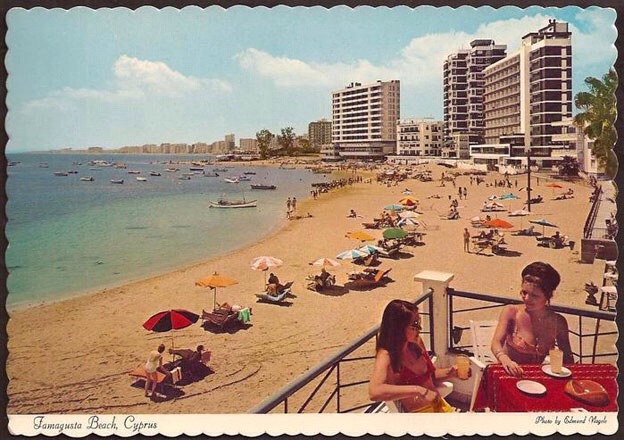
This wasn’t some sleepy fishing village. This was a booming, futuristic metropolis of leisure. High-rise hotels pierced the skyline, each one more luxurious than the last. The streets, like JFK Avenue, hummed with the sound of expensive sports cars and the chatter of beautiful people from every corner of the globe. The beaches were considered among the best on Earth—a perfect stretch of white sand meeting the impossibly clear waters of the Mediterranean.

And the stars came. Oh, did they come.
This was where the jet set landed. Think of a Hollywood icon from the 60s or 70s, and they probably walked these streets. Richard Burton and Elizabeth Taylor were regulars. The Argo Hotel was rumored to be Liz’s personal favorite escape, a place to hide from the prying eyes of the world. Brigitte Bardot, the French bombshell, graced its beaches. Raquel Welch filmed scenes for one of her movies on this very sand. It was a place where sun-drenched days bled into neon-soaked nights, where the clinking of champagne flutes and the whisper of casino chips provided the soundtrack to a Mediterranean dream that seemed, for a glorious moment, as if it would never end.
Deep Dive: The Engine of a Dream
Varosha’s rise wasn’t an accident. It was a perfect storm of investment, location, and ambition. Greek-Cypriot entrepreneurs, sensing the world’s growing appetite for luxury travel, poured fortunes into building this coastal paradise. They constructed state-of-the-art hotels, a library, theaters, and apartment blocks that offered breathtaking sea views. It was a symbol of Cypriot success, a beacon of prosperity that attracted not just tourists, but also some of the island’s most brilliant and creative minds.
For the 39,000 people who called it home, it was more than just a resort. It was a community. It was home. A place of opportunity and endless summer.
They had no idea it was all about to be stolen from them.
The Day the Music Died: Invasion and Exodus
Paradise has a dark side. Underneath the glamour, Cyprus was an island divided. Tensions between the Greek-Cypriot majority and the Turkish-Cypriot minority had simmered for years, sometimes boiling over into violence. The political situation was a powder keg.
And on July 20, 1974, someone lit the fuse.
Following a coup d’état in Cyprus, orchestrated by the military junta ruling Greece at the time, Turkey launched a full-scale invasion of the island, citing the need to protect the Turkish-Cypriot population. They called it “Operation Attila.” For the people of Varosha, it was the beginning of the end.
The first wave of the invasion seized territory to the north. A tense ceasefire followed. But it wouldn’t hold. On August 14th, the second wave began. Turkish tanks rolled across the plains towards Famagusta. The sound of fighter jets ripped through the summer air. Bombs fell.
Panic set in. They ran.
The entire population of Varosha, almost exclusively Greek-Cypriots, fled for their lives. They left with only the clothes on their backs. They grabbed their children, their car keys, and they drove south, away from the advancing army. They believed they would be back. In a few days, maybe a week, once the fighting stopped and the politicians sorted things out. International pressure would surely force a withdrawal.
They were wrong.
They left dinners cooking on stoves. They left family photographs on the mantelpiece. They left laundry hanging on the line. In a car dealership, brand new 1974 models sat gleaming on the showroom floor, waiting for owners who would never arrive. In the boutiques, mannequins were dressed in the latest fashions, frozen in chic poses for an audience that had vanished into thin air.

They locked their doors, expecting to unlock them the following week. Those doors have remained locked for nearly 50 years.
The Forbidden Zone: A Concrete Tomb by the Sea
What happened next is the core of the mystery. The Turkish military didn’t just occupy Varosha. They did something far stranger.
They sealed it off.
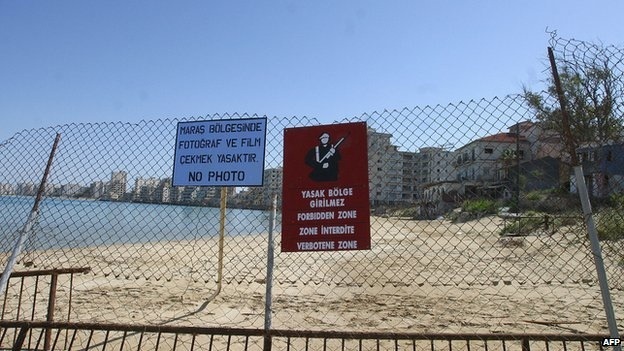
They erected a massive fence, topped with barbed wire, encircling the entire district. They posted armed guards with orders to shoot on sight. Varosha became a ghost town not by accident, but by design. It was turned into a political bargaining chip, a pawn in the frozen conflict of the divided island. A brutal, tangible symbol of the stalemate.
In 1984, the United Nations Security Council passed Resolution 550. It stated in no uncertain terms that any attempts to resettle any part of Varosha by people other than its original inhabitants is “inadmissible.” It called for the area to be transferred to the administration of the United Nations. But nothing happened. The fence remained. The guards remained. The silence remained.

Signs were posted along the barrier, stark warnings in multiple languages. “PHOTOS AND MOVIES ARE FORBIDDEN.” Trespassers risk death. For decades, the only human beings to legally walk its streets have been Turkish military personnel and the occasional UN official. From the outside, former residents and curious tourists could only peer through the wire at their decaying homes and hotels, a modern-day Pompeii preserved not by volcanic ash, but by political venom. They would come to the fence on anniversaries, pinning letters and flowers to the wire—messages to a home they could see, but never touch.
Whispers from a Dead City: What Lies Within?
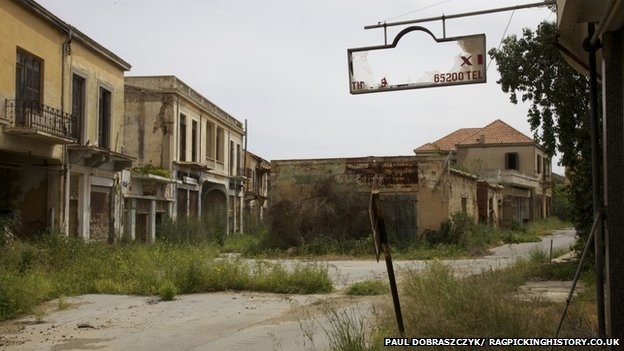
Despite the danger, a few have ventured inside. Journalists, urban explorers, and soldiers have brought back chilling stories and haunting images. These accounts paint a picture of a world utterly frozen in time, a place where nature is the only thing that has moved forward.
- The 1974 Car Dealership: It’s one of the most famous legends of Varosha. A showroom filled with classic cars from 1974, now caked in half a century of dust, their tires long since rotted away. Relics of an age of oil and steel, waiting for a test drive that will never come.
- The Fashion Boutiques: Imagine walking past a shop window and seeing mannequins styled in bell-bottoms and wide-collared shirts. Fashions that were the height of cool in 1974 now look like ghostly costumes from another dimension.
- The Homes Left Behind: This is the most personal, most heartbreaking part. Explorers report seeing homes with tables still set for a meal. Pots and pans still on the stove. Children’s toys scattered on the floor of a nursery. It’s a city of a million interrupted moments.
- Nature’s Revenge: Without humans, the wild has returned with a vengeance. Massive sand dunes have swallowed the ground floors of seafront hotels. Ancient bougainvillea vines have crushed balconies and burst through windows, cascading down the sides of buildings in a riot of color. Trees grow through the floors of living rooms. And on the deserted beaches, critically endangered sea turtles have found a perfect, undisturbed sanctuary to lay their eggs. An accidental paradise born from a human tragedy.
The Plot Twists: Conspiracy and a Controversial Reawakening
For decades, Varosha was a constant. A scar. But recently, the story took a shocking turn.
In October 2020, Turkish and Turkish-Cypriot authorities did the unthinkable. They cut a hole in the fence. They opened up a small section of the beachfront to the public for the first time in 46 years. Since then, they have opened more streets, allowing tourists to rent bicycles and ride past the decaying buildings, treating the immense tragedy as a kind of macabre theme park.
This move was met with international condemnation. It flies in the face of UN resolutions. For the original residents, it was another stab in the heart. Their homes, which they had dreamed of returning to, were now being repurposed as a tourist attraction by the very powers that forced them out. They can look, but they still can’t go home.
This has fueled a new wave of internet theories and speculation. What is the endgame here?
- The Great Land Grab? Is this a slow, deliberate attempt to absorb Varosha completely, defying the UN and making its return to the original owners impossible? By creating “facts on the ground,” are they trying to ensure the division of Cyprus is permanent?
- A Hidden Treasure? Some theorists wonder if the decades of absolute lockdown were about more than just politics. Were they searching for something? Rumors have always swirled about bank vaults and safe deposit boxes in the abandoned city, filled with the fortunes of the wealthy who once vacationed there. Could there be a treasure hunt going on behind the scenes?
- Geopolitical Chess? Others see this as a power play by Turkey on the world stage, using the heartbreaking symbol of Varosha to assert its influence in the Eastern Mediterranean, a region rich with newly discovered natural gas reserves.
A Scar on the Sand
Today, Varosha is a paradox. It is both a tomb and a tourist attraction. A time capsule and a political weapon. A place of profound sadness and bizarre beauty. The story is not over. The fate of this ghost city hangs in the balance, caught between the dreams of those who were exiled and the ambitions of those who hold the keys.
It stands as a silent, crumbling monument to a conflict that has never truly ended. A physical manifestation of loss, of memory, of lives stolen in the blink of an eye. As you look at the photos of its empty streets and hollowed-out hotels, one question hangs in the air, as heavy and oppressive as the silent summer heat.
Will the ghosts of Varosha ever be laid to rest? Or is this paradise, lost so long ago, gone for good?
Originally posted 2014-01-14 23:17:09. Republished by Blog Post Promoter
![20140115-001353[1]](https://coolinterestingnews.com/wp-content/uploads/2014/01/20140115-0013531.webp)