Home Weird World Strange Places The urban transport graveyard in Moscow

The urban transport graveyard in Moscow

0
58

The Moscow Ghost Fleet: A Soviet Graveyard Hiding a Dark Secret?

There are places in this world that have slipped through the cracks of history. Forgotten zones. Silent monuments to a time that was, fenced off and left to the mercy of the elements. Most people drive by them every day, their eyes glazing over, never once questioning what secrets lie just beyond the rusting chain-link.

But we do. We question everything.

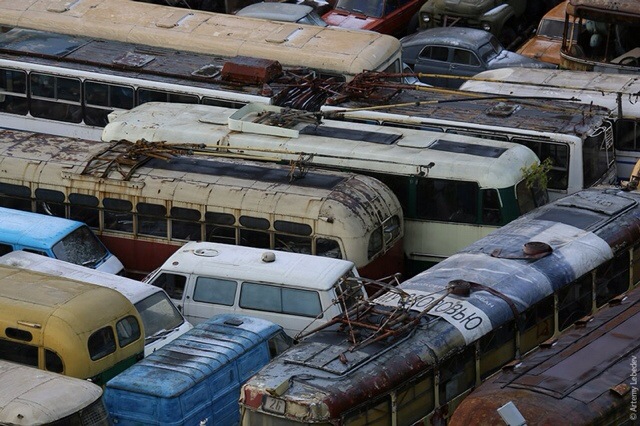
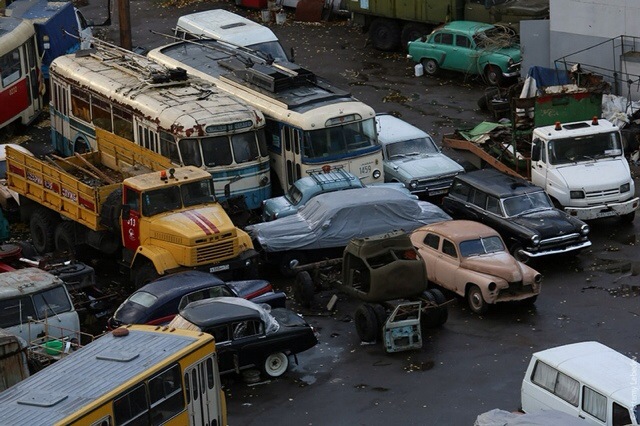
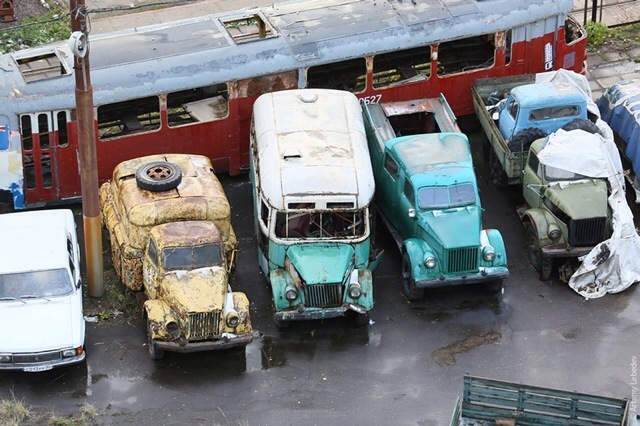
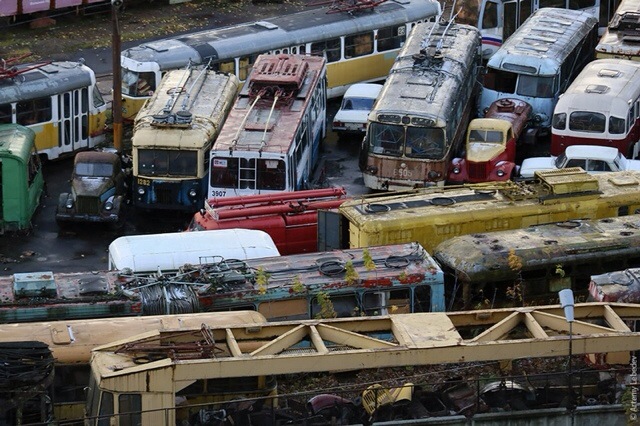
Behind an unassuming fence at an old tram repair plant in Moscow, a ghost fleet lies sleeping. An entire city of steel, frozen in time. This isn’t just a few old vehicles. It’s a mechanical army, surrendered to rust and ruin. A fleet of buses, trams, and cars, all written off and abandoned. Waiting.

But waiting for what?

20140310-010619.webp

The official story is simple. Boring. They say it’s just industrial decay. The inevitable result of the Soviet Union’s collapse, a lack of funding, and miles of bureaucratic red tape. They tell us these machines were simply too old, too expensive to scrap, and not special enough to preserve in a museum. So they were parked, locked away, and forgotten.

A neat and tidy explanation. Too neat.

When you see the sheer scale of this boneyard, the official story starts to feel thin. It frays at the edges. Because this wasn’t a slow, haphazard process. It looks like a sudden stop. A mass evacuation. It looks like someone, or something, hit the emergency brake on an entire city’s worth of transport and walked away. Forever.

So, what really happened here? What is this place?

Deep Dive: The Ghosts in the Machine

To understand the strangeness of this graveyard, you have to understand what these vehicles represented. In the Soviet Union, public transport wasn’t a convenience; it was a lifeline. It was the circulatory system of the collective state. Trams, with their clanging bells and electric veins, were the heart of urban life. Buses, sturdy and relentless, were the arteries, pushing workers from their monolithic apartment blocks to the factories that fueled a superpower.

These weren’t just machines. They were characters in the daily drama of millions of lives. They carried first loves and last goodbyes. They heard whispered secrets and revolutionary ideas. Each seat held a thousand stories. Every scratch on the paint was a memory. To see them like this, herded together and left to rot, feels less like neglect and more like a deliberate act of erasure. A desecration.

The models themselves tell a story. You can spot the iconic rounded shapes of the LiAZ-677, the “Cattle Wagon,” so nicknamed for its often-cramped conditions. You can see the angular bodies of Ikarus buses, a Hungarian import that became a symbol of late-Soviet era travel. And the trams… the classic Tatra T3s, workhorses of the Eastern Bloc, their once-friendly faces now grimacing with broken windows and peeling paint.

Theory #1: The Politburo’s Phantom Project

What if this wasn’t a junkyard at all? What if it was a staging ground?

One of the more persistent underground theories whispered on old Russian internet forums is that this depot was connected to a secret, last-ditch Cold War project. The plan was simple, and terrifying. In the event of a full-scale nuclear exchange, this fleet wasn’t meant for ordinary citizens. It was a dedicated evacuation network for essential high-ranking party members, KGB operatives, and key scientists.

Think about it. Why so many vehicles in one place? They weren’t just being stored; they were being held in reserve. Perhaps they were retrofitted with special equipment. Lead-lined floors. Advanced communication systems stripped out long ago. Air filtration units to protect against fallout. The project was top-secret, known only as “Metropoliten-2’s extension” or something equally vague. When the USSR collapsed, the project was instantly de-funded. The special equipment was removed by men in unmarked uniforms overnight, and the vehicles were left behind—a silent, embarrassing reminder of how close the world came to the brink.

Too big to move, too sensitive to simply scrap. The easiest solution? Lock the gates and let nature do the dirty work. Let the rust bury the secrets.

20140310-010734.webp

Theory #2: The Zone of Contamination

Another, darker theory suggests that the problem isn’t the vehicles themselves, but the ground they sit on. Or something that happened *to* them.

Was there an “event” at this depot? A chemical spill that was never reported? A radiological incident from a secret cargo one of these vehicles was transporting? Consider the possibility that this entire fleet is contaminated. Unsafe. The decay we see isn’t just time; it’s a warning.

Urban explorers who have allegedly slipped through the fences have told stories of strange feelings, of metallic tastes in the air, of Geiger counters clicking erratically in certain areas. Of course, these are just unverified rumors. But they paint a chilling picture. The authorities couldn’t exactly announce a toxic disaster in the middle of Moscow. Instead, they did what they always do. They built a fence. They posted guards. And they waited for the problem to literally dissolve.

In this scenario, the vehicles are prisoners. They are silent witnesses to an industrial catastrophe that has been scrubbed from the official record. They aren’t being ignored; they are being quarantined.

A Forensic Look: What the Photos Really Show Us

Let’s stop speculating for a moment and look at the evidence. The images themselves are clues, artifacts from a lost world. They are more than just sad pictures of decay; they are a crime scene.

The Army of Buses

Look at that first image again. Rows and rows of buses, packed in tight. This isn’t orderly parking. It’s a traffic jam at the end of the world. They are different models from different eras, all crammed together. Why? It suggests a rapid collection. They weren’t retired one by one over years; they were rounded up. Gathered. Why the urgency?

20140310-010749.webp

The uniformity of the decay is also suspicious. They all seem to be in a similar state of ruin, as if they were all “killed” at the same time. The rust bleeds down their sides in the same patterns. The tires are all equally flat and rotted. It’s an unnatural uniformity.

Echoes in the Empty Cabins

The interior shots are perhaps the most haunting. A driver’s cabin, stripped bare. Wires hang like severed veins. The gauges are gone. Was it just looters? Or was sensitive equipment methodically removed before the gates were locked for the last time?

20140310-010742.webp

You can almost hear the ghosts. The chatter of passengers, the rumble of the engine, the hiss of the pneumatic doors. Who was the last person to sit in that seat? Where were they going? Did they have any idea they were taking the final journey? The silence in these photos isn’t empty. It’s heavy. It’s loud.

The Silent Scream of the Trams

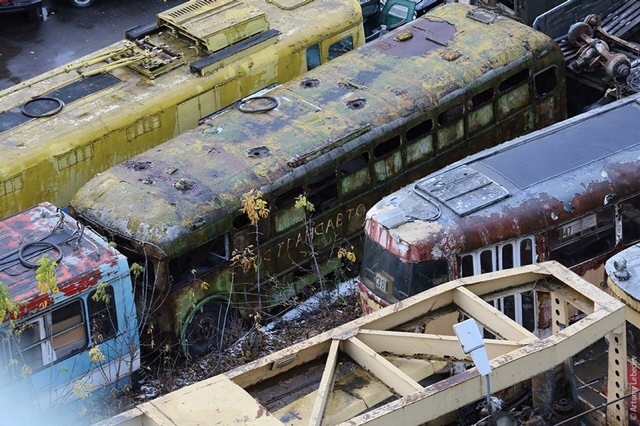
The trams feel different. They seem more tragic. Unlike the buses, which look like beasts of burden put out to pasture, the trams have faces. Their large front windows are like eyes, now smashed and vacant. They stare out, waiting for a spark of electricity that will never come.

20140310-010756.webp

Their bodies are covered in graffiti, a newer layer of history painted over the old. These are the messages of the explorers, the trespassers, the only people who have visited this place in decades. They are trying to leave their mark on the mystery, to say “I was here. I saw this.” It’s a modern attempt to speak to the past, but the ghosts don’t answer.

The Digital Ghosts: Modern Sleuths Hunt for Answers

When these photos first surfaced and began to spread across the internet, they ignited a firestorm of curiosity. Digital detectives on platforms like Reddit and Telegram channels began a hunt. Using satellite imagery and old city maps, they tried to geolocate the exact spot. For a while, it was believed to be part of the Apakov Tram Depot, but others disputed this, pointing to inconsistencies in the surrounding buildings.

The location remains a point of contention. Is it possible the site has already been cleared? Wiped clean from the map as if it never existed? Some users claim to have found more recent satellite photos showing the lot is now empty, the ghost fleet having vanished as mysteriously as it appeared.

Did they finally scrap them? Or were they moved to an even more remote, more secret location? The digital trail goes cold, leading only to more questions. The disappearance of the graveyard is almost more mysterious than its existence. It’s a cover-up of a cover-up.

Are They Still There? The Enduring Mystery

So what is the truth? Is this a simple, sad story of urban decay and forgotten history? A place where beautiful machines that should be in a museum were left to die by apathetic officials?

Or is it something more?

Is it the silent remnant of a desperate Cold War plan? A quarantined zone hiding a toxic secret? The evidence is ambiguous. The witnesses are silent. The machines themselves are the only ones who know for sure, and their iron lips are sealed with rust.

Perhaps the real answer doesn’t matter. What matters is that places like this exist. They are glitches in our modern, sanitized world. They are reminders that not every story has been told, not every secret has been uncovered. They force us to look past the mundane and ask: what else is hiding in plain sight?

The next time you pass a fenced-off industrial lot, with weeds growing high and buildings looking empty, don’t just look away. Look closer. Listen. You might just hear the whispers of a ghost fleet, waiting for its final dispatch.

Originally posted 2014-03-10 00:08:32. Republished by Blog Post Promoter