The Billion-Light-Year Whisper: Decoding the Universe’s Most Baffling Signal
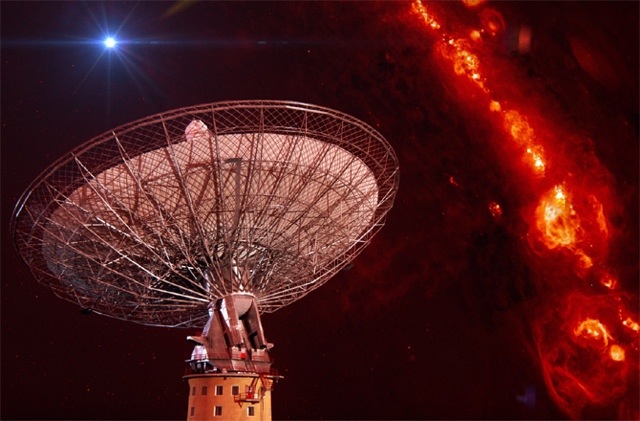
Imagine a flash. A cosmic scream from the abyss. So powerful it outshines entire galaxies, yet so brief it’s gone in less time than it takes you to blink. A phantom signal, traveling for billions of years across the expanding void, finally striking a radio telescope dish in the Australian outback like a phantom raindrop in a hurricane.
Then, silence.
This isn’t science fiction. This is the very real, very unsettling mystery of the Fast Radio Burst, or FRB. And it’s a mystery that began by complete accident, with a signal that astronomers initially tried to wish away.
A Ghost in the Machine: The Anomaly That Rewrote the Rules
Back in 2007, a graduate student named David Narkevic was digging through old, forgotten data from the Parkes radio telescope in New South Wales, Australia. He wasn’t looking for alien transmissions. He wasn’t hunting for cosmic enigmas. His team was on a celestial fishing expedition, sifting through the endless static of space for the familiar, rhythmic pulses of neutron stars.
But they found something else. Something impossible.
A single, stupendously bright burst of radio waves, recorded years earlier in 2001. It lasted for just five milliseconds. It was so strange, so out of place, that the immediate assumption was… equipment failure. A glitch. A stray signal from a microwave oven in the observatory’s kitchen. (Seriously, they actually had to rule that out later with a different set of signals called “perytons.”)
But this one was different. It had a calling card. A strange signature that hinted at an incredible journey.

The Tell-Tale Smear
Think of it like this: when a burst of light travels through space, it isn’t empty. It passes through thin clouds of plasma and interstellar dust. As it does, the different frequencies, or “colors,” of the radio light get slowed down by slightly different amounts. The lower frequencies arrive a fraction of a second later than the higher frequencies. This creates a “smear” in the signal, a cosmic delay that scientists can measure.
Why does this matter? Because the bigger the smear, the farther the signal has traveled.
And the smear on this 2001 signal—dubbed the “Lorimer Burst”—was enormous. Off the charts. It wasn’t a signal from our solar system. It wasn’t from some star in the Milky Way. The math was chilling. This phantom flash had traveled from outside our galaxy, across millions, perhaps *billions*, of light-years of intergalactic space. The idea was so radical, so unbelievable, that for years the Lorimer Burst was treated like an embarrassing secret. A weird data point nobody could explain, and many refused to believe.
Was it just a one-off cosmic fluke?
They Kept Coming: A Trickle Becomes a Flood
For years, the silence continued. The Lorimer Burst remained a lone ghost in the machine. But then, a new survey at the same Parkes telescope hit pay dirt. In 2013, a team led by Dan Thornton found four more. Four new bursts, all with the same impossible characteristics.
They came from different points in the sky. They were all one-time events. And they were all monstrously powerful.
Let’s talk about power for a second. It’s a number so big it almost loses meaning. In just a few milliseconds, a single one of these bursts releases as much energy as our sun pours out in 300,000 years. Three hundred. Thousand. Years. All compressed into an instantaneous flash.
As astronomer Dan Thornton put it, the energy has spread out so much over its billion-light-year journey that by the time it reaches us, the massive Parkes dish would have to collect the signal for a *million years* just to capture the equivalent energy of a single flying mosquito.
This was no longer a fluke. This was a phenomenon. The universe was shouting at us, and we had no idea what it was saying or who—or what—was doing the shouting.
Cosmic Cataclysms or Something Else? The Official Story
With the reality of FRBs established, the race was on to explain them. The scientific community, always looking for a natural explanation, put forward a list of the most violent, exotic, and destructive events the universe has to offer. These are the “official” suspects.
The Magnetar Mayhem Theory
Imagine a dead star. The collapsed core of a giant that went supernova. Now imagine that stellar corpse spinning hundreds of times a second and possessing a magnetic field a quadrillion times stronger than Earth’s. A field so powerful it could rip the iron from your blood from a thousand miles away. That’s a magnetar.
These are cosmic monsters. Their magnetic fields are so twisted and stressed that they occasionally snap, triggering “starquakes” on their surface. The theory goes that one of these colossal magnetic explosions could launch a beam of radio waves so powerful it could be seen across galaxies. It’s currently the leading contender, the safest bet on the table.
Colliding Dead Stars
What’s more violent than one dead star? Two of them smashing together. The merger of two neutron stars, or a neutron star and a black hole, is one of the most energetic events in the cosmos, second only to the Big Bang itself. Such a collision would undoubtedly throw off a final, brilliant scream of energy across the electromagnetic spectrum. This fits perfectly with the one-and-done nature of most FRBs. After all, you can’t blow something up twice.
Or can you?
The Bombshell: A Signal That Blinked Back
For years, every FRB detected was a one-time event. They flashed once, from a random direction, and were never heard from again. This supported the cataclysm theories. A star explodes, two black holes merge, and that’s the end of the story. Case closed.
Then came FRB 121102.
First detected in 2012 by the Arecibo Observatory, it seemed like just another burst. But then it happened again. From the exact same spot in the sky. And again. And again. It was a repeater.
This discovery sent a shockwave through the astronomical community. It was a complete game-changer. You cannot have a repeating signal from a one-time explosion. Whatever was creating FRB 121102 was still there, operating, and capable of generating these god-like bursts of energy over and over again.
Suddenly, the neat and tidy explanations went out the window. The search for the source became an obsession. Using a network of telescopes, astronomers were able to pinpoint the signal’s origin with incredible precision. It wasn’t just in a distant galaxy; they found the exact host: a tiny, barely-there dwarf galaxy over 3 billion light-years from Earth.
The mystery had just gotten a thousand times deeper. And a thousand times stranger. A stable, repeating source of unimaginable energy? The door had just been flung wide open for more… creative explanations.
Whispers from the Void: The “Alien” Hypothesis
Once you have a repeating signal from a fixed point in space, you have to start asking uncomfortable questions. Is it possible that this isn’t natural at all? Is it artificial? Is it… technology?
This is where we leave the beaten path of mainstream science and venture into the electrifying world of “what if.”
H3: The Galactic Lighthouse
What if these aren’t messages? What if they are beacons? An advanced civilization, millions of years ahead of us, might have mastered interstellar, or even intergalactic, travel. To navigate the terrifying emptiness between galaxies, they could have constructed a series of enormously powerful “lighthouses,” pulsing out navigational fixes. We’re not the intended recipients; we’re just a primitive world living near the flight path, occasionally getting swept by the beam.
H3: Powering a Starship?
Top minds, like Harvard’s Avi Loeb, have seriously proposed that FRBs could be evidence of advanced alien technology. One compelling idea is that they are beams used for propulsion. Imagine a civilization building a massive “light sail” the size of a planet. To push that craft across the void, they would need to blast it with a focused beam of energy of unimaginable power. Could FRBs be the “leakage” from these massive energy beams as they power starships across the cosmos?
H3: A Dying Civilization’s Power Grid
Let’s consider a darker possibility. What if the repeating signal isn’t a sign of a thriving civilization, but a failing one? Perhaps we are witnessing the catastrophic breakdown of a planetary-scale, or even solar-system-scale, power grid. The repeating, sometimes sputtering bursts could be the final, uncontrolled death throes of a technology so advanced we can’t even comprehend it.
It’s a chilling thought. Are we listening to a distress call? A warning? Or simply the echoes of a long-dead empire’s final moments, their last gasp of energy just now reaching our shores?
The FRB Gold Rush: A New Eye on the Sky
The discovery of the repeater turned the FRB field from a niche curiosity into a full-blown gold rush. The problem was, traditional radio telescopes could only look at a tiny patch of sky at a time. It was like trying to find a photographer’s flash at a rock concert by looking through a drinking straw.
Enter CHIME. The Canadian Hydrogen Intensity Mapping Experiment. It’s not a traditional dish. It looks like a series of massive metal half-pipes in the British Columbia wilderness. But its genius is its field of view. CHIME sees a huge swath of the sky all at once, every single day. It is a purpose-built FRB-hunting machine.
And it has changed everything. Since it went online, CHIME has detected *thousands* of FRBs. They are not a rare phenomenon. The universe is literally humming with them. There’s at least one going off somewhere in the sky every single second of every day.
Even more bizarrely, CHIME has found more repeaters. And some of them have a pattern. A rhythm. One source, FRB 180916, doesn’t just repeat—it repeats on a strict 16.35-day cycle. For four days, it’s active, sending out bursts. Then, for the next 12 days, it’s completely silent. Then the cycle begins again. Like clockwork.
A natural phenomenon with a precise, repeating cycle? It’s not impossible. The orbit of a star or another object could trigger the bursts periodically. But it also feels… engineered. Calculated. The kind of structured pattern that intelligence creates.
The Signal Fades, But the Mystery Deepens
So where does that leave us? We’ve gone from a single, unbelievable blip in archived data to a daily cosmic puzzle. We know FRBs are real. We know they come from galaxies billions of light-years away. We know some of them repeat, some even on a schedule. The leading “safe” explanation is that they are fired off by magnetars, the angriest stellar corpses in the universe.
But the doubt lingers.
The sheer energy involved still boggles the mind. The periodic nature of some repeaters feels too deliberate, too clean. We are still a species staring at a footprint on a beach, with no idea what kind of creature made it. Was it a natural wave, or something walking on two legs?
Every new discovery seems to only deepen the questions. Every answer gives birth to a dozen more. We are eavesdropping on a conversation that started before our planet even had life. The universe is screaming at us in a language of pure energy, a language we do not understand. The only question is: what is it trying to say?