Something is Hunting in the Mist
Imagine standing alone on the moors. It’s quiet. Dead quiet. The kind of silence that presses against your ears. The fog rolls in, thick and gray, swallowing the world around you until you can barely see your own boots. You think you’re alone. You hope you’re alone.
Then, you hear it. A twig snaps. A low, guttural growl vibrates in your chest. It’s not a sheep. It’s not a dog. It’s something else entirely.
Welcome to Bodmin Moor. This isn’t just a scenic spot in Cornwall, England. It is ground zero for one of the most terrifying and persistent mysteries in modern history. They call it the Beast of Bodmin. And for decades, it has been terrorizing farmers, baffling police, and stalking the nightmares of locals.
We aren’t talking about a folklore legend from the Middle Ages. We aren’t talking about ghosts. We are talking about flesh and blood. Muscle and claw. A predator that by all accounts should not exist on British soil, yet thousands of people swear they have seen it with their own eyes.
The Monster in the Backyard
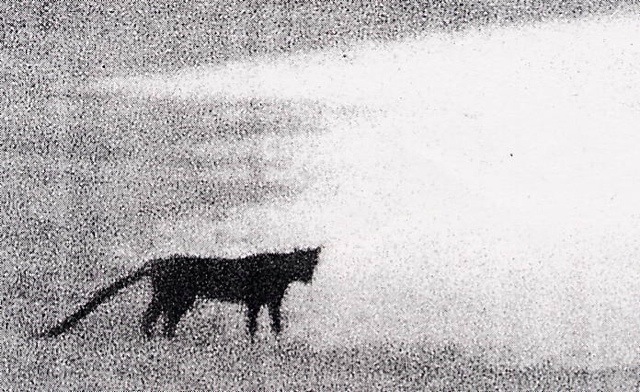
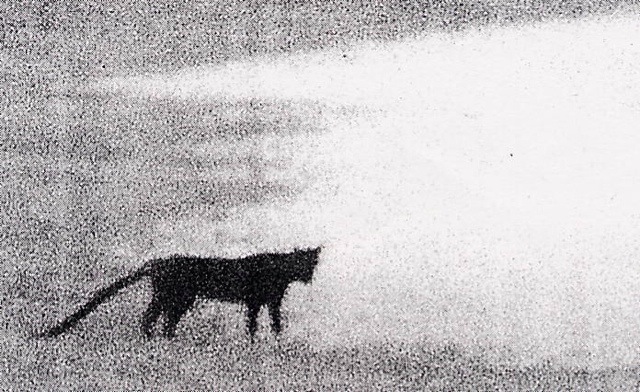
What exactly is the Beast? Witnesses don’t describe a monster from a movie. They describe something chillingly realistic. A large, black cat. Sleek. Powerful. About the size of an Alsatian dog, but moving with a liquid grace that no canine possesses. Yellow eyes that catch the headlights of passing cars. A tail that sweeps the ground.
It sounds like a panther. It looks like a panther. It hunts like a panther.
So, is it a panther?
Since 1983, the reports have flooded in. We are looking at over 60 official, credible sightings in this specific area alone. That doesn’t account for the hundreds of people too afraid or embarrassed to call the police. The Bodmin Moor has become the nerve center for “Alien Big Cat” (ABC) phenomena in the UK.
But sightings are just stories, right? People see what they want to see. A trick of the light. A large house cat seen from a weird angle. Shadows playing games on the mind.
That would be a comforting explanation. But it doesn’t explain the blood.
The Silent Massacre
Farmers are tough people. They know their land. They know their animals. And they know how a dog attacks a sheep. Dogs are messy. They chase, they bite at the legs, they cause panic. It’s chaos.
The attacks on Bodmin Moor were different. They were surgical.
Throughout the late 80s and early 90s, livestock began vanishing. When carcasses were found, they were often stripped clean. Other times, the kills showed signs of a terrifying efficiency: a single, crushing bite to the throat. This is the hallmark of a stealth predator. A big cat doesn’t run its prey down over miles; it ambushes. It strikes hard and fast. It suffocates.
Sheep were found with their bodies flipped over, necks broken. No domestic dog does that. No fox has the power to do that. Something with immense upper-body strength was prowling the fields.
Panic started to set in. This wasn’t just about losing money on livestock. It was about safety. If this thing could take down a fully grown sheep or a calf, what would happen if it stumbled across a hiker? What if it found a child playing near the edge of the moor?
The “harrods” Theory: A Rich Person’s Mistake?
Before we dismiss this as impossible, we have to look at history. How would a black panther or a puma end up in Cornwall? Did they swim?
No. We brought them here.
Rewind to the swinging sixties and early seventies. It was a wild time in London. If you had enough cash and a desire to show off, you could buy almost anything. Do you want a lion cub? A leopard? You could literally walk into Harrods department store in London and buy an exotic cat. It was a status symbol. Rich people kept them in their gardens or posh apartments.
Then came the crackdown.
In 1976, the government passed the Dangerous Wild Animals Act. It was a good law. It said, “Hey, maybe you shouldn’t have a deadly predator in your living room unless you have a proper license and secure enclosure.”
The law imposed huge fines and strict regulations. Suddenly, owning that cool leopard wasn’t so fun. It was expensive and illegal. The owners faced a choice. Put the animal down (kill it), give it to a zoo (which were already full), or…
Open the back door. Drive out to the countryside. Let it go.
It is widely believed that in 1976, dozens, maybe hundreds of big cats were released into the British wilds. Bodmin Moor, with its rugged terrain, plenty of deer and sheep, and endless hiding spots, would be a paradise for a puma or leopard. They didn’t just survive. The theory goes that they thrived. They mated. They started a population.
The Government Steps In (Or Do They?)
By 1995, the noise was too loud to ignore. The press was in a frenzy. Farmers were angry. The public was scared.
Great Britain’s Ministry of Agriculture, Fisheries and Food (MAFF) finally decided to act. They launched an official investigation. This was it. The moment of truth. They sent in the experts to scour the land, analyze the kills, and find the Beast.
The investigation ran for months. They reviewed the files. They walked the moors. They looked at the grainy photos and the plaster casts of paw prints.
On July 19, 1995, they dropped their report. The verdict?
“No verifiable evidence.”
They claimed that the mauled farm animals could have been attacked by common indigenous species. Maybe a badger? A large fox? A feral dog? They waved away the eyewitness accounts as misidentifications.
But here is where it gets interesting. They couldn’t close the door completely. The report contained a very specific, very slippery sentence. They conceded that “the investigation could not prove that a ‘big cat’ is not present.”
It was a classic non-denial denial. “We didn’t find it, but we can’t say it’s not there.”
The locals were furious. It felt like a cover-up. Admitting there was a breeding population of lethal predators in the UK would be a disaster for tourism and agriculture. It would cost millions to track and capture them. Was it easier to just say “it’s a dog” and hope the problem went away?
The Skull in the River
Then, the universe played a joke on the government. A twisted, perfect joke.
On July 24, 1995—less than a single week after the government released their “nothing to see here” report—a boy went for a walk.
Fourteen-year-old Barney Lanyon-Jones was hiking with his brothers along the River Fowey. This is right at the southern edge of Bodmin Moor. It’s a beautiful, rugged spot. The water rushes over stones, hiding secrets.
Barney saw something bobbing in the current. It looked strange. Not a rock. Not a branch. It was pale and smooth.
He waded in. The water was cold. He reached down and pulled the object from the muck. When he lifted it up, water pouring from the hollow sockets, he realized he was holding a monster.
It was a skull.
But not a sheep skull. It measured about four inches wide and seven inches long. The lower jaw was missing, likely torn away or lost to time. But the upper jaw remained. It possessed two sharp, prominent incisors. Massive, curved fangs designed for piercing thick hide and crushing windpipes.
Barney had found the Holy Grail. It was the skull of a large cat. Specifically, it looked like a leopard.
The Aftermath: Evidence or Hoax?
The media exploded. The timing was impossible to ignore. The government says “no cats,” and six days later, a kid pulls a leopard skull out of a river in the exact same area.
The skull was sent for analysis at the Natural History Museum in London. The experts looked at it. They measured the teeth. They checked the bone density.
The verdict? It was 100% a leopard skull. No doubt about it.
Vindication! The farmers were right! The witnesses were right! The Beast was real, and here were its bones!
But wait.
The story takes a dark turn. The scientists didn’t stop at identifying the species. They looked closer. They found something odd inside the skull case. They found the egg case of a tropical cockroach. A bug that couldn’t survive in the cold, wet climate of Cornwall.
They also noted that the skull had cut marks on it. Very fine, straight cuts. The kind made by a knife. The kind made when you are skinning an animal to make… a rug.
The official explanation shifted instantly. This wasn’t a cat that died on the moor. This was an old leopard skin rug that had rotted away, or perhaps someone had thrown an old taxidermy skull into the river as a hoax. They claimed it was a plant. A fake. A publicity stunt designed to embarrass the Ministry.
Does that solve it? Not really.
Ask yourself this: Who carries a leopard skull around? Who throws it in a river right where a boy just happens to be walking? And even if this specific skull was a hoax, does that disprove the 60 sightings? Does it explain the sheep with their throats torn out?
Skeptics say the skull proves nothing. Believers say the “cockroach theory” was a desperate attempt by the authorities to save face.
Modern Technology: The Hunt Continues
You might think this story died in the 90s. It didn’t. If anything, the mystery has only grown deeper.
We live in the age of the smartphone. Everyone has a high-definition camera in their pocket. You would think we would have a 4K video of the Beast by now. And while we don’t have a National Geographic quality documentary, we have fragments. We have clues.
In recent years, thermal imaging drones have been flown over UK moors. They have picked up heat signatures of animals that don’t match sheep or deer. Large, predatory shapes moving in the dark.
In 2016, a fresh investigation shook the community again. A sheep carcass was found in the UK (in Gloucestershire, a similar hotbed for sightings) with strange bite marks. This time, they didn’t just look at it. They swabbed it for DNA.
The results came back from the lab. They found fox DNA. Expected. But they also found something else. The test came back positive for the genus Panthera. That is the big cat family. Lion. Tiger. Leopard.
It was a massive breakthrough. Scientific proof that a big cat had been chewing on a sheep in Britain. The mainstream media reported it, people gasped, and then… silence. The world moved on. But the mystery hunters didn’t.
The Survival Question
Could a population of leopards really survive in Cornwall? Critics say it’s too cold. They say there isn’t enough food.
Let’s look at the facts. Leopards are incredibly adaptable. In the wild, they live in the scorching heat of Africa, but the Amur Leopard lives in the freezing forests of Russia and China. They handle snow just fine. A British winter is a walk in the park for them.
As for food? Bodmin Moor is teeming with deer. Rabbits. Pheasants. And thousands of slow, stupid sheep. It is an all-you-can-eat buffet for an apex predator. There is no competition. No lions. No hyenas. Just them.
They are masters of stealth. A leopard can hide in grass that is only inches tall. They are nocturnal. They sleep in trees or dense brush during the day and hunt when we are asleep. If they don’t want to be seen, you won’t see them.
The Paranormal Twist
We have to touch on the fringe theories. Because sometimes, the biology doesn’t add up.
Some witnesses report things that don’t fit the “escaped zoo animal” profile. They talk about cats that vanish instantly. Not “run away fast,” but literally disappear. Fade into the mist.
They speak of a sense of dread. A psychic weight that hits you before the sighting. This has led some researchers to suggest that the Beast of Bodmin might be something more… spectral. A “Zooform” entity. A ghost. Or perhaps a creature that slips between dimensions.
It sounds crazy. But when you are standing on the moor at midnight, and the wind is howling, and you feel eyes watching you from the dark, the rational world feels very far away. Ancient folklore is full of “Black Shuck” dogs and phantom cats. Is the Beast a modern version of an ancient guardian?
Final Verdict: Eyes Open
So, what is out there?
Is it a colony of escaped leopards, quietly breeding in the abandoned mines and caves of Cornwall? Is it a hybrid species, growing larger and bolder with every generation?
Or is it mass hysteria? A trick of the mind fueled by fear and foggy nights?
The government says it’s not real. The scientists say the skull was a fake. But ask the farmer who found his prize ram ripped apart. Ask Barney Lanyon-Jones what he felt when he held those fangs in his hand. Ask the police officers who have seen the yellow eyes in their patrol car headlights.
The evidence is messy. The photos are blurry. But the fear is real.
If you ever visit Bodmin Moor, enjoy the view. It’s breathtaking. But maybe, just maybe, don’t stray too far from the path. And if you hear a twig snap in the silence… don’t wait to see what made the sound.
Just run.