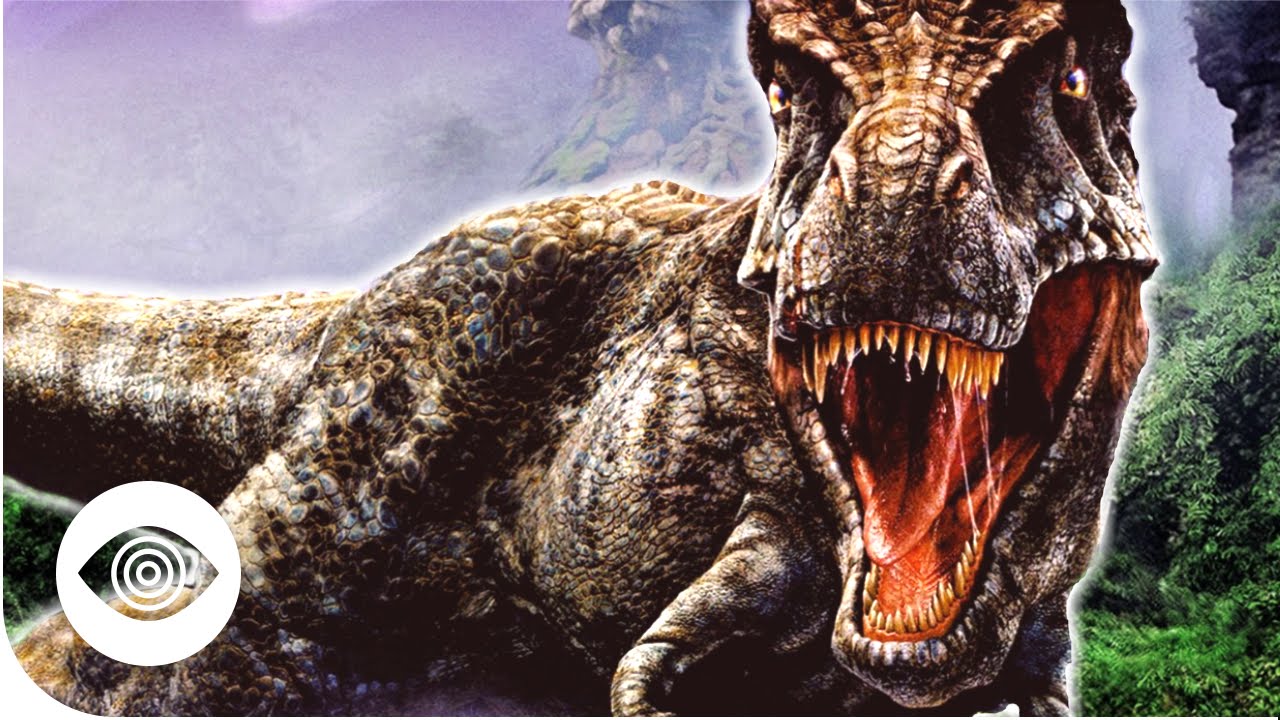
The 66-Million-Year-Old Lie?
Boom. Lights out. That’s the story we’ve been fed since kindergarten, right? A massive asteroid, the size of a mountain, slams into the Yucatan Peninsula. The sky turns black, fire rains from the heavens, and the reign of the dinosaurs ends in a single, fiery afternoon. 66 million years ago. Case closed. History written.
But what if the history books are missing a few pages?
What if the extinction wasn’t a hard stop, but a long, slow fade? Or worse… what if the fade never finished? We are told that the only things surviving that apocalyptic winter were tiny mammals and the ancestors of chickens. But the planet is huge. The corners of our maps are still fuzzy. And deep in the most inhospitable, suffocating jungles on Earth, people—locals, explorers, and scientists—keep seeing things that shouldn’t exist. They describe thundering footsteps. Scaly skin. Beasts that match the descriptions of creatures dead for millions of years.
We are talking about Living Dinosaurs.

The Zombie Fossils: Evidence of Survival?
Before we hack our way into the jungle to chase monsters, we have to look at the rocks. Paleontology is supposed to be the buzzkill here. It’s the science that says “No, they’re dead.” But even the rocks are whispering secrets that make mainstream scientists sweat.
There is a massive anomaly in the fossil record. It’s called the “Paleocene Dinosaur” problem.
Here is the setup: The K-Pg extinction event (the asteroid impact) created a geological line in the dirt called the K-T Boundary. Below the line? Dinosaurs. Above the line? No dinosaurs. That is the golden rule. But rules are made to be broken.
In the rugged badlands of the Hell Creek Formation—a place famous for T-Rex bones—researchers found something impossible. They discovered dinosaur remains sitting 1.3 meters (4.3 feet) above the impact layer. Do the math. In geological time, that much dirt equals roughly 40,000 years.
Think about that. 40,000 years after the apocalypse, something was arguably still walking around. Mainstream science tries to explain this away with a term called “reworking.” They claim the bones were washed out of the ground and re-buried in newer dirt. Convenient, right? It’s a neat way to tidy up a messy reality. But for those who question the official narrative, these “Zombie Fossils” are the smoking gun. They suggest the extinction wasn’t an instant lights-out event. It was gradual. And if it was gradual, who is to say it ever hit 0%?
The Biology Loophole: Dinosaurs Are Already Here
If you want to get technical—and annoying at parties—you can say dinosaurs are everywhere. You probably ate one for dinner. In the strict world of biology, the term “living dinosaur” isn’t a conspiracy; it’s a fact. But it’s not the cool kind.
Modern birds aren’t just related to dinosaurs; they are dinosaurs. They are the only lineage of the clade to survive the fire and ash. Specifically, they belong to the Maniraptora group. This is the same family tree that holds the Velociraptor. So, when a Cassowary looks at you with those cold, dead eyes and a giant claw on its foot, you are looking at a raptor that learned to fly (or forgot how to, in the Cassowary’s case).
But let’s be real. When we talk about “Living Dinosaurs,” nobody cares about pigeons. We aren’t here for feathers. We are here for the nightmares. We are here for the cryptozoological monsters that supposedly haunt the deep lakes and unmapped swamps of our world. We are looking for the “man eaters.”

The Lazarus Effect: Back from the Dead
Why do we think it’s possible? Why do we hold onto the hope that a T-Rex or a Sauropod is hiding in the Congo? Because nature loves to play tricks on us. It’s called the Lazarus Taxon.
This is a scientific phenomenon where a species disappears from the fossil record for millions of years—vanishes completely—only to reappear alive and well in the modern day. The most famous example? The Coelacanth.
Scientists were 100% certain the Coelacanth went extinct 66 million years ago. Same time as the dinos. Gone. Dust. Then, in 1938, a fisherman off the coast of South Africa hauled one up in his net. It wasn’t a fossil. It was breathing, snapping, and very much alive. It had been hiding in the deep ocean, unchanged, for eons. If a six-foot fish can hide for 66 million years, why not a reptile in the thickest jungle on Earth?
The Ghost of the Congo: Mokele-Mbembe
Pack your bags. We are going to the Likouala region of the Republic of the Congo. This is not a tourist destination. It is a green hell. The swamp is the size of Florida, largely unmapped, and hostile to human life. And it is the home of the most compelling living dinosaur legend of them all: Mokele-Mbembe.
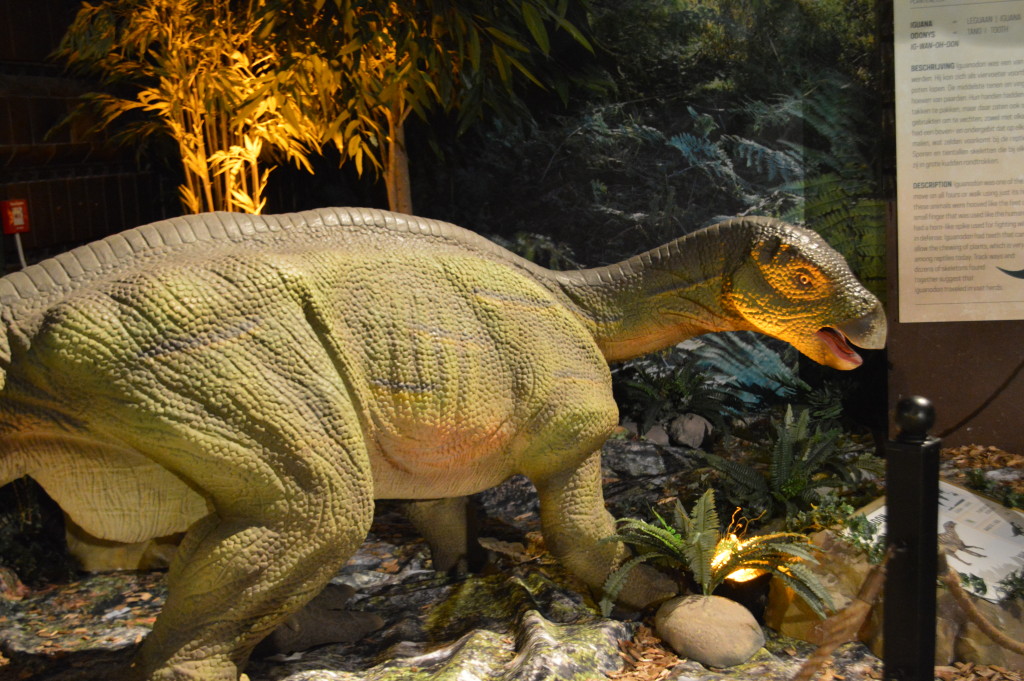
For centuries, the indigenous people living along the river have told stories of a creature. They don’t call it a “dinosaur.” To them, it’s just another animal, like the elephant or the hippo. But when they draw it in the dirt? It has a massive body, four stout legs like tree trunks, and a long, serpentine neck.
When showed illustrations of animals, the locals don’t point to the hippo. They point to the sauropod—the Brontosaurus type. They say it lives in the river caves. They say it eats the Malombo vine. And they say it is fiercely territorial. If you get too close in a canoe? It doesn’t eat you. It flips your boat and kills you just to make a point.
Is it a lost population of sauropods, miniaturized by the dense jungle environment (a phenomenon known as insular dwarfism)? Several expeditions have gone in. Many came back with nothing but malaria. But some came back with sonar readings of massive, shapeless objects moving deep underwater, and audio recordings of a roar that matches no known mammal.

The “Kasai Rex” and the Man Eaters
While Mokele-Mbembe is a plant-eater, there are darker whispers. Stories that keep people out of the forest after sundown. We are talking about the predators. The “man eaters.”
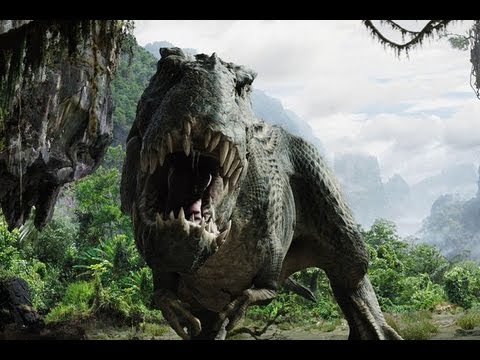
In 1932, a Swedish plantation owner named John Johnson was traveling through the Kasai Valley in Africa. He claimed to encounter a creature attacking a rhinoceros. But this wasn’t a lion. He described a massive lizard, walking on two powerful hind legs, with dark red scales and a snout filled with teeth. He called it the Kasai Rex.
Was it a surviving Tyrannosaur? A Relic Allosaurus? Or was it a tall tale spun by a bored traveler? The story has been picked apart by skeptics for decades. They say the photo he “took” was a hoax. But the local legends of the “Kasai” beast persist independent of Johnson. The locals speak of a giant lizard that walks upright. In a world where Komodo Dragons exist (and they are terrifying enough), is it so impossible to imagine a cousin that grew bigger and stayed hidden?
The Ropen: Lights in the Sky
Let’s shift gears. Look up. In Papua New Guinea, the locals fear the night. They speak of the “Ropen.” It translates roughly to “Demon Flyer.”
This isn’t a bird. According to eyewitnesses—including World War II veterans stationed on the islands—it is a leathery-winged creature with a long tail and a beak filled with teeth. But here is the kicker: It glows. Witnesses describe a bioluminescent glow emanating from the creature as it soars over the reefs looking for fish.
A glowing Pterodactyl? Science says Pterosaurs went extinct with the dinosaurs. Science also says bioluminescence in reptiles is impossible. But the descriptions are eerily consistent. Long tail (birds don’t have those). Leathery wings (bats have those, but not huge ones with long tails). The Ropen remains one of the most baffling mysteries in cryptozoology. Is it a Pterosaur that evolved to hunt at night, developing a glow to attract deep-sea prey?
Why Haven’t We Found Them?
This is the question the skeptics always scream. “We have satellites! We have Google Earth! We have drones!”
Do we?
Have you ever looked at the Amazon or the Congo on Google Earth? It’s a green blur. The canopy is so dense, so thick, that you cannot see the ground. You could hide a city under there, let alone a herd of elephants. In fact, we are finding cities. Recent Lidar scans in the Amazon have revealed massive, ancient civilizations that we walked right over for centuries without noticing. If we missed entire stone cities, how hard is it to miss a solitary animal that actively avoids humans?
The ocean is even worse. We have explored less than 5% of our oceans. We know more about the surface of Mars than the bottom of the Mariana Trench. The Coelacanth proved that things survive in the deep. Who knows what else is down there? The Loch Ness Monster—often described as a Plesiosaur—might be a distinct population trapped in a geological fault line, or perhaps a visitor from the sea utilizing underground cavern systems.
The Psychological War
There is a fear to admitting these things might exist. It breaks our timeline. It suggests we aren’t the masters of the planet we think we are. If a 30-foot reptile is still hunting in the Congo, what does that say about our understanding of history?
Cryptozoology is often mocked. It is the field of “monsters.” But every animal was a monster until we caught it. The Gorilla was a myth until 1847. The Giant Squid was a sailor’s drunk story until we found a carcass. The Okapi was a “unicorn” until we took a picture.
The term “Living Dinosaur” is rejected by modern science because it carries baggage. It sounds impossible. But the evidence—the scattered bones in Hell Creek, the consistent folklore from isolated tribes, the biological possibility of the Lazarus effect—paints a different picture.
Maybe they are all gone. Maybe the asteroid got every single one of them. Or maybe, just maybe, in the deepest, darkest corners of the map, where the GPS signal dies and the trees block out the sun… something is waiting. Something ancient. Something hungry.
Keep your eyes open. The history books might be due for a rewrite.