A Monster Washed Ashore. You’ve Seen the Photos. Now Learn What It Was Trying to Tell Us.
The abyss has secrets. Deep, dark, crushing secrets. It’s the last true frontier on our own planet, an alien world hidden beneath a blanket of water, and every so often, it sends us a message. A dispatch from the deep.
Sometimes, that message is a monster.
You’ve probably seen the pictures. They scorched the internet a while back, a viral sensation that had everyone asking the same questions. Is it real? Is it a hoax? Is that thing… from around here?
Let me be clear. It’s real. It’s not a Photoshop trick. And what it represents is far more terrifying and wonderful than any simple hoax.
The photo shows a crowd of people on a beach, struggling to hold up a creature of impossible length. A silver, serpentine behemoth with a face from a forgotten age and a strange, crimson mane. It looks like something that should be swimming in the margins of an ancient map, accompanied by the words “Here Be Dragons.”
But this wasn’t an ancient map. This was Southern California. And the dragon was very, very real.
The Catalina Incident: A Glimpse into the Abyss
The story begins with a flicker of silver in the deep blue. Jasmine Santana, a marine science instructor at the Catalina Island Marine Institute, was on a routine dive in the clear waters of Toyon Bay. The day was ordinary. The sun was bright. The water was calm. Nothing suggested the world was about to get a whole lot weirder.
Then she saw it. On the sandy bottom, just 60 feet down, lay something that didn’t belong. A shimmering, silvery ribbon of life, impossibly long and ethereal, its colossal size hard to comprehend. At first, she thought it was a discarded piece of equipment. Something man-made. No fish she knew of grew to that proportion.
It was an 18-foot-long sea serpent. A real-life leviathan.
Realizing she had stumbled upon the discovery of a lifetime, she knew she couldn’t leave it. This was evidence. This was a messenger. With immense effort, she began to drag the creature, its body heavy and limp, toward the shore. It was a herculean task. Soon, others rushed to help. It took a team of more than two dozen people—staff, students, and volunteers—to finally haul the bizarre beast from the waves and onto the sand.
The creature they laid out on the beach was not a true sea monster in the mythological sense. But it was as close as anyone there would ever come to one. The official name? An oarfish.
Deep Dive: What in the World is an Oarfish?
So, what is this biological question mark? The oarfish, or *Regalecus glesne*, is the longest bony fish on the planet. Forget the Great White Shark. Forget the Blue Whale (it’s a mammal). When it comes to sheer, unbelievable length, the oarfish is king.
They call it the “King of Herrings” in some cultures, though it isn’t related to herring at all. A better name would be the “Ribbon of the Abyss.”
Think about its anatomy. It’s built like nothing else.
- A Body Like a Blade: Its body is laterally compressed, meaning it’s incredibly thin from side to side, but very tall. This gives it that strange, ribbon-like appearance.
- Skin of Silver: Its skin is scaleless and covered in a silvery substance called guanine. It’s soft, easily damaged, and gives the fish a ghostly, metallic sheen.
- The Crimson Crest: Its most striking feature is the magnificent red dorsal fin that runs the entire length of its body. It starts at the head with a flamboyant, feathery crest, which likely gives rise to the “mane” in sea serpent legends.
- A Gentle Giant’s Mouth: For all its monstrous size, the oarfish has a tiny, toothless mouth. It feeds by swimming through the water column and filtering out tiny krill, plankton, and small crustaceans. It’s a harmless giant.
They live in the twilight zone. The mesopelagic zone, to be specific. A world between 660 and 3,300 feet down where sunlight is a distant memory. Down there, pressure is immense and the world is cold and black. They spend their entire lives hanging vertically in the water column, a silver ghost in the gloom, their red fins gently undulating to keep them stable.
This is why we so rarely see them. Their world is not our world. When one appears at the surface, like the Catalina specimen, it’s an event. It means something has gone wrong in their deep, dark home. It’s almost always sick, injured, or dying. A refugee from an alien environment, gasping its last in our bright, shallow world.
The Earthquake Fish: An Omen From the Deep?
This is where the story takes a turn. Into the realm of folklore, prophecy, and conspiracy.
In Japan, the oarfish has another name: *Ryugu no tsukai*. It means “Messenger from the Sea God’s Palace.” According to ancient legend, these fish rise from their deep-sea kingdom to warn of impending earthquakes on the surface. They are an omen. A bad one.
Pure superstition, right? A story from a less scientific time?
Maybe. Maybe not.
The internet is filled with timelines that are… unsettling. Before the devastating 2011 Tohoku earthquake and tsunami in Japan, at least 20 oarfish were found washed ashore or caught in nets in the preceding year. A chilling coincidence. Before a massive 8.8-magnitude quake in Chile in 2010, a 16-foot oarfish washed up. In 2013, just days after the Catalina oarfish was found, a second, 14-foot specimen was discovered on a beach in Oceanside, California. The “quake swarm” that followed was minor, but it happened.
Is there a connection? Mainstream science says no. The official explanation is that sick or dying oarfish are more susceptible to being pushed to the surface by strong currents, which can sometimes precede seismic events but aren’t caused by them. They argue it’s a classic case of confirmation bias—we only remember the times an oarfish appeared before a quake and forget all the times they appeared when nothing happened.
But what if there’s a mechanism they’re missing? Some theorists propose that the immense pressure changes and release of gases from the seabed before an earthquake could be profoundly distressing to sensitive deep-sea creatures like the oarfish. They might be fleeing a toxic or painful change in their environment, sending them on a fatal journey to the surface.
Are they a geological early-warning system we don’t yet understand? A biological seismograph? Or is it just a creepy, cosmic coincidence? The legend persists because the stakes are so high.
Sea Serpents: The Oarfish as Prime Suspect
For centuries, sailors have returned from the sea with tales of monsters. Long, serpentine beasts with horse-like heads and fiery manes, breaking the surface to stare at their ships before vanishing back into the depths.
Cryptozoologists and monster hunters have long searched for a real animal to explain these sightings. And the oarfish fits the profile… almost perfectly.
Imagine you’re a sailor in the 18th century. You see an 18-foot, or maybe even a 30-foot, silvery creature at the surface. It’s sick and disoriented, bobbing strangely. Its long, red dorsal fin catches the light, looking for all the world like a fiery mane or a row of spiky fins. Its head, with that strange crest, bobs up and down on the waves. You’ve never seen anything like it. It’s a serpent. A sea serpent.
Many famous historical sightings, when you strip away the terror and exaggeration, sound a lot like an oarfish encounter. The length, the serpentine body, the “mane”—it all lines up.
But there are problems. The oarfish is not aggressive. It’s a passive filter feeder. It wouldn’t chase a ship. Furthermore, many classic sea serpent reports describe a creature moving in vertical coils, like a caterpillar. An oarfish, like a snake or an eel, can’t do that. It moves by undulating side-to-side. And what about the “horse-like head”? The oarfish has a distinctly fishy face.
So, is the oarfish the answer to all sea serpent sightings? No. But it is almost certainly the answer to *some* of them. It proves that the ocean is capable of producing creatures so strange, so impossibly long, that they step right out of mythology and into reality.
The Loch Ness Conundrum: A Fish Out of Water?
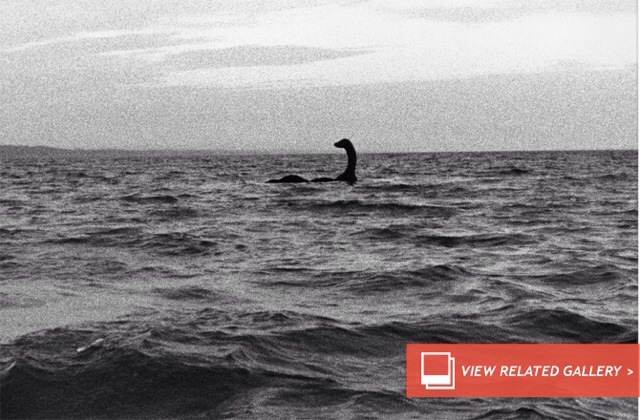
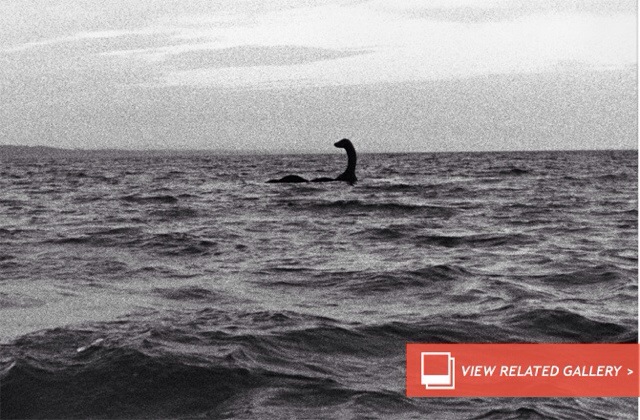
This brings us to the most famous monster of all. Nessie. Could the strange creature of Loch Ness, Scotland’s long-necked enigma, be some kind of oarfish? The idea is tantalizing. A real, known “sea serpent” that could solve the world’s greatest cryptid mystery.
It’s a great theory. For about five seconds.
Then, science crashes the party. The oarfish-as-Nessie theory completely falls apart under the slightest scrutiny.
Three Strikes and You’re Out
- The Salt Problem: Oarfish are saltwater creatures, specifically adapted to the high-salinity, high-pressure environment of the deep ocean. Loch Ness is a freshwater lake. A saltwater fish thrown into freshwater undergoes a process called osmotic shock. Its cells would absorb water uncontrollably, swell, and burst. It would be a very quick, and very messy, death.
- The Temperature Problem: Oarfish are found in temperate to tropical waters. Loch Ness is… not tropical. It’s a highland lake, fed by cold rivers, and stays at a bone-chilling 42°F (5.5°C) year-round. An oarfish in that water would be like a lizard on an iceberg. Its metabolism would shut down almost instantly.
- The Location Problem: Simply put, there are no oarfish in or near Scotland’s Great Glen. They just don’t live there.
So, we can put that theory to bed. Nessie is not an oarfish. But that just deepens the mystery of the loch. If not an oarfish, then what?
If Not a Sea Serpent, Then What? The Nessie Suspect Lineup
The search for a real animal behind the Nessie legend is a cottage industry of its own. Here are the top contenders.
The Sleeper Shark Theory
This one has gained serious traction. Bruce Wright, a senior scientist at the Aleutian Pribilof Island Association, proposed that Nessie could be a Greenland sleeper shark. These are true monsters. They can reach over 20 feet long and weigh more than four tons. They are slow, ghostly creatures that can tolerate a wide range of temperatures and salinities. Wright theorized that they could easily navigate the River Ness from the ocean and find a happy home in the deep, food-rich loch.
A dark, hulking shape moving just below the surface? A large fin breaking the waves? It fits. It’s a chillingly plausible explanation.
The Giant Eel Theory
For years, people have suggested that Nessie could be an abnormally large European eel. The loch has a massive eel population. The problem? Eels don’t get that big. The largest ever recorded was around 5 feet. To explain the 20-foot “monster” sightings, you’d need a biological freak of nature of unprecedented size. Unlikely, but not entirely impossible.
The Plesiosaur Theory
This is the classic, the one everyone thinks of, thanks to the infamous “Surgeon’s Photograph.” A surviving population of prehistoric marine reptiles, trapped in the loch since the age of dinosaurs. It’s a romantic, thrilling idea. It’s also almost certainly wrong. Plesiosaurs were air-breathers; they’d be seen constantly. There’s also not nearly enough food in the loch to support a breeding population of giant reptiles. And, well, they’ve been extinct for 65 million years.
The Catalina oarfish didn’t solve the Loch Ness mystery. It only reminded us that we should keep looking, because the real animals in our world are sometimes stranger than any monster we can invent.
Beyond the Oarfish: The True Monsters of the Deep
The oarfish is just one page in a whole library of deep-sea horror stories. The truth is, the deeper you go, the more monstrous the residents become.
Take the Giant Squid (*Architeuthis dux*). For centuries, it was a legend. The Kraken. A beast that could pull ships to their doom. We knew it existed only from carcasses that washed ashore and the sucker scars on the bodies of sperm whales. Then, in 2004, the legend came to life. Japanese scientists captured the first-ever footage of a living giant squid in its natural habitat, nearly 3,000 feet down. A 26-foot-long titan with eyes the size of dinner plates, hunting in the eternal night. It was a moment that changed biology forever.
And it’s not even the biggest. The Colossal Squid (*Mesonychoteuthis hamiltoni*) lives even deeper, in the frigid waters of the Antarctic. It’s heavier than the Giant Squid and its tentacles are armed not with suckers, but with swiveling, razor-sharp hooks. A living nightmare.
The abyss is hiding things we can’t even imagine. Goblin sharks with protractible jaws. Anglerfish with their own biological lanterns. Frilled sharks that look like sea serpents themselves.
The Catalina oarfish wasn’t an anomaly. It was a reminder. A messenger from a world we barely know. It was a shimmering, 18-foot-long question mark that washed up on our shores.
And the question it asks is simple.
What else is down there, waiting in the cold, silent dark?