Home Weird World Science Unclassified "alien" life found in Antarctic Lake

Unclassified "alien" life found in Antarctic Lake

0
70

The Vostok Anomaly: Has Science Found Alien DNA Trapped Beneath Antarctica?

There are places on this Earth that feel alien. Places so remote, so hostile, they might as well be on another planet. And no place is more alien than Antarctica.

It’s a continent of secrets. A desert of ice, miles deep, hiding an entire landscape of mountains and valleys we can only map with radar. For centuries, it has been the subject of hushed whispers and wild theories. But what if the biggest secret isn’t buried in the rock, but in the water trapped beneath it?

Imagine a world sealed off from our own. A world that hasn’t seen sunlight or felt fresh air for over 15 million years. It’s a concept straight out of science fiction. But it’s real.

And we drilled a hole into it.

What we found there could change everything we think we know about life itself. Or, it’s a story we were told, then quickly told to forget. You have to ask yourself: why?

A Frozen World Beneath Our Feet

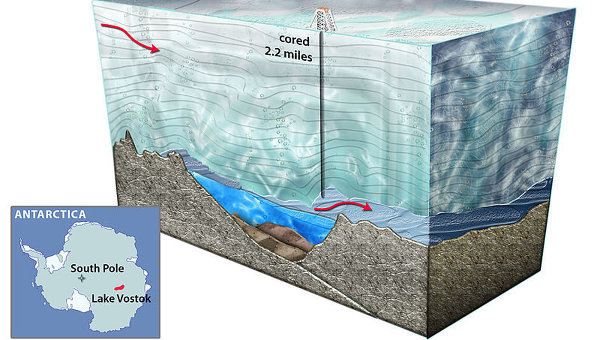
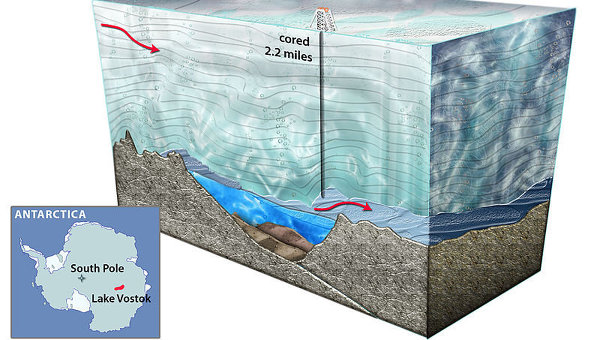
Deep below the Russian Vostok Station, one of the coldest and most inhospitable places on the planet’s surface, lies a ghost. A phantom lake. It’s called Lake Vostok, and it is immense. Stretching over 15,000 square kilometers, roughly the size of Lake Ontario, and plunging to depths of over 900 meters, it’s one of the largest freshwater lakes on Earth. And until recently, we barely knew it existed.

Antarctic Lake

Its ceiling is a solid sheet of ice nearly four kilometers—or two and a half miles—thick. Think about that. The pressure is crushing, over 350 times what you feel at sea level. The darkness is absolute. And the water, fed by melting ice from the glacier above and warmed by the faint geothermal heat from the Earth below, is super-saturated with oxygen. At levels 50 times higher than typical freshwater, it should be a toxic, sterilizing brew for any life we know.

This is a pristine time capsule. A biological and geological experiment that has been running in total isolation since long before humanity ever walked the Earth. For 15, 20, maybe even 25 million years, it has been completely cut off. A lost world.

What kind of life could possibly survive in such a place? What strange evolutionary path would it take in the cold, the dark, the crushing pressure?

Scientists were desperate to know.

The 23-Year Mission to Pierce the Veil

Getting to Lake Vostok wasn’t easy. It was one of the most ambitious and dangerous drilling projects in history. Starting in 1989, Russian teams at Vostok Station began a slow, painstaking descent. This wasn’t just punching a hole. It was a delicate surgical procedure on a planetary scale.

Their greatest fear? Contamination.

If they introduced surface bacteria, modern microbes from our world, into that ancient, sealed environment, they would destroy it forever. The scientific equivalent of burning down the Library of Alexandria. They developed special techniques, using a clean fluid to keep the borehole from freezing shut and designing a thermal drill head that would melt the final few feet, letting the lake’s own water flood up and freeze to the probe for a pure, untouched sample.

For twenty-three years they drilled. Through punishing Antarctic winters where temperatures drop to -89°C (-128°F). Through mechanical failures and logistical nightmares. A generation of scientists dedicated their lives to this single, monumental goal.

Then, in February 2012, they broke through. After drilling 3,769 meters, they touched liquid water. They had entered the lost world. The world waited with bated breath. The first samples were carefully collected and sent back to labs in St. Petersburg. The silence was deafening.

The DNA That Broke Biology

The initial results were a disappointment. Some reports came out suggesting the samples were sterile. Devoid of life. Or worse, contaminated with microbes from the drilling fluid. The dream of a unique biosphere seemed to be fading. The lake, after all that effort, might just be a big, dead body of water.

But then came the bombshell.

A year later, Sergei Bulat, a researcher at the Laboratory of Eukaryote Genetics at the St. Petersburg Nuclear Physics Institute, stepped forward with an announcement that sent shockwaves through the scientific community.

They found something.

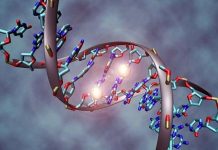
In water that had frozen to the head of the drill, they discovered bacterial DNA. But this wasn’t just any bacteria. After painstakingly eliminating every possible known contaminant from their databases, they were left with a genetic sequence that was utterly alien.

“After excluding all known contaminants…we discovered bacterial DNA that does not match any known species listed in global databanks,” Bulat stated. “We call it unidentified and ‘unclassified’ life.”

How different was it? To classify something as a new species, its DNA generally needs to be less than 90% similar to its closest known relative. The DNA from Lake Vostok didn’t even come close. The match between its genetic code and any known organism on the entire planet never exceeded 86 percent.

This wasn’t just a new species. It wasn’t just a new genus. This thing was so different, they couldn’t place it in any of the 40-plus known major subkingdoms of bacteria. It didn’t fit. Anywhere.

It was a biological orphan. Something that had seemingly evolved on a completely separate path from everything else we’ve ever studied.

Bulat delivered the quote that set the internet on fire:

“If it were found on Mars, people would call it Martian DNA. But this is DNA from Earth.”

A Shadow Biosphere?

What does this actually mean? It suggests the possibility of a “shadow biosphere.” A second tree of life, right here on Earth, that we’ve never seen before because it exists in places we’ve never looked. Life, but not as we know it.

Think about it. Every living thing we’ve ever found, from the smallest microbe to the largest whale, from a mushroom to you, is related. We all share a common genetic heritage. We are all on the same tree of life.

The Vostok bacteria seems to be sitting on a completely different tree. In a completely different forest. A forest that has been growing in the dark for 15 million years.

The story was explosive. It was on news sites everywhere. The world was about to be turned upside down. And then… it went quiet.

The Great Retraction: A Cover-Up Beneath the Ice?

Almost as quickly as the news broke, the backpedaling began. Other scientists, particularly from competing international teams, rushed to pour cold water on the findings. “It’s contamination,” they cried. “It must be from the lab, or the drilling process.”

Soon, even Bulat’s own institution seemed to distance itself from his statements, issuing clarifications and calling the findings “preliminary.” The narrative was quickly controlled and shifted. The official story became: “Interesting anomaly, but most likely contamination. Nothing to see here, folks.”

But for those of us who watch these things, it all felt a little too neat. A little too fast.

Was it a genuine scientific correction? Or was it a cover-up? Did they find something so profound, so potentially destabilizing, that the powers that be decided to put the genie back in the bottle?

Think about the implications. If life can evolve in such an extreme, isolated environment into something completely unrecognizable, what does that say about life elsewhere in the universe? It would mean that moons like Jupiter’s Europa or Saturn’s Enceladus, which are thought to have massive sub-surface liquid oceans, are almost *certain* to harbor life. Alien life would go from a theoretical possibility to a statistical probability.

Maybe that’s a truth someone decided we weren’t ready for.

Connecting the Dots: Vostok is Just the Tip of the Iceberg

To understand the full weight of the Vostok mystery, you can’t look at it in isolation. You have to see it as one piece of a much larger, much stranger puzzle: the puzzle of Antarctica itself.

  • Operation Highjump: Why, in 1946, did the US Navy send a massive military fleet, including an aircraft carrier, to Antarctica under the command of Admiral Richard E. Byrd? The official reason was “training.” But they brought combat troops and fought heavy losses, ending the mission months early. In a Chilean newspaper, Byrd was quoted as saying it was imperative the US prepare for a war against an enemy that could “fly from pole to pole with incredible speed.” What did they encounter down there?
  • Neuschwabenland: During WWII, the Nazis mounted a major expedition to Antarctica, claiming a huge territory they called Neuschwabenland. They mapped it, scouted for locations, and planted their flags. Fringes of this story claim they discovered vast, warm, ice-free caverns and built a secret base, Base 211, to continue their work after the war. Is it a coincidence that the Vostok drilling project is happening in a region not far from where this alleged activity took place?
  • The Buried Pyramids: In recent years, satellite imagery has revealed multiple pyramid-shaped structures peeking through the ice. Perfect four-sided peaks that look astonishingly artificial. Geologists insist they are just “nunataks”—natural mountain peaks eroded into a pyramidal shape. But could they be something more? The eroded remnants of a civilization that existed when Antarctica was green?
  • The Piri Reis Map: This infamous 16th-century map appears to show the coast of Antarctica… without any ice. It depicts a landmass that we didn’t officially “discover” for another 300 years, and a coastline we couldn’t map until we had modern radar. How was this possible unless someone, in the distant past, had seen Antarctica ice-free?

When you see the Lake Vostok discovery through this lens, it stops being just a story about weird bacteria. It becomes a clue. Maybe the life in that lake isn’t just ancient terrestrial life. Maybe it’s connected to whatever else is hidden beneath the ice. Maybe it’s the biological evidence that supports the geological and historical anomalies.

What If… They Found More Than Just Bacteria?

Let’s speculate for a moment. The samples came from the very top layer of the lake, where the drill broke through. The lake itself is thousands of feet deep. What if the “unclassified” bacteria is just the bottom of the food chain?

What could be lurking in the abyssal depths of that 15-million-year-old world? In total darkness and crushing pressure? Evolution is a powerful force. In an environment with no predators from the outside world, what could have evolved over that immense time span?

And what happens if we aren’t careful? The pressure inside the lake is immense. If a major breach occurred, what would come out? Ancient microbes we have no immunity to? Or something else?

The story of Lake Vostok isn’t over. It has just gone quiet. New samples have been taken. More research is happening, but now it’s behind closed doors, away from sensational headlines. They pierced the veil once and announced what they saw. Then they were told to look again, and to be more… careful with their conclusions.

We are left with the chilling words of Sergei Bulat, a man who saw the data before the story was changed. It’s “Martian DNA,” but it’s from Earth. A profound paradox.

It means there is an alien world right here, under our feet. We’ve had a single, fleeting glimpse into it, before the door was slammed shut. The ice holds its secrets. And we are left to wonder, what else is down there, waiting in the eternal dark?

Originally posted 2016-05-02 12:27:56. Republished by Blog Post Promoter