Ancient Riddles in Stone and Sand: Are These the Greatest Unsolved Mysteries on Earth?
Look around you. Everything feels so certain, doesn’t it? We have maps for every corner of the globe, satellites watching from above, and the entire history of human knowledge in our pockets. We think we have it all figured out.
We don’t.
Not even close. Before our concrete cities and digital chatter, there were giants. Civilizations that rose from the dust, possessed of a strange and powerful wisdom, who etched their secrets into the very fabric of the planet. They built monuments that defy our understanding of physics. They drew pictures on the ground so massive you can only see them from the sky. They knew things about the stars that we’ve only recently rediscovered with supercomputers.
And then they vanished.
What are these silent structures and sprawling desert drawings trying to tell us? Are they just relics of forgotten cultures? Or are they something more? A warning? A message? A signpost left by visitors who were not of this world? Forget what you learned in your history textbook. Today, we’re peeling back the layers of dust and dogma to stare directly into the heart of four of history’s most profound enigmas. The truth is stranger than you can possibly imagine.
Stonehenge: The Silent Giants of Salisbury Plain
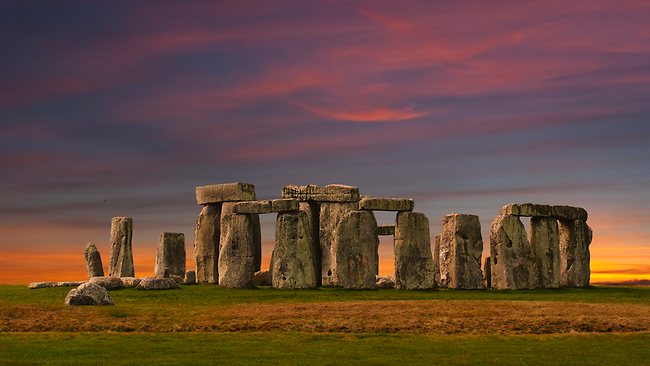
There it sits. A ring of colossal stones on a windswept plain in England. Brooding. Silent. Ancient. Stonehenge is more than a British icon; it’s a question mark made of rock. For thousands of years, it has stood against the wind and the rain, guarding its secrets with an impenetrable silence. We think we know it, but we know nothing.
The official story is tidy. It was built over 1,500 years, starting around 3000 BC. But that simple fact hides a mind-bending reality. This wasn’t a weekend project. This was a generational obsession. A purpose so powerful that it drove people to perform impossible feats of engineering with nothing but bone, stone, and sinew.
Who Were the Master Builders?
Forget the popular image of white-robed Druids. That’s a romantic fantasy cooked up centuries later. The Druids had nothing to do with building Stonehenge; the final stones were placed a thousand years before their culture even existed. So, who did? The people who erected these monoliths were Neolithic humans, supposedly primitive farmers. Yet these “primitives” achieved something that would challenge even modern engineers.
The bigger sarsen stones, weighing up to 40 tons each, were dragged from 20 miles away. That’s incredible enough. But the smaller bluestones? That’s where the story gets truly bizarre. Geologists have confirmed that these stones, weighing up to four tons apiece, came from the Preseli Hills in Wales. That’s a journey of over 150 miles.
How? Why? Why haul 80 multi-ton stones across rugged hills, through dense forests, and over treacherous waters? Mainstream archaeology offers theories of rollers, sledges, and rafts. It must have taken a colossal workforce, united by a fanatical devotion to a single goal. What goal could possibly be worth that price?
A Cosmic Clock or Something More?
The most popular theory is that Stonehenge was an astronomical observatory. A prehistoric calendar. And it’s true, the entire structure is aligned with surgical precision to the movements of the sun. On the summer solstice, the sun rises directly over the Heel Stone, flooding the central altar with light. On the winter solstice, it sets perfectly between the tallest trilithon. It’s a magnificent celestial clock.
But what if that’s just a fraction of the story? What if that’s just the most obvious function of a far more complex machine?
Recent acoustic research has produced some startling results. Stand in the center of the circle, and sound behaves in strange ways. It amplifies. It reverberates. Some researchers now believe Stonehenge was designed as a giant sound chamber, a place for powerful, trance-inducing rituals where chanting and drumming would create an otherworldly experience. It wasn’t just built to be seen; it was built to be heard and felt.
Then there’s the evidence of healing. Excavations have revealed burials of individuals with signs of severe illness and injury, many of whom came from hundreds of miles away. The bluestones themselves were believed to have magical healing properties in ancient folklore. Was Stonehenge a Stone Age Lourdes? A place of pilgrimage where the sick came seeking a miracle?
A temple. A clock. A concert hall. A hospital. The theories keep piling up because no single explanation feels big enough to justify the sheer, staggering effort of its creation. The stones remain silent, their purpose lost to time, a monument to a belief system so powerful it moved mountains.
The Nazca Lines: A Message for the Gods?
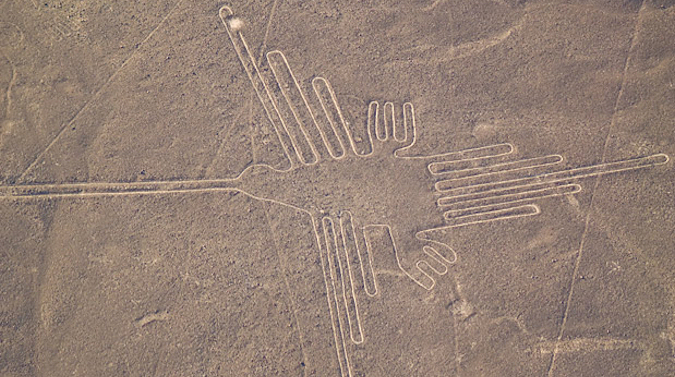
Let’s travel from the green fields of England to the bone-dry coastal plains of Peru. Here, etched into the desert floor, is a mystery so vast you can’t even see it. Not from the ground, anyway. This is the home of the Nazca Lines, Earth’s largest and most enigmatic art gallery.

For over 2,000 years, these incredible geoglyphs lay hidden in plain sight. It wasn’t until the 1930s, when commercial airplanes began flying over the region, that the world became aware of them. And what they saw was unbelievable. Hundreds of perfect geometric shapes, massive straight lines that run for miles, and colossal stylized drawings of animals, birds, and even humanoid figures.
There’s a spider, a monkey with a curling tail, a hummingbird with a 200-foot wingspan, and a strange, waving figure often called “The Astronaut.” All carved into the earth with uncanny precision. And this is the part that breaks your brain: they were created by people who could never have seen their own finished work. They are visible only from the air.
Sketches for Sky Beings
So, who were they for? Why create art on a scale that is incomprehensible from ground level?
This question opened the door for one of the most explosive theories in alternative history: ancient astronauts. Popularized by author Erich von Däniken in his book “Chariots of the Gods?”, the idea is simple and terrifying. These weren’t drawings for human eyes. They were messages. Signals. Perhaps even landing strips for visitors from another world.
Think about it. The long, straight lines look eerily like modern airport runways. The figures are so stylized, so perfect, they seem like pictograms designed to be easily understood from a great height. Was the Nazca culture in contact with extraterrestrial beings? Did they create these giant symbols as a tribute, a welcome mat, or a desperate plea for their “gods” to return? Mainstream science scoffs. But they’ve yet to provide a satisfying answer to the central question: why?
A Map to a Hidden World?
Of course, there are other theories. Some researchers argue the lines are connected to astronomy, pointing to constellations or celestial events. A more compelling recent theory connects the lines to water, the most precious resource in a desert. Many of the lines and animal figures appear to point toward sources of water, or align with the underground aqueducts known as puquios, another engineering marvel of the Nazca people.
In this view, the lines were part of massive ritual processions. People would walk the lines, praying for rain and a good harvest. The animal symbols represented powerful spirits or deities associated with water and fertility. It’s a plausible theory, but it still doesn’t fully explain the obsession with making them visible only from above.
Could they have seen them? Some have proposed that the Nazca people constructed hot air balloons from local textiles and reeds to get a bird’s-eye view to direct the construction. It’s a wild idea, but burn pits found at the end of some lines hint that it might just be possible. Whether they were calling down to gods in the sky or mapping out the life-giving water beneath their feet, the Nazca people poured their soul into the sand, creating a mystery for the ages.
Easter Island’s Stone Sentinels: The Lonely Moai
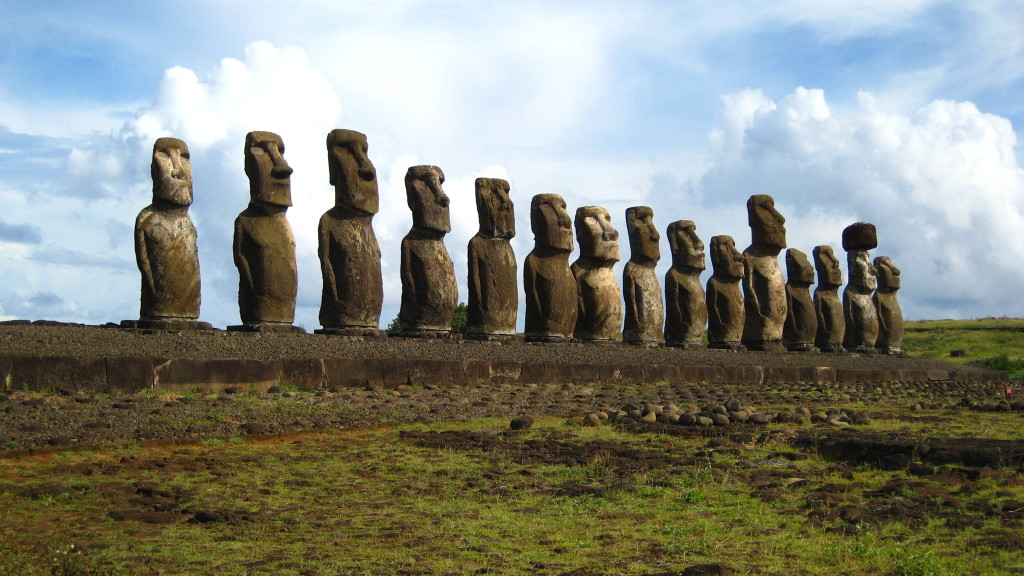
Let’s go to the most isolated inhabited place on Earth. Easter Island, or Rapa Nui, is a tiny speck of volcanic rock in the vastness of the Pacific Ocean, over 2,000 miles from the nearest continent. Yet on this remote outpost, a lost civilization achieved the unthinkable.
They carved and erected nearly 1,000 colossal stone statues. The Moai.

These stone-faced giants, with their long faces, heavy brows, and enigmatic expressions, stand with their backs to the sea, watching over the land. They weigh an average of 14 tons. The largest, “El Gigante,” was never finished but would have stood 72 feet tall and weighed 270 tons. Carved from the hard volcanic tuff of the Rano Raraku quarry, they were then transported for miles across the island’s difficult terrain and raised onto stone platforms called ahu.
How on Earth Did They Move Them?
This is the riddle that has haunted explorers and archaeologists for centuries. The island has no draft animals, no wheels, and, by the time Europeans arrived, very few trees. So how did they do it?
The prevailing theory used to be that they were rolled on a continuous supply of log rollers, a process that would have required a massive amount of timber. But a more fascinating theory has emerged, one that comes directly from the island’s own oral traditions. The legends say the Moai didn’t need to be carried. They walked.
It sounds impossible. But recent experiments have shown it might be true. By tying ropes around the head of a replica Moai and using a coordinated team of pullers, archaeologists have successfully made the statue “walk” by rocking it from side to side, inching it forward in a shuffling motion. It’s a slow, painstaking process, but it works. Could this simple, ingenious method be the solution to the island’s greatest engineering puzzle?
The Secret Buried Beneath Our Feet
For decades, we thought we knew what the Moai looked like. Giant heads on the landscape. We were wrong. A few years ago, photos from an excavation project went viral online, revealing a stunning secret: the heads have bodies. Huge, torsos, extending deep into the earth, covered in intricate carvings that had been protected from the elements for centuries.
This changes everything. Why were they buried? Were they always intended to be this way, with only their heads visible? Or did centuries of erosion simply cover them up? The discovery of these hidden bodies and their mysterious petroglyphs only deepens the enigma of their purpose. They weren’t just statues. They were something far more complex.
The story of Rapa Nui usually ends as a tragedy, a cautionary tale of a society that destroyed itself. The theory goes that their obsession with statue-building led to deforestation, soil erosion, and starvation—a phenomenon called ecocide. But even this is now being questioned. New evidence suggests the population collapse may have been caused by diseases introduced by European visitors, not by their own actions. The mystery of the Moai, and the people who made them, is far from over.
The Maya: Cosmic Geniuses Who Vanished
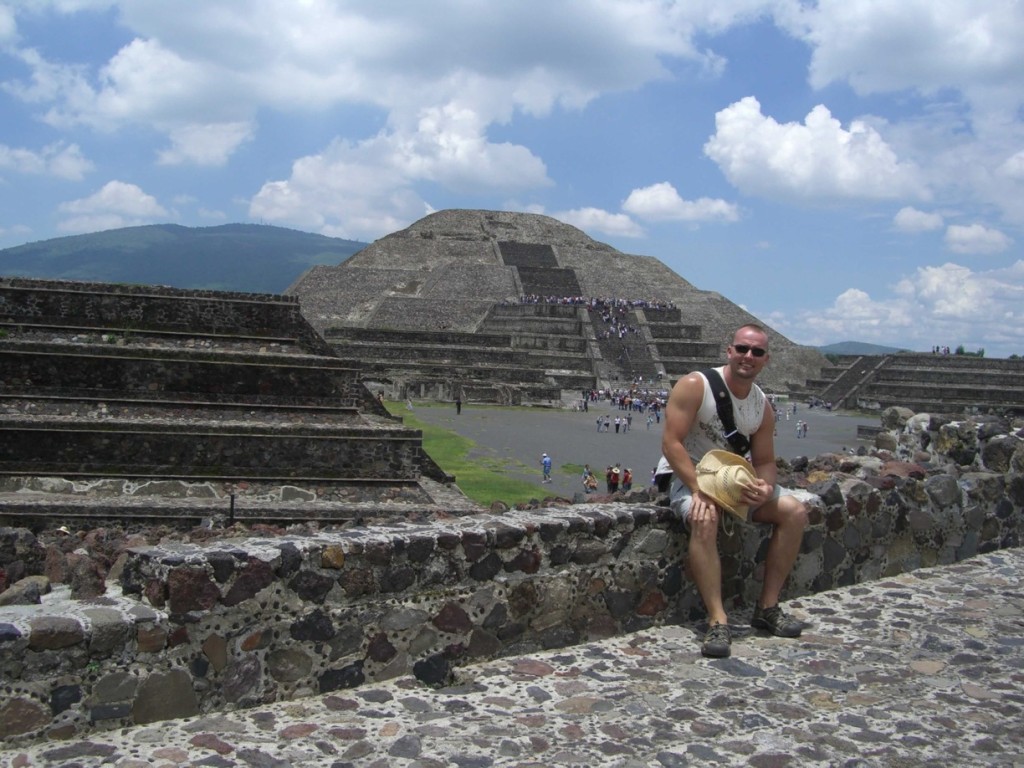
Our final stop takes us deep into the suffocating jungles of Mexico and Central America. Here, hidden beneath a thick canopy of green, lie the crumbling pyramids and lost cities of the Maya. This wasn’t just another ancient civilization. The Maya were on a different level. They were masters of mathematics, astronomy, and time itself.

At a time when Europe was stumbling through the Dark Ages, the Maya were building sprawling cities of stone, complete with advanced water management systems. They developed a complex written language, one of the few to arise independently in the ancient world. They independently developed the concept of the number zero. Their knowledge of the cosmos was simply astounding.
Masters of Time and Space
The Mayan calendar is famous for its complexity and accuracy. Their calculation of the length of the solar year was more precise than the calendar used in Europe at the time. They tracked the cycles of Venus with an error of only a few hours over 500 years. They could predict solar and lunar eclipses. They did all this with naked-eye observation and a profound understanding of mathematics.
Their cities were not just places to live; they were cosmic engines. Structures like the pyramid of Chichen Itza are perfectly aligned astronomical devices. During the spring and fall equinoxes, the setting sun casts a shadow that creates the illusion of a giant serpent slithering down the pyramid’s staircase. It’s a breathtaking fusion of architecture, myth, and science. These weren’t just temples; they were physical representations of time and space.
Where Did Everybody Go?
Then, around 900 AD, something went terribly wrong. In the heart of the southern lowlands, the great Mayan cities were abandoned. Construction stopped mid-project. Monuments were left unfinished. The people seemingly packed up and walked away, letting the jungle swallow their magnificent creations. This is the great Mayan collapse, and it remains one of history’s biggest puzzles.
What happened? Scholars point to a combination of factors: prolonged drought, endemic warfare between city-states, disease, and political instability. A perfect storm that brought a brilliant civilization to its knees.
But is that the whole story? How does a society with such sophisticated knowledge simply fall apart? Some of the more fringe theories are even more captivating. Did they over-exploit their resources? Did they suffer a spiritual crisis? Or, as some have whispered, did they find a way to go somewhere else? It sounds like science fiction, but when you consider their obsession with the stars and their almost supernatural knowledge, you have to wonder. They didn’t just collapse. They disappeared.
From the stone circles of England to the sky-art of Peru, from the lonely giants of the Pacific to the star-temples of the jungle, the message is the same. We are a species with amnesia. We live among the ruins of civilizations so advanced and so driven by purpose that we can barely comprehend their motives, let alone their methods. They left us puzzles we are not yet smart enough to solve. The past isn’t dead. It’s not even past. It’s standing right behind us, waiting patiently for us to finally turn around and listen.