Saturday, June 13, 2026
HomeUnexplained MysteriesModern MysteriesThe world’s strangest unsolved plane mysteries of Bermuda Triangle

The world’s strangest unsolved plane mysteries of Bermuda Triangle

The Vanishing: Deconstructing History’s Most Baffling Aviation Mysteries

There is a unique kind of horror reserved for things that simply vanish. Not crash. Not burn. Vanish. One moment, a hulking metal tube filled with hundreds of souls is a solid, predictable presence on a radar screen, a voice in a controller’s ear. The next? Nothing. Just static. An empty patch of sky where something used to be.

It’s a primal fear. A tear in the fabric of our ordered world. And in 2014, that fear came roaring back into the global consciousness.

Malaysia Airlines Flight MH370 was supposed to be a routine red-eye from Kuala Lumpur to Beijing. But it never arrived. It blinked off the radar and was swallowed by the night, sparking the largest and most expensive search in human history. For years, the silence was deafening. Then, a piece of debris washed up on a remote island. A flaperon. From a Boeing 777.

It was a ghost from a watery grave. Experts confirmed it was from the missing jet, the only Boeing 777 unaccounted for on the entire planet. It was the first tangible clue, a brutal confirmation of a loss that had, until then, lived only in the abstract. But it didn’t solve the mystery. It deepened it. How did a modern marvel of engineering, tracked by satellites and packed with technology, simply fly away from the world?

The internet exploded with theories. A rogue pilot. A remote cyber-hijacking. A fire in the cargo hold carrying volatile lithium-ion batteries. Each theory only pulled the knot of the mystery tighter. MH370 became the modern benchmark for the unexplainable. But it was not the first. Not by a long shot. The sky has been swallowing planes for a century, leaving behind puzzles that mock our understanding of science, reason, and reality itself. These are the stories of the others. The ones who flew into a question mark and never came back.

Amelia Earhart: The Vanishing Icon

Long before MH370, there was another name that was shorthand for aviation mystery: Earhart. Amelia Earhart wasn’t just a pilot; she was a global superstar, a symbol of daring and the breaking of boundaries. In 1937, she set out to do the impossible: circumnavigate the globe at the equator.

It was the final, daring leg of her journey. She and her navigator, Fred Noonan, took off from Lae, New Guinea, pointed toward a tiny speck in the vast Pacific Ocean called Howland Island. It was a staggering navigational challenge, a 2,556-mile flight over an endless blue expanse to find an island just two square miles in size. They never made it.

Her last radio transmissions to the U.S. Coast Guard cutter Itasca, waiting for her at Howland, are haunting. They speak of cloudy weather, of being unable to see them, of running low on fuel. Her final, staticky message crackled through the radio: “We are on the line 157 337… We are running on line north and south.”

Then, silence.

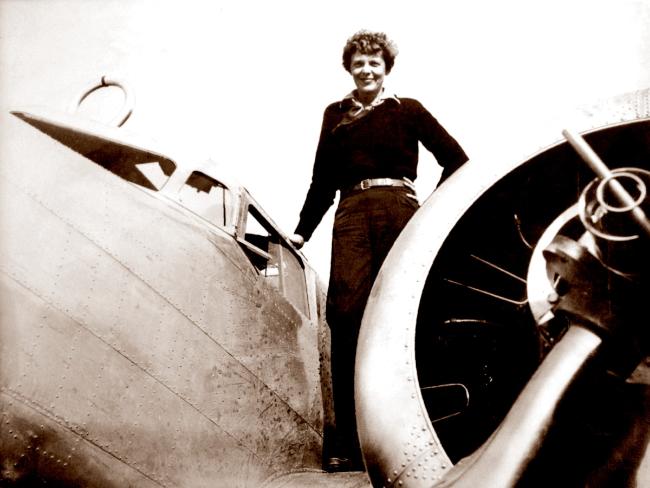
Amelia Earhart standing on the wing of her plane

The official story is simple. They ran out of fuel, missed the island, and crashed into the unforgiving Pacific. Their Lockheed Electra sank beneath the waves, lost forever in the deep. It’s clean. It’s tragic. It’s also, for many, completely unbelievable.

Deep Dive: The Gardner Island Hypothesis

What if they didn’t crash into the ocean? What if they made it to land?

This is the core of the most compelling alternative theory, championed by The International Group for Historic Aircraft Recovery (TIGHAR). They argue that Earhart, realizing she couldn’t find Howland, turned south along that “157 337” line and spotted an uninhabited atoll then known as Gardner Island (now Nikumaroro). It had a flat reef, perfect for an emergency landing at low tide.

The evidence? It’s tantalizing. For days after the disappearance, radio operators across the Pacific and even in the United States reported picking up faint, desperate distress calls. Over 100 of them. Were these hoaxes? Or was it Amelia, using the plane’s radio as long as the engines could run to charge the batteries, pleading for a rescue that never came?

Decades later, expeditions to Nikumaroro found things. Pieces of Plexiglas matching the Electra’s specifications. A piece of aluminum that looks eerily like a custom patch installed on her plane in Miami. The skeletal remains of a castaway were found there in 1940, initially dismissed as male but later re-examined by modern anthropologists who determined they were consistent with a female of Earhart’s height and ethnic background. The bones themselves are now lost, another ghost in the story. Was she a castaway, surviving for days, weeks, or even months on a desert island before succumbing to the elements?

From Spy to Alien Abductee: The Wildest Theories

The Gardner Island theory is just the beginning. The story of Amelia Earhart is a magnet for high strangeness.

One persistent theory claims her global flight was a cover for an espionage mission for President Franklin D. Roosevelt. Her real job? To fly over Japanese-controlled islands and photograph their military buildup. In this version, she was either shot down or forced to land, captured by the Japanese, and executed as a spy. A photograph surfaced years ago, allegedly from a Japanese archive, that some claim shows a captured Earhart and Noonan on a dock in the Marshall Islands. FBI analysis has since suggested it’s likely not them, but the theory refuses to die.

And it gets weirder. Some say she completed her mission, returned to the U.S. in secret, and lived out her life under an assumed name in New Jersey. Why? To avoid a diplomatic incident with Japan that could have sparked war. Then, of course, there’s the inevitable alien abduction theory. A pioneering pilot, pushing the boundaries of human achievement, vanishes over the world’s largest ocean. For some, the only explanation that fits is one that isn’t of this world.

Poster about Amelia Earhart's last flight

Into the Vortex: The Legend of Flight 19

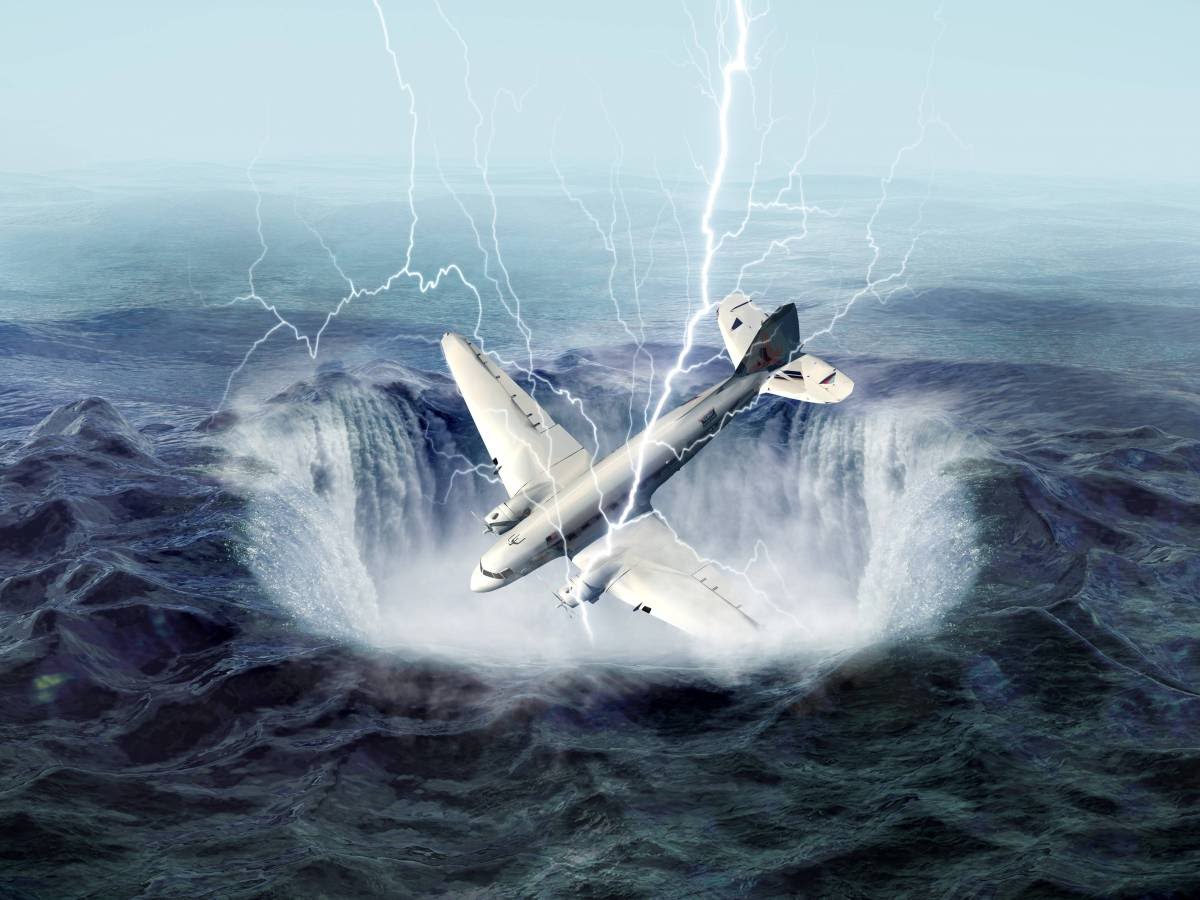
Before the region had a catchy name, it was already earning a reputation. The Bermuda Triangle. A stretch of the Atlantic that seems to have a hungry appetite for ships and planes. And no case cemented its dark legacy more than the disappearance of Flight 19.

On December 5, 1945, five TBM Avenger torpedo bombers took off from Fort Lauderdale, Florida. It was a routine training exercise, “Navigation Problem No. 1.” Fourteen airmen, a mix of seasoned instructors and trainees, flying in perfect weather. They completed their bombing runs over the Hen and Chickens shoals, turned north, and then headed back to base. Simple.

But they never came home.

Radio transmissions from the flight leader, Lieutenant Charles Taylor, became increasingly bizarre. He was confused. Lost. His compasses were malfunctioning. “I don’t know where we are,” his voice crackled over the radio. “We must have got lost after that last turn.”

Air traffic controllers listened, helpless, as the pilots grew more disoriented. They were flying over the ocean, but nothing looked right. “Everything is wrong… strange…” one transmission said. “We can’t be sure of any direction. The ocean doesn’t look as it should.”

They couldn’t find west. In Florida. They were lost in their own backyard. As fuel ran low and daylight faded, Taylor made a chilling final decision: they would all ditch in the sea together when the first plane ran out of gas. Then, just like Earhart, their radios fell silent.

But the story wasn’t over. The Navy immediately scrambled a PBM Mariner flying boat to search for the missing squadron. With a crew of 13 men, the massive plane took off into the twilight. Twenty-three minutes later, it too vanished from radar. A ship in the area reported seeing a massive explosion in the sky, a brilliant flash of light, and then nothing. The theory is that the Mariner, nicknamed “the flying gas tank” for its tendency to accumulate fuel vapors, exploded in mid-air.

But no wreckage of the Mariner was ever found. No wreckage of the five Avengers was ever found. No trace of the 27 men was ever seen again. An entire training squadron and their rescue plane, wiped from existence in a few short hours.

Ghosts in the Machine: When Technology Betrays

Some mysteries aren’t about strange lights or geographic anomalies. They are about the terrifying fragility of our own creations. They are about the moments when the complex machines we trust with our lives simply… break. In the most horrifying ways imaginable.

Helios Airways Flight 522: The Ghost Flight

Imagine this. You’re an F-16 fighter pilot. You get a call to scramble and intercept a passenger jet that isn’t responding to air traffic control. You pull alongside the Boeing 737 and look into the cockpit. What you see will haunt you forever. The pilot is slumped over the controls, motionless. The co-pilot is gone. In the passenger cabin, oxygen masks are dangling. Everyone is unconscious.

This was the nightmare reality of Helios Airways Flight 522 on August 14, 2005. The plane took off from Cyprus, heading for Athens. But it never began its descent. Instead, it entered its pre-programmed holding pattern and just… circled. For over an hour, it flew on autopilot, a ghost ship carrying 121 souls, all of them incapacitated or worse.

The fighter pilots watched in horror as someone suddenly entered the cockpit. It was a flight attendant, Andreas Prodromou, who had apparently stayed conscious using a portable oxygen supply. He tried desperately to control the massive jet. But he was too late. The engines flamed out from fuel starvation. The plane plunged from the sky, crashing into a hillside and killing everyone aboard.

The investigation revealed a chillingly simple cause: a cabin pressurization switch had been left in the “manual” position after a maintenance check. As the plane climbed, the cabin never pressurized. The crew and passengers slowly, silently suffocated from hypoxia, an insidious lack of oxygen that causes confusion before unconsciousness. The pilots never even knew what was happening before they passed out. A single switch, a tiny human error, turned a passenger jet into a high-altitude tomb.

Air France Flight 447: The Four-Minute Fall

On June 1, 2009, an Airbus A330, one of the most advanced airliners ever built, was flying from Rio de Janeiro to Paris. It was a technological marvel. Then it flew into a thunderstorm over the middle of the Atlantic Ocean and disappeared without so much as a single distress call.

For two years, the wreckage lay at the bottom of the ocean, a four-kilometer-deep enigma. When the black boxes were finally recovered, they told a story not of a sudden disaster, but of a slow, confusing, and ultimately fatal breakdown between man and machine.

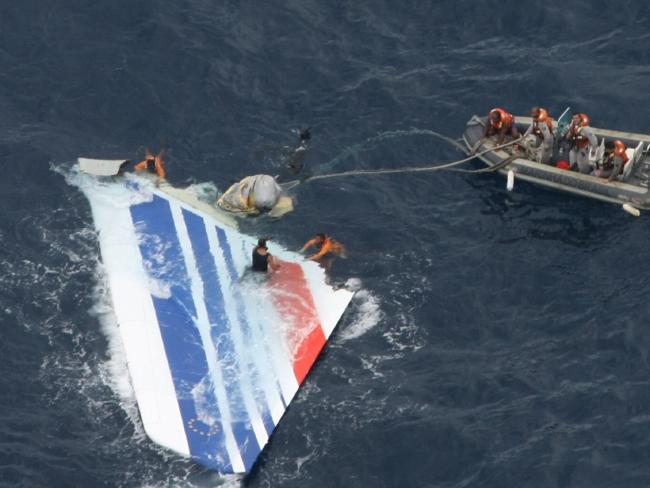
Debris from Air France Flight 447 being recovered

Ice crystals in the storm had clogged the plane’s pitot tubes—the small sensors that measure airspeed. The autopilot disengaged. The confused pilots, deprived of accurate speed readings, made a catastrophic error: they pulled the nose up too high, causing the massive jet to stall. It began to fall. And it fell for four minutes and 23 seconds.

The cockpit voice recorder captured their confusion and panic. They didn’t understand why the plane wasn’t flying. They argued about what to do. They were falling out of the sky at 11,000 feet per minute, yet they never fully grasped the situation until the very end. All 228 people on board were lost because a tiny tube froze, and the humans in charge couldn’t understand what their hyper-advanced airplane was telling them.

Echoes of the Cold War and Sky-High Sabotage

Not all disappearances can be blamed on weather or mechanical failure. Some have the distinct stench of something more sinister. Cover-ups. Secret weapons. Human malice.

The B-47 Stratojet with a Nuclear Payload

In March 1956, at the height of the Cold War, a U.S. Air Force B-47 Stratojet bomber was on its way from Florida to Morocco. It was a routine ferry flight, but this was no ordinary plane. It was carrying two nuclear weapon cores in shielded transport cases. This was a “Broken Arrow” incident waiting to happen.

Over the Mediterranean Sea, it descended through clouds to meet a tanker for a second mid-air refueling. It never came out. The bomber, its three-man crew, and its two nuclear cores vanished. No trace. No wreckage. No oil slick. One of the largest air-sea searches in history found absolutely nothing. Did it explode? Did a rival power somehow snatch a nuclear bomber out of the sky? Or is a piece of unimaginable destructive power still sitting at the bottom of the Mediterranean, a ticking atomic clock?

Aer Lingus Flight 712: A Secret War?

On March 24, 1968, an Aer Lingus flight from Cork, Ireland, to London plummeted into the sea, killing all 61 on board. The investigation found no clear cause. But whispers began almost immediately. Witnesses on the ground claimed to have seen something else in the sky that day. Something fast. A missile.

The theory that has persisted for decades is that the plane was accidentally shot down by an experimental missile being tested by the British military at a range in Wales. The British government has always issued firm denials. But the questions remain. The plane’s final, garbled radio transmission mentioned it was spinning rapidly. Was it a mechanical failure? Or was it an aircraft mortally wounded by something it was never supposed to encounter in a commercial flight path?

EgyptAir Flight 990: Two Stories, One Disaster

On Halloween 1999, EgyptAir Flight 990 crashed into the Atlantic Ocean, killing all 217 people on board. What happened in the cockpit in those final moments became the source of an international dispute. The American National Transportation Safety Board (NTSB) and the FBI investigated and came to a chilling conclusion: the crash was deliberate. They believed the relief first officer, Gameel Al-Batouti, had intentionally put the plane into a deadly dive.

The cockpit voice recorder captured Al-Batouti calmly repeating a single phrase, “Tawkalt ala Allah,” which translates to “I rely on God,” over and over as the plane fell. The lead pilot can be heard fighting him, yelling “What is this? Pull with me!”

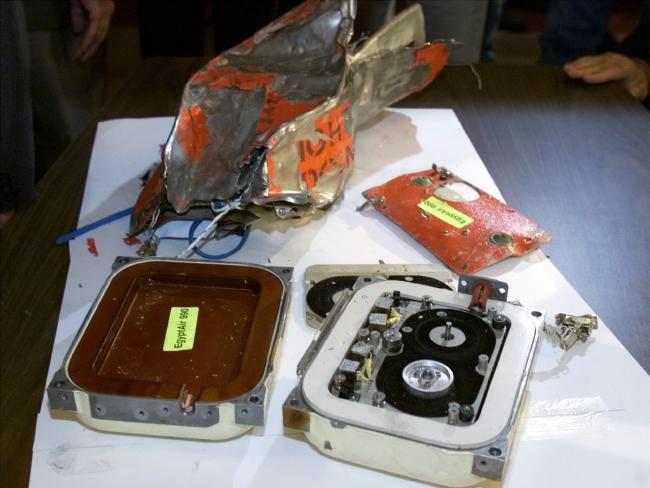
The damaged flight data recorder from EgyptAir 990

But Egyptian authorities vehemently rejected this. They conducted their own investigation and concluded the crash was caused by a mechanical failure in the plane’s elevator control system. So which is it? A deliberate act of mass murder-suicide? Or a catastrophic equipment malfunction? Two official investigations. Two completely different realities. The truth remains buried at sea.

Pan Am Flight 7: A Poisoned Sky

In 1957, a Pan Am Boeing Stratocruiser, the “Clipper Romance of the Skies,” was on a luxurious round-the-world trip. During the leg from San Francisco to Honolulu, it went missing. For five agonizing days, search crews scoured the Pacific. They finally found the wreckage floating hundreds of miles off course.

But the discovery only deepened the mystery. The plane had little external damage. It seemed to have landed gently on the water. The autopsies on the 44 victims delivered the real shocker: they had died from carbon monoxide poisoning. How? No source for the poison was ever found. The leading theory became a sinister plot of insurance fraud, that someone had detonated a device in the cargo hold designed to cause a fire and bring the plane down, allowing them to collect a massive payout. But no proof was ever found. It was a perfect, unsolved crime at 30,000 feet.

The sky is a vast, empty canvas. Most of the time, our journeys across it are safe and predictable. But these stories are a stark reminder that sometimes, the canvas tears. They tell us that for all our radar, our satellites, and our science, there are still pockets of mystery big enough to swallow a 200-ton machine without a trace. They are holes in our history, events that defy simple explanation. So the next time you look up at a clear blue sky, remember those who flew into it and never came out. And ask yourself: what other secrets is it keeping?

Arindam Mukherjee
Arindam Mukherjee
Arindam loves aliens, mysteries and pursing his interest in the area of hacking as a technical writer at 'Planet wank'. You can catch him at his social profiles anytime.
RELATED ARTICLES
- Advertisment -

Most Popular

Recent Comments

Warren Pan Abbott on The legend of the Devil Monkey !
chris davies on The McPherson Tape Mystery
Reed Reedly on ET has Internet!
Bea Houseoffashion on Proof Of Time Travellers – Gallery
Marcus2012 on ET has Internet!
Reed Reedly on ET has Internet!
LaughsAtConspiracyNuts on The 9/11 Conspiracy – Myths and Facts
Alex Sliverman on Did the ancients fly?
Doctor Wholigan on Time Traveler in 1938 film
chris davies on The McPherson Tape Mystery
Archie1954 on 10 secret UFO hideouts
chris davies on Ghosts of flight 401
Marcus2012 on ET has Internet!
jason Macdonald on Proof of Time Travel? – China
chris davies on Long-Lost Pyramids Found?
Reed Reedly on ET has Internet!
Milkman on Connected Universe
Tenmiles on Baigong Pipes Mystery
Simon Foster on Sirius – The Documentary
From the 1st April on 2013 – Alien Contact date ?
SkyWatcher on Is ET ignoring us?
I Come From The Future on Obama to make UFO Alien disclouser soon ?
Just another person on 2013 – Alien Contact date ?
Malcolm Windowcleaner on The strange case of Rudolph Fentz
Mason Servio on Strange Things on Mars
Marke Wisdom Seeker on What will we find as arctic melts?
Andrea A Elisabeth Levyne on Aliens Captured in Varginha, Brazil
Mitch Grouyeki on Amazing Space Shuttle pictures