
Home Weird World Paranormal The World’s Most Haunted Places – The Myrtles Plantation

The World’s Most Haunted Places – The Myrtles Plantation

0
68

20140105-172726.webp

The Whispering Walls of St. Francisville

You can feel it before you even see the house. The air in St. Francisville, Louisiana, is thick. Heavy. It hangs on you like a wet wool coat, smelling of river mud, ancient oaks, and sweet olive. But when you step onto the grounds of The Myrtles Plantation, the atmosphere shifts. The heat is still there, sure. But underneath it? A cold current. A static charge that makes the hair on your arms stand straight up.

Welcome to what many experts, thrill-seekers, and terrified tourists call “America’s Most Haunted Home.”

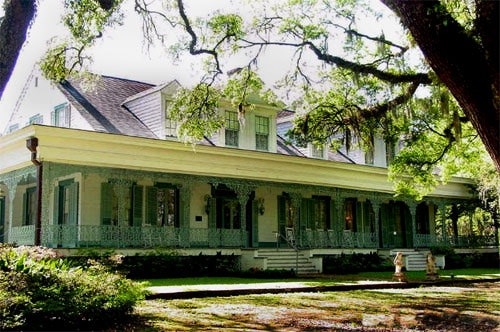
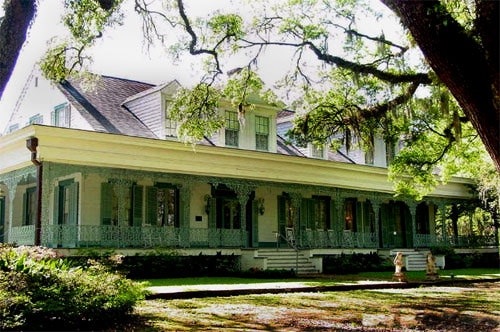
This isn’t just a house. It’s a puzzle box of tragedy. Built in 1796 by General David Bradford, this architectural stunner hides a history so dark, so twisted, that it’s become the Holy Grail for paranormal investigators. We are talking about a place where the timeline of history bleeds into the timeline of the dead. Some researchers claim the soil here has soaked up the blood of at least ten murder victims. Is that number inflated? Maybe. Skeptics and historians like Troy Taylor and David Wisehart argue that official records only confirm one singular, brutal slaying inside the home.

But here is the thing about ghost stories: Ghosts don’t care about your paperwork.

Whether it’s one murder or ten, the energy here is undeniable. It screams at you. It wakes you up at 3:00 AM. It pulls the covers off your bed. Even the hardest skeptics walk away from The Myrtles with stories they hesitate to tell in the daylight.

The Man Who Ran: General Bradford’s Secret

To understand the haunting, you have to look at the foundation. The Myrtles wasn’t built as a happy retirement home. It was a hideout. General David Bradford wasn’t just a wealthy planter; he was a fugitive. Known as “Whiskey Dave,” he was a key player in the Whiskey Rebellion. President George Washington actually put a price on his head. Think about that energy. Paranoia. Fear. Looking over your shoulder every single second.

Bradford built this place to disappear. He built it to hide from the government.

He lived here alone, terrified, for years before he could even bring his family down. That kind of anxiety leaves a mark. It imprints on the wood and the stone. Some sensitive psychics claim that the initial “heaviness” of the house comes from Bradford himself—a man who spent his final years waiting for the hammer to drop.

The Legend of Chloe: Sliced Ears and Poisoned Cake

If you know anything about The Myrtles, you know the name Chloe. This is the big one. The legend that keeps the lights on and the tourists screaming. But is it history, or is it folklore gone wild?

The story goes like this: Chloe was a slave owned by Clark Woodruff (Bradford’s son-in-law). She wasn’t a field hand; she was a house servant, which meant she was always close to the family. Close to the secrets. The legend says she was forced into being Woodruff’s mistress—a terrible, abusive power dynamic common to the era. Fearing she would be cast out to the brutal work of the fields, Chloe began eavesdropping on Woodruff’s private business conversations. She needed leverage. She needed to know she was safe.

She got caught.

Woodruff didn’t just fire her. The story claims he ordered her ear to be sliced off as punishment. To hide the mutilation, Chloe began wearing a green turban. A green turban that has been spotted by hundreds of witnesses over the last century.

The Birthday Cake of Death

Revenge is a dish best served… sweet? This is where the story gets absolutely horrific. Allegedly, Chloe baked a birthday cake for the Woodruff children. But she spiked the batter. Not with arsenic, but with extract of boiled oleander leaves—a toxic plant that grows thick on the property.

The theory? She didn’t want to kill them. She supposedly just wanted to make them sick, play the role of the nurse who cured them, and win back the family’s favor. It was a desperate, twisted gamble.

It went wrong. Catastrophically wrong. Sara Woodruff (the mother) and two of her daughters ate the cake. They didn’t just get a stomach ache. They died in agony within hours.

The other slaves, terrified that the master would blame them all, allegedly dragged Chloe from her room and hanged her from a nearby tree. Her body was reportedly weighed down with rocks and thrown into the Mississippi River. No grave. No marker. Just rage and water.

Now, historians will tell you there is zero record of a slave named Chloe. They’ll tell you the Woodruff family died of yellow fever, not poison. But explain that to the people who snap photos of a transparent woman in a turban standing near the breezeway. Explain it to the guests who wake up to see a dark figure staring at them from the corner of the room.

The Mirror That Never Forgets

Walk into the hallway. Look at the mirror. It’s huge, gilded, and absolutely terrifying.

According to custom, when someone died in the house, mirrors were supposed to be covered. The belief was that a mirror could trap the departing spirit if it wasn’t veiled. After the poisoning of the Woodruffs, legend says this specific mirror was overlooked. It was left exposed.

Take a closer look at the glass. You will see drips. Smudges. Handprints. The housekeeping staff at the Bed and Breakfast have cleaned this glass with industrial-strength cleaner. They have scrubbed it until their arms ached. But the marks always return. They come back from the inside of the glass.

Are these the trapped souls of Sara and her children, scratching to get out?

The 17th Step: The Death of William Drew Winter

We mentioned earlier that only one murder is “verified.” This is it. And it is cinematic enough to be a horror movie all on its own.

William Drew Winter was an attorney and agent who lived at the Myrtles from 1860 to 1871. The Civil War had just ravaged the South. Tensions were high. It was a time of lawlessness. One evening, Winter stepped out onto the side porch. A stranger—or perhaps a known enemy—rode up. A shout. A flash of gunpowder.

Winter took a shotgun blast to the chest.

Blood pouring from his body, Winter didn’t die immediately. He staggered back inside. He was trying to get upstairs to his wife. Imagine the sheer will it took. He grabbed the banister. He pulled himself up. One step. Two steps. Blood trailing behind him like a red ribbon.

He made it to the 17th step. And there, his heart finally stopped. He collapsed and died in his wife’s arms.

This isn’t just a sad story. It’s an auditory loop. To this day, hundreds of guests and employees have reported hearing heavy boots stomping up the stairs. Thump. Thump. Thump. The sound always stops on the 17th step. It never goes to the 18th. It is a recording of a death, playing over and over again for eternity.

The Other Restless Residents

The house is crowded. It’s not just Chloe and Winter. The paranormal activity here is constant and varied. It’s like a train station for the dead. Here is a breakdown of the other entities that allegedly refuse to leave:

  • The Children on the Veranda: Guests frequently report seeing two little girls with long blonde hair playing near the windows. They peer in, laughing, but when you turn to look at them directly, they vanish into the mist. Are these the poisoned Woodruff children?
  • The Phantom Piano: The grand piano on the ground floor has a mind of its own. It doesn’t play a symphony. It plays one, singular, haunting chord. It strikes the note when the room is empty. You’ll be in the next room, you hear the PING, you run in—nobody is there.
  • The Ghostly Maids: It’s not just the owners who are stuck here. Witnesses often see slaves in period clothing sweeping the floors or standing by the doors. They sometimes ask guests a question that chills the blood: “Can I do any chores for you?” before dissolving into thin air.
  • The Frenchwoman: Some have reported a woman in a black dress who roams the guest rooms. She often lifts the mosquito netting around the beds and peers down at the sleepers. Imagine waking up to that face inches from yours.

A Night of Terror: The Stacey Jones Account

The Myrtles is now a functioning Bed and Breakfast. They invite you to sleep in the same rooms where people died. They dare you to turn off the lights. Many accept the challenge. Few get a good night’s sleep.

My colleague, Stacey Jones, the founder of Central New York Ghost Hunters, isn’t someone who gets scared easily. She hunts ghosts for a living. She has stood in abandoned asylums and walked through graveyards at midnight. But her stay at The Myrtles? That was different.

Here is her direct report from the front lines:

“It was a spectacular place to stay, if you keep an open mind. While taking the guided tour, I saw what looked like a heavyset African-American woman wearing an apron walk by the door, on the porch. Thinking it was a worker in period dress, I peeked out and no one was there.”

Pause for a second. A full-bodied apparition. In broad daylight. That is rare. Most ghost sightings are shadows or feelings. Jones saw a person. But the night got worse.

“We stayed in the children’s bedroom, and my best friend (who was a non-believer at the time) experienced quite a bit of paranormal phenomena. She was held down in the bed and constantly poked all night. She was unable to move or cry out for help. She didn’t think the stay was as great as I did.”

This describes a classic, aggressive haunt. Being “held down” is terrifyingly personal. It’s an invasion. It suggests that whatever is in that room isn’t just a recording—it’s intelligent. It knows you are there. And it wants to touch you.

“They let you ghost hunt on the grounds whenever you like, but you can’t ghost hunt in the main house without an escort. I suggest setting up a video camera in your room and bring a tape recorder to obtain EVP.”

Modern Technology Meets Old Ghosts

In the age of smartphones and Google Earth, you would think these legends would die out. High-definition cameras usually ruin the mystery, right? Not here. If anything, the internet has only made the legend of The Myrtles stronger.

There was a moment a few years back where a “Google Street View” capture of the plantation seemed to show a dark, hand-shaped shadow reaching out from the porch columns. Online forums exploded. Was it a glitch? A shadow from a tree? Or was it the house saying hello?

And let’s talk about the famous “Chloe Postcard.” In 1992, a proprietary photograph was taken for insurance purposes. The photographer wasn’t trying to capture a ghost; he was taking a picture of the rooflines and the spacing between the buildings. But when the film was developed, there she was. A distinct, shadowy figure standing between the two buildings. She appears to be looking right at the camera. The figure is translucent. You can see the wall boards through her body.

That image has been analyzed by experts for decades. No Photoshop. No double exposure. Just… something standing there that shouldn’t be standing there.

Why Do We Keep Coming Back?

Why do we pay money to be terrified? Why do we book a room in a house where children were poisoned and men were shot? It’s because we are desperate to know what lies on the other side. We want proof.

The Myrtles Plantation offers that proof. It sits there, wrapped in its iron lace grillwork, silent and watchful. It doesn’t force you to believe. It just waits. It waits for you to walk up those stairs. It waits for you to look in that mirror.

If you are brave enough—or foolish enough—to visit St. Francisville, go ahead. Book a room. But a word of advice: don’t sleep with your feet hanging off the edge of the bed. And if you hear the piano play a single, lonely chord in the middle of the night… don’t go downstairs to investigate.

Some doors, once opened, can never be closed again.

Originally posted 2014-01-05 16:29:40. Republished by Blog Post Promoter









