The Silence on the Red Planet is Deafening. Then… We Saw This.
Space is quiet. It holds its secrets close, wrapped in the vacuum of the dark void. But sometimes, just sometimes, the curtain slips. We get a glimpse of something that shouldn’t be there. Something that defies the easy answers found in geology textbooks.
We are looking at Mars. The Red Planet. Our dusty, rusty neighbor. For decades, we thought it was a dead rock. Just a desolate wasteland of iron oxide and freezing storms. But recent images suggest we might be dead wrong. We might be looking at a graveyard.
Enter “Marshenge.”
This isn’t just a random pile of rubble. This is structure. This is geometry. This looks like intent.
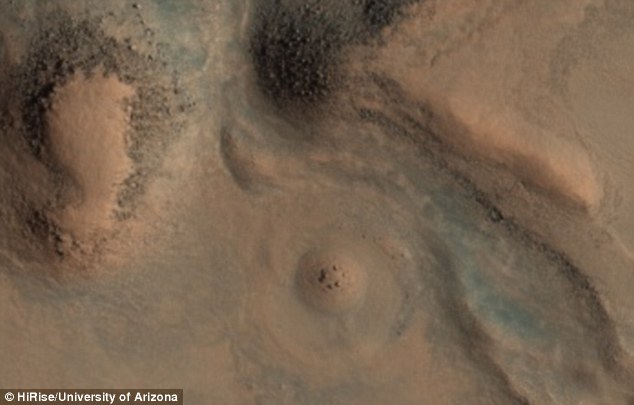
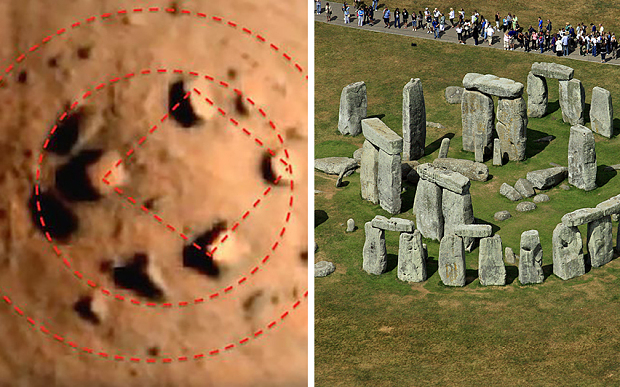
A bizarre, almost perfectly circular formation of stones has been spotted on the Martian surface. It sits there, defiant, on a raised mound of earth, looking eerily like one of the most famous prehistoric monuments on Earth: Stonehenge. Is it a trick of the light? A bizarre geological fluke? Or are we staring at the eroded ruins of a civilization that died while Earth was still just a soup of bacteria?

The Eye in the Sky: How We Found It
Let’s back up. How did we even see this? We didn’t use a telescope from a backyard in Ohio. This image comes from the heavy hitters.
The discovery was made using the High Resolution Imaging Science Experiment. That’s a mouthful, so let’s call it HiRise. It’s a camera. But calling HiRise a camera is like calling a Ferrari a wagon. It’s the most powerful camera ever sent to another planet, strapped to the back of the Mars Reconnaissance Orbiter (MRO). This machine has been circling Mars since 2006, snapping pictures with such insane detail that it can spot a coffee table on the surface from hundreds of miles up.
It was scanning the ground. Looking for landing sites. Looking for water ice. Instead, it found a circle.
When the data came back to Earth, the internet didn’t just talk. It screamed. NASA confirmed the existence of the stones. They didn’t hide the photo. It’s right there on their servers. A spokesperson even admitted, somewhat cryptically, “the first images caused much speculation, this new images will cause even more.”
Speculation is putting it mildly. The community of anomaly hunters—those dedicated digital archaeologists who scour every pixel NASA releases—went into overdrive.
Nature vs. The Unknown
Look at the spacing. Look at the way the stones sit on that mound. It’s a classic “henge” formation. In archaeology, a henge is usually a circular bank of earth, often with an internal ditch. And standing in the middle? Monoliths.
The skeptics, the debunkers, and the mainstream scientists were quick to jump in. They had to. If they admitted this might be artificial, history books would burn. Their explanation? Permafrost.
They call it “patterned ground.”
The theory goes like this: Mars is cold. Freezing. The ground is packed with ice. Over thousands, maybe millions of years, the ground freezes and thaws. Freezes and thaws. This cycle pushes and pulls the soil. According to geologists, this process can naturally sort rocks. It pushes the big stones to the edges and keeps the fine dirt in the middle. Over eons, they claim, this creates circles. Polygons. Shapes.

The Problem with the “Natural” Explanation
Does that explanation satisfy you? Because it leaves a lot of loose threads hanging.
Yes, patterned ground exists. We see it on Earth in the Arctic. We see it in Antarctica. But those patterns usually look like a honeycomb. A connected web of shapes. They are packed together like tiles on a bathroom floor.
Look at the image again. This isn’t a honeycomb. It is a solitary, isolated circle sitting proudly on a raised hill. Where are the other circles? If this is a natural freeze-thaw cycle, why is it only happening right here? Why did nature decide to build just one perfect monument and then stop?
It’s the isolation that bothers me. It stands alone. Just like a temple would.
Dubbed ‘Marshenge’, this formation has become a rallying cry for those who believe we have been lied to about the history of our solar system. If natural processes sort rocks, they do it randomly, chaotically. They don’t usually create a perfect ring of equidistant boulders on a pedestal.
Could it be pareidolia? That’s the psychological trick where your brain sees a face in a cloud or a bunny in a piece of toast. Scientists love that word. It shuts down the conversation. “Oh, you’re just imagining things.”
But geometry isn’t a face in a cloud. A circle is a circle. Math is math. And the odds of rocks rolling uphill to form a defensive perimeter are… astronomical.
The Earth Connection: Echoes of Stonehenge
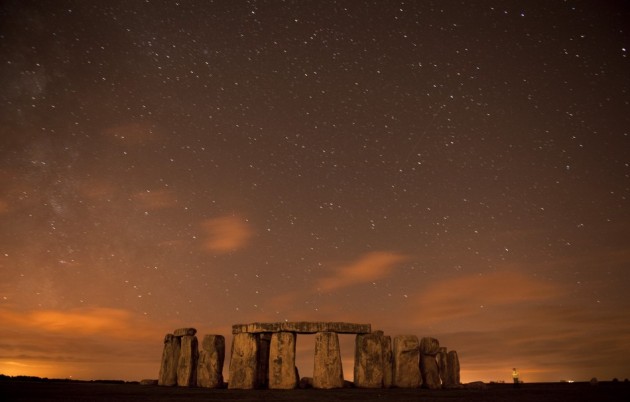
Why does this resonate so deeply with us? Because we have seen it before. In Wiltshire, England.
Stonehenge. The ultimate mystery. Even here on Earth, with all our technology, we still argue about it. It was built around 3,100 BC. That’s over 5,000 years ago. People with no wheels, no steel tools, and no cranes dragged massive stones—some weighing 25 tons—across miles of countryside to build it.
Why?

A Cosmic Blueprint?
Stonehenge on Earth has long been soaked in supernatural folklore. Some say Merlin the Wizard danced the stones into place. Others whisper about giants. And yes, many have looked at the precision of the layout—the way it aligns perfectly with the summer solstice sunrise and the winter solstice sunset—and pointed to the stars.
Ancient astronaut theorists have asked the question for decades: Was Stonehenge a landing pad? A signaling device? A star map left by visitors?
Now, look back at Mars. If a civilization existed there millions of years ago, and if they fled that dying world to come here, did they bring their architecture with them? Is Stonehenge a copy? A memorial to the home they left behind?
Think about the function. Experts believe Stonehenge was used for religious ceremonies. A place to monitor the heavens. A celestial observatory. If you lived on Mars, a planet with two moons (Phobos and Deimos) and a thin atmosphere, watching the sky would be your primary connection to the universe. You would build a circle to track the seasons, to know when to plant, when to harvest, and perhaps, when to prepare for the end.
The Durrington Walls Discovery
The mystery on Earth just keeps getting deeper, too. We used to think Stonehenge stood alone. We were wrong.
Earlier this month, archaeologists dropped a bombshell. They announced the discovery of another line of standing stones just a mile away from the famous site. These aren’t small rocks. These are massive.
Using ground-penetrating radar—technology that lets us see underground without digging—they found nearly 100 stones buried beneath the surface. This site dates back 4,500 years. They found it along the south-eastern edge of what is now called the “Durrington Walls superhenge.”
It’s a circular earthwork a third of a mile across. A super-structure.
This proves that ancient builders were obsessed with this shape. The circle. The enclosure. It was vital to them. It meant protection. It meant power. If this shape is a universal symbol of intelligence and gathering, finding it on another planet shouldn’t surprise us. It should wake us up.

The Bigger Picture: Mars is Weird
If “Marshenge” was the only weird thing on the Red Planet, maybe we could accept the ice theory. Maybe we could shrug and move on.
But it’s not alone.
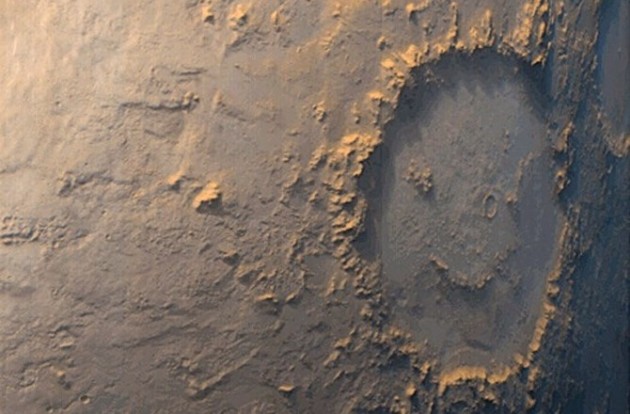
We have the “Face on Mars” in the Cydonia region. NASA dismissed it as a trick of light and shadow in the 1970s. But look at the image enhancements. The symmetry is terrifying. We have the Pyramids of Elysium—huge, three-sided structures that look strikingly like the ones in Egypt. We have photos of what look like glass tubes, artificial tunnels, and even statues.
Every year, the rovers send back more data. Every year, the “natural” explanations get thinner and thinner.
Mars was once like Earth. We know this now. It had oceans. It had rivers. It had a thick atmosphere. It had blue skies. Life could have thrived there for a billion years. Then, something happened. A cataclysm. The core cooled. The magnetic field collapsed. The solar wind stripped the atmosphere away, turning a paradise into a frozen hellscape.
If there were people there—beings like us—what would they leave behind? Wood rots. Steel rusts. Plastic disintegrates. But stone? Stone lasts forever.
The Next Step
We are standing on the edge of a new era. For the first time in human history, we aren’t just looking. We are going.
Companies like SpaceX and government agencies are building the ships right now. Starship is being tested. The plan is to put boots on the ground within our lifetime. When the first astronauts land, will they be geologists looking for rocks? Or will they be archaeologists looking for ruins?
Imagine the moment. An astronaut crests a hill, dust kicking up around their boots. They look down into a valley and see it. Not a photo. Not a blurry satellite image. But the real thing. A circle of standing stones, weathered by a billion years of sandstorms, but still standing.
They walk to the center. They touch the stone. And they realize we were never alone.
Until then, we have the images. We have the questions. And we have “Marshenge,” a silent sentinel on a dead world, waiting for us to come back and remember.