
Home Weird World Science The Venus flytrap is able to count to five

The Venus flytrap is able to count to five

0
71

It sits there. Waiting. Silent. Green. To the naked eye, it’s just vegetation. But looks are deceiving. This isn’t just a plant. It’s a predator. A calculator. A biological impossibility that has baffled scientists, terrified children, and obsessed researchers for centuries.

We are talking about the Venus flytrap. Dionaea muscipula.

Most plants are passive. They drink sunlight. They sip water. They wave in the breeze. The Venus flytrap? It hunts. It thinks. And, as impossible as it sounds, it counts.

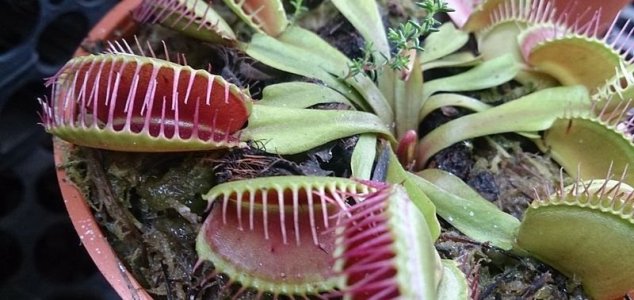
Venus flytrap

The Venus flytrap obtains nutrients from the insects it catches. But that sentence is too simple. It doesn’t do justice to the sheer horror and brilliance of the mechanism at play here. This is a green computer. A botanical bear trap. And it solves a problem that no plant should be able to solve.

The secret behind the carnivorous plant’s success is its ability to count how many times it is touched. Yes. Math. Without a brain. Without a nervous system as we know it. How?

The Green Nightmare: A Perfect Killing Machine

One of the most unusual yet recognizable plants on Earth – the Venus flytrap is a bizarre-looking specimen with a set of traps capable of ensnaring any insect that happens to wander in to them. But why? Why kill?

It comes down to geography. Evolution is a desperate game. These plants are native to a tiny, specific sliver of the world: the wetlands of the Carolinas in the United States. The soil there is terrible. It’s garbage. Boggy, acidic, and devoid of nitrogen. Most plants would starve there. They would wither and die.

The flytrap refused to die. Instead, it looked up. It looked at the sky. It realized the food wasn’t in the dirt. The food was flying around it.

So, it turned the tables. It became the eater, not the eaten.

Exactly how the plant decides when to close one of its trap and begin digesting what’s inside has remained a topic of debate for years, but now scientists conducting a new study believe that the secret to the plant’s success lies in its rather remarkable ability to count.

The Energy Crisis

Think about movement. You move your hand. Easy, right? Muscles contract. Nerves fire. You ate a sandwich, so you have energy. For a plant, movement is expensive. It is exhausting. Snapping one of its traps shut and initiating the production of digestive enzymes takes up a lot of energy and is something the plant can ill-afford unless it is sure it is getting a meal out of it.

If the trap shuts for a false alarm—a raindrop, a piece of falling debris, a curious human poking it with a stick—the plant wastes hours or days reopening. It wastes energy it doesn’t have. If this happens too often? The plant dies. Starvation.

So, it needs a failsafe. A security system. It needs to know, without a shadow of a doubt, that the thing inside its mouth is alive, moving, and worth eating.

To avoid closing its trap unnecessarily, the plant keeps track of the number of times that it feels something brushing against the trigger hairs inside its trap before deciding to proceed.

The Rule of Two: How the Trap “Thinks”

Inside the red, fleshy lobes of the trap, there are tiny hairs. Trigger hairs. They look innocent. They are not. They are the tripwires of a biological bomb.

The first time it detects something the plant doesn’t actually react at all other than to trigger an increased awareness that a tasty morsel may have wandered in. It’s not until it feels something brush up against the trigger hairs a second time that the trap actually shuts.

Let’s break this down. It is mind-blowing.

  • Touch One: The insect lands. It brushes a hair. The plant feels it. An electrical signal—an action potential, almost identical to the signals in your human brain—shoots across the leaf. But the trap stays open. Why? Because a raindrop only hits once. A falling twig hits once. The plant waits. It sets a timer. A biological stopwatch begins ticking.
  • Touch Two: The insect moves again within 20 seconds. It hits a second hair, or the same hair again. BAM. The trap snaps shut in less than a tenth of a second. Faster than the human eye can follow.

This is the “Double-Tap” verification system. It is nature’s way of asking, “Are you sure?”

The Horror of Digestion

But the counting doesn’t stop there. This is where it gets dark. Really dark.

Subsequent detections prompt the plant to begin digesting whatever it is has caught inside. The trap is shut, but not tight. It’s a cage. Small insects can actually squeeze out and escape. This is intentional. The plant doesn’t want a snack. It wants a meal. If the bug is too small, let it go. It’s not worth the digestive acid.

But if the bug is big? It panics. It struggles. It trashes around inside the green prison. And every time it struggles, it bumps those trigger hairs again.

Three touches. Four touches. Five touches.

Each touch sends a chemical signal to the plant’s glands. The plant is counting the struggle. It is measuring the size of the fight. The more the victim fights, the more acid the plant prepares.

What makes this process particularly interesting is the fact that the plant is even able to determine how large or nutritious the caught insect might be and produces the correct amount of digestive enzymes to get the job done as efficiently as possible.


After five or more stimulates, the trap seals hermetically. It becomes a stomach. It floods with enzymes that dissolve the insect alive, turning it into a nutrient-rich goo that the plant absorbs. It is gruesome. It is efficient. It is beautiful.

The Conspiracy: Are They From Here?

Now, let’s get weird. There is a persistent theory on the internet—a whisper in the alternative history communities—that the Venus flytrap doesn’t belong here. Look at it. Does it look like a rose? A fern? An oak tree?

It looks like a creature from a 1950s sci-fi movie. It acts like an animal. It uses electricity to think.

The theory connects to the “Carolina Bays.” These are thousands of mysterious, oval-shaped depressions scattered across the exact same region where the flytrap grows natively. For decades, geologists and fringe theorists have argued about what caused them. The most exciting theory? A comet impact.

Imagine it. Roughly 12,000 years ago, a comet breaks up over North America. Fragments slam into the Carolinas. The heat is intense. The radiation is strange. The biology of the area is scorched and mutated.

Did the Venus flytrap evolve naturally over millions of years? Or is it a mutant? A biological anomaly created by an ancient cataclysm? Or, as some daring thinkers suggest, did the spores come with the rock from the stars?

Science says evolution. The flytrap is a cousin of the Drosera (sundew). But the speed? The snap-trap mechanism? It evolved independently and seemingly out of nowhere. It is a “morphological jump” that makes biologists scratch their heads. It’s the only plant on land that hunts like a bear trap.

Darwin’s Obsession and The “Root-Brain”

Charles Darwin, the father of evolution, was terrified of this plant. He was also in love with it. He called it “one of the most wonderful plants in the world.”

He spent years testing them. He fed them meat. He poked them with glass. He blew on them. He realized they were smart. He wrote extensively about their sensitivity.

Modern research backs him up. We now know that plants have a “root-brain” hypothesis. They use neurotransmitters. They use glutamate—the same chemical your brain uses to send signals right now while you read this. When a flytrap counts to two, calcium ions flood its cells, changing the water pressure instantly, forcing the leaves to buckle and snap. It is a hydraulic computer.

Can They Feel Pain?

Here is a question that will keep you up at night. Scientists recently discovered that if you use general anesthesia on a Venus flytrap—the same ether or xenon gas they give you at the hospital—the plant goes to sleep. It stops counting. You can touch the hairs, and it won’t snap. It “blacks out.”

When the gas wears off? It wakes up. It starts hunting again.

If a plant can be anesthetized, does that mean it has consciousness? If it can count, does it know it exists? If it hunts, does it enjoy the kill?

The Silent Watchers

The next time you see a Venus flytrap in a garden center or a botanical garden, don’t just walk past. Stop. Look closer. Watch the open jaws. They are waiting. They are sensing the air pressure, the temperature, the vibrations of your footsteps.

They are counting.

It is a reminder that nature is not just a backdrop. It is active. It is aggressive. And in the case of the Venus flytrap, it is capable of complex mathematics that keeps it alive in a hostile world. It counts to survive. It calculates to kill.

And it is doing it all without a single neuron.

So, is it just a plant? Or is it something else entirely—a form of intelligence we are only just beginning to understand? The research continues. The mystery deepens. And the trap stays open, waiting for the next mistake.









