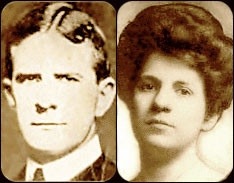
The Real Dr. Jekyll and Mr. Hyde: A Tale of Poison, Greed, and a Doctor Who Got Away with Murder
You know the story. We all do. A respectable doctor, a hidden darkness, a potion that unleashes a monster. Robert Louis Stevenson’s The Strange Case of Dr. Jekyll and Mr. Hyde is a gothic masterpiece, a chilling fable about the duality of man.
But what if I told you it wasn’t just a fable?
What if I told you that just a few years after Stevenson’s book shocked the world, a real-life doctor, a man of science and society, began his own horrifying transformation? A man who didn’t need a potion to become a monster. A man who used his medical bag not to heal, but to kill. A man named Dr. Bennett Clark Hyde.
This isn’t fiction. This is the story of a Gilded Age dynasty, a web of poison, and one of the most audacious murder sprees in American history. Buckle up. The truth is far stranger, and far more terrifying, than any story ever put to paper.
The Kansas City King and the Ambitious Doctor
First, you have to understand Kansas City at the turn of the 20th century. It was a city of raw ambition, a place of cowboys and capitalists, where fortunes were forged in cattle, railroads, and real estate. And at the very top of this pyramid sat one man: Colonel Thomas Swope.
Swope was a legend. A self-made millionaire, a philanthropist who had literally donated the land for the city’s largest park—a park that still bears his name. He was an aging, eccentric bachelor, impossibly wealthy and without a child to his name. His legacy, his fortune, was an object of intense speculation.
Into this world of immense power and old money stepped Dr. Bennett Clark Hyde. On the surface, he was everything a man of his time should be. Well-educated, charismatic, a respected physician with a promising career. He was handsome. He was charming. He moved in the right circles. But beneath that polished veneer, a different kind of ambition was churning. An ambition that was cold, patient, and utterly ruthless.

Hyde saw his path to the top. It wasn’t through his medical practice. It was through marriage.
A Forbidden Love or a Calculated Gambit?
His target was Frances Swope, a niece of the great Colonel. She was part of the extended Swope clan that lived in a sprawling mansion in nearby Independence, Missouri. Frances’s father, Logan Swope, had passed away years earlier, leaving his widow and seven children under the financial protection of their powerful uncle, the Colonel.
When Dr. Hyde began courting Frances, the Swope family was immediately on high alert. They saw him for what he was. A predator. A gold-digger with a medical degree. They didn’t trust his easy smile or his sophisticated manners. They fought the union with every fiber of their being, making their disapproval clear to anyone who would listen.
Did their warnings work? Of course not.
In 1905, Dr. Hyde and Frances Swope eloped, a stunning act of defiance that sent shockwaves through Kansas City society. Hyde had done it. He had breached the fortress. He was now a member of the Swope family, whether they liked it or not. He had his foot in the door of the treasure house. Now, all he had to do was eliminate the competition.
The Shadow of the Will
And there was so, so much to eliminate. The Colonel’s fortune was astronomical, worth tens of millions in today’s money. His will was a complex document, but its intentions were well known throughout the family. A significant portion was set aside to be divided among the seven children of his late brother, Logan. Upon the Colonel’s death, they would all be fabulously rich.
Another, even larger fund, was to be split equally among all surviving relatives. Every single one. But there was a catch. A terrifying catch for a man like Hyde. The Colonel, in his later years, was growing more philanthropic. He was openly talking about changing his will, about giving that massive second fund entirely to charity. The clock was ticking. For Hyde’s plan to work, the Colonel had to die. Soon. And so did anyone else who stood between him and that colossal pile of cash.
The First Domino Falls: A Medical ‘Accident’
October 1st, 1909. The beginning of the end.
J. Moss Hunton, a cousin to the Swopes and an executor of the Colonel’s estate, fell suddenly ill at the family mansion. Dr. Hyde was on the scene, along with the trusted family physician, Dr. George Twyman. The diagnosis was a stroke.
Then Hyde made a suggestion so bizarre, so medically archaic, that it should have raised every red flag in the room. He wanted to bleed him. Bloodletting. A medieval practice that had been almost entirely abandoned by 1909 as dangerous and ineffective. It was the medical equivalent of using a musket in modern warfare.
Dr. Twyman protested, but Hyde, with his forceful personality, insisted. He was family, after all. He made the incision. The blood flowed. And it continued to flow. Hyde just let him bleed out, right there in front of everyone. When Hunton was finally, blessedly dead, the cause was ruled an “accidental hemorrhage” during a medical procedure. An accident. No one questioned it.
Dr. Hyde had just committed his first murder in plain sight. And he got away with it. It was a test. A horrifyingly successful one. He now knew he could kill with impunity.
The Colonel’s Last Pill
Two days later. October 3rd.
Colonel Swope, already 82 years old and frail from a recent fall, was bedridden. He complained of a stomach ache. Nothing serious. A nurse was attending to him when Dr. Hyde swept into the room. He was a vision of calm authority, the concerned doctor making a house call. He handed the nurse a single capsule.
“Give this to him,” he instructed.
The nurse did as she was told. The Colonel swallowed the pill. What happened next was not a gentle passing. It was violent. It was terrifying. The old man was seized by convulsions. His body went rigid. He cried out in agony, his face a mask of horror. His condition deteriorated with breathtaking speed.
And where was the longtime family physician, Dr. Twyman? He was never called. Dr. Hyde, the man who provided the “medicine,” made sure of that. He watched his patient die.
Colonel Thomas Swope, the Kansas City King, was dead. The official cause? “Apoplexy.” A stroke. Just like his estate executor two days prior. Coincidence.
Hyde must have felt invincible. Two deaths. Two powerful men who stood in his way. Gone. And no one suspected a thing. If he had stopped there, he might have lived out his days as a wealthy, respected man. But greed is a voracious beast. He wasn’t done. He wasn’t even close.
An Act of God? Or an Act of Hyde?
December, 1909. Barely two months after the Colonel’s death, a plague descended upon the Swope mansion.
One by one, members of the family and staff began to fall violently ill. The diagnosis was typhoid fever, a terrifying and often fatal disease. Dr. Hyde was, of course, on hand to manage the crisis. He had a ready explanation: the water cistern at the mansion was contaminated. It was a tragic, unfortunate accident of nature.
Except it wasn’t. This was not an epidemic. This was a systematic culling.
Nine people became sick. Nine potential heirs or witnesses. As they lay in their beds, weak and vulnerable, who was there to administer their medicine? Who was in control of their treatment? Dr. Hyde. And under his care, another Swope died. Chrisman Swope, one of the seven primary heirs, succumbed to the “fever” after taking medicine provided by his brother-in-law.
One more down.
The Traveler’s Curse and a Fatal Mistake
This is where Hyde’s breathtaking arrogance finally tripped him up. The mask slipped.
Lucy Swope, another of the heirs, had been traveling in Europe. Hearing of the deaths and the sickness sweeping her family, she cut her trip short and sailed back to America. Dr. Hyde, playing the part of the dutiful relative, insisted on meeting her in New York and escorting her back to Missouri by train.
During that long train journey, Hyde was attentive. Overly so. He repeatedly offered Lucy water to drink, not from the train’s supply, but from his own “special bottle.” Soon after arriving home—though notably, she did *not* stay at the contaminated Swope mansion—Lucy fell violently ill with the exact same typhoid symptoms as everyone else.
It was the fatal mistake. How could she have typhoid from the mansion’s water when she hadn’t had a single drop?
Even more damning? While Hyde was away on his trip to New York, something miraculous happened back at the Swope mansion. The plague lifted. The patients, suddenly out from under Dr. Hyde’s direct care, all began to recover.
The whispers started. The coincidences were piling up too high to ignore. This wasn’t bad luck. This was a pattern. This was evil.
The Unmasking of a Monster
The family finally brought in outside doctors. What they found chilled them to the bone. The pattern of illness and death was medically impossible as a natural outbreak. The police were called.
The investigation moved swiftly. The authorities received a court order to exhume the bodies of Colonel Swope, Chrisman Swope, and J. Moss Hunton. The grim task of digging up the graves began, and the secrets they held were about to scream into the light of day.
The autopsies revealed the horrifying truth. This wasn’t typhoid. This was poison. A cocktail of it. Traces of strychnine and cyanide were found in the Colonel’s body. The others showed evidence of both poison and exposure to typhoid germs.
Investigators descended on Dr. Hyde. A search of his purchase records revealed everything. In the months leading up to the deaths, he had made bulk purchases of deadly poisons. He had also ordered laboratory-grade typhoid cultures from a medical supplier. Pure, concentrated death.
His excuse was pathetic. The poison, he claimed, was to kill bugs in his office. The typhoid germs were for “experiments.” Yet his own office staff had never been warned about deadly poisons being used and had never seen any such experiments. The net was closing.
The Trial of the Century
On April 16, 1910, Dr. Bennett Clark Hyde was put on trial for the murder of Colonel Thomas Swope. It was a media circus, the biggest trial the region had ever seen. The prosecution laid out its devastating case, a story of pure, unadulterated greed.
They presented evidence from the other poisonings and deaths to establish a pattern, to show the jury this was a deliberate, monstrous plan to wipe out an entire family and claim a fortune. On May 16, after a month of shocking testimony, the jury returned its verdict.
Guilty. He was sentenced to life in prison. Justice was served.
But the story doesn’t end there. Because Mrs. Hyde, his wife Frances, stood by him. Using the very Swope money he had killed for, she hired the best, most ruthless lawyers in the country to fight for her husband’s freedom.
Justice on Trial
The legal battle that followed was a mockery of justice. Hyde’s dream team of lawyers appealed the verdict. They found a technicality, a procedural error by the judge, and the State Supreme Court shockingly overturned the conviction. He was granted a new trial.
The second trial began, but ended in a bizarre spectacle when one of the jurors had a complete mental breakdown in the middle of the proceedings and had to be institutionalized. Mistrial.
They tried a third time. The prosecution presented the same mountain of evidence. The same damning timeline. The same proof of poison purchases. But this time, something had shifted. The jury couldn’t agree. They were deadlocked. Another mistrial.
After three grueling trials, the prosecutor finally gave up. The evidence, he declared, was “stale.” He didn’t believe he could ever get a unanimous conviction. The case was dismissed. Dr. Bennett Clark Hyde, the man who had poisoned a family, the man who had murdered for money, put on his hat and walked out of the courthouse. A free man.
The Long, Cold Aftermath
Hyde may have escaped the hangman’s noose, but he could not escape his own monstrous reputation. His life unraveled. His wife, Frances, the woman who had stood by him, finally saw the truth. She gave birth to his two children but divorced him in 1920, citing extreme cruelty and violence. The monster he had unleashed on her family had finally turned on her.
His medical career was in ruins. No one would trust the “Poison Doctor.” He lost his license to practice. The once-proud physician, who had dreamed of a life of luxury, was reportedly forced to take jobs as a common laborer to survive. He died in 1934, a broken and notorious man.
But he was never punished. He was never held accountable for his crimes. He got away with it.
The case of Dr. Hyde serves as a terrifying reminder. Sometimes the most horrifying monsters don’t lurk in the shadows or in the pages of a novel. They walk among us, dressed in suits, armed with smiles and medical degrees. They hide their darkness not behind a chemical potion, but behind a mask of respectability. And the strange case of Kansas City’s Dr. Hyde proves that sometimes, against all logic and all justice, the monster wins.