Wednesday, August 5, 2026
HomeUnexplained & ParanormalStrange StoriesThe Strange Ayer’s Rock Curse, Australia

The Strange Ayer’s Rock Curse, Australia

The Cursed Souvenirs of Uluru: Why Do Thousands of Stolen Rocks Get Mailed Back to the Australian Outback?

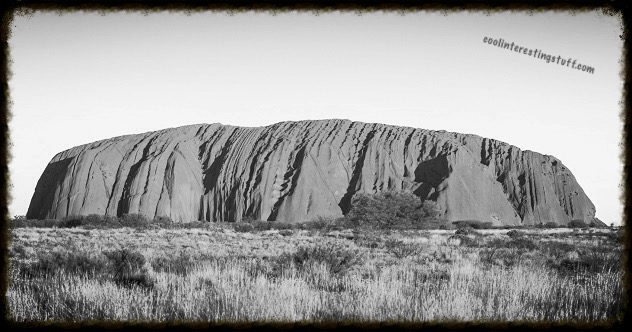
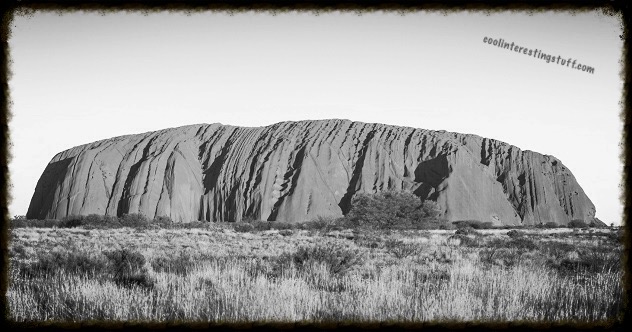
Picture this. You’re there. Standing in the heart of the Australian outback, the sun beating down, the red dust coating your boots. And before you, a titan. A colossal, blood-red mountain that erupts from the flat earth like a sleeping giant’s heart. You’ve seen the pictures, but nothing prepares you for the sheer scale, the ancient, silent energy that hums in the air around it.

This is Uluru.

In a moment of touristy impulse, you bend down. Your fingers close around a small, reddish stone. It’s warm from the sun. Smooth. A perfect memento. A tiny piece of this powerful place to take home, to put on your desk, to remember this day. What’s the harm? It’s just one rock. There are millions.

You slip it into your pocket.

And that’s when your problems begin. Because that little stone doesn’t want to be in your pocket. It doesn’t want to be on your desk. It wants to go home. And it will unleash a torrent of unbelievably bad luck on your life until you send it back.

Sounds crazy, right? A B-movie horror plot? Tell that to the park rangers at Uluṟu-Kata Tjuṯa National Park, who receive a package, almost every single day, from a desperate tourist somewhere in the world, begging them to return a stolen rock to the base of the monolith. This isn’t just an urban legend. It’s a documented phenomenon. A mailbag full of misery, sent back to the center of Australia. They call them the “sorry rocks.” And their stories are a chilling warning.

A Giant Hiding in Plain Sight

So what exactly is this place? Tourists have long called it Ayer’s Rock, a name slapped on it by a colonist in 1873. But its true name, its ancient name, is Uluru. It’s not just a big rock. Let’s get that straight. What you see is merely the tip. The weathered peak of a gargantuan slab of sandstone that continues for miles beneath the sandy soil of the Outback. Think of it like a stone iceberg, with most of its incredible mass hidden from view.

It stands over 1,142 feet high, but its total circumference is a staggering 5.8 miles. To walk around it is to feel humbled, dwarfed by its presence. And its most famous trick? The light. At sunrise and sunset, Uluru puts on a show. It shifts through a mind-bending palette of colors—from dull brown to burnt orange, to fiery crimson, to a deep, bruised purple. It looks, for all the world, like it’s alive. Breathing. A living heart in the center of the continent.

And for the traditional owners of this land, the Aṉangu people, it is exactly that.

Deep Dive: The Dreaming Tracks

To the Aṉangu, Uluru is not a tourist attraction. It is a sacred text. A living history book. Every crack, every cave, every stain and fissure on its surface is a chapter in their most profound creation stories, known as the Tjukurpa, or “The Dreaming.”

The Dreaming isn’t a dream you have at night. It is the-time-before-time, when giant ancestral beings journeyed across a formless land, shaping the world as we know it. They created the rivers, the mountains, the animals, and the people. Their journeys, their battles, their loves and their laws are etched into the very fabric of Uluru. The paths they walked are called “dreaming tracks,” and they are invisible lines of energy that crisscross the continent, all converging on this central, powerful point.

When tourists used to climb Uluru (a practice now thankfully banned), they were, in the Aṉangu worldview, trampling all over the most sacred parts of this story. Imagine someone walking with muddy boots across the altar of a grand cathedral. That’s the level of disrespect we’re talking about. And when you pick up a rock? You aren’t just taking a stone. You are stealing a word from a sacred prayer. You are tearing a page from a holy book. You are disrupting the energy of a place that has been humming with spiritual power for over 60,000 years.

Is it any wonder the spirits get angry?

The Mailbag of Misfortune

The “curse” of Uluru isn’t some ancient, dusty legend. It’s a modern problem that lands on the doormat of the National Park office with a thud. Daily. For decades, the park has been receiving packages, large and small, from all corners of the globe. Inside is always a piece of Uluru. A small pebble. A handful of red dust. Sometimes, a shocking chunk of rock.

And almost always, there’s a letter. A frantic, desperate, often deeply personal letter of apology.

These aren’t just polite notes. They are chronicles of disaster. People write of luck that soured the very moment they took the rock. The stories range from the mundane to the utterly terrifying:

  • Sudden financial ruin.
  • Nasty divorces and bitter romantic breakups.
  • Unrelenting family arguments.
  • Car accidents and freak injuries.
  • Bouts of deep, unexplainable depression.
  • And in the most chilling letters, the sudden deaths of loved ones.

The rangers have seen it all. A massive 32-kilogram (70 lb) chunk of rock was once mailed back from a suburb in South Australia. Imagine the effort and expense. Imagine the desperation. Someone lugged that behemoth home, only to be plagued by so much misery they had to pack it up and pay a fortune to ship it back. Another piece, weighing 9 kilograms (20 lb), made a round trip all the way from Germany.

Voices of the Cursed: From the Mailbag

While the park keeps the letters confidential to protect the senders, some stories have inevitably leaked out over the years, painting a vivid picture of the curse in action.

There was the story of “Tim,” a backpacker from Belgium. He pocketed a small, fist-sized rock. Within a week, his travel van broke down in the middle of nowhere. His wallet was stolen. He came down with a vicious case of pneumonia. Back home, his girlfriend left him and he lost his job. He lived with this string of disasters for two years before a friend mentioned the Uluru curse. Desperate, he found the rock in a shoebox, wrapped it up, and sent it express post to Australia with a letter begging for forgiveness. He claimed his luck turned around within days.

Or consider “Maria” from Italy. She and her husband took a handful of red sand from the base of the rock on their honeymoon. For the next decade, they were plagued by fertility issues and a series of devastating miscarriages. They spent a fortune on doctors, with no success. One night, watching a documentary about Australia, they saw a segment on the “sorry rocks.” The next morning, they mailed their little bag of sand back. Within a year, she was pregnant.

Coincidence? Maybe. But the letters keep coming.

Skeptics Enter the Chat: Is the Curse Just a Guilty Conscience?

Of course, there’s a perfectly rational, scientific explanation for all of this. It’s called confirmation bias. It’s a trick of the human mind.

Here’s how it works: Everyone on earth experiences bad luck. Cars break down, relationships end, people get sick. It’s just life. However, if you have done something you feel subconsciously guilty about—like, say, stealing a piece of a sacred, world-famous monument—your brain will look for a reason for your misfortune. It will actively search for a connection.

That little rock on your shelf becomes a magnet for blame. The flat tire isn’t just a flat tire; it’s the rock’s fault. The argument with your boss isn’t just a bad day at work; the rock caused it. You are primed to attribute any negative event to your transgression.

Returning the rock, then, becomes a powerful psychological act. It’s a ritual of absolution. You confess your “sin” by writing the letter. You perform an act of penance by paying for the postage. When you send it off, you mentally release yourself from the guilt. You *feel* lighter. You expect your luck to change, and so you start noticing the good things more than the bad. Your “curse” is lifted because you’ve convinced yourself it will be.

It’s a neat theory. It’s logical. It’s scientific. And for many, it’s the end of the story.

But it doesn’t quite explain everything.

What if It’s More Than Just Psychology?

The sheer, unrelenting volume of returned rocks is staggering. A university student who studied the phenomenon found that about a quarter of all people who admitted to taking a rock believed they had suffered some form of misfortune as a result. One-in-four. That’s a high number for mere coincidence.

And what about the nature of the bad luck? Many stories speak of a very specific pattern: a sudden, sharp downturn in fortune that begins almost immediately after taking the stone, followed by a similarly abrupt return to normalcy once the rock is sent back. It’s too clean, too cinematic for random chance.

This is where modern paranormal theories come into play. On internet forums and Reddit threads, a new hypothesis has emerged. What if the rock itself isn’t cursed? What if it’s a transmitter?

Think about it. Uluru is a place of immense geothermal and, some say, spiritual energy. The Aṉangu have known this for millennia. Could the rocks be “entangled” with the main monolith on some quantum level? When you remove a piece, you are breaking a connection, creating a spiritual imbalance. The bad luck isn’t a punishment from an angry god. It’s a symptom of this imbalance. It’s a chaotic, negative energy that clings to you because you are carrying a broken piece of a sacred circuit.

Returning the rock doesn’t appease a spirit. It simply completes the circuit again. It restores the balance. Your life goes back to normal because you have removed the source of the spiritual static.

A Final Warning Etched in Stone

In October 2019, after decades of requests from the Aṉangu people, the climb on Uluru was permanently closed. It was a monumental victory for the traditional owners, a sign that the world was finally beginning to listen to their ancient wisdom. The “human ants” that once scarred the sacred dreaming tracks are gone.

But the curse of the stolen souvenirs remains.

The little rocks and pebbles at the base of Uluru are still there. They are part of the story. Part of the spirit of the place. They have rested there for millions of years, soaking up the energy of the sun, the moon, and the Dreaming. They don’t belong in a pocket, or on a mantelpiece thousands of miles away.

So, is the curse real? Is it an angry spirit, a psychological quirk, or a disruption of cosmic energy? In the end, it almost doesn’t matter. The result is the same. A wave of misery follows the theft, and relief only comes when the stone is returned.

If you find yourself one day standing in the shadow of that magnificent, silent giant, listen to the warning that echoes in the stories of thousands of regretful tourists. Take a photo. Take a memory. But leave the rocks where they lie. Some things are not meant to be possessed. Some places are more powerful than you can possibly imagine. And some souvenirs come with a price far too high to pay.

Arindam Mukherjee
Arindam Mukherjee
Arindam loves aliens, mysteries and pursing his interest in the area of hacking as a technical writer at 'Planet wank'. You can catch him at his social profiles anytime.
RELATED ARTICLES
- Advertisment -

Most Popular

Recent Comments

Warren Pan Abbott on The legend of the Devil Monkey !
chris davies on The McPherson Tape Mystery
Reed Reedly on ET has Internet!
Bea Houseoffashion on Proof Of Time Travellers – Gallery
Marcus2012 on ET has Internet!
Reed Reedly on ET has Internet!
LaughsAtConspiracyNuts on The 9/11 Conspiracy – Myths and Facts
Alex Sliverman on Did the ancients fly?
Doctor Wholigan on Time Traveler in 1938 film
chris davies on The McPherson Tape Mystery
Archie1954 on 10 secret UFO hideouts
chris davies on Ghosts of flight 401
Marcus2012 on ET has Internet!
jason Macdonald on Proof of Time Travel? – China
chris davies on Long-Lost Pyramids Found?
Reed Reedly on ET has Internet!
Milkman on Connected Universe
Tenmiles on Baigong Pipes Mystery
Simon Foster on Sirius – The Documentary
From the 1st April on 2013 – Alien Contact date ?
SkyWatcher on Is ET ignoring us?
I Come From The Future on Obama to make UFO Alien disclouser soon ?
Just another person on 2013 – Alien Contact date ?
Malcolm Windowcleaner on The strange case of Rudolph Fentz
Mason Servio on Strange Things on Mars
Marke Wisdom Seeker on What will we find as arctic melts?
Andrea A Elisabeth Levyne on Aliens Captured in Varginha, Brazil
Mitch Grouyeki on Amazing Space Shuttle pictures