Saturday, July 11, 2026
HomeUnexplained MysteriesModern MysteriesThe mystery of missing Flight MH370

The mystery of missing Flight MH370

20140310-224444.webp

Imagine a seven-story building. Now, fill it with 239 living, breathing people. Mothers, fathers, toddlers, artists, builders. Now, imagine that building is moving at 600 miles per hour, seven miles above the earth. And then? Snap. It’s gone. Vanished. No explosion. No distress scream. Just… nothing.

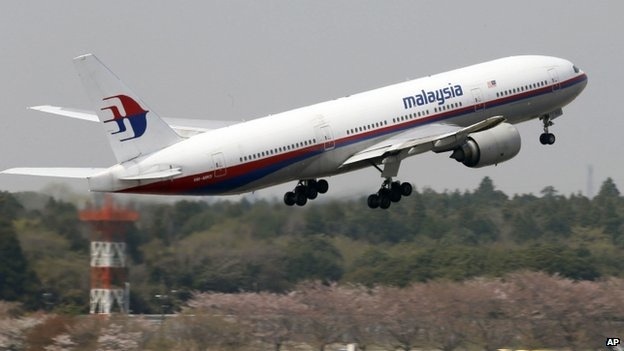
This isn’t a movie script. This is the chilling reality of Malaysia Airlines flight MH370. It is the greatest aviation mystery of the modern age. Maybe of all time. How does a massive Boeing 777-200ER, packed with cutting-edge tracking technology, simply dissolve into the ether?

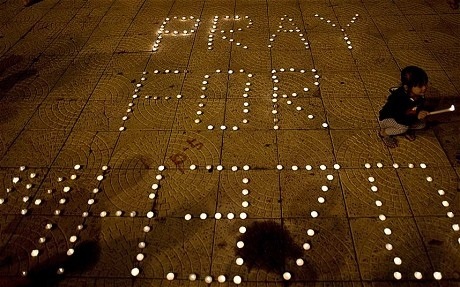
Mystery shrouds the fate of MH370. It was supposed to be a routine red-eye from Kuala Lumpur to Beijing. But instead of landing, it flew into the history books—and into the nightmares of the families left behind.

The Timeline of the Disappearance: A Deep Dive

To understand the horror, we have to look at the clock. Every second counts here.

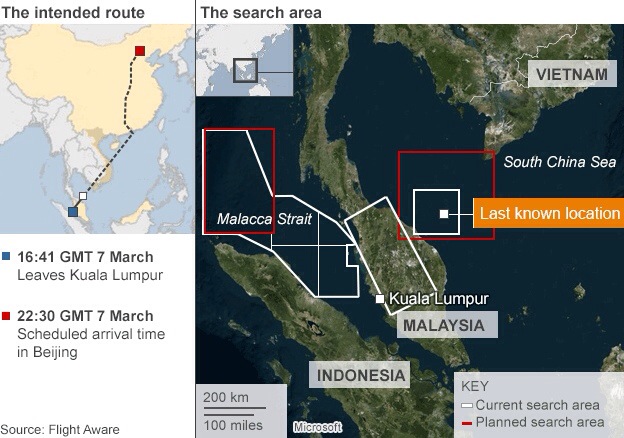
Flight MH370 departed from Kuala Lumpur International Airport at exactly 00:41 on Saturday (16:41 GMT Friday). The conditions were perfect. The night sky was clear. The moon was out. It was smooth sailing. The heavy jet roared into the sky, climbing to its cruising altitude.

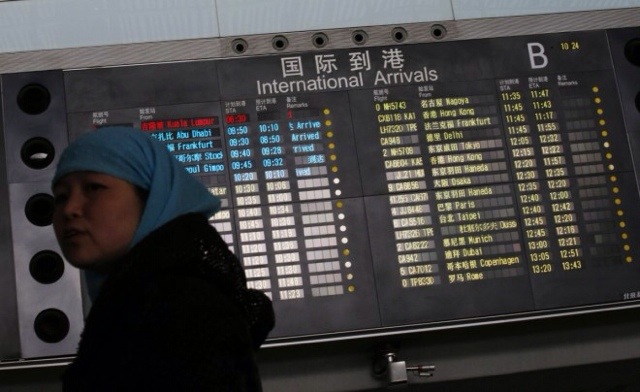
It was due to arrive in Beijing at 06:30. Families were already checking the arrival boards. Taxi drivers were waiting. But the plane never showed up.

The scariest moment happened at 01:19 AM. The pilot, or perhaps the co-pilot, radioed Malaysian air traffic control. His voice was calm. Relaxed. “Good night Malaysian three seven zero,” he said. Those were the last words anyone on Earth heard from that plane.

Air traffic controllers lost contact at 01:30, almost an hour after takeoff. But they didn’t just “lose contact.” The plane went dark. Someone, or something, manually turned off the transponder—the device that tells the world “Here I am!”

The Radar Anomaly

Here is where the story gets twisted. When the civilian radar lost the plane, you would think the sky was empty. It wasn’t. Military radar is different. It doesn’t need a transponder; it just bounces radio waves off metal objects.

Military officials admitted later—much later—that flight 370 was last detected by military radar at 2:40 a.m. local time on Saturday. It wasn’t heading to Beijing anymore. It was way off course. It was spotted near the island of Pulau Perak at the northern end of the Strait of Malacca. It was flying at an altitude of 29,500 feet.

Think about that. The plane flew for over an hour after it went silent. It pulled a sharp U-turn, flew back over Malaysia, and headed out toward the vast, dark ocean. Why? Who was flying it?

The Phantom Phone Call

In the days following the disappearance, hope was fragile. It was barely there. But then, something impossible happened.

At a time during the flight, but as yet undisclosed, a relative reportedly managed to call one of the passengers. This passenger was carrying a Singapore phone. The line connected.

It rang. And it rang. And it rang.

Malaysia Airlines has repeatedly tried to call the same number but no ringtone has been heard since. But for that brief window, families thought their loved ones were alive. They thought the plane had landed on a remote island. They thought they were being held hostage.

Tech experts have argued about this for a decade. Some say a “ring” is just the network trying to find the phone, not the phone itself ringing. But try telling that to a mother who is calling her missing son and hearing a dial tone. It haunts them to this day.

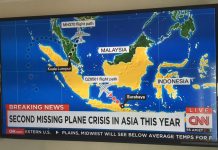
It was flying over the South China Sea, south of Vietnam’s Ca Mau peninsula when it first vanished. The normal route would have taken it over Cambodia and Vietnam before entering Chinese airspace. It never made it there.

The Silent Turn

No distress signal or message was sent. No “Mayday.” No “Pan-Pan.” Nothing. The pilots had multiple ways to signal for help. They used none of them.

But it is believed the plane attempted to turn back from its scheduled path, perhaps towards Kuala Lumpur Airport. This wasn’t a jagged, panicked turn. Radar analysis suggests it was a smooth, controlled, computerized turn. Someone punched that new route into the flight computer.

The Pilot and the Machine

Was it the pilot? This theory is the most popular, and the most controversial. Captain Zaharie Ahmad Shah was 53 years old. He was a veteran.

Weather conditions on this flight are said to have been good and the experienced pilot had more than 18,000 flying hours behind him. He had been employed by the airline since 1981. He knew the Boeing 777 better than he knew the back of his own hand.

Later investigations found a flight simulator in his home. On the hard drive, buried in deleted files, was a practice flight. A flight that went deep into the southern Indian Ocean. A flight into the middle of nowhere. Was he practicing a suicide run? Or is this just a coincidence?

Malaysia Airlines has a very good safety record. And the jet, a Boeing 777-200ER, is said to be one of the safest because of its modern technology. These planes don’t just fall apart. They are flying tanks.

One of the plane’s wingtips was clipped in an incident while taxiing in 2012. It hit the tail of another plane. But it was repaired and certified as safe. Could that repair have failed? Did the wing snap off? Unlikely. A structural failure usually leads to a messy debris field. MH370 left no trail.
20140310-225006.webp

The Search for a Needle in a Haystack

When a plane crashes on land, you find it. When it crashes near the coast, you find it. But the ocean? The ocean is a monster.

No wreckage has been found despite early indications that potential debris from an aircraft had been seen about 50 miles [80km] to the south-west of Tho Chu Island. This was just the start of a long list of false hopes.

Both waters to the east of Malaysia, in the South China Sea, and in the Straits of Malacca, along Malaysia’s west coast, are being searched. At first, everyone looked in the wrong place. They looked where the plane stopped talking. They should have looked where it kept flying.

The Scale of the Hunt

The search effort was massive. It was the biggest in aviation history. It involved at least 34 aircraft and 40 ships from several countries. The zone was widened to a 185-kilometre radius from the point the plane vanished from radar screens between Malaysia and Vietnam after two days.

Imagine looking for a suitcase floating in an area the size of Australia. That is what they were up against.

Malaysian maritime officials found oil slicks in the South China Sea. The world held its breath. Was this the fuel from the shattered wings? Lab tests shattered that hope. They found that samples of it were not from an aircraft. It was just fuel from ships.

On the 2nd day, Sunday, a Vietnamese plane spotted a rectangular object. It looked like a door. A chill went through the search teams. Was this one of the plane’s doors? But ships could not locate it again. The ocean swallows evidence.

On Monday, a Singaporean search plane spotted a yellow object 140 kilometres southwest of Tho Chu island. Life rafts are yellow. Slides are yellow. But it turned out to be sea trash. Just garbage floating in the waves.

The Mystery of the Stolen Passports

Then, the story took a darker turn toward terrorism. Authorities checked the flight manifest. The list of names.

Two of the passengers were travelling on passports stolen in Thailand. They had onward tickets to Amsterdam, Europe. Why were two men flying on fake IDs? Were they hijackers? Did they storm the cockpit?

But it’s not known whether the two men had anything to do with the plane’s disappearance. In the murky world of black markets, stolen passports are common currency.

Criminals and illegal migrants regularly travel on fake or stolen documents. Investigations revealed that the tickets for the two passengers had been purchased by an Iranian man known only as “Mr. Ali” in a Thailand travel agent. He bought them separately. He paid cash.

The stolen passports, one belonging to Christian Kozel of Austria and the other to Luigi Maraldi of Italy, were entered into Interpol’s database after they were taken in Thailand in 2012 and 2013, the police organization said. Neither of the real men were on the plane. They were safe at home, watching the news in horror as their names flashed across the screen.

The Five Who Didn’t Board

Here is a detail that conspiracy theorists obsess over. Five passengers who checked in for Flight MH370 didn’t board the plane. They checked in. They got their boarding passes. But they never walked down the jet bridge.

Their luggage was removed from the plane before takeoff. This is standard procedure. You don’t fly the bag if the passenger isn’t there. But who were they? The five passengers have yet to be identified publicly in a meaningful way. Did they know something? Did they get a warning? Or did they just miss their flight and become the luckiest people on the planet?

No Plane, No Contact, Nothing!

Let’s talk about the tech. A modern Boeing 777 is constantly screaming data at satellites. It’s called the “handshake.”

The plane, a Boeing 777-200 ER, was equipped with a transponder – an inbuilt tracker which automatically relays information about the flight (such as altitude) to ground radar stations. That stopped sending information instantly. It didn’t fade out. It was cut.

No “ping” has been received from the so-called, indestructible black box. The Flight Data Recorder and the Cockpit Voice Recorder have underwater locator beacons. They ping for 30 days. Searchers listened. They heard nothing but the silence of the deep.

Crews also have discrete radio channels, and most aircraft have at least one other back-up communication system. Nothing was sent through any of these channels either to indicate a problem. If there was a fire, they would radio. If there was a hijacking, there are secret codes they can punch in. None were used.

The plane was comfortably cruising at a height of about 35,000 feet through the night sky above the South China Sea. It wasn’t storming. There was no turbulence.

There should have been enough time for the pilot, Zaharie Ahmad Shah, 53, or the co-pilot, Fariq Abdul Hamid, 27, to send a distress signal. Even a three-second call. “Mayday.” But they did not.

The “Zombie Flight” Theory

An airplane can also glide for as long as 30 minutes in the event of total engine failure. If the engines quit, the plane becomes a glider. It doesn’t drop like a stone.

For all communication to suddenly stop, without a distress signal, would normally indicate some sort of sudden catastrophic failure. An explosion. A missile. A massive structural break. Something that would not allow the crew time to send messages using the radio or through the transponder.

But a catastrophic failure at that height would have left some wreckage. It would rain debris for miles. As of yet, none has been found in the initial search zone.

Adding to the mystery, the US has reviewed imagery taken by American spy satellites for evidence of a mid-air explosion. The US military sees everything. Heat blooms. Flashes. But they have not found anything to locate its whereabouts. If it blew up, the satellites missed it.

The Mobile Phones: A Ghost in the Network

The most heart-wrenching part of this saga involves the cell phones. It defies logic.

The plot has thickened after it emerged, according to reports and TV footage – that passengers’ family members reported ringing victims’ mobile phones. This happened hours, even days after the crash.

The phones rang, but nobody answered, according to a joint statement signed by 19 families. Can you imagine the torture? Holding the phone, hearing that “ring-ring,” and praying someone picks up.

In each case, the families said, the phone would ring but the call would be hung up or ring out. If the phone was at the bottom of the ocean, it wouldn’t ring. If it was destroyed, it wouldn’t ring.

The sister of one of the Chinese passengers rang his phone live on TV twice on Sunday morning and heard it ringing. She said she called again later that afternoon and heard it ring once more. The world watched her face crumble as the ringing stopped.

Telecom engineers say this is a “phantom ring.” It’s the sound the network makes while it tries to locate the device. It doesn’t mean the device is actually ringing. But to the families, it felt like their loved ones were still out there, waiting to be found.

20140311-105315.webp

The Satellite Data: The 7th Arc

Days turned into weeks. Then, a British satellite company called Inmarsat came forward. They had data. The plane’s entertainment system had tried to log on to the satellite. It did this once an hour. These “handshakes” proved the plane didn’t crash at 1:30 AM.

It flew for six more hours.

Malaysia Airlines flight MH370 was last heard from at 1.20am local time on Saturday morning, roughly 40 minutes after taking off. But the satellite data shows it flew south. Deep south. Toward the frozen, empty darkness of the Southern Indian Ocean. A place where ships rarely go. A place called the “Roaring Forties” because of the violent waves.

Why fly there? There is nowhere to land. It is a flight to nowhere.

The skies were clear and the plane had 239 passengers on board. Of those, 150 were Chinese – but in total 14 countries had citizens on board. Every corner of the globe was touched by this tragedy.

The plane sent no distress signal. And no wreckage has yet been found in the main search zone. Years later, a piece of the wing—a flaperon—washed up on Reunion Island, thousands of miles away near Africa. It was covered in barnacles. It confirmed the plane crashed in the ocean. But it didn’t tell us why. And it didn’t tell us where the rest of the fuselage is resting.

Is the fuselage intact on the ocean floor? Are the passengers still strapped in their seats, preserved by the cold, deep water? Or was the plane shattered into a million pieces?

New theories in 2024 involving WSPR tracking—using amateur radio waves to track disturbances in the atmosphere—suggest we might be looking in the wrong patch of ocean. But until the black boxes are found, MH370 remains a ghost flight.

It is a reminder that even in our hyper-connected world, you can still disappear. You can still step off the edge of the map.

20140311-105436.webp

Amit Ghosh
Amit Ghoshhttps://coolinterestingnews.com
Aloha, I'm Amit Ghosh, a web entrepreneur and avid blogger. Bitten by entrepreneurial bug, I got kicked out from college and ended up being millionaire and running a digital media company named Aeron7 headquartered at Lithuania.
RELATED ARTICLES
- Advertisment -

Most Popular

Recent Comments

Warren Pan Abbott on The legend of the Devil Monkey !
chris davies on The McPherson Tape Mystery
Reed Reedly on ET has Internet!
Bea Houseoffashion on Proof Of Time Travellers – Gallery
Marcus2012 on ET has Internet!
Reed Reedly on ET has Internet!
LaughsAtConspiracyNuts on The 9/11 Conspiracy – Myths and Facts
Alex Sliverman on Did the ancients fly?
Doctor Wholigan on Time Traveler in 1938 film
chris davies on The McPherson Tape Mystery
Archie1954 on 10 secret UFO hideouts
chris davies on Ghosts of flight 401
Marcus2012 on ET has Internet!
jason Macdonald on Proof of Time Travel? – China
chris davies on Long-Lost Pyramids Found?
Reed Reedly on ET has Internet!
Milkman on Connected Universe
Tenmiles on Baigong Pipes Mystery
Simon Foster on Sirius – The Documentary
From the 1st April on 2013 – Alien Contact date ?
SkyWatcher on Is ET ignoring us?
I Come From The Future on Obama to make UFO Alien disclouser soon ?
Just another person on 2013 – Alien Contact date ?
Malcolm Windowcleaner on The strange case of Rudolph Fentz
Mason Servio on Strange Things on Mars
Marke Wisdom Seeker on What will we find as arctic melts?
Andrea A Elisabeth Levyne on Aliens Captured in Varginha, Brazil
Mitch Grouyeki on Amazing Space Shuttle pictures