Wednesday, May 6, 2026
HomeWeird WorldStrange PlacesThe lost treasures of Antilla

The lost treasures of Antilla

20140210-145525.webp

The Ghost Ship That Refused to Die: The Mystery of the SS Antilla

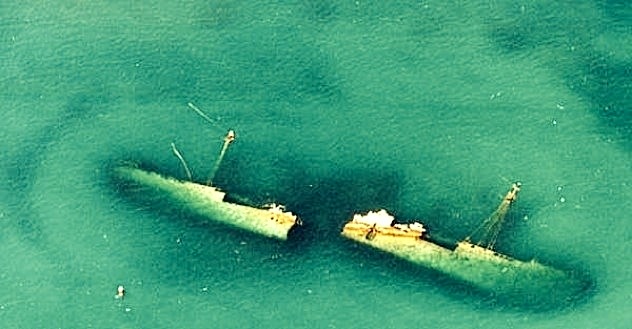
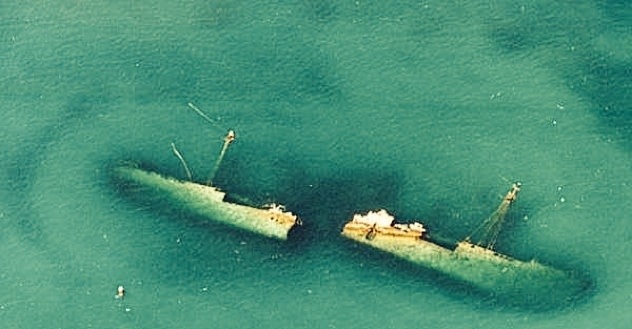
Look at the water. It’s perfect, right? That classic, impossible Caribbean turquoise. But beneath that glass-like surface off the coast of Aruba lies something massive, dark, and twisted. It isn’t just a pile of rusting metal. It is a crime scene. A tomb. A puzzle left unsolved for over eighty years.

You might think you know about World War II. You picture the beaches of Normandy, the jungles of the Pacific, or the snowy hellscape of the Eastern Front. But here? In paradise? Yes. The war came here too, and it left a scar that you can literally swim through.

Those seeking the lost treasures of Antilla, the German fighter wreckage, will need to dive along the North Point of Aruba. But don’t think for a second this is just another tourist trap. The SS Antilla is the largest shipwreck in the Caribbean (spanning a whopping 400 feet), and the story of how it got there is stranger than fiction.

May 1940: The World on Fire

Let’s rewind the clock. It’s May 1940. The world is holding its breath. In Europe, the Nazi war machine is blitzing across borders, swallowing nations whole. But thousands of miles away, in the sleepy, sun-drenched waters of the Dutch Antilles, things were supposed to be quiet.

They weren’t.

Aruba wasn’t just an island of flamingos and white sand back then. It was a strategic juggernaut. It was home to one of the largest oil refineries on the planet. The Lago Oil and Transport Company was churning out fuel that the Allies desperately needed to keep their tanks rolling and planes flying. If you controlled the oil, you controlled the war.

Enter the SS Antilla.

This wasn’t some rusty old bucket. This ship was brand new. It was the pride of the Hamburg America Line, state-of-the-art, and barely a year old. It had been cruising around the Caribbean, trading goods, looking innocent. But when Germany invaded Poland, the Antilla got a frantic message: Do not go home. You will be sunk by the British blockade. Hide.

So, Captain Ferdinand Schmidt parked his massive freighter in Aruba. He thought he was safe. Aruba was Dutch territory, and the Netherlands was neutral. He could sit there, sip coffee, and wait out the war.

The Morning Everything Changed

May 10, 1940. The radio on the Antilla’s bridge crackles to life. Bad news. Germany has invaded the Netherlands. Neutrality is over. The Dutch are now at war with Germany.

Suddenly, Captain Schmidt isn’t a guest anymore. He’s the enemy. And he is sitting on a 400-foot steel beast right next to the Allies’ most valuable gas station.

There’s a tale that claims the Antilla was anchored along the North Shore when authorities rowed out to sea and asked for its surrender. That’s the polite way of putting it. The reality was much more tense. Dutch Marines didn’t just ask. They surrounded the ship. They had machine guns. They had orders.

The ultimatum was simple: Surrender the ship, or we open fire.

The Great Bluff

Put yourself in Schmidt’s boots. He has a crew of young German sailors looking at him. He has Dutch guns pointed at his hull. And he has standing orders from the German High Command: Never let a German ship fall into Allied hands.

If the Allies got the Antilla, they would have a brand new transport ship to move troops and weapons against Germany. Schmidt couldn’t let that happen. He had to make a choice. A fast one.

While the skipper contemplated his options on shore—or rather, while he stalled the Dutch officers with negotiations—he initiated a plan that was both genius and suicidal. He played it cool. He told the Dutch authorities he would surrender, but he needed time to gather his crew and their personal effects. He asked for 24 hours.

The Dutch were suspicious. They gave him six hours.

Schmidt went back to his ship. He didn’t pack his bags. He ordered his crew to seal the portholes. He ordered them to lock the heavy steel doors. And then, he did something incredibly dangerous.

Fire in the Belly

He told the engineers to light the boilers. Not to get the engine running, but to build pressure. Immense, screaming pressure. They stoked the fires until the boilers were glowing white-hot, vibrating with enough energy to power a city block. The ship was a ticking time bomb.

Then, the final move.

He left the ship’s seacock open. For those who aren’t sailors, the seacock is a valve in the hull that lets water in for cooling. When you open it and don’t pump the water out, the ocean rushes in.

Cold Caribbean seawater flooded into the engine room. It hit the superheated, white-hot boilers. Basic physics took over with violent force.

The Explosion That Shook the Island

BOOM.

It wasn’t just a leak. It was a catastrophic thermal explosion. The shockwave ripped the ship apart from the inside out. The midsection of the Antilla was blown to smithereens. The ship broke its back. Smoke poured into the sky, black and thick, visible from every corner of the island.

Instead of surrendering and losing his treasure, the ship exploded and sank. It didn’t go down quietly. It hissed, groaned, and convulsed as it slipped beneath the waves. By the time the Dutch Marines realized what was happening, it was too late to save the vessel. Schmidt and his crew jumped into the lifeboats, watching their home disappear. They were taken prisoner, sent to internment camps on Bonaire and later Jamaica, but they had won. The Allies got nothing but a pile of scrap metal at the bottom of the sea.

The “Treasure” Conspiracy: What Was Really on Board?

Now, let’s get to the juicy part. The rumors. You don’t sink a ship that violently just to keep the bad guys from getting a transport vessel, do you? People have been whispering about the “Treasure of the Antilla” for decades.

The internet is full of theories. Some are plausible; some are downright nuts. Let’s break them down.

Theory 1: The Nazi Gold

This is the classic trope. Every time a German ship sinks, someone says there’s gold involved. The theory goes that the Antilla was secretly carrying bullion intended to pay for espionage activities in South America. When the war kicked off, Schmidt had to dump it. Is there gold buried under the silt in the cargo hold? Divers have been looking for 80 years. No one has flashed a gold bar yet. But that doesn’t mean it’s not there. The ocean is good at hiding things.

Theory 2: Advanced Weaponry

Another theory suggests the Antilla wasn’t just a cargo ship, but a supply vessel for U-boats (German submarines). The Caribbean was crawling with U-boats during the war (Operation Neuland). They were hunting oil tankers leaving Aruba. Was the Antilla holding torpedoes? Enigma machines? Secret code books?

If Schmidt had sensitive military tech on board, the explosion makes perfect sense. You don’t just sink that stuff; you vaporize it. You make sure it can never be recovered.

Theory 3: The “Treasure” Was the Ship Itself

Sometimes the truth is boring, but sometimes it’s practical. The ship itself was the treasure. In 1940, shipping tonnage was more valuable than gold. Britain needed ships. Germany needed ships. By destroying the Antilla, Schmidt denied the enemy a massive asset. In war, ensuring your enemy has less is just as good as you having more.

The Ghost Ship Today: A Dangerous Beauty

Today, the Antilla is a celebrity. It is one of the most famous wreck dives in the world. But it’s spooky. The locals don’t call it the Ghost Ship for nothing.

This ghost ship, as the locals call it, remains a tribute to the German soldiers from WWII. But it’s also a thriving, alien ecosystem. The steel is coated in tube sponges, coral formations, and anemones. It’s alive.

Because the ship rests in shallow water (only about 60 feet deep at the max), you can see it from the surface on a clear day. Snorkelers can hover over the massive mast. But for divers, it’s an eerie playground. You can swim along the deck. You can peer into the dark, gaping holes where the explosion ripped the steel open like paper.

The Dangers of the Deep

Don’t let the shallow depth fool you. The Antilla is dangerous. It’s old. It’s falling apart. The structural integrity is gone. Penny-sized bubbles of air trapped inside for decades are slowly leaking out, corroding the metal from the top down.

Divers are warned: Do not enter the wreck.

The passageways are narrow. The metal is jagged and rusty. Silt can get kicked up in a second, blinding you, trapping you in the dark belly of a Nazi ghost. People have gotten stuck. It’s a place that demands respect.

An Ecosystem of Iron

What’s truly wild is how nature has reclaimed this weapon of war. The Antilla is now home to a massive population of marine life. It’s like a bustling underwater city.

  • Grim-faced Barracudas patrol the bridge like spectral guards.
  • Green Moray Eels weave through the twisted pipes.
  • Lobsters hide in the crevices of the cargo holds.
  • Angelfish and Blue Tangs add splashes of neon color to the drab, brown rust.

It’s a beautiful contradiction. A machine built by a regime of hate, destroyed in an act of war, now serving as a nursery for life in the Caribbean.

The Unanswered Questions

Even after all these years, the Antilla keeps some secrets. Why did the Dutch give Schmidt that six-hour window? Was there a sympathetic officer on shore? And what about the rumors of a second explosion heard hours after the ship sank? Was that the boilers finally giving up, or something else detonating in the hold?

We may never know the full story. The logbooks are gone. The crew is gone. All that’s left is the silent, brooding hulk of iron on the sandy floor of the ocean.

Why You Should Care

Why does a sunken ship in Aruba matter? Because it’s a physical reminder that history isn’t just words in a book. It’s real. It’s heavy. It has consequences.

The Antilla is a monument to a moment when the entire world pivoted. It represents the lengths people will go to for their country, the destruction of war, and the enduring power of nature to cover our scars.

If you ever find yourself in Aruba, don’t just sit on the beach with a cocktail. Grab a mask. Swim out to North Point. Look down into the abyss. See the Ghost Ship for yourself. Just remember—when you stare into the dark cargo holds of the Antilla, you’re staring directly into the eyes of World War II.

And who knows? Maybe you’ll see something glinting in the sand that everyone else missed. Maybe the treasure is still there, waiting for the right person to find it. Or maybe, just maybe, the real treasure is the story itself.

Source: Listverse

Amit Ghosh
Amit Ghoshhttps://coolinterestingnews.com
Aloha, I'm Amit Ghosh, a web entrepreneur and avid blogger. Bitten by entrepreneurial bug, I got kicked out from college and ended up being millionaire and running a digital media company named Aeron7 headquartered at Lithuania.
RELATED ARTICLES
- Advertisment -

Most Popular

Recent Comments

Warren Pan Abbott on The legend of the Devil Monkey !
chris davies on The McPherson Tape Mystery
Reed Reedly on ET has Internet!
Bea Houseoffashion on Proof Of Time Travellers – Gallery
Marcus2012 on ET has Internet!
Reed Reedly on ET has Internet!
LaughsAtConspiracyNuts on The 9/11 Conspiracy – Myths and Facts
Alex Sliverman on Did the ancients fly?
Doctor Wholigan on Time Traveler in 1938 film
chris davies on The McPherson Tape Mystery
Archie1954 on 10 secret UFO hideouts
chris davies on Ghosts of flight 401
Marcus2012 on ET has Internet!
jason Macdonald on Proof of Time Travel? – China
chris davies on Long-Lost Pyramids Found?
Reed Reedly on ET has Internet!
Milkman on Connected Universe
Tenmiles on Baigong Pipes Mystery
Simon Foster on Sirius – The Documentary
From the 1st April on 2013 – Alien Contact date ?
SkyWatcher on Is ET ignoring us?
I Come From The Future on Obama to make UFO Alien disclouser soon ?
ÛñK?øWn on 2013 – Alien Contact date ?
Just another person on 2013 – Alien Contact date ?
Malcolm Windowcleaner on The strange case of Rudolph Fentz
Mason Servio on Strange Things on Mars
Marke Wisdom Seeker on What will we find as arctic melts?
Andrea A Elisabeth Levyne on Aliens Captured in Varginha, Brazil
Mitch Grouyeki on Amazing Space Shuttle pictures