The Kikiyaon: Gambia’s Soul-Eating Nightmare That Creates Real-Life Zombies
There are whispers in the dark. Stories told when the sun bleeds out across the horizon and the only light comes from a flickering fire. In Gambia, West Africa, the elders warn the children, and the children listen. Because they know. They know that not every shadow is empty.
Some shadows have wings.
Some shadows have teeth.
And some shadows are hungry.
We’re not talking about just any boogeyman or a simple creature of the night. We’re talking about a terror so specific, so deeply embedded in the local psyche, that its name is spoken with a shudder. They call it the Kikiyaon. And what it does is far, far worse than simply killing you. It steals the very thing that makes you… you.
Anatomy of a Monster: What Exactly IS the Kikiyaon?
Forget what you think you know about monsters. The Kikiyaon isn’t some lumbering beast. It’s a chilling, efficient predator. A nightmare given form. Most accounts, passed down through generations, paint a disturbingly consistent picture.
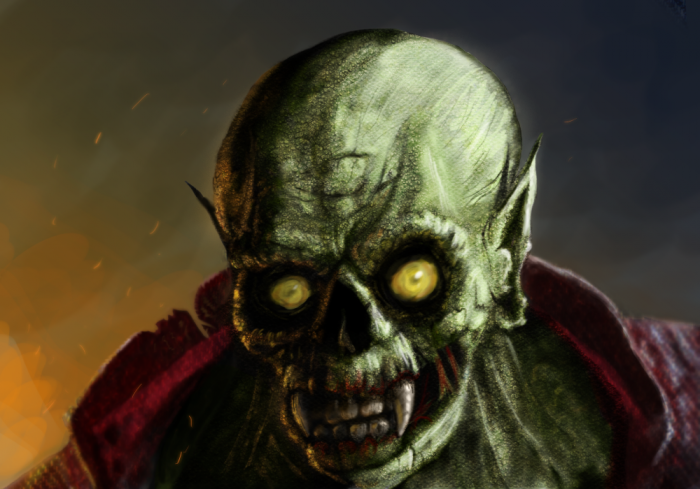
Picture this. It stands no more than five feet tall. Deceptively small. It has a humanoid shape, but the similarity to anything human ends there. Its skin is the color of dried blood and old leather, stretched taut over a wiry, unnervingly strong frame. From its back, or perhaps fused to its arms, are vast, leathery wings. Not the wings of an angel. The wings of a bat. A demon. They are its method of travel, allowing it to silently slice through the midnight air.
And the eyes. Oh, the eyes.
Witnesses don’t talk about the color. They talk about the light. A piercing, malevolent red glow that cuts through the deepest darkness. Two burning coals in the abyss, searching. Always searching. Its feet are not feet; they are talons, long and sharp, capable of gripping and tearing. But the real weapons are at the other end. Its mouth is a gash filled with needle-like teeth, as sharp as freshly broken glass.
But the most terrifying part? Its name. In the local tongue, Kikiyaon translates to something absolutely bone-chilling.
“Soul Eater.”
Or, by some accounts, “Soul Cannibal.” It doesn’t just want your blood or your flesh. It wants your essence. It wants to consume your spirit and leave behind an empty, walking husk.
The Bite: A Fate Worse Than Death
So what happens when the Kikiyaon finds you? The stories are not for the faint of heart. This isn’t a quick, violent attack in the jungle. This is a home invasion of the most personal, violating kind.
It happens at night. Always at night. The creature is said to be able to find its way into any home, no matter how securely barred. It moves with an unnatural silence, a creeping dread that might only manifest as a cold spot in the room or the feeling of being watched. You might not even wake up. Not at first.
Then comes the bite.
It’s not a frenzied, tearing attack. It’s a precise, venomous puncture. The Kikiyaon sinks its razor teeth into your skin, and in that moment, the exchange happens. It’s not just saliva that enters your bloodstream. It’s a poison. A spiritual contagion. As it draws out your life force, your soul, it leaves behind an emptiness, a void that begins to fester immediately.
Stage One: The Wasting Sickness
You don’t just become a zombie. It’s a process. A horrifying, drawn-out decay of self. It begins with a sickness, a profound illness that baffles local healers and modern doctors alike. A burning fever takes hold. You become weak, delirious, tormented by visions you can’t describe. You waste away, your body withering as if starved, even as you eat. It’s a sickness of the soul, and the body is just the first thing to show the symptoms. It’s as if the engine of your being has been shut off, and the machine is just slowly grinding to a halt.
Stage Two: The Hollowing
This is the truly terrifying part. As the illness progresses, your friends and family notice a change. The light in your eyes goes out. Your personality, your memories, your quirks, your laughter, your love… it all just evaporates. You might still walk. You might still talk, but the words are hollow, echoes of the person who used to live inside. You are a puppet whose strings have been cut. Your soul has been devoured, digested by the Kikiyaon, and all that remains is a biological machine. An automaton of flesh and bone.
The Gambian tribes who hold this belief are petrified of this creature for this exact reason. Death is one thing. Becoming a soulless vessel, a walking ghost, is another horror entirely.

Stage Three: The Inevitable End
This soulless state is not permanent. The body cannot survive without its spiritual anchor. The wasting sickness, which never truly leaves, intensifies. Within days, or perhaps weeks, the body finally gives out. The victim dies. But were they even alive to begin with after the bite? It’s a question that haunts the folklore. The Kikiyaon doesn’t just kill you; it makes you watch yourself disappear before it lets your body crumble into dust.
Deep Dive: Roots of a West African Nightmare
Where does a story like this come from? Is it just a scary tale to keep kids in line? Or is it a cultural memory of something real? To understand the Kikiyaon, you have to understand the world it comes from.
West Africa has a rich, complex history of oral tradition. Stories are not just entertainment; they are history, law, and wisdom. A monster in a story often represents a very real-world danger. A story about a creature that attacks at night and leaves you with a fatal, wasting sickness could be a personification of deadly nocturnal diseases. Think about illnesses like malaria or African trypanosomiasis (sleeping sickness), transmitted by a tiny bite in the night, leading to fever, confusion, personality changes, and eventual death. To an ancient culture, could this process not seem like a literal monster stealing one’s soul?
The Kikiyaon shares disturbing traits with other legends from across the continent and the world.
The Vampire Connection
The parallels to the European vampire are impossible to ignore. A nocturnal predator. It enters homes uninvited. It uses a bite to transmit its curse. It drains a form of life essence from its victim. But where the classic vampire drains blood, the Kikiyaon drains the soul, a concept that is arguably even more horrifying. Is this a case of parallel evolution in mythology, with two separate cultures developing a similar monster to explain similar fears? Or could these tales share a much older, common ancestor, a proto-nightmare that has echoed through human history?
Africa’s Other Winged Terrors
The Kikiyaon is not alone in the African skies. Legends of winged monsters are surprisingly common. The Kongamato of Central Africa is described as a pterosaur-like creature that attacks boats and people. The Popobawa of Zanzibar is a shapeshifting, bat-winged entity known for nocturnal assaults. While their methods and motives differ, the theme of a winged, night-flying aggressor strikes a deep, primal chord. The sky is supposed to be open, a symbol of freedom. When a monster can drop out of that sky, anywhere, anytime, nowhere is safe.
Modern Sightings & Internet Theories: The Legend Lives On
You might think a story like this would fade away in the age of smartphones and the internet. You’d be wrong. Legends like the Kikiyaon don’t die; they evolve. The stories still persist in rural Gambia, but now they’ve also found a new home: the dark corners of the web.
Cryptozoology forums and paranormal message boards have entries about the “Gambian Soul-Eater.” You can find anecdotal accounts, often third-hand, of strange encounters. A tourist in the late 90s who heard an unearthly screech and saw a large, winged shape silhouetted against the moon. A Peace Corps volunteer in the 2000s who was told by his host family to never leave his windows open after dark, no matter how hot it got, because of the “air demon.”
Of course, there are skeptics. And they have their theories.
What if it’s a Misidentification?
Could the Kikiyaon be a distorted description of a real animal? Africa is home to some massive bats. The Hammer-headed Bat, with its strange, moose-like face and nearly three-foot wingspan, could certainly look monstrous in the dark. A terrified, half-asleep person seeing one of these up close could easily have their imagination fill in the more demonic details. A large owl, silent and deadly, could also be a candidate. But does a bat or an owl explain the soul-stealing bite and the zombie-like sickness? Unlikely.
The Ultraterrestrial Hypothesis
This is where things get really weird. A popular theory in modern conspiracy circles is that creatures like the Kikiyaon aren’t mythological beasts or misidentified animals. They are “ultraterrestrials” — beings from another dimension or a parallel reality that can briefly cross over into our own. This theory attempts to explain their strange abilities and why they are so hard to find or capture. They aren’t hiding in caves; they are simply going back to wherever they came from. For believers, the Kikiyaon isn’t folklore; it’s a terrifyingly real dimensional intruder.
Surviving the Soul Eater: A Guide from Legend
So, what if you find yourself in Gambia, and the sun begins to set? What if you hear a scratching sound at your window that doesn’t sound like a branch? According to the old stories, you’re not entirely helpless. Over centuries, people have developed supposed methods for warding off the Kikiyaon.
It is said the creature detests the smell of a certain type of local salt, “kanwa.” Leaving small piles of it on windowsills and across doorways is believed to create a barrier it cannot cross. Others say it fears loud, sharp noises. Families would keep metal pots and pans by their beds to bang together if they heard anything suspicious, the sudden clangor supposedly driving the creature back into the night.
The most powerful protection, however, is said to be a clear conscience and a strong spirit. The lore suggests the Kikiyaon is drawn to those who are already weakened in spirit—the cruel, the greedy, the despairing. It preys on those whose souls are already flickering, making them easier to extinguish and consume.
Whether any of this is true is anyone’s guess. But in the dead of night, with the wind howling outside, it’s probably better to be safe than sorry.
The Kikiyaon remains a chilling enigma. Is it a folk memory of a forgotten disease? A personification of the primal fear of the dark? A misidentified animal? Or is it something more? A genuine, flesh-and-blood predator that stalks the Gambian night, hunting for the one thing it needs to survive: your soul.
The stories don’t offer easy answers. They only offer a warning. A warning that is carried on the wind across the moonlit plains, a whisper that reminds everyone who hears it to lock their doors and protect their spirit. Because the Soul Eater is always out there. Watching. Waiting. And it’s always hungry.