The Cold Case Inside the Cold Case: What Happened to JFK’s Brain?
November 22, 1963. Dallas, Texas. A day scorched into the American psyche.
A president, John F. Kennedy, slain in broad daylight. A nation plunged into chaos and grief. We all know the date. We all know the name of the alleged killer. It’s about the only part of the story everyone seems to agree on.
But the official story, the one neatly packaged by the Warren Commission, has always felt… wrong. Thin. Like a cheap suit that doesn’t quite fit the facts. It left a universe of questions that still haunt us, echoing through the decades.
- How many shots were really fired in Dealey Plaza?
- Who was the mysterious “Babushka Lady” filming the event?
- Why was Lee Harvey Oswald, a man with known ties to intelligence circles, so conveniently silenced by Jack Ruby just two days later?
These questions are the bread and butter of the JFK assassination mystery. They are the public face of the conspiracy. But behind them lurks a stranger, darker, and far more ghoulish question. One that involves a missing piece of evidence so critical, so personal, that its absence screams of a cover-up.
The President’s brain is gone.
Vanished. Swiped. Lost to history.
And if you want to understand the true depth of the JFK conspiracy, you have to understand why someone would go to extraordinary lengths to steal the most important piece of forensic evidence in American history.
The Night of Confusion: A Botched Autopsy
To find the beginning of this bizarre trail, you have to go back to the night of the assassination. The chaos didn’t end in Dallas. In fact, it was just getting started.
Against the laws of Texas, where the crime occurred, JFK’s body was essentially seized by the Secret Service and flown back to Washington D.C. for a military autopsy at Bethesda Naval Hospital. The doctors in Dallas, who had desperately tried to save the President, were left behind. Their initial observations, their firsthand knowledge of the wounds, were immediately sidelined.
The scene at Bethesda was pure bedlam. High-ranking military officials, FBI agents, and Secret Service men crowded the autopsy room, many with no medical expertise. They barked orders. They limited photographs. The three pathologists performing the autopsy were military men, not forensic experts in gunshot wounds. They were completely out of their depth, and they were under immense pressure.
It was during this confused, intimidating, and highly controlled procedure that the decision was made. The President’s brain, horrifically damaged by the fatal headshot, was to be removed and preserved for further study. This was standard procedure. What happened next was anything but.

The brain was placed in a stainless-steel container filled with formalin, a fixing agent. It needed weeks to properly harden before it could be examined. This examination was supposed to answer the most pressing question of all: what was the exact path of the bullet that killed John F. Kennedy?
That examination never truly happened. Not in the way it should have.
A Chain of Custody… That Snapped
For a piece of evidence this monumental, you’d expect a chain of custody locked down tighter than Fort Knox. You would be wrong.
Here’s the known, official path of the President’s brain:
Step 1: The White House. After its removal at Bethesda, the steel container was handed over to the Secret Service. They didn’t take it to a secure medical facility or an FBI lab. They took it to the White House and stored it in a locked file cabinet in the office of Secret Service agent Robert Bouck.
Step 2: The Handover. In April 1965, nearly a year and a half later, JFK’s brother, Attorney General Robert F. Kennedy, instructed that the brain, along with other autopsy materials, be transferred to the National Archives. It was placed in a secure room, Room 6325, for safekeeping. Evelyn Lincoln, JFK’s former personal secretary, was given the key.
Step 3: The Vanishing. On October 31, 1966, a routine inventory check was conducted at the National Archives. The archivist in charge, Herman Kahn, made a sickening discovery. The stainless-steel container holding the president’s brain was gone. So were the tissue slides and other related materials.
There was no sign of a break-in. No forced locks. Nothing. The most vital evidence from the crime of the century had simply evaporated from one of the most secure buildings on the planet.
An investigation was launched, but it went nowhere. Every employee was questioned. No one saw anything. No one knew anything. The official report from the House Select Committee on Assassinations in 1978 could only conclude the obvious: the brain was missing, presumed stolen.
But who would steal it? And why? This is where the story spirals down the rabbit hole.
Theory #1: The Brother’s Burden
This is the theory favored by many mainstream historians, including James L. Swanson, author of “End of Days.” It’s a story rooted in family, grief, and the desperate protection of a legacy.
The argument goes like this: Robert F. Kennedy orchestrated the removal of his brother’s brain from the National Archives. His motive? To protect the carefully crafted image of “Camelot.”
Deep Dive: Hiding JFK’s Medical Secrets
We now know that John F. Kennedy, the image of youthful vigor, was one of the sickest presidents in American history. He suffered from Addison’s disease, an adrenal gland disorder that left him in chronic pain and reliant on a cocktail of powerful drugs, including corticosteroids and, allegedly, amphetamine shots administered by Dr. Max “Dr. Feelgood” Jacobson.
In the 1960s, this was a political bombshell. The Cold War was raging. A president perceived as weak or medically compromised would be a massive liability. The Kennedy family went to extraordinary lengths to hide his health problems from the public.
The President’s brain, upon detailed examination, could have revealed evidence of this long-term drug use. It might have shown the physical toll of his illnesses. For a family obsessed with image, and for a brother who saw himself as the keeper of the flame, this was an unacceptable risk. Did RFK take the brain to ensure his brother’s private medical battles remained private forever?

The Darker Possibility: Hiding the Truth of the Assassination
But there’s a more sinister spin on the “RFK did it” theory. What if Robert Kennedy didn’t believe the lone gunman story? What if he suspected a conspiracy but felt powerless to fight the shadowy forces behind it?
The brain was the key. It was the one piece of evidence that could definitively prove the number and direction of the shots. If the brain showed damage consistent with a shot from the front—from the infamous grassy knoll—the entire Warren Commission report would crumble. It would prove a conspiracy. And proving a conspiracy could have destabilized the U.S. government at the height of the Cold War.
Did Robert Kennedy steal the brain not to hide a medical secret, but to bury a political one? Perhaps he believed it was the only way to prevent a national crisis, or even to protect his own family from the powerful people who had killed his brother. In this version, his act wasn’t about preserving a legacy; it was about survival.
Theory #2: The Deep State Heist
Forget the grieving brother. Let’s talk about the spooks.
This theory posits that the brain was never intended to be properly analyzed. Its disappearance wasn’t a panicked afterthought; it was part of the plan from the very beginning. The same powerful figures who orchestrated the assassination couldn’t risk leaving the most damning piece of evidence lying around.
Who had the means, motive, and opportunity? The list is short and terrifying.
- The CIA? JFK had famously vowed to “splinter the CIA into a thousand pieces and scatter it to the winds” after the Bay of Pigs fiasco. Men like Allen Dulles, the CIA director Kennedy fired, had a deep-seated hatred for the president.
- The Military-Industrial Complex? Kennedy was seen as soft on Communism by many hardliners in the Pentagon. He had resisted calls for a full-scale invasion of Cuba and was reportedly considering a withdrawal from Vietnam. His death was very, very good for business.
- The Mafia? Robert Kennedy, as Attorney General, had waged a relentless war on organized crime. The Mob, who had allegedly helped get JFK elected, felt betrayed.
In this scenario, the chaotic autopsy at Bethesda wasn’t a mistake; it was a feature. It was controlled chaos, designed to confuse the record. The transfer to the National Archives was just a temporary holding pattern until the coast was clear. Then, an operative—someone with top-level clearance—simply walked in and removed the evidence. No fuss, no mess. A clean, professional job. The calling card of an intelligence agency.
Deep Dive: What the Brain Could Have Told Us
Why was this specific organ so important? It’s simple: physics.
The Warren Commission claimed all shots came from Lee Harvey Oswald, perched high above and behind the presidential motorcade in the Texas School Book Depository.
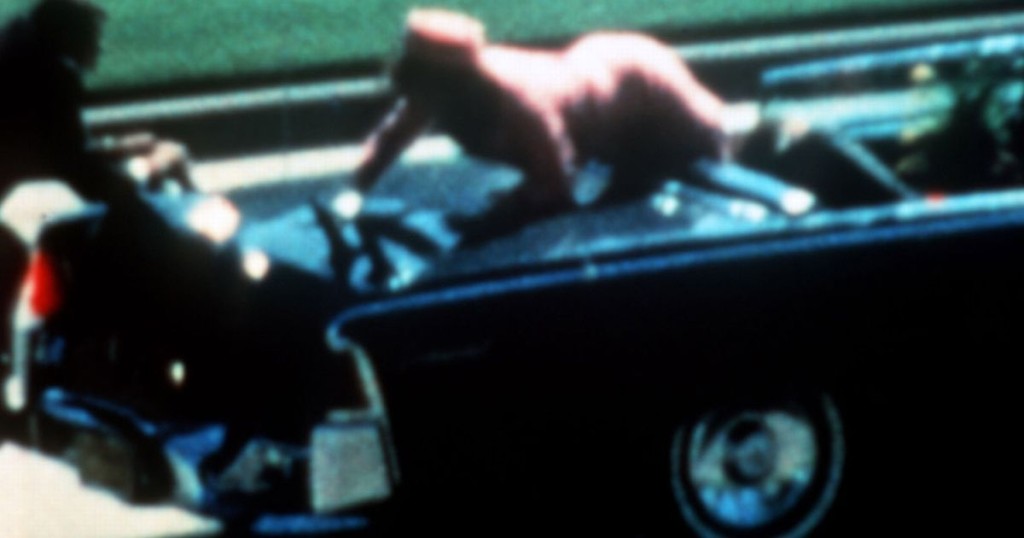
But if you watch the Zapruder film, the only complete moving picture of the event, you see something deeply unsettling. At the moment of the fatal headshot (frame 313), Kennedy’s head snaps violently backward and to the left. Backward. Toward the supposed shooter.
This motion has fueled the “grassy knoll” theory for over 50 years. It suggests a shot from the front and to the right.
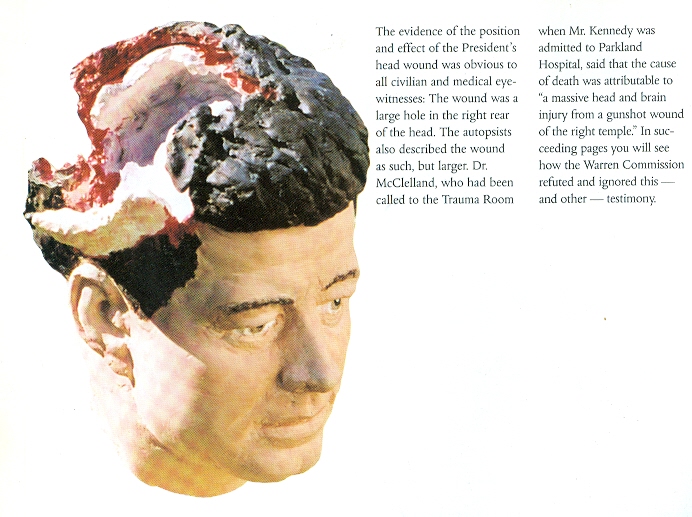
A proper forensic examination of the brain would have settled this debate. Pathologists can determine the direction of a bullet by tracing its path through the tissue. They can identify the tell-tale signs of an entry wound versus a much larger, more destructive exit wound. The brain would have held the final, undeniable answer to the central question of the assassination: was Oswald the lone gunman, or was he a patsy in a much larger plot?
Someone wanted to make sure that question could never be answered.
Where Is It Now? The Unsettling Silence
So, what happened to it? Was it secretly buried by Robert Kennedy in a private, unmarked location? Was it incinerated in a government facility, its secrets turned to ash? Or is it sitting somewhere, a macabre trophy in a private collection?
The mystery endures. The Assassination Records Review Board, a government body formed in the 1990s to declassify documents, was stumped. They concluded that the “most likely” scenario involved Robert Kennedy and his assistant, Angie Novello, removing the container, but they couldn’t prove it. It remains an official, unsolved theft.
Today, the story lives on in the dark corners of the internet, on forums and in documentaries, a constant reminder that we do not have the whole story. The missing brain is a physical manifestation of the missing truth.
It’s a symbol. A symbol of a crime without a solution, of evidence that was erased, and of a government that, to this day, cannot—or will not—explain what happened. The gaping hole in the historical record mirrors the horrific wound in the President’s head. And it leaves us with the chilling realization that the cover-up of the century might have been built around a tiny steel box, spirited away in the dead of night, taking the truth with it.
Originally posted 2016-03-14 17:19:01. Republished by Blog Post Promoter