
Sunday, July 12, 2026
HomeWeird WorldParanormalThe Butler Street Poltergeist

The Butler Street Poltergeist

The Siege of Butler Street: When Physics Broke Down

Imagine sitting in your living room. It’s January. 1959. Springfield, Massachusetts. It is bitterly cold outside. The kind of New England winter that hurts your face. You are 80 years old. You are Mrs. Charles Papineau, and you are just trying to stay warm. Sitting with you is your grandson, Wayne. He’s 13. Just a kid.

Quiet. Peaceful. Boring, even.

Then, BOOM.

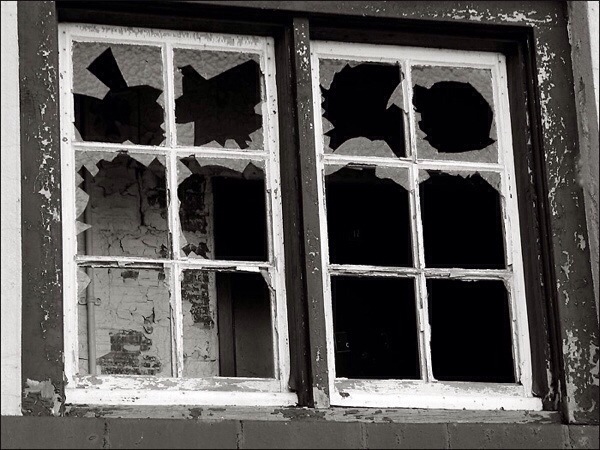
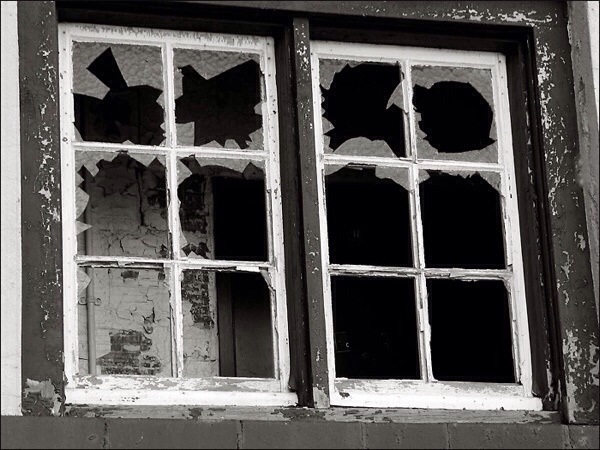
A sound like a gunshot cracks through the stale, heated air. But it isn’t a gun. It’s the window. The glass hasn’t just cracked; it has exploded. Shards fly everywhere. Not out into the snow—but in. Right at you. Right onto the rug. The silence returns as quickly as it left, replaced only by the howling wind rushing through the jagged hole in the pane.

You freeze. You look at Wayne. He looks at you. You check outside. Nobody.

You fix it. You move on. Maybe it was a fluke? A rock thrown by a neighbor kid? But then it happens again. And again. And again.

Welcome to the baffling, terrifying, and mostly forgotten mystery of the Springfield Poltergeist. This isn’t just a story about broken glass. This is a story about a week-long siege where invisible forces turned a quiet suburban home into a war zone, baffling police, confusing scientists, and leaving an insurance agent questioning reality itself.

The Week the House Went Mad

Most ghost stories burn slow. A creaky floorboard here, a whisper there. Not this one. The events at Butler Street went from zero to a hundred instantly. This wasn’t a haunting; it was an artillery barrage.

Over the course of a single, hellish week in January 1959, Mrs. Papineau and Wayne didn’t just lose a window or two. They lost 39 windows.

Think about that number. Thirty. Nine.

That is almost every piece of glass in a standard home. We aren’t talking about little hairline fractures. We are talking about violent, explosive destruction. According to the police reports and the terrified testimony of Mrs. Papineau, the pattern was maddeningly consistent. There was no warning. No creaking. Just a dull, heavy thump sound—like a heavy fist hitting a table—followed immediately by the shattering of glass.

Panic set in. Who wouldn’t panic? Mrs. Papineau was 80 years old. Her nerves were shot. She told reporters that windows were exploding right in front of her face. Imagine the psychological toll. You sit down for tea—SMASH. You go to the bathroom—CRASH. There was no sanctuary. The house itself had become a weapon.

The “Inside” Anomaly

Here is where things get weird. Really weird. If a vandal throws a brick through your window, where does the glass go? Mostly inside, right? But you also find the brick. You find footprints in the snow. You see a kid running away.

At Butler Street, the police found nothing. No rocks. No pellets. No bricks. No footprints in the fresh January snow.

Even stranger was the testimony of the glazier—the poor repairman tasked with fixing this mess. He noted something that defied the logic of a “pressure” explosion. If the heat inside the house caused the glass to expand and break, or if the house was settling, the glass would usually crack or buckle. But he told reporters that the glass had fallen inside the house, as if struck from the outside with “violent force” right in the center of the pane.

So, we have a force strong enough to punch through glass, precise enough to hit the center, but invisible enough to leave no trace. Was it a sniper? A ghost? Or something else entirely?

Enter the Architect: Science Meets the Supernatural

When the cops are stumped, the weirdos come out of the woodwork. But in this case, the “weirdo” was a professional. Enter John C. Parker.

Parker wasn’t a ghost hunter in the TV sense. He was an architect. A man of structure, angles, and materials. He understood how buildings worked. He understood load-bearing walls and thermal expansion. But Parker had a hobby: he was an “amateur expert” on poltergeists.

He saw the Butler Street case not as a spooky story, but as a puzzle to be solved. He approached it with the cold logic of an engineer. He didn’t bring holy water; he brought a thermometer.

Parker’s theory initially leaned toward physics. Could it be a rapid shift in temperature? The bathroom seemed to be ground zero for some of the most violent activity—three windows shattered in that small room alone. Parker installed a high-precision thermometer in the bathroom to monitor for sudden drops or spikes in heat (a common trope in ghost lore, but also a legitimate structural concern).

He didn’t stop there. He decided to armor the house. He installed a heavy-duty plastic window in the bathroom. The logic was sound: if this is a natural phenomenon (like sonic vibrations or structural shifting), the plastic might warp, but it shouldn’t shatter like glass. If it did break, it would imply a force far beyond simple environmental factors.

Unfortunately for history, the results of Parker’s deep investigation have largely vanished into the ether. We know he set up the experiment. We know he was there. But the data? Lost. Did the plastic hold? Did the temperature drop? The silence on his final findings is almost as loud as the breaking glass.

Deep Dive: The “Wayne” Factor (RSPK Theory)

We need to talk about Wayne.

In the world of paranormal research, there is a theory known as RSPK. That stands for Recurrent Spontaneous Psychokinesis. It is the gold standard theory for modern parapsychologists who try to explain poltergeist activity without bringing demons or dead people into the mix.

The theory goes like this: Poltergeists aren’t ghosts. They are raw, uncontrolled psychic energy projected by a living person. And that person is almost always a teenager.

Look at the profile:

  • The Location: A domestic home.
  • The Agent: Wayne, age 13. Puberty. High stress. Living with an elderly grandmother (potentially a strict or quiet environment).
  • The Activity: Explosive, attention-seeking, violent outbursts (smashing things).

13 is the magic number. It is the age of hormonal chaos. The theory suggests that when a teenager represses intense emotions—anger, frustration, anxiety, sexual tension—that energy has to go somewhere. In most kids, it turns into acne or bad attitude. In a rare few (according to the theory), it manifests externally. It becomes a shockwave. It becomes a force that smashes windows.

Did Wayne hate living on Butler Street? Was he bored? Was he grieving? We don’t know his story. We only know he was there for every single shatter. And usually, in RSPK cases, the activity stops when the “agent” leaves the room or falls asleep. While the reports don’t give us a minute-by-minute log of Wayne’s location, the correlation is impossible to ignore for anyone who studies the unexplained.

It’s worth noting that Mrs. Papineau was a skeptic. She didn’t believe in ghosts. This actually adds credibility to the event. She wasn’t a superstitious woman looking for attention. She was an annoyed old lady who was cold and tired of cleaning up glass.

The Sonic Boom Hypothesis

Let’s play devil’s advocate. Let’s say Wayne was just a normal kid and not a psychic X-Man. What else could break 39 windows in a week?

Springfield, Massachusetts, sits very close to Westover Air Reserve Base. In 1959, this was a major hub for the Strategic Air Command. We are talking about the height of the Cold War. Massive B-52 bombers and supersonic fighters were the norm.

Could it have been sonic booms? A jet breaking the sound barrier creates a massive pressure wave. It hits the ground like a bomb. It can absolutely shatter windows.

But there are holes in this theory—big ones.

1. The localized damage: Sonic booms cover a wide area. If a jet went supersonic over Springfield, Mrs. Papineau wouldn’t be the only one calling the glazier. Every house on Butler Street would have damage. But they didn’t. It was only her house. Why would a sonic boom target a single address?

2. The “Inward” fall: A sonic boom pushes against the house. It presses the glass in. This matches the evidence. However, the timing is wrong. 39 times in one week? At random hours? And the “thumping” sound heard before the break? A sonic boom is the break and the sound simultaneously. You don’t hear a thump, wait a second, and then watch the glass break.

The Act of God (or Ghost?)

The most sympathetic character in this whole absurd drama isn’t Mrs. Papineau. It isn’t Wayne. It’s the unnamed insurance agent.

Picture this guy’s week. He gets a claim form.
“Cause of damage?”
“Unknown / Poltergeist.”

The claim was for $93. In 1959, that was a decent chunk of change (equivalent to about $1,000 today). But insurance companies thrive on specific boxes. Fire. Flood. Theft. Vandalism.

There is no checkbox for “Angry Spirit.”

The agent was reportedly so rattled and confused that he couldn’t process the paperwork. He had to call the head office. “Hey, boss? Yeah. The windows keep exploding. No, nobody is throwing rocks. Yes, I saw it. What do I write down?”

This little detail grounds the story. It takes it out of the realm of campfire tales and puts it into the mundane reality of bureaucracy. The damage was real. The cost was real. The confusion was professional, not just personal.

The Sudden Silence

And then, it stopped.

As abruptly as the chaos began, silence returned to Butler Street. The siege lasted a little less than a week. 39 windows died. The glazier made his money. The police packed up their cruisers and went back to chasing speeders.

Why did it end?

If we look at the RSPK/Wayne theory, perhaps the stressor was removed. Maybe Wayne got a girlfriend? Maybe he passed a test he was worried about? Maybe he just got bored? Poltergeist activity is historically short-lived. It burns hot and fast, usually lasting a few weeks to a few months. A one-week flare-up is intense, but not unheard of.

If we look at the Geological theory (frost quakes or “cryoseisms”), maybe the ground settled. January in Massachusetts is deeply frozen. Sometimes, water underground freezes and expands, causing the earth to snap. This can cause localized tremors that feel like explosions. It could explain the “thump” and the damage. Once the pressure in the ground equalized, the breaking stopped.

But again—why only one house?

The Unsolved Legacy

We will never know for sure what happened on Butler Street in 1959. The house may still be there, renovated and oblivious to its violent past. The people involved have long since passed away.

But the Springfield Poltergeist remains a fascinating case study because it sits right on the fence between the explainable and the impossible. It has the physical evidence of a crime (broken glass) but lacks a criminal. It has the witnesses of a haunting, but lacks the ghosts.

It leaves us with an unsettling question: Is our reality as stable as we think it is? Or are there moments when the rules just… bend? When the friction between a teenager’s mind and the physical world gets too hot, does the glass just have to give way?

For Mrs. Papineau, the cause didn’t matter. She just wanted to be warm. For the rest of us, the shattered windows of Butler Street remain a jagged, unsolved puzzle in the dark history of the unexplained.

Amit Ghosh
Amit Ghoshhttps://coolinterestingnews.com
Aloha, I'm Amit Ghosh, a web entrepreneur and avid blogger. Bitten by entrepreneurial bug, I got kicked out from college and ended up being millionaire and running a digital media company named Aeron7 headquartered at Lithuania.
RELATED ARTICLES
- Advertisment -

Most Popular

Recent Comments

Warren Pan Abbott on The legend of the Devil Monkey !
chris davies on The McPherson Tape Mystery
Reed Reedly on ET has Internet!
Bea Houseoffashion on Proof Of Time Travellers – Gallery
Marcus2012 on ET has Internet!
Reed Reedly on ET has Internet!
LaughsAtConspiracyNuts on The 9/11 Conspiracy – Myths and Facts
Alex Sliverman on Did the ancients fly?
Doctor Wholigan on Time Traveler in 1938 film
chris davies on The McPherson Tape Mystery
Archie1954 on 10 secret UFO hideouts
chris davies on Ghosts of flight 401
Marcus2012 on ET has Internet!
jason Macdonald on Proof of Time Travel? – China
chris davies on Long-Lost Pyramids Found?
Reed Reedly on ET has Internet!
Milkman on Connected Universe
Tenmiles on Baigong Pipes Mystery
Simon Foster on Sirius – The Documentary
From the 1st April on 2013 – Alien Contact date ?
SkyWatcher on Is ET ignoring us?
I Come From The Future on Obama to make UFO Alien disclouser soon ?
ÛñK?øWn on 2013 – Alien Contact date ?
Just another person on 2013 – Alien Contact date ?
Malcolm Windowcleaner on The strange case of Rudolph Fentz
Mason Servio on Strange Things on Mars
Marke Wisdom Seeker on What will we find as arctic melts?
Andrea A Elisabeth Levyne on Aliens Captured in Varginha, Brazil
Mitch Grouyeki on Amazing Space Shuttle pictures









