A Shadow on the Hill: Why Waverly Hills is America’s Most Terrifying Place
Some buildings are just brick and mortar. Others… others remember. They hold the echoes of joy, of life. And some, the darkest ones, soak up pain like a sponge. They become saturated with misery, with fear, with death. On a lonely hill in Louisville, Kentucky, sits such a place. A sprawling gothic monster of a building that has become a magnet for the macabre and a permanent resident in our collective nightmares.
This is the story of the Waverly Hills Sanatorium.
Forget what you’ve seen on television. Forget the quick little ghost stories you’ve heard. To truly understand the oppressive weight of Waverly Hills, you have to go back. Back to a time of desperation. Back to a time when a simple cough could be a death sentence.
Before the Ghosts, There Was the Plague
At the dawn of the 20th century, a terrifying killer stalked the globe. It wasn’t a monster hiding in the shadows. It was invisible, airborne, and it could be inside your friends, your family, even you. They called it Tuberculosis. The “White Plague.” The Consumption.
It was a slow, agonizing disease. A persistent cough would turn bloody. A fever would set in that never quite broke. The body would waste away, leaving its victims pale, skeletal, and gasping for every breath. There was no cure. No antibiotic. It was everywhere, and Jefferson County, Kentucky, was hit particularly hard. The low, swampy land was a perfect breeding ground for the disease.
Something had to be done.
A Fortress of Hope, A Palace of Pain
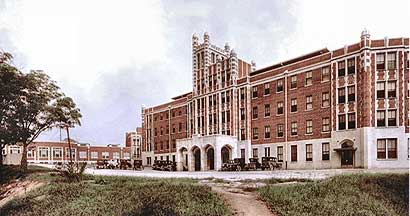
The first Waverly Hills was a smaller, two-story wooden building that opened in 1910. It was overwhelmed almost immediately. A much larger, more imposing structure was needed to fight this war. So, construction began in 1924 on the building we see today. A five-story, bat-winged colossus of Tudor Gothic architecture, designed to be a self-contained fortress against the White Plague.

When it opened in 1926, it was a marvel. It could hold over 400 patients. The unique curved design ensured that every single room had maximum exposure to the two things thought to be the only effective treatments: fresh air and sunlight. Huge screened-in porches, called solariums, lined every floor. Patients would be wheeled out in their beds, day and night, rain or shine, even in the freezing cold of winter, bundled in blankets. The belief was that the frigid air would kill the bacteria in their lungs.
It was a place of last resort. A place of hope. But for tens of thousands, it was the last place they would ever see.
The Brutal “Cures” of a Desperate Era
The fresh air treatment was just the beginning. The medical staff at Waverly, desperate for a breakthrough, experimented with procedures that today seem like something from a horror movie. They tried inserting balloons into the lungs to expand them, a painful and often fruitless procedure.
Then came the thoracoplasty. This was a brutal surgery where doctors would remove several ribs from a patient’s chest wall. The idea was to intentionally collapse a lung, allowing it to “rest” and heal. It was disfiguring. The recovery was excruciating. And the success rate? Abysmal.
Imagine being a patient. Lying on a porch in the dead of winter, listening to the chorus of coughs from hundreds of other souls, knowing that your best hope might be a surgery that could kill you or leave you crippled for life. The mental toll was astronomical. The despair was a palpable, living thing within those walls.
Death was a constant companion. It stalked the halls. At the height of the epidemic, it’s said that a patient died at Waverly Hills nearly every single day. The sheer volume of bodies became a problem. A logistical problem, and a morale problem.
How do you keep hope alive when the evidence of failure is being carried past your window every hour?
You hide it.
The Body Chute: A 500-Foot Tunnel of Secrets
This is where the story of Waverly Hills takes its darkest turn. Deep in the hospital’s lower level, a 500-foot tunnel was cut through the hill. Its official purpose was innocent enough. It was built to transport supplies and staff from the railroad tracks at the bottom of the hill up to the main building. A simple, efficient solution.
But it soon found a new, secret purpose.
To keep the remaining patients from seeing the constant parade of death, the staff began using this tunnel to transport the bodies. The dead were loaded onto a gurney, taken to a motorized rail system, and lowered down the dark, steep incline. Out of sight, out of mind. At the bottom, a waiting hearse would collect the body and drive away, unnoticed.
This tunnel became known as the “Body Chute.”

Can you imagine that final journey? The finality of it? Leaving the world not through the front door, but through a cold, damp service tunnel, hidden away like a shameful secret. For decades, modern paranormal investigators have called this tunnel one of the most active areas on the property. They record disembodied voices moaning in the darkness. They report being touched, pushed, and overwhelmed with a sense of profound sadness. It’s as if the tunnel itself absorbed the sorrow of every soul that passed through it.
While the exact number of deaths is lost to time and poor record-keeping, estimates range from a conservative 8,000 to a sensationalized 63,000. Whatever the true number, it was a staggering loss of life. A mountain of grief built in the heart of Kentucky.
A New Name, Same Suffering: The Woodhaven Years
By 1961, a miracle drug, Streptomycin, had all but eradicated tuberculosis. The great sanatorium was no longer needed. Waverly Hills closed its doors. But the building’s story of suffering was far from over.
A year later, in 1962, it reopened as the Woodhaven Geriatric Center. A nursing home for the elderly, many suffering from dementia and severe mental handicaps. But this wasn’t a peaceful place of rest. Reports from the time paint a grim picture of overcrowding, understaffing, and horrific patient neglect. Rumors swirled of cruel and unusual punishments and experimental treatments, including electroshock therapy being used far too liberally.
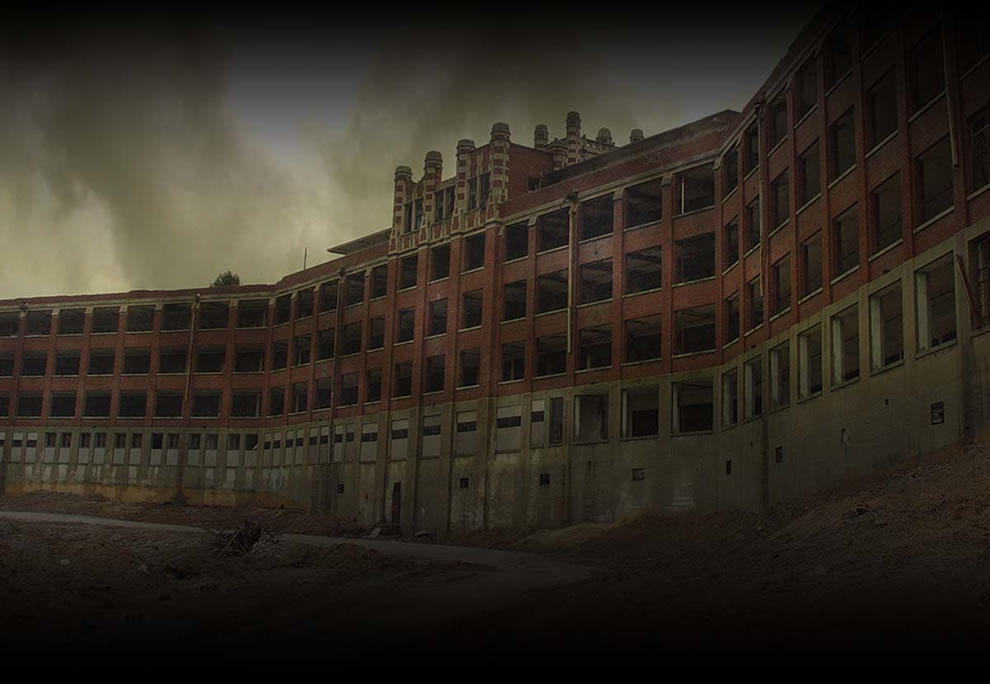
The state of Kentucky finally shut it down for good in 1982 amidst a storm of patient abuse allegations. The building was finally empty. Abandoned. Left to rot on its lonely hill.
But it was never truly empty.
When the Living Left, the Dead Remained: The Hauntings Begin
As the building decayed, the stories began. Legends. Rumors. Local kids would dare each other to break in, coming back with tales that would chill the blood. They spoke of strange lights in the windows of a building with no power, of disembodied screams echoing from the empty halls, of doors slamming shut in the dead of night.
Waverly Hills had become more than an abandoned hospital. It had become a legend. A place where, some say, the veil between our world and the next is impossibly thin.
Room 502: The Heart of the Darkness
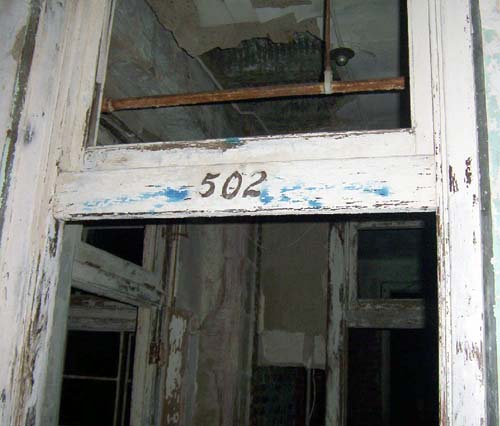
Of all the haunted corners of Waverly, one location is spoken of in hushed, fearful tones: Room 502. Located on the fifth floor, this was once a nurses’ station. It is now considered by many to be the epicenter of the building’s paranormal activity.
The legend is twofold and utterly tragic. In 1928, the head nurse of the floor, only 29 years old, was found dead in this room. She had hanged herself from a light fixture. The story goes that she was unmarried, pregnant, and wracked with shame or despair. The discovery of her body must have been a horrifying sight.
Just a few years later, in 1932, another nurse who worked in Room 502 allegedly jumped to her death from the room’s window or the nearby roof patio. No note was ever found. No reason was ever given.
Two nurses. One room. Two violent deaths. Coincidence? Or is there something about that specific room? Visitors who dare to enter Room 502 report an immediate, crushing feeling of depression. Investigators have captured chilling electronic voice phenomena (EVPs) of a female voice whispering, “Get out!” Figures are seen in the window from the outside, and shadowy shapes dart across the room, only to vanish when a flashlight beam hits them.
The Lost Children of the Sanatorium
Waverly wasn’t just for adults. Children, too, fell victim to the White Plague. Their laughter once echoed on the rooftop playground, a small mercy in a life of sickness. Now, different sounds are heard.
On the third floor, many have reported encounters with a little girl named Mary. Sometimes she’s seen playing with a ball. Other times, only the sound of the ball is heard… bounce… bounce… bounce… echoing down the desolate corridor. One terrified visitor claimed to have seen her up close. He said the little girl looked at him and stated, blankly, “I have no eyes.” He fled the building and swore never to return.

Then there’s the little boy, sometimes called Timmy or Bobby. He’s known for rolling a leather ball to ghost hunters, a playful but unsettling invitation from beyond the grave. On the rooftop, where the sickest children were brought for sunlight therapy, people have heard the faint, ghostly sound of children singing. The song they sing? “Ring around the Rosy.” A nursery rhyme long, and perhaps falsely, associated with plague and death.
The Fourth Floor: Where Shadows Walk
Ask a seasoned paranormal investigator which floor of Waverly is the most active, and many will say the fourth. This floor is the domain of the “shadow people.” Fleeting, human-shaped figures made of pure darkness that dart in and out of doorways, peek around corners, and seem to watch from the end of long hallways. They move with an unnatural speed. They are not reflections. They are not tricks of the light. Dozens of cameras have captured them. Some believe these are the spirits of the most tormented patients, their human forms eroded by trauma. Others believe they are something else entirely. Something that was never human to begin with.
Phantoms in the Kitchen and at the Gates
The hauntings aren’t confined to the patient floors. In the massive, derelict kitchen, the distinct smell of cooking food—baking bread, roasting meat—is often reported, even though the last meal was served there in 1982. A full-bodied apparition of a man in a white cook’s uniform has been seen walking through the room, seemingly still on the job.
And at the main entrance, perhaps the most startling and tragic spirit appears. An old woman, seen with chains on her wrists and ankles, her spectral form bleeding, runs from the front doors screaming, “Help me! Somebody save me!” before vanishing into thin air. Is she a ghost from the sanatorium, or a tormented soul from the brutal Woodhaven era?
An Echo That Never Fades
Today, Waverly Hills stands as a protected historical building, saved from the wrecking ball by private owners who run historical and paranormal tours. It has been featured on countless television shows, each crew leaving with their own evidence of something inexplicable occurring within its walls.
So what is it? Is Waverly Hills Sanatorium just a big, creepy old building whose tragic history plays on our imaginations? Is it a place filled with the residual energy of thousands of lives cut short by a terrible disease and questionable medicine?
Or is it something more? Is it a place where the veil has been worn so thin by decades of intense suffering that the dead now walk freely among the living? A place that truly remembers, and will not let anyone, living or dead, forget what happened there. The only way to know for sure is to walk its halls yourself. But be warned: you may not be walking them alone.
Originally posted 2016-07-18 20:53:28. Republished by Blog Post Promoter