
Home Weird World Science ‘Robocabs’ could replace taxis by 2030

‘Robocabs’ could replace taxis by 2030

0
59

The Trojan Horse in Your Driveway: The Terrifying Truth About Self-Driving Cars

They sold it to you as a dream. A utopia on wheels.

Picture it: A world with no traffic jams. No accidents. No stress. You just hop into a sleek, silent pod, speak your destination, and lean back as the city glides by. It’s convenient. It’s green. It’s the future, they said.

But what if they lied?

What if the dream they’re selling is actually a cage? A perfectly designed, chrome-plated, GPS-guided prison for humanity. A future where you don’t just lose control of the wheel… you lose control of everything.

Forget what the mainstream news tells you. We need to look behind the curtain. We need to ask the questions the Silicon Valley billionaires hope you never think to ask.

The Official Story: A Convenient Illusion

Let’s start with the brochure-friendly version of reality. The story you’ve been fed for years. Companies, from tech behemoths to legacy automakers, are all racing toward a driverless future. They parade their prototypes on curated test tracks, showcasing a world of effortless mobility.

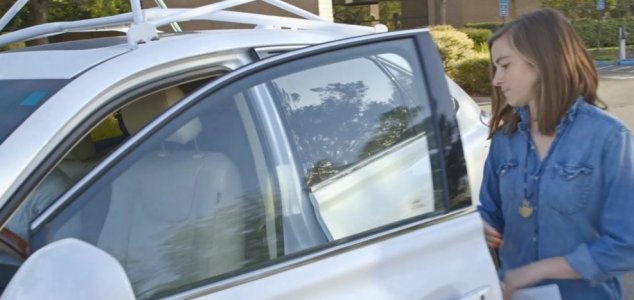
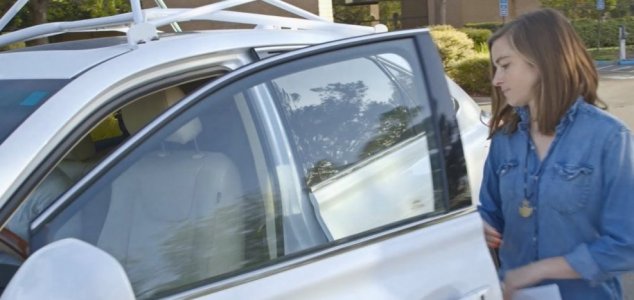
Google's early model self-driving car on the road

They tell you this is about progress. It’s about safety. And, of course, it’s about the environment.

Back in 2015, a study by the Lawrence Berkeley National Laboratory made a bold prediction. They claimed that autonomous taxis—or “robocabs” as they called them—would likely be a common sight on our streets by 2030. Think about that. That’s just a few short years away. They promised this revolution would slash carbon emissions by a staggering 82%. How? By using smaller, electric, hyper-efficient vehicles perfectly matched to each trip.

“Most trips in the U.S. are taken singly, meaning one- or two-seat cars would satisfy most trips,” said researcher Jeffery Greenblatt at the time. “That gives us a factor of two savings, since smaller vehicles means reduced energy use and greenhouse gas emissions.”


It sounds perfect, doesn’t it? A clean, green, efficient world. No more searching for parking. No more DUIs. No more human error causing horrific pile-ups on the freeway. But every perfect story has a dark side. And this one is a chasm.

The “Johnny Cab” Prophecy: Were We Warned?

Remember the 1990 sci-fi classic ‘Total Recall’? Arnold Schwarzenegger hops into a taxi driven by a cheerful, slightly creepy animatronic driver named Johnny Cab. It was a funny, futuristic gimmick. A throwaway detail in a wild movie.

Or was it?

The architects of our future love to hide their plans in plain sight, embedding their intentions in our popular culture. They call it predictive programming. They show us a version of the future, frame it as entertainment, and let the idea soak into our collective subconscious. By the time the technology actually arrives, we’re already accustomed to it. We accept it without question because we’ve seen it before.

The robocab wasn’t just a funny movie prop. It was a signal. The first quiet step towards a world where you no longer pilot your own destiny. You summon a pod. You are a passenger. You are not in control.

Deep Dive: The End of Ownership and the Rise of “Mobility as a Service”

This isn’t about you buying a new, smarter car. Oh no. That’s not the plan at all. The real endgame is the complete elimination of private car ownership. Think about it. Why would a company want to sell you a depreciating asset for a one-time fee when they can trap you in a never-ending subscription for the rest of your life?

They call it “Mobility as a Service” or MaaS. A friendly, corporate term for a seismic shift in personal freedom.

In this new world:

  • You own nothing. Your access to transportation is entirely dependent on your standing with a handful of mega-corporations.
  • You have no freedom of movement. Your “mobility subscription” could have tiers. A basic plan might limit you to a certain number of miles per month or confine you to your own city. Want to visit family out of state? That’ll be the premium package.
  • There is no privacy. The car becomes a rolling surveillance device. It knows where you go, when you go, who you’re with. The interior microphones will capture every conversation. The internal cameras will watch every move. This data isn’t just for “improving your customer experience.” It’s the most valuable commodity on Earth. And you’re giving it away for free with every trip.

This isn’t a conspiracy theory. This is the business model. It’s the ultimate dream of Big Tech: to turn a fundamental freedom—the freedom to travel—into a recurring revenue stream under their total control.

The Control Grid: Who Really Holds the Keys?

Let’s peel back another layer. What happens when every vehicle on the road is part of a single, interconnected network? A city-wide, nation-wide, or even world-wide grid controlled by a central AI.

Who programs that AI? Who sets the rules?

Imagine a future protest or a political rally the powerful don’t like. With the push of a button, they could create a “no-go zone.” Every autonomous car in the city would simply refuse to travel to that location. Dissent could be neutralized before it even begins, not with riot police, but with a simple software update.

Consider a health crisis. The system could be programmed to restrict travel for anyone whose “health passport” isn’t up to date. Your car wouldn’t just refuse to start; it would tell you that your trip has been “denied for non-compliance.” Your ability to buy groceries, see a doctor, or go to work would be tied directly to your obedience.

The Trolley Problem on Steroids

We’ve all heard of the classic ethical dilemma: A runaway trolley is about to hit five people. You can pull a lever to divert it to another track, but there’s one person on that track. What do you do? Now, imagine that’s not a thought experiment. It’s a line of code.

Every single day, self-driving cars will have to make life-or-death decisions in a split second. In an unavoidable crash scenario:

  • Does it prioritize its passenger above all else?
  • Does it swerve to hit a single person instead of a group of three?
  • Does it calculate the “value” of the lives at stake? Does the 80-year-old get sacrificed to save the 10-year-old? Does the CEO get saved over the janitor?

These aren’t questions for philosophers anymore. These are programming mandates being decided right now, in secret, by engineers and corporate lawyers. What “moral framework” are they building into these machines? And whose interests will it serve?

The Jobpocalypse: An Extinction-Level Event for the Working Class

The “official story” glosses over one tiny detail: the human cost. What happens to the millions of people whose entire livelihood is based on driving?

This isn’t just about taxi drivers. It’s about truckers. Delivery drivers. Bus drivers. Chauffeurs. Uber and Lyft drivers. We are talking about one of the largest employment sectors on the planet being wiped out, not in a generation, but in a decade. It’s an economic extinction event on a scale we have never seen before.

Where do these people go? What do they do? The system has no answers. The plan is simply to replace them with a cheaper, more compliant, and more efficient machine. The resulting social and economic chaos will be staggering. And in the midst of that chaos, who will people turn to for help? The same corporate and government entities that created the problem in the first place, who will happily offer a “solution” in the form of universal basic income and greater dependency. See how it works?

What If It All Goes Wrong? The Nightmare Scenarios

We’ve been promised a system that is perfectly safe, perfectly efficient, and incorruptible. But what if it isn’t? What happens when the system breaks?

Scenario 1: The City-Wide Hack

Anything connected to a network can be hacked. It’s the first rule of cybersecurity. Now imagine not just one car being hacked, but an entire city’s fleet. A hostile nation-state or a sophisticated terror group could, with a few keystrokes, turn a metropolis into a death trap. They could:

  • Lock every door, trapping millions of people inside their vehicles.
  • Send every car careening into buildings or off bridges.
  • Create a complete and total gridlock, preventing emergency services from reaching anyone.
  • Use the fleet as a weapon, coordinating attacks with terrifying precision.

It sounds like a movie plot. But the vulnerabilities are real. The infrastructure for this exact scenario is being built right now, and we’re cheering it on.

Scenario 2: The Kill Switch

What if the “grid” itself goes down? An enemy cyberattack, a massive solar flare, or even a simple catastrophic software bug could render the entire transportation system useless in an instant. Every car would stop dead. The arteries of our society would clog and harden. Commerce would cease. Food wouldn’t get delivered to stores. People wouldn’t get to hospitals. Society would grind to a halt in a matter of hours.

This hyper-centralization creates a single point of failure so catastrophic that it’s hard to even comprehend. The old world of individual cars, for all its flaws, was resilient. If one car broke down, the others kept going. In the new world, if the system breaks down, *everything* breaks down.

Scenario 3: The Algorithm Becomes Judge, Jury, and Executioner

The system will know everything about you. Your social credit score, your political leanings, your criminal record, your online posts. What if the algorithm starts making judgments?

You’re late on a bill? Maybe your “mobility access” is throttled to essential travel only. You posted something “problematic” online? Suddenly, you can’t seem to summon a car. The system isn’t broken; it’s working exactly as designed. It’s enforcing compliance through the denial of basic services.

This is the ultimate form of social control. A quiet, invisible fence built around your life, with the limits determined by a faceless, unaccountable algorithm.

The future they are building isn’t about convenience. It’s about control. They are constructing a system that will have the power to monitor, direct, and restrict the movements of every single person. The open road, a symbol of freedom for generations, is being systematically replaced by a closed network. A digital leash.

They promise you safety and you give up freedom. They promise you convenience and you give up privacy. They promise you utopia and you get a cage. So the next time you see one of those futuristic, self-driving cars glide by, don’t just see a piece of technology. See it for what it really is: a beautiful, silent Trojan Horse, and we are all welcoming it right through the gates.

Think about it. The choice is still, for a little while longer, yours to make.

Originally posted 2015-11-16 10:19:00. Republished by Blog Post Promoter









