Home Weird World Strange Places Strange mysterious unexplored locations – Gangkhar Puensum

Strange mysterious unexplored locations – Gangkhar Puensum

0
50

The Mountain That Wants You Dead: Inside the Mystery of Gangkhar Puensum

Forget Mount Everest. Seriously, forget it. Everest is a tourist trap. A conga line of wealthy thrill-seekers waiting in line to snap a selfie at the summit while stepping over frozen garbage. It’s commercialized. It’s conquered. It’s done.

But there is a place where humans are not welcome.

There is a towering white giant hiding in the mist that has spat out every single person who dared to set foot on its slopes. It is the highest unclimbed mountain on Earth. It is a ghost on the map. And if you believe the locals, it is the home of gods who do not want to be disturbed.

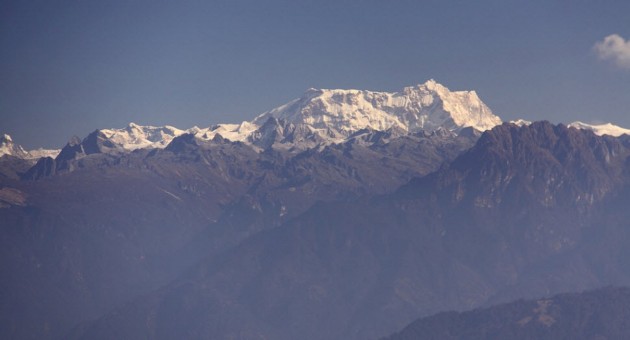
image3-e1451853768848

Welcome to Gangkhar Puensum. The Forbidden Peak.

Located on the jagged, disputed border between Bhutan and China, this isn’t just a pile of rock and ice. It is a 7,570-meter (24,836 ft) warning sign from nature. While modern technology has mapped the bottom of the ocean and the surface of Mars, this mountain managed to stay hidden, moving around on maps like a phantom for decades. It refuses to be pinned down.

The White Peak of the Three Spiritual Brothers

Names have power. In Bhutan, they don’t just name mountains after guys who discovered them. They name them after what lives there. Gangkhar Puensum translates roughly to “White Peak of the Three Spiritual Brothers.”

Sounds peaceful, right? Wrong.

In Himalayan folklore, “spiritual brothers” aren’t monks sitting around chanting. They are titanic, elemental forces. Guardians. Entities that view human climbers not as explorers, but as an infection. The mountain is the 40th highest in the world, yet it remains the undisputed king of the “unclimbed.” Thousands have stood on top of Everest. Not one human soul has ever stood on the summit of Gangkhar Puensum and lived to tell the tale.

Why? Is it just too steep? Too cold? Or is there something else up there pushing people back?

The Phantom on the Map: How Do You Lose a Mountain?

Here is where the story gets absolutely bizarre. We are talking about a mountain that is over four and a half miles high. It is a colossus. You can see it for miles. And yet, for nearly a century, nobody could agree on where it actually was.

It’s insane.

The elevation was first measured back in 1922. But the maps? The maps were garbage. Total fiction. For decades, cartographers drew Gangkhar Puensum in completely different locations. Some maps had it inside China. Others had it deep in Bhutan. Some had the height wrong by thousands of feet.

Imagine the confusion. You are an explorer, you have your gear, you have your team, you trek for weeks into the most hostile terrain on the planet, and you look at your map. Then you look at the horizon. The mountain isn’t there.

That actually happened. The very first team that tried to find a route to the summit couldn’t even find the mountain. They wandered around the Himalayas, freezing, confused, and eventually had to turn back because the peak had seemingly vanished. Was it just incompetence? Or does the geography of the region twist and turn to hide its secrets?

The Cursed Expeditions: 1983 – 1994

Eventually, the maps got slightly better. Bhutan opened its doors to mountaineering for a brief, chaotic window in 1983. The rush was on. Commercial climbers saw Gangkhar Puensum as the ultimate prize. The last great trophy.

Four major expeditions were launched between 1983 and 1994. They were well-funded. They had the best gear. They had veteran climbers who had eaten mountains like K2 for breakfast.

They all failed.

Every single one.

It wasn’t just that they couldn’t reach the top. It was how they failed that sends shivers down your spine. Reports from these expeditions are fragmented, but the common thread is chaos. Unpredictable weather patterns that seemed to target the climbers specifically. Clear blue skies that would instantly turn into blinding whiteouts the second a boot touched the sacred zone.

Heavy snowfall? That’s an understatement. We are talking about walls of snow burying camps overnight. Winds that sounded like screaming voices. Conditions that were “unsustainable.” That’s the polite, scientific way of saying the mountain tried to kill them.

Strange “Events” and Unexplained Phenomena

Dig a little deeper into the logs of these failed trips, and you find the weird stuff. The stuff they don’t put in the official press releases.

Climbers reported “strange events.” What does that mean? Mysterious mechanical failures. Equipment that worked perfectly at base camp would suddenly die as they ascended. Compasses spinning wildly. Magnetic anomalies that made navigation impossible.

And the lights.

There have been persistent rumors for decades of strange, glowing orbs hovering near the peaks of the high Himalayas. Not airplanes. Not satellites. Just silent, hovering lights that watch the climbers. Are they ball lightning? Plasma discharges? Or are we looking at the modern interpretation of the “Spiritual Brothers”?

The Yeti Connection: More Than Just a Myth?

You can’t talk about unclimbed Himalayan peaks without talking about the big guy. The Yeti. The Migoi.

In the West, the Yeti is a joke. It’s a cartoon character selling coolers. In Bhutan? It is very, very real. The Bhutanese people treat the existence of the Migoi (their name for the Yeti) with the same seriousness that we treat the existence of bears or wolves.

Gangkhar Puensum is often cited as the heart of Yeti territory. This is their sanctuary. The one place humans haven’t ruined.

Cryptozoologists have long theorized that if a relic population of Gigantopithecus or some other hominid survived, they would need a massive, isolated territory to thrive. A place with caves. A place with water. A place where humans physically cannot go.

This mountain fits the profile perfectly. Sightings in the valleys below the mountain are common. Footprints. Strange whistling sounds in the night. The locals don’t climb the mountain because they respect the gods, sure. But they also don’t climb it because they know they aren’t the top of the food chain up there.

The 1999 Incident: The Japanese Invasion

The story takes a dark political turn in 1999. By this point, Bhutan had realized that letting people stomp all over their sacred mountains was a bad idea. But the thirst for the summit was too strong.

A team of climbers from Japan didn’t want to take “no” for an answer. They played the political game. They got a permit from the Chinese authorities to climb the mountain from the northern side, bypassing Bhutan’s restrictions. They were going to sneak in the back door.

They were well-prepared. They were determined. They actually managed to reach the summit of Liankang Kangri, a subsidiary peak standing at 7,535 meters. They were staring right at the main peak of Gangkhar Puensum. It was right there. The prize was within reach.

Then, the mountain—or perhaps the people protecting it—fought back.

A massive diplomatic incident exploded. Bhutan was furious. They viewed this as a spiritual violation and an infringement on their sovereignty. Protests erupted. The pressure was immense. The Japanese team, standing on the razor’s edge of history, looked at the final summit… and turned around.

They backed down. They claimed it was due to the protests, but rumors persist that the team saw something on that final ridge. Conditions that were impassable. A sense of dread that overwhelmed even the most hardened alpinist. They came down, and the mountain remained virgin territory.

2004: The Gates Slam Shut

That was the last straw.

In 2004, the government of Bhutan did something that is almost unheard of in the modern world. They chose magic over money. They chose spirits over sport.

They completely banned mountaineering on Gangkhar Puensum. They declared that any peak higher than 6,000 meters was sacred home to the protective spirits and ancestral deities. No more permits. No more expeditions. No more humans.

Think about how rare that is. In a world where everything is for sale, where you can buy a ticket to space or a submarine ride to the Titanic, Bhutan said, “Stop.”

The “Black Spot” Theories

Since the ban, the mystery has only deepened online. Go to Reddit. Go to the conspiracy forums. Gangkhar Puensum is a hotbed for digital sleuths.

Why is it really banned? Is it just religion?

Some theories suggest that the “magnetic anomalies” reported by early climbers weren’t natural. There is a persistent belief in the “Hollow Earth” or subterranean base theory—the idea that the Himalayas hide entrances to vast underground systems (think Agartha or Shambhala). According to these modern legends, the UFOs seen in the area aren’t coming from space; they are coming from inside the mountain.

Satellite imagery of the region is often criticized for being lower resolution than other areas. Glitches? Or censorship? If you wanted to hide a secret base, or the entrance to a lost civilization, the highest unclimbed, legally forbidden mountain on Earth is the perfect place to put it.

What If We Are Meant to Stay Away?

We live in an age of entitlement. We think we have the right to go everywhere. We think we have the right to see everything.

Gangkhar Puensum stands as a giant middle finger to that idea.

It is a reminder that we are small. It represents the unknown. In a world where every square inch is mapped by Google, analyzed by AI, and uploaded to Instagram, this mountain holds onto its secrets with an iron grip.

Maybe the strange events were just weather. Maybe the Yeti is just a bear. Maybe the magnetic anomalies are just iron deposits.

But maybe not.

Maybe the voices the climbers heard in the wind were real. Maybe the “Spiritual Brothers” are standing guard right now, watching the passes, waiting for the next fool to try their luck.

The Last Frontier

Today, Gangkhar Puensum remains silent. The snow piles up, layer upon layer, untouched by human boots. The wind howls through canyons that have never echoed with the sound of a human voice. The “White Peak of the Three Spiritual Brothers” keeps its watch.

Whatever is up there—whether it’s gods, monsters, aliens, or just rock and ice—it owns that space. We are just guests on this planet, and some rooms are locked for a reason.

It is the insurmountable, forbidden peak. And as long as Bhutan holds the line, it will remain the last great mystery of our world. For now, the mountain has won. And honestly? It’s probably better that way.

Originally posted 2016-01-04 11:44:27. Republished by Blog Post Promoter