Saturday, April 11, 2026
HomeWeird WorldScienceUS challenges Japan to a giant robots duel

US challenges Japan to a giant robots duel

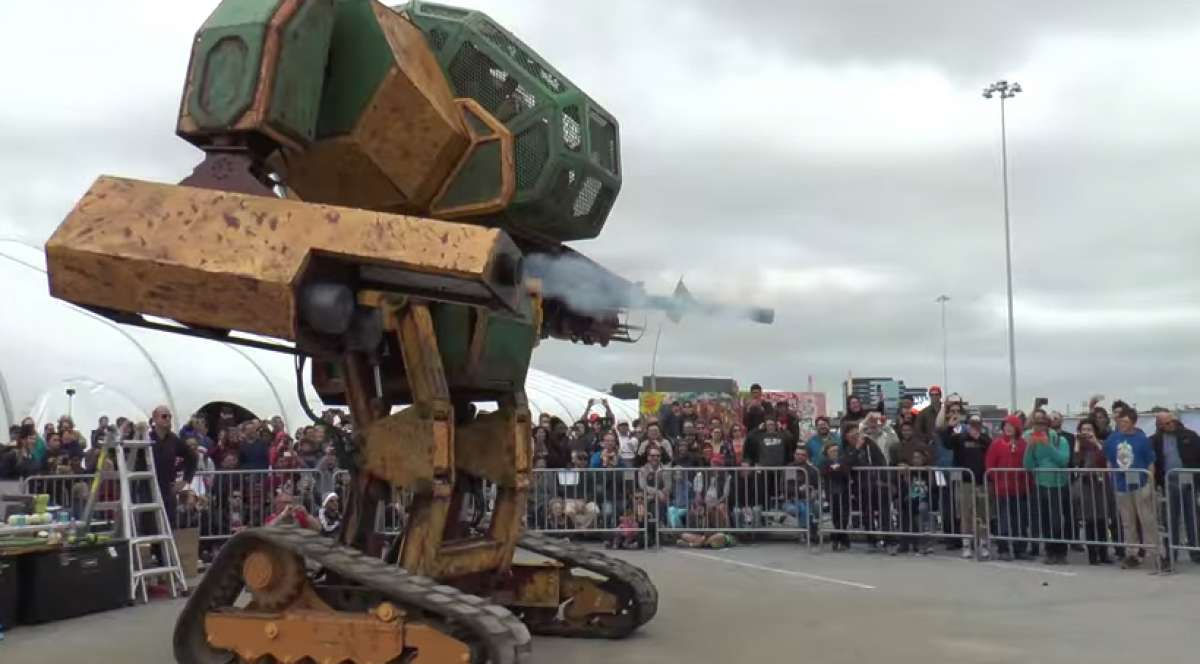
You are looking at the dawn of a terrifying, exhilarating new age. This isn’t CGI. This isn’t a render from a blockbuster movie studio. This is steel, hydraulic fluid, and 15,000 pounds of raw American aggression.

Megabot is an undeniably impressive piece of kit. But to call it just “impressive” is a massive understatement. It is a warning shot.

For decades, we have been fed a steady diet of science fiction. We grew up glued to the screen, watching Gundam pilots scream commands in the heat of battle. We watched Pacific Rim and dreamed of the day we could strap ourselves into a machine the size of a building and punch a monster in the face. We thought it was fantasy. We thought it was decades away.

We were wrong.

Two giant mechanized robots could soon be duking it out in a showdown of epic proportions, and the implications are mind-bending.

The Rise of the American Titan

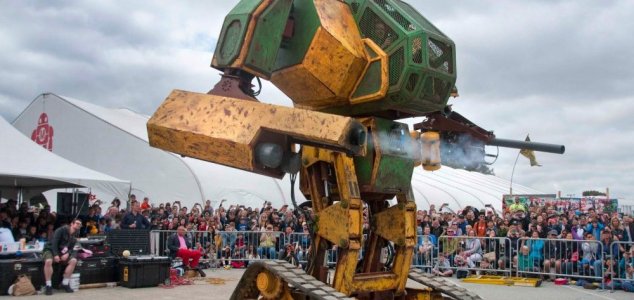
Let’s look at the stats because they are absolutely bonkers. Towering at a height of 15ft and weighing in at 15,000 pounds, Megabot II is a huge mechanized paintball-firing combat walker that wouldn’t look out of place guarding a dystopian border.

Think about the engineering here. This isn’t a tank. Tanks are stable. Tanks have treads. This thing walks. It mimics the human form. That is an engineering nightmare that roboticists have struggled with for fifty years. And yet, here it stands.

The “Mark II” isn’t designed for peace. It isn’t designed to rescue kittens from trees. It is built for violence. Simulated violence, sure. But violence nonetheless. It’s equipped with modular pneumatic cannons. These aren’t your weekend warrior paintball guns. These cannons launch projectiles the size of cannonballs at speeds that could crack a concrete wall.

The Japanese Rival: A Different Breed of Monster

Its opponent, the Japanese-made Kuratas, is a completely different animal. It stands 3ft shorter and weighs significantly less, but do not let the size fool you. If MegaBot is a sledgehammer, Kuratas is a scalpel.

Built by Suidobashi Heavy Industry, the Kuratas looks like it rolled right off the set of a cyberpunk thriller. It is sleek. It is fast. It is terrifyingly advanced.

While the Americans went for brute force and heavy armor, the Japanese team focused on high-tech integration. The Kuratas comes equipped with a sophisticated targeting system that tracks enemies automatically. It features a heads-up display (HUD) that allows the pilot to lock onto targets just by looking at them.

And then there is the weaponry.

It sports a Gatling gun capable of firing 6,000 BBs per minute. But here is the part that will give you chills. The firing mechanism is activated by the pilot’s smile. They call it the “Smile Shot.” You smile, and the robot unleashes a hail of plastic death. It is a psychological masterpiece—you have to look happy while you destroy your opponent.

The Challenge Heard ‘Round the World

This week the US inventors behind Megabot have thrown down the gauntlet in an attempt to organize a duel between the two machines as part of an ongoing effort to start a real-life robot fighting league.

This wasn’t a polite email. This was a spectacle. The MegaBots team draped themselves in American flags, cranked up the rock music, and stared into the camera with the intensity of pro wrestlers.

“Born of the fires of American innovation, we’ve built the Megapot II, America’s first fully functioning piloted robot,” they said. “And because we’re American, we’ve added really, really big guns.”

That quote alone tells you everything you need to know about the philosophy here. It is loud. It is brash. It is unapologetic.

“The mark II isn’t the first fighting robot in the world, Kuratas beat us to it. We have a giant robot, you have a giant robot. You know what that means – we challenge you to a duel.”

Simple logic. primal logic. Two alphas in the same cage. Nature demands a fight.

Inside the Beast: How It Works

Requiring a team of two to operate, Megabot possesses two huge modular pneumatic cannons for arms and can let loose paint-filled cannonballs at speeds of up to 120mph.

Why two pilots? Because the cognitive load of running this machine is too high for one brain. One person drives. They handle the legs (or tracks), the balance, the movement. They are the nervous system. The second person? They are the trigger man. They handle the turret, the aiming, the weapons systems.

It’s exactly like an Apache attack helicopter or a tank crew. You need coordination. You need communication. If the driver zigs when the gunner expects a zag, you miss the shot. Or worse, you tip over.

“We’re bringing video games and science fiction to life in the form of internally piloted giant fighting robots,” said co-founder Gui Cavalcanti.

This statement is key. They aren’t trying to build a weapon of war (officially). They are trying to build a sport. Imagine Formula 1, but instead of racing, the cars stand up and punch each other. The revenue potential is astronomical. Merchandising, ticket sales, pay-per-view events. This could be the NFL of the 22nd century starting right now.

The “What If?” Scenario: The Military Connection

Let’s take a step back and put on our tin foil hats for a second. We have to ask the question: Is this really just for fun?

History shows us that entertainment technology and military technology often sleep in the same bed. The internet started as ARPANET. GPS was for missiles before it was for your pizza delivery.

Giant bipedal robots have always been dismissed by military strategists. They say they are too tall, too easy to target, and the ground pressure is too high. But look at what is happening here. Private companies are solving the balance issues. They are solving the power-to-weight ratio problems.

If MegaBots and Suidobashi solve the physics of walking tanks for a sporting league, how long before a defense contractor buys the patent? Swap the paintballs for depleted uranium shells. Swap the pilot for an AI connection. Suddenly, you have an urban assault vehicle that can step over barricades and demoralize an entire city just by standing up.

Is this the soft disclosure of exoskeleton warfare? Maybe.

The Logistics of a Metal Showdown

If Japan accepts the challenge then the fight will take place in approximately one year’s time.

Why a year? Because these machines are prototypes. They are fragile. If you punched the MegaBot II right now, it might leak hydraulic fluid and shut down. They need armor. They need melee combat upgrades.

This gap year is going to be an arms race. A literal arms race. The Americans need to figure out how to stop a Gatling gun. The Japanese need to figure out how to stop a 3-pound cannonball moving at highway speeds.

And where do you host this? You can’t do it in a boxing ring. The floor would collapse. You can’t do it in a stadium; the shrapnel (even plastic shrapnel) would blind the audience. You need an industrial wasteland. An abandoned steel mill. A dry dock.

The aesthetic is going to be gritty. It has to be.

The Psychology of the Pilot

Imagine being the guy inside. You are strapped into a metal cage. You have a helmet on. The heat from the engine is rising up through the floorboards. You smell ozone and grease.

Then, the proximity alarm goes off. A 9,000-pound Japanese robot is charging you at full speed.

That is not a video game. That is real fear. The G-forces when these things collide will be significant. Whiplash is a guarantee. If the glass canopy breaks? You are in trouble. This sport isn’t for the faint of heart. It requires a new breed of athlete—part gamer, part fighter pilot, part mechanic.

The Deep Dive: Why We Need This

Why has this story grabbed the internet by the throat? Why did the crowdfunding campaigns for these upgrades break records?

Because we are bored with the digital world. We spend our lives staring at screens, tapping on glass, interacting with pixels. We crave reality. We crave mass. We want to see heavy things hitting other heavy things.

There is a visceral satisfaction in mechanical combat. It’s the same reason people love demolition derbies or monster truck rallies, but amplified by a thousand. It taps into the ancient Roman gladiator instinct, but without the human blood (hopefully).

Furthermore, it represents a triumph of engineering. For years, robotics has been about tiny, precise movements. Microchips. Drones. This returns to the Iron Age mentality. Big steel. Big rivets. Big fire.

The Reality Check: Scripted vs. Real

Here is the controversy that haunts this project. Can a robot fight ever be “real”?

In the world of BattleBots (remote control cars with saws), the physics allow for real chaos. But with 15-foot piloted mechs, safety becomes the limiting factor. If MegaBot tips over, the pilot could die. If Kuratas’ cockpit is breached, it’s game over in a bad way.

Skeptics are already flooding the forums. They say the fight will be scripted. They say it will be WWE with sheet metal. “Kayfabe” for engineers.

Does it matter? If the metal crunches, if the oil spills, if the spectacle is there—will the audience care if the outcome was pre-determined? Maybe not. We watch movies knowing they are fake. We just want to believe the machine is powerful.

However, for this to truly take off as a sport, there needs to be an element of unpredictability. A lucky shot. A mechanical failure. A pilot error. If they can capture that lightning in a bottle, they change the world of sports entertainment forever.

The Legacy of the Duel

Whether this fight happens in a year, or two, or never, the line has been crossed. The challenge has been issued. The genie is out of the bottle.

Other teams are watching. There are rumors of a Chinese team building a mech. A Russian team. A Korean team. We could be looking at the World Cup of Mecha within a decade.

Imagine national pride on the line. Flags waving. Giant robots painted in national colors clashing in a desert arena. It is the ultimate expression of technological dominance without the need for actual war.

The MegaBot II is clunky. It’s ugly. It leaks. But it is the first. It is the Model T Ford of giant robots. Future generations will look back at that picture up top—that rust-colored hulk—and say, “That is where it started.”

Get ready. The future is heavy, and it is walking towards us.

Originally posted 2015-11-29 10:27:05. Republished by Blog Post Promoter

Arindam Mukherjee
Arindam Mukherjee
Arindam loves aliens, mysteries and pursing his interest in the area of hacking as a technical writer at 'Planet wank'. You can catch him at his social profiles anytime.
RELATED ARTICLES
- Advertisment -

Most Popular

Recent Comments

Warren Pan Abbott on The legend of the Devil Monkey !
chris davies on The McPherson Tape Mystery
Reed Reedly on ET has Internet!
Bea Houseoffashion on Proof Of Time Travellers – Gallery
Marcus2012 on ET has Internet!
Reed Reedly on ET has Internet!
LaughsAtConspiracyNuts on The 9/11 Conspiracy – Myths and Facts
Alex Sliverman on Did the ancients fly?
Doctor Wholigan on Time Traveler in 1938 film
chris davies on The McPherson Tape Mystery
Archie1954 on 10 secret UFO hideouts
chris davies on Ghosts of flight 401
Marcus2012 on ET has Internet!
jason Macdonald on Proof of Time Travel? – China
chris davies on Long-Lost Pyramids Found?
Reed Reedly on ET has Internet!
Milkman on Connected Universe
Tenmiles on Baigong Pipes Mystery
Simon Foster on Sirius – The Documentary
From the 1st April on 2013 – Alien Contact date ?
SkyWatcher on Is ET ignoring us?
I Come From The Future on Obama to make UFO Alien disclouser soon ?
Just another person on 2013 – Alien Contact date ?
Malcolm Windowcleaner on The strange case of Rudolph Fentz
Mason Servio on Strange Things on Mars
Marke Wisdom Seeker on What will we find as arctic melts?
Andrea A Elisabeth Levyne on Aliens Captured in Varginha, Brazil
Mitch Grouyeki on Amazing Space Shuttle pictures