Forget the Acropolis: The Real Secrets of Greece are Hiding in the Shadows
When you think of Greece, what comes to mind? White sandy beaches? Gyros? Broken columns and bored tour guides droning on about dates you’ll forget in five minutes? Probably.
But scratch the surface. Look closer. There is a darker, weirder, and infinitely more electric side to this ancient land. Greece is a hotbed for the unexplained. We are talking about energy vortexes that make compasses spin wildly. Structures that defy the laws of physics. Ancient technology that we still—thousands of years later—cannot replicate.
Why is nobody talking about this? Because it doesn’t fit the narrative. It’s too messy. It scares the mainstream historians. But we aren’t here for the safe version of history. We are here for the truth.
Get ready. We are going off-road. From the hollow peaks of mountains that look suspiciously like pyramids to caves that might just be gateways to other dimensions, these are the strange mysteries of Greece that the travel brochures won’t touch.
The Pyramid of Taygetos: A Geological Fluke or Ancient Super-Structure?
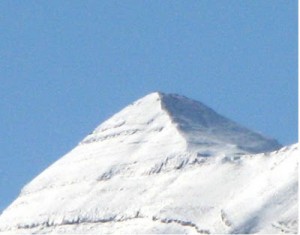
Let’s start with something that shouldn’t exist. If you look at the skyline of Mount Taygetos, specifically the peak known as “Profitis Ilias,” you see something jarring. It’s sharp. It’s symmetrical. It is perfectly conical.
It looks exactly like a pyramid.

Older Than Egypt?
The “Pyramid Phenomenon” at the peak of Mount Taygetos has driven researchers and conspiracy theorists crazy for decades. The official story? It’s natural. Just a quirk of wind and erosion. Nothing to see here, move along.
But does wind carve perfect geometric angles? Does rain create a base that looks suspiciously engineered?
There are researchers who have dared to suggest that this structure was carved by human hands long before the Pharaohs even thought about the Giza plateau. We are talking about the potential for a lost civilization in the Peloponnese that possessed technology capable of shaping a mountain.
The Energy Spike
People don’t just climb Taygetos for the view. They go for the “vibe.” And I don’t mean a relaxing Sunday afternoon feeling. Hikers report strange phenomena near the peak. Sudden dizziness. Electronic batteries draining instantly. A feeling of static electricity in the air even when there is no storm.
Is the pyramid a massive energy accumulator? Some theories suggest that ancient pyramids weren’t tombs at all, but power plants. If Taygetos is a modified natural pyramid, was it designed to tap into the telluric currents of the Earth?
The layout is puzzling. The base is limestone, carved to fit a specific shape. At sunrise, the shadow of the pyramid forms a perfect equilateral triangle in the Gulf of Messinia. A perfect triangle. By accident? The odds of that happening naturally are astronomical.
Visitors describe a “hum” at the top. Silence, but heavy. The air feels thick. Many leave feeling recharged, as if they just plugged themselves into a wall socket. Others leave with migraines. Whatever this stone cone is, it is active. It is doing something.
The Church of Aghia Theodora: The Miracle That Defies Engineering
Physics is a strict mistress. She has rules. Gravity pulls things down. Roots crack stone. Heavy objects crush light objects. These are facts.
Until you visit the Church of Aghia Theodora in Arkadia.

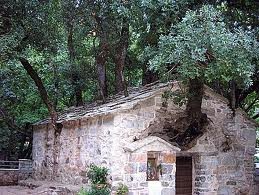
Located just outside Megalopolis, this tiny, 12th-century Byzantine chapel is the stuff of nightmares for structural engineers. Why? Because there are seventeen massive trees growing out of the roof.
Not bushes. Not saplings. Seventeen gigantic trees.
Here is the kicker: There are no roots inside the church. You walk inside, expecting to see a web of wood cracking the plaster, bursting through the walls. You see nothing. The walls are smooth. The ceiling is intact. Where are the roots going? How are these massive oaks and maples getting water?
The Legend of the Blood River
Experts are baffled. By all logical models, the roof should have collapsed centuries ago. The weight alone is crushing. The expansion of the roots should have turned the stone walls to dust. Yet, it stands. It has stood for nearly a thousand years.
Science fails here, so we turn to the legend. Tradition says this is the martyrdom site of Saint Theodora. Before her execution, she prayed: “Let my body become a church, my hair a forest of trees, and my blood a spring to water them.”
Creepy? Yes. Accurate? Well, look at the site. The church is the body. The trees are the hair. And underneath the foundation runs a river.
A Biological Anomaly
In the 1990s, geologists and restorers tried to investigate. They wanted to X-ray the walls. They wanted to understand the root system. They stopped.
Why? Because they realized that the root system is actually holding the church together. It’s a symbiotic relationship. The trees aren’t killing the building; they have become the building. It is a biological impossibility. It’s like the stone and the wood fused at a molecular level.
Pilgrims flock here not just for the religious aspect, but to witness a glitch in the matrix. The energy here is palpable. It’s peaceful, but intense. You are standing in the presence of something that shouldn’t be possible. And yet, there it is.
The Asclepion at Epidaurus: Ancient Hospital or Alien Tech?
Let’s head to Argolida. The Asclepion at Epidaurus. If you read the guidebooks, they call it a “sanctuary.” A nice place where ancient Greeks went to get healed by the god Asclepios. They slept, they dreamt, they got better. A primitive spa.
Don’t believe it. That is the boring version.

The Asclepion was a high-tech center of the ancient world. And the technology they used? Sound.
The nearby Great Theatre of Epidaurus is famous for its acoustics. You can drop a pin on the stage—literally a pin—and hear it hit the stone from the very last row, 60 meters up. Architects today, with all our computers and lasers, cannot replicate this. We still don’t fully understand how they did it.
Vibrational Healing
But why build a theatre with such perfect sound right next to a hospital? Recent theories suggest the theatre wasn’t for entertainment. It was a medical device.
Sound healing. Frequencies. We are only now rediscovering that certain sound frequencies can accelerate cell regeneration and calm the nervous system. Did the priests of Asclepios know this? Were they using the theatre to project specific vibrational frequencies into the patients?
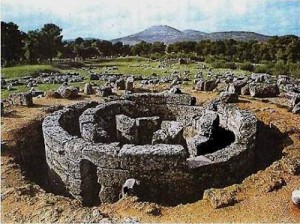
It gets weirder. The “Tholos”—a circular building at the site—has a subterranean labyrinth that baffles archaeologists. Was it for snakes? Or was it a resonance chamber? A magnetic coil?
The UFO Connection
Ask the locals. They will tell you stories the historians won’t. The area around Epidaurus is a hotspot for sightings. Strange lights. Orbs hovering over the theatre at night. Silent. Watching.
Is there a connection between the geometric perfection of the site and these sightings? Some ancient astronaut theorists believe Asclepios wasn’t a god, but an extraterrestrial figure who brought medical knowledge to humanity. The symbol of Asclepios—the snake wrapped around the staff (which we still use for medicine today)—looks suspiciously like a double helix of DNA. Did they know about DNA thousands of years ago?
The energy at Epidaurus is undeniable. It’s a “charged” place. You feel lighter. Pain fades. Is the ancient machine still running on standby mode?
Davelis Cave: The Area 51 of Greece
If you only visit one mysterious place in Greece, make it this one. But be warned: this isn’t a tourist trap. It’s a rabbit hole.
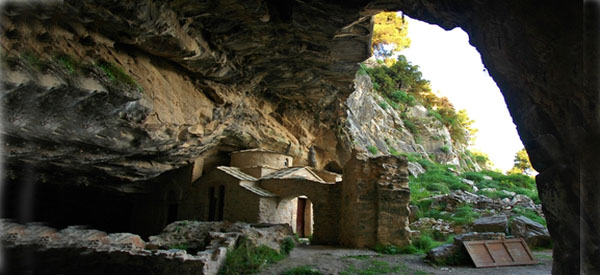
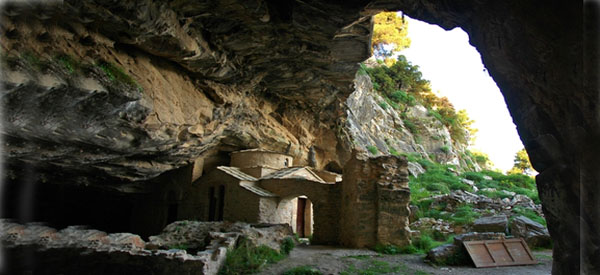
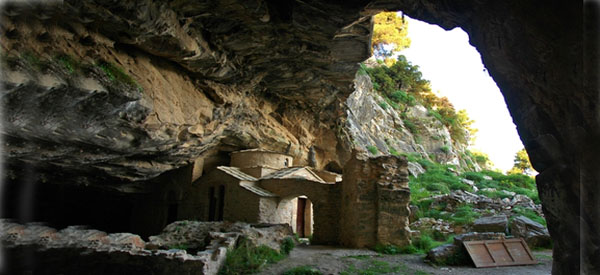
Davelis Cave, located on Mount Penteli in Attica, is ground zero for the paranormal in Europe. It makes the haunted castles of Scotland look like a Disney ride.
Mount Penteli is famous for its marble. The Parthenon was built from this mountain. But deep inside, something is wrong. The geometry of the mountain is anomalous. Magnetic fields here are distorted. Compasses don’t work. Birds avoid flying over the entrance.
The Bandit and the Goat-God
Historically, it was a shrine to the god Pan and the Nymphs. Later, in the 19th century, the infamous bandit Davelis used it as a hideout. Legend says he hid a massive treasure deep in the tunnels. But Davelis isn’t the reason people are scared of this cave.
It’s what happened in the 1970s and 80s.
The Military Cover-Up
Out of nowhere, the Greek military, possibly with NATO involvement, cordoned off the cave. They brought in heavy machinery. They closed the roads. Locals reported explosions. Strange hums. Lights shooting out of the mountain.
What were they doing?
The official excuse was “storage works.” But you don’t use a culturally significant archaeological site for storage. They used dynamite to reshape the interior. They built massive concrete walls blocking off tunnels. They poured cement over the floor.
Conspiracy theorists went wild. Were they trying to find something? Or were they trying to keep something in?
The Hollow Earth & The Vril Society
This is where it gets into high-strangeness territory. There is a persistent theory that Davelis Cave sits on a “ley line” intersection that acts as a gateway. A Stargate?
Researchers have found strange carvings near the entrance. Delta shapes. Some link this to the “Vril” energy theories—a supposed ancient power source that the Nazis were obsessed with. The theory goes that the mountain is hollow, or at least connected to a vast subterranean network extending under Athens.
Visitors who sneak in at night report seeing shadow people. They hear footsteps when no one is there. There are stories of “time slips”—people entering the cave for what feels like 10 minutes, only to emerge and find that hours have passed.
Investigator George Balanos wrote extensively on the “Penteli Enigma,” documenting electromagnetic anomalies and psychological disturbances experienced by researchers. Cameras malfunction. Batteries die instantly. People have panic attacks for no reason.
Today, the cave is accessible, but the scars of the military operation are visible. The concrete walls are there. The blocked tunnels are there. Why? What is behind the concrete? Is it a base? A portal? Or did they find something in the marble that scared them so much they had to bury it?
Greece isn’t just ruins and history books. It is alive with mystery. The land remembers. And if you listen closely, at places like Davelis Cave or the peak of Taygetos, you might hear it whispering secrets that we aren’t supposed to know.