It sounds like the plot of a twisted horror movie. A quiet town. A pizza delivery driver. A ticking time bomb locked around a human neck. A bizarre scavenger hunt. But this wasn’t a script. It wasn’t a nightmare you could wake up from. It was real life, unfolding live on television in Erie, Pennsylvania.
August 28, 2003. A day that changed the history of true crime forever.
Most of us know the headline: The Pizza Bomber. But when you peel back the layers of this story, you find something far darker than a bank heist gone wrong. You find a rabbit hole of madness, broken geniuses, frozen bodies, and a conspiracy so strange that even the FBI had trouble wrapping their heads around it.
Today, we are cracking this case wide open. We aren’t just looking at the robbery; we are looking at the impossible mechanics of the bomb, the mind-bending “scavenger hunt” notes, and the terrifying question that still haunts the internet: Was Brian Wells a victim, or was he part of the gang?

The Delivery That Ended in a Nightmare
Brian Wells was 46 years old. A high school dropout. A quiet man who loved music and his cats. He worked at Mama Mia’s Pizza-Ria. It was a normal shift until the phone rang at 1:30 PM. An order for two small pizzas. The destination? A remote, unpaved road near a television transmission tower. Not a house. Not a business. Just a spot on a map.
This should have been a red flag. But Wells took the pies and drove out.
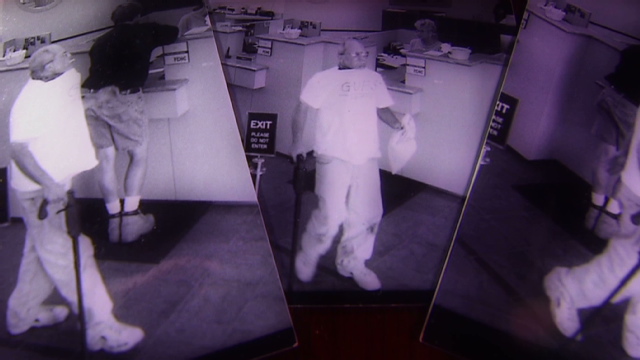
What happened next is a blur of terror. When he arrived at the tower, he didn’t find a hungry customer. He found an ambush. Men emerged from the shadows. Investigators believe he was held at gunpoint while a device—a heavy, triple-banded metal collar—was locked onto his neck. It looked oversized, clunky, almost homemade. But inside the metal box resting against his chest was a sophisticated explosive device.
This wasn’t just a bomb. It was a shackle.
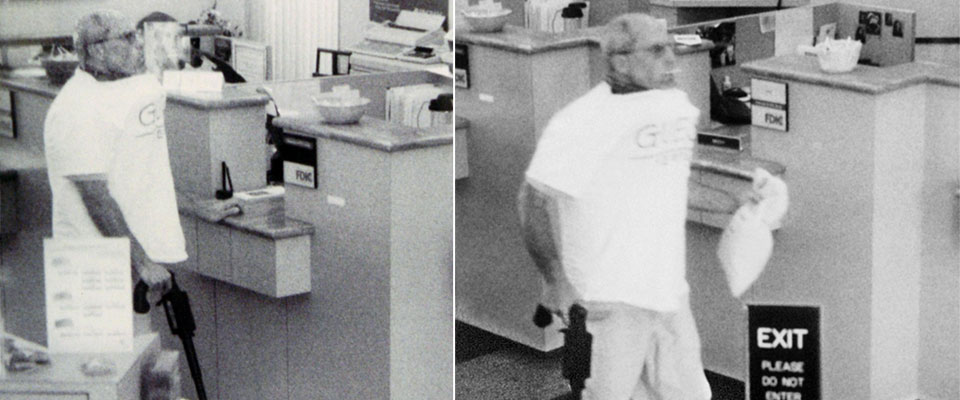
They handed him a cane. But it wasn’t a walking stick. It was a homemade shotgun, crafted to look like a cane. And then, they gave him the papers. Nine pages of hand-written instructions. A map. A terrifying ultimatum.
The “Collar Bomber” Scavenger Hunt
Imagine the panic. You have a bomb on your neck. You are told it has a timer. The only way to stop it? Play a game.
The instructions were incredibly complex. They told Wells he had to rob a bank. But that was just step one. After the bank, he had to follow a set of clues—a macabre scavenger hunt across the city—to find keys and codes. These keys, the robbers claimed, would unlock the collar and stop the clock.
He was told that if he deviated, he died. If he called for help, he died. If he didn’t move fast enough, he died.
The Robbery: Calm in the Face of Death
At 2:28 PM, Brian Wells walked into the PNC Bank. He didn’t run in screaming. He didn’t wave the gun around like a maniac. He walked up to the teller with the eerie calmness of a man who has no other choice.
He handed the teller a note. It demanded $250,000 in 15 minutes. He lifted his shirt to show the bomb strapped to his body. The teller, terrified, told him she couldn’t open the vault that fast. She gave him what was in her drawer—about $8,702.
This is where the theory of Wells’ involvement gets murky. A man desperate for $250,000 to save his life settles for $8,000? He took the bag. He grabbed a lollipop from the counter. A lollipop. Then he walked out.
Why the lollipop? Was it a signal? Or was it the action of a man in shock, his brain reverting to autopilot?
The Standoff and the Ticking Clock
Wells got into his car and drove to the next location on his list. He was looking for the clue that would save his life. But he didn’t make it. State troopers spotted him standing outside his car in a parking lot nearby. They ordered him to the ground.
This is the moment that breaks your heart. Wells sat on the pavement, the metal collar weighing him down. He wasn’t aggressive. He was pleading.
“I have a bomb here,” he told the police. “I’m not lying.”
The police didn’t know what to do. They drew their weapons and took cover behind their cruisers. They called the bomb squad, but this was 2003. Protocols were different. Traffic was bad. The response was sluggish.
Wells sat there, cross-legged, surrounded by police who were too afraid to approach him. He shouted to them, “Did you call my boss?” He asked them to contact the people who did this to him. He was desperate to finish the scavenger hunt. He believed that if he could just get to the next clue, he could live.
Then, the device started to beep.
The beeping got faster. Wells’ eyes went wide. He told them, “It’s gonna go off.”
At 3:18 PM—just three minutes before the bomb squad arrived—the device detonated. It wasn’t a small pop. It was a massive, directional blast that blew a fist-sized hole through his chest. He died instantly, right there on the pavement, while news helicopters circled overhead and broadcast the footage live.
Deep Dive: The Device of Doom
Let’s talk about the bomb. This wasn’t some dynamite strapped together with duct tape. This was engineering genius mixed with madness.
The collar was like a giant handcuff made of solid metal. It was hinged and locked with a heavy-duty padlock. The box containing the explosives also contained two kitchen timers. But here is the twisted part: investigators later discovered that the device had electronic decoys. Wires that went nowhere. It was designed to fool a bomb squad.
The Horror of the Truth: The FBI eventually determined something chilling. Even if Brian Wells had completed the scavenger hunt… even if he found every key and every clue… the bomb was rigged to kill him anyway. There was no way to take it off without tools that Wells didn’t have. He was a walking dead man from the moment they locked it on him.
Why? Silence. Dead men tell no tales. The conspirators needed a mule to rob the bank, but they couldn’t risk him identifying them later.
The Investigation: A House of Horrors
For weeks, the police had nothing. Just a dead pizza man and a list of bizarre notes. But then, the case took a turn so weird it defied logic.
A man named Bill Rothstein lived near the radio tower where Wells was ambushed. Rothstein was a brilliant eccentric. A handyman. A hoarder. A man who could build anything. He called the police a few weeks later with a confession. But not about the bank robbery.
He told them, “There is a body in my freezer.”
Police raided his house. Sure enough, frozen solid in a chest freezer was the body of James Roden. Who was James Roden? He was the ex-boyfriend of a woman named Marjorie Diehl-Armstrong.
Rothstein claimed Marjorie killed Roden in a dispute over money and asked him to hide the body. Rothstein, fearing Marjorie was going to frame him, decided to turn her in. But investigators quickly realized this wasn’t just about a frozen body. This was the crack in the dam.
The connection was made. Marjorie knew Rothstein. Rothstein lived near the transmission tower. Marjorie had a history of violence.
Meet the Mastermind: Marjorie Diehl-Armstrong
If you wrote a character like Marjorie Diehl-Armstrong in a book, editors would say she was unrealistic. She was highly intelligent, suffering from severe bipolar disorder, and had a terrifying history. Years earlier, she had killed a boyfriend and claimed self-defense. She had a magnetic, chaotic personality that pulled men into her orbit and destroyed them.
Investigators began to piece together a theory. Marjorie needed money. A lot of it. Why? Because she wanted to kill her father.
Yes, you read that right. The motive for one of the most complex bank heists in American history was patricide. Marjorie believed her father was wasting her inheritance. She wanted him dead so she could get the money. But she couldn’t do it herself.
She needed to hire a hitman. She found Kenneth Barnes, a local drug dealer and friend. Barnes was willing to kill the dad, but he wasn’t cheap. He wanted $250,000.
The exact amount written on the demand note Brian Wells handed to the bank teller.

The Conspiracy Unravels
The plan was concocted by a group of misfits. Marjorie provided the rage. Kenneth Barnes provided the muscle. Bill Rothstein, the handyman genius, likely built the collar bomb and the cane gun, though he died of cancer before he could be charged. And Brian Wells?
This is where the debate rages on.
Prosecutors argued that Brian Wells was actually in on the plot initially. They claimed he agreed to wear a fake bomb to rob the bank, thinking he would just play the victim and split the cash later. The theory is that when he showed up at the tower, the conspirators double-crossed him. They slapped a real bomb on his neck and armed it.
This explains why he walked into the bank so calmly. He thought he was safe. He thought it was a prop. It explains why he grabbed a lollipop. He was acting.
But when he got outside and realized the timer was actually ticking—and that the conspirators weren’t helping him—panic set in. He realized he had been betrayed. He had been turned from a partner into a patsy.
Modern Theories: The Internet Isn’t Convinced
Since the release of the Netflix documentary Evil Genius, amateur sleuths have been obsessing over the details. Many people refuse to believe Wells was involved at all. They point to the terror in his voice during the standoff. They point to the fact that he was lured to a fake address.
The “Total Victim” Theory: Could Wells have been innocent? Think about it. If he was in on it, why did they need to jump him at the tower? Why write nine pages of complex notes for someone who knows the plan? The sheer complexity of the scavenger hunt suggests it was designed for someone who didn’t know what was happening—a cruel maze to keep him busy while the robbers got away.
Furthermore, Jessica Hoopsick, a prostitute who knew Wells, later confessed that she helped set him up in exchange for money and drugs from the conspirators. She claimed Wells had no idea what was coming. He was just a delivery driver who walked into a trap.
The Sentences
Justice was slow, but it came. Bill Rothstein took his secrets to the grave in 2004. But Kenneth Barnes and Marjorie Diehl-Armstrong faced the music.
In 2007, the hammer dropped. Kenneth Barnes pled guilty and testified against Marjorie to save his own skin. He was sentenced to 45 years in federal prison. Marjorie, defiant to the end, fought the charges. She was known for her rambling, incoherent courtroom outbursts. But the evidence was overwhelming. She received life in prison plus 30 years. She died behind bars in 2017.
Bizarre Factor: The “What If” Scenario
The apparent motivation for this entire insanity was money to pay for a murder that never happened. But step back and look at the method. Why a bomb? Why a scavenger hunt? Why not just rob the bank with a ski mask?
Some criminal psychologists believe the money was secondary. They believe Bill Rothstein and Marjorie Diehl-Armstrong wanted to prove they were smarter than everyone else. They wanted to create the “perfect puzzle.” They treated Brian Wells like a lab rat in a twisted science experiment.
The scavenger hunt notes were filled with arrogance. They taunted the police. They taunted Wells. It was an ego trip written in ink and blood.
The tragedy of Brian Wells is that he never stood a chance. Whether he was a naive participant who got double-crossed or an innocent man grabbed at gunpoint, his final moments were spent in absolute loneliness, surrounded by people who were supposed to help him but were too afraid to get close.
Next time you order a pizza and the driver shows up late, remember this story. Remember the day a delivery run turned into a battle for survival against a clock that couldn’t be stopped.
Originally posted 2016-03-14 17:25:58. Republished by Blog Post Promoter