The Ohio Butterfly: Was This Bizarre UFO a Secret Drone or an Alien Visitor?
Some days are just… normal. Until they’re not.
You grab lunch. You walk out into the sunshine, thinking about traffic, or what’s for dinner, or that stupid thing your boss said. The world is predictable. It’s solid. Then you look up. And the world is never the same again.
That’s what happened to a father and son, Tom and Christopher. One perfectly ordinary afternoon in Ohio, they stepped out of a restaurant, and their reality tilted on its axis. Because hanging there, against the pale blue canvas of the sky, was something impossible.
It wasn’t a saucer. It wasn’t a tic-tac. It wasn’t a triangle.
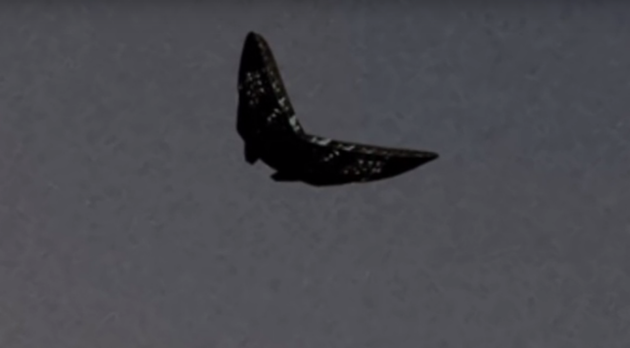
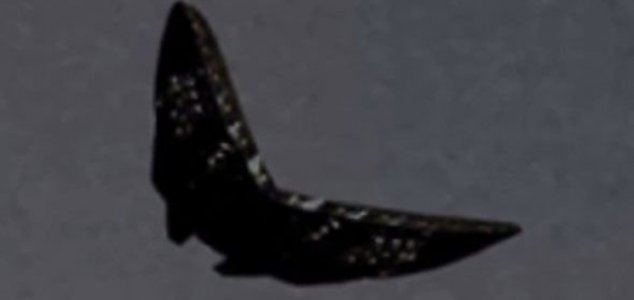
It was a butterfly. A giant, metallic butterfly.
A silent, winged enigma gliding over the American Midwest. They fumbled for their phones, hands shaking, adrenaline surging. They knew what they were seeing was wrong. It didn’t belong. And they had to capture it before it vanished forever. The images they took would spark a firestorm of debate across the internet, pulling in believers, debunkers, and everyone in between. What did they see that day? Was it a mind-bending piece of alien technology, a secret military project, or one of the most clever hoaxes of the digital age?
Strap in. We’re going down the rabbit hole.
A Sighting Unlike Any Other
Let’s paint the picture. A quiet suburban street. The gentle hum of distant traffic. Tom and Christopher, full from their meal, squinting against the afternoon sun. Then, one of them points. A single, silent finger aimed at the sky.
There. Moving with an unnatural grace.
It had wings, but they didn’t flap. It had a metallic sheen, but it caught the light in a way that seemed to shift and warp. The shape was unmistakably that of a lepidopteran—a butterfly. But it was cold. Hard. Mechanical. It possessed a strange, almost sinister symmetry, yet felt completely out of place.
No noise. That’s the part that gets you. Commercial jets roar. Helicopters chop the air. Drones have a high-pitched whine. This thing… was deathly quiet. It moved with a purpose they couldn’t comprehend, gliding as if the laws of physics were merely a suggestion it chose to ignore. The two men scrambled, pulling out their smartphones. The result was a few precious seconds of video and a handful of still images that would soon become famous in certain corners of the web.

Look at that image. Really look at it. The object is stark against the clouds. The shape is undeniable. One side seems to mimic a wing, while the other has a chunkier, more industrial feel. Is that a cockpit? A sensor array? Or just a bizarre, non-functional design from a mind that doesn’t think like a human?
The pictures aren’t perfect. They’re exactly what you’d expect from someone in a state of shock, aiming a phone at the sky. But they were enough. Enough to start the conversation. Enough to go viral.
SecureTeam10 Throws Down the Gauntlet
In the mid-2010s, if you had a strange video of something in the sky, there was one place you wanted it to end up: the YouTube channel ‘SecureTeam10’. Hosted by Tyler Glockner, the channel was a powerhouse of UFO analysis, presenting findings with a dramatic, high-stakes narration that made every video feel like a blockbuster revelation.
When the “Metal Butterfly” footage landed on his desk, Glockner knew he had gold. He didn’t just report the sighting; he championed it. He was adamant this was the real deal.
“The reason I am calling this an alien craft rather than just a UFO…is in the stunning detail, where we can see the true structural characteristics of this ship,” he announced to his millions of subscribers. He challenged his audience directly, his voice laced with conviction: “And guys you take a look and tell me with a straight face this has anything to do with humans.”
For countless viewers, this was proof. The argument was simple and powerful. Human aircraft are built for function: tubes, wings, rotors, jets. They are products of our understanding of aerodynamics and propulsion. This… this was something else. It was art. It was sculpture. It was a design so alien, so inefficient by our standards, that it couldn’t possibly be ours. It was a statement.
The internet exploded. Forums on Reddit and Above Top Secret lit up with discussion. Was this a biological-mechanical hybrid? A ship belonging to an insectoid race? The theories were wild, fascinating, and utterly captivating.
The Skeptic’s Corner: CGI and Star Wars
But for every action, there is an equal and opposite reaction. The UFO community is not a monolith; it’s a battlefield of ideas. And the skeptics came armed for war.
Enter Nigel Watson, a seasoned UFO researcher and author with a knack for pouring cold water on fiery claims. He took one look at the footage and wasn’t impressed. His assessment was blunt and to the point.
“It looks like it was produced using a model and CGI,” he stated. Computer-Generated Imagery.
Suddenly, the mysterious craft didn’t seem so otherworldly. Watson’s argument was that creating such an object in a program like Blender or 3ds Max is not just possible, but relatively straightforward for a skilled digital artist. You model the object, apply textures to give it that metallic sheen, and then “track” it into the shaky-cam footage. The software matches the movement of the fake object to the movement of the real-world camera, creating a seamless, and deeply deceptive, illusion.
Then, Watson delivered the killer blow. He gave the object a pop-culture anchor that made it feel instantly more familiar, and therefore, more man-made. “It is a very distinctive looking object,” he mused, “it reminds me of the Millennium Falcon spacecraft in the Star Wars films with a bite taken out of it.”

He was right. Once you see it, you can’t unsee it. The asymmetrical design, the “chunk” taken out of one side—it echoes the iconic design of Han Solo’s famous freighter. Was the “Metal Butterfly” just the work of a Star Wars fan with some video editing software and a desire for fifteen minutes of internet fame? The possibility is strong.
Red Flags for a Digital Hoax
When analyzing potential fakes, experts look for common giveaways. How does the Ohio Butterfly stack up?
- The Shaky Cam: Conveniently, the camera is unstable and struggles to hold focus. This is a classic technique used by hoaxers to hide imperfections in the CGI, like poor lighting integration or fuzzy edges. A stable, clear shot is much harder to fake.
- Lack of Corroboration: Tom and Christopher were the only known witnesses. In a populated suburban area in the middle of the day, how did nobody else see a giant metal butterfly in the sky? No other photos, no other videos, no other calls to local news or police. This is a massive red flag.
- The Source: The video gained its fame primarily through a YouTube channel known for its dramatic presentations, not for rigorous, scientific vetting. While entertaining, these channels often prioritize compelling content over verifiable fact.
Deep Dive: Our Skies Are Filled with Weird Wings
But let’s put the CGI debate aside for a moment. What if it *was* real? The “Butterfly” wouldn’t be the first time a bizarrely shaped object has been reported in our skies. Our history of high strangeness is filled with encounters that defy the simple saucer shape.
The Triangles and Boomerangs
For decades, witnesses have reported enormous, silent, triangular, or v-shaped craft. The Belgian UFO wave of 1989-1990 saw thousands of citizens, including police officers, report massive, low-flying black triangles adorned with powerful lights. In 1997, the “Phoenix Lights” event had thousands of people across Arizona witness a mile-wide, v-shaped craft drift silently over the state. These objects shared a key characteristic with the Ohio Butterfly: silent, graceful movement that seemed to defy our understanding of propulsion.
Sky-Critters and Bioforms
Pushing further into the fringe, we find the concept of atmospheric beasts or “bioforms.” This theory suggests that some UFOs aren’t machines at all, but living creatures native to the upper layers of Earth’s atmosphere. Proponents of this idea point to sightings of amoeba-like, pulsating, or even “sky-serpent” objects. Could the Metal Butterfly be a case of mistaken identity? Perhaps it wasn’t a machine, but a biological entity with a metallic, insect-like carapace. A creature from a domain we barely understand, momentarily dipping down into our world.
The Mothman Prophecies
And you can’t talk about a giant, winged anomaly in Ohio without mentioning its infamous West Virginia neighbor: the Mothman. In the late 1960s, the town of Point Pleasant was terrorized by sightings of a huge, winged humanoid with glowing red eyes. While not a UFO in the mechanical sense, the Mothman legend taps into the same primal fear. The fear of something unnatural in the sky, a winged creature that shouldn’t exist, heralding… something. The Butterfly, in a way, is the Mothman’s mechanical cousin—a silent, winged mystery that appears and disappears, leaving only questions in its wake.
What If? Unpacking the Wild Theories
Okay, let’s play devil’s advocate. Let’s assume Tom and Christopher were telling the truth. Let’s assume the video is 100% real. What in the world could this thing be?
Theory 1: The Alien Scout Drone
This is the most popular theory among believers. The object wasn’t a mothership carrying a crew; it was an unmanned probe. A drone. In this scenario, the butterfly shape isn’t a whimsical choice. It’s a design choice based on advanced physics we can’t even begin to grasp. Perhaps the “wings” are not for aerodynamic lift but are instead components of a sophisticated gravitational propulsion system. The shape could be for stealth, designed to mimic a natural form (albeit on a massive scale) to confuse observers. It was a scout, collecting data, cataloging our world, and it just happened to get spotted.
Theory 2: The Secret Military Project
Never discount human ingenuity, especially when it’s funded by a black budget. The history of aviation is filled with bizarre experimental aircraft. Could the Butterfly be a next-generation spy drone developed by a group like DARPA or a skunk works division? The principle of biomimicry—designing technology based on biological models—is a hot field. Engineers have built small drones that fly like insects or birds. Is it possible they scaled the concept up? A silent, oddly-shaped surveillance platform could overfly enemy territory without triggering the same alarms as a traditional aircraft. The sighting by Tom and Christopher could have been an accidental public debut of a top-secret project.
Theory 3: The Extradimensional Visitor
This is where things get really weird. Some modern physicists and theorists speculate about the existence of other dimensions, parallel to our own. What if UFOs aren’t from other planets, but from other “branes” of reality? In this model, an object could “phase” into our reality for a short time before phasing back out. This could explain the sudden appearances and disappearances, the lack of sound, and the physics-defying movements. The Butterfly’s form might not even be its “true” shape, but merely how our three-dimensional brains perceive a higher-dimensional object passing through our world. It looked like a butterfly to us for the same reason a 2D drawing of a cube looks like a set of connected squares. It’s just a shadow of a greater reality.
The Verdict That Never Came
So, what was the Metal Butterfly of Ohio?
The truth is, we don’t know. The case is a perfect capsule of modern ufology. It exists in a gray area, fueled by a compelling visual but undermined by a lack of verifiable data. It is a battle between perception and technology.
For the skeptics, the case is closed. It’s a well-made but obvious fake, a product of its time when YouTube creators were pushing the boundaries of viral content. The Millennium Falcon comparison, the shaky camera, the single point of view—it all adds up to a digital ghost story.
For the believers, it remains an unsolved and tantalizing mystery. The object’s unique design is its greatest defense. It’s too strange to be ours, too specific to be a lazy fake. It’s a glimpse of something truly, profoundly different.
The Metal Butterfly has since faded from the main stage, becoming a cult classic sighting, a favorite “what if” story shared on late-night forums. It serves as a potent reminder. In a world where anyone with a laptop can create convincing illusions, how can we ever know what’s real? And if something so bizarre did fly through our skies, would we even be able to accept it?
Was it just a few megabytes of clever code? A trick of light and software? Or did a father and son, on one unforgettable afternoon, capture proof of a silent, metallic marvel fluttering on the very edge of our understanding?
Originally posted 2015-10-31 06:31:27. Republished by Blog Post Promoter