Is Your Reality a Lie? The Shocking Scientific Theory That Says Our Universe Is a Giant Hologram
Take a look at your hand. Go ahead. It seems solid, doesn’t it? Three-dimensional. You can make a fist, tap your fingers on the desk, feel the warmth of your own skin. It’s real. Unquestionably real.
But what if it isn’t?
What if everything you see, everything you touch, everything you are… is nothing more than a complex projection? An elaborate illusion beamed from the very edge of the universe. A hologram.
This isn’t the plot of a science fiction movie. This isn’t a late-night talk radio conspiracy. This is a chilling, mind-bending, and increasingly plausible theory being tested by some of the most brilliant physicists on the planet. They call it the Holographic Principle, and it suggests that our sprawling, three-dimensional cosmos might be nothing but a light show projected from a flat, two-dimensional surface far, far away.
Forget what you think you know. Forget common sense. We’re about to peel back the curtain on reality itself, and what you find might make you question everything.
What If Everything You See Is Just Cosmic Static?
Let’s get this straight. The idea is wild. Absolutely bonkers. But it’s grounded in some of the deepest questions in physics.
Think about the hologram on your credit card. It’s a flat, 2D sticker. But when the light hits it just right, it produces a three-dimensional image. A bird that seems to fly. A globe that appears to turn. All the information needed to create that 3D illusion is encoded on the 2D surface.

Now, scale that up. Way up.
Scale it up to the size of the entire universe.
The Holographic Principle proposes that the universe works the same way. It suggests there’s a distant, two-dimensional boundary—a sort of cosmic screen—at the edge of our known universe. And on that screen, every piece of information that makes up our reality is written. Your body. The planet Earth. The distant stars. All of it.
Every particle. Every atom. Every single thing is just a “projection” of data stored on that cosmic hard drive. You aren’t a body with a consciousness. You are a stream of data being interpreted as a body with a consciousness.
Sounds crazy? It all started with the most mysterious objects in the cosmos.
The Black Hole Paradox: Where Reality Breaks Down
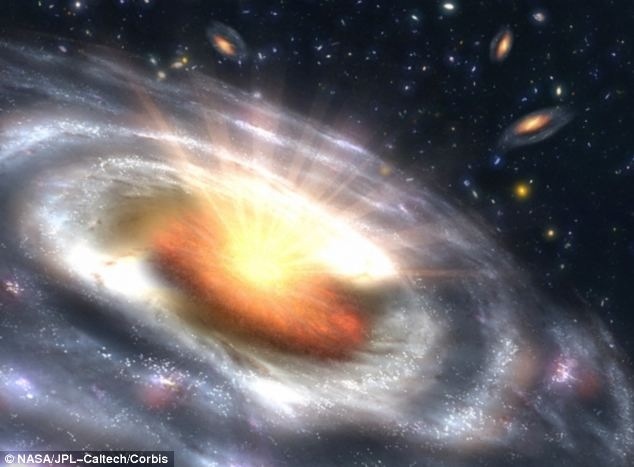
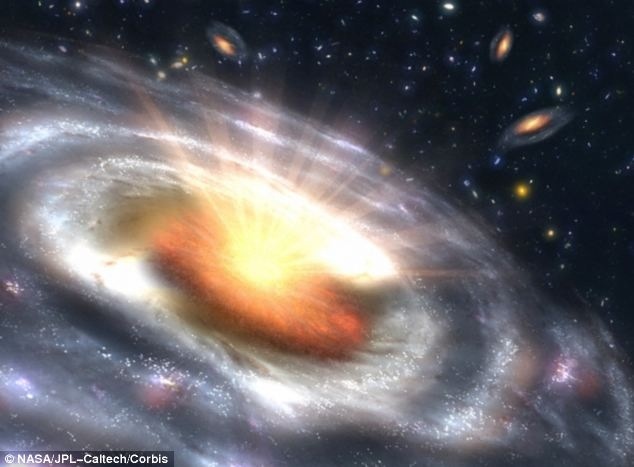
To understand where this earth-shattering idea came from, we have to travel to the edge of a black hole. These cosmic monsters are so dense, with gravity so powerful, that nothing—not even light—can escape once it crosses the “event horizon.”
For decades, this created a massive problem for physicists, a real head-scratcher known as the “black hole information paradox.”
Here’s the breakdown. A fundamental rule of quantum physics is that information can never be truly destroyed. It can be scrambled, rearranged, or hidden, but the underlying data of what made something what it was has to exist *somewhere*. If you burn a book, the information isn’t gone. It’s just converted into ash, smoke, and heat. A super-advanced computer could, in theory, reconstruct the book from that mess.
But what happens when you throw the book into a black hole?
According to our old understanding, it would fall past the event horizon and be crushed into an infinitely small point—a singularity. The information, it seemed, would be wiped from existence. Vanished. This broke the laws of physics. A major crisis.
A Mind-Bending Solution: Information on the Surface
Then, in the 1970s, geniuses like Jacob Bekenstein and Stephen Hawking had a revolutionary thought. They discovered that the “entropy” of a black hole—a way of measuring its information content—wasn’t proportional to its 3D volume. It was proportional to its 2D surface area. The event horizon itself.
Stop and think about that. That’s insane.
It’s like saying the number of books in a library isn’t determined by the size of the building, but by the square footage of its wallpaper. It meant that everything that ever fell into the black hole—stars, planets, unlucky astronauts—didn’t have its information stored *inside* the 3D hole. It was all smeared out and encoded on the 2D surface.
Physicists Gerard ‘t Hooft and Leonard Susskind took this incredible idea and ran with it. If this principle applies to a black hole, why not… everything? What if our entire universe is just like the inside of a black hole, and all our “information” is stored on a distant boundary? A cosmic event horizon.
Suddenly, the universe wasn’t a stage. It was a movie being played on a screen.
The Telltale Sign: Did a Japanese Supercomputer Find Proof?
For decades, this was just a fascinating mathematical idea. A “what if.” It was too strange, too complex to ever prove. How could you possibly test if our universe is a projection of another one?
Then, a team in Japan decided to try.
Physicist Yoshifumi Hyakutake and his colleagues at Ibaraki University didn’t use a telescope. They used a supercomputer. Their plan was audacious: to see if two completely different types of universes could, mathematically, be the same thing.
They ran two mind-bendingly complex simulations.
- Simulation A: A complex, ten-dimensional universe based on string theory. It had gravity, exotic particles, and vibrating strings of energy—a model that could, in theory, describe our own universe. They calculated the internal energy and properties of a black hole within this world.
- Simulation B: A much, much simpler world. A flat, two-dimensional cosmos with no gravity at all. A universe of quantum particles just zipping around on a plane. They calculated the energy of this lower-dimensional system.
These two universes couldn’t be more different. One was a complex, gravity-filled 3D (and higher) reality. The other was a simple, gravity-free 2D cartoon.
Then came the moment that sent shockwaves through the physics community.
The numbers matched.
The calculations from the complex universe with gravity and the simple universe without gravity produced the same results. It was a direct, numerical link. A mathematical bridge between two impossibly different realities. For many, this was the first piece of compelling evidence that the holographic principle wasn’t just a bizarre theory. It might actually be true.
Hunting for the Pixels of Reality
If our world is a projection, like a video on a screen, then it should have a resolution. If you get close enough to your TV, you don’t see a smooth picture. You see the tiny pixels that make it up. The building blocks.
So, does our universe have pixels?
Some physicists think it does. They believe that at the smallest possible scale—the “Planck length,” a distance trillions of times smaller than an atom—spacetime itself stops being smooth. It becomes grainy. Jittery. A sort of cosmic static they call “holographic noise.”
This idea led to one of the strangest experiments ever built: the Fermilab Holometer. In a lab outside Chicago, scientists built a contraption of high-powered lasers and mirrors specifically to hunt for this cosmic jitter. The idea was to see if spacetime itself shivers at this incredibly tiny level. If they detected that shiver, it would be a smoking gun. Proof that our 3D space is emerging from a blur of 2D information.
After years of searching, the Holometer didn’t find the specific kind of noise it was looking for. The establishment media reported it as a failure. But did that disprove the theory?
Not at all. It just meant that *one* specific model of holographic noise was wrong. Perhaps the pixels are smaller. Perhaps they behave differently. The search isn’t over. They just know where *not* to look. The mystery, as always, deepens.
What If It’s True? Three Terrifying Possibilities
Okay. Let’s step away from the math and the experiments. Let’s just assume, for one terrifying minute, that it’s true. That we are all just characters in a cosmic hologram. What does that actually mean for us?
Possibility 1: We Are Living in a Simulation
This is the big one. The idea that we’re living in a computer simulation has exploded in popularity online and even among some tech billionaires. The holographic principle gives this idea a terrifying physical framework. If our reality is just information projected from a 2D surface, it’s not a huge leap to think that surface is a computer’s hard drive. Someone—or something—could have built it. Someone could be running it.
Are we a science experiment for a hyper-advanced alien species? An ancestor simulation run by future humans? Or, most unsettling of all, are we just an incredibly advanced video game for a being we can’t possibly comprehend? Every decision you make, every emotion you feel… could it just be part of the code?
Possibility 2: The Nature of Consciousness is an Illusion
If you are not a physical body, but a projection of data, then what is “you”? What is the voice inside your head? What is consciousness?
The holographic principle would suggest that your consciousness isn’t located inside your brain. It couldn’t be. Your brain is part of the projection. Instead, your consciousness might be an emergent property of the system itself. A complex ripple in the data. Or perhaps the “real” you is part of the information encoded on that distant 2D surface, and the 3D body you inhabit is just an avatar. A vessel for experiencing the holographic world. This would fundamentally change what it means to be alive, and what might happen after we die.
Possibility 3: Reality Can Be Hacked
This is where things go completely off the rails. If the universe is fundamentally information—if the laws of physics are just the operating system of the hologram—then could it be hacked? Could the code be rewritten?
Think about it. Miracles. Psychic phenomena. Glitches in the Matrix. Things that defy our known laws of physics. Are these just bugs in the code? Or is someone with “admin access” changing the parameters? Could a sufficiently advanced consciousness learn to manipulate the source code of reality itself, bending the laws of physics to its will? The power would be godlike. The consequences, unimaginable.
The Pushback: Is It All Just a Mathematical Fantasy?
Of course, not everyone in the scientific community is convinced. Many mainstream physicists view the holographic principle as a powerful mathematical tool, not a literal description of reality.
They argue that the “duality” discovered by Hyakutake’s team is a clever mathematical trick that allows them to solve impossible problems in string theory by translating them into a simpler system. It’s a useful shortcut, they say, but it doesn’t mean we’re literally living on the wall of a cosmic cave.
Skeptics also point out that the entire theory rests on the foundations of string theory, which itself is an unproven and highly controversial idea with dozens of different versions. It’s a theory built on top of another theory. A house of cards, they might whisper.
But is that the full story? Or is this just the classic resistance to a paradigm-shifting idea? Every great scientific revolution—from a round Earth to the theory of relativity—was called crazy at first. The establishment always pushes back against ideas that threaten to tear down everything they know.
The Final, Unsettling Question
So, where does that leave us? Trapped between a comfortable, solid reality we can trust and a mind-shattering alternative where nothing is as it seems.
The evidence is mathematical. The experiments are inconclusive. The implications are terrifying. There are no easy answers here. Only bigger and bigger questions.
The next time you look up at the night sky, don’t just see stars. See the potential pixels of a grand projection. The next time you touch a solid wall, ask yourself if you’re feeling an object, or just the force-field of a highly detailed illusion.
What are you? A collection of atoms moving through a 3D space? Or a complex symphony of information beamed from the edge of time? The line between physics and philosophy has never been blurrier.
And you are standing right on it.
Originally posted 2013-12-13 03:05:51. Republished by Blog Post Promoter
![20131213-040203[1]](https://coolinterestingnews.com/wp-content/uploads/2013/12/20131213-0402031.webp)