Silence. That is the first thing that hits you. It’s not a peaceful silence, like a library or a church. It is a heavy, oppressive weight. The kind of silence that feels like it’s watching you.
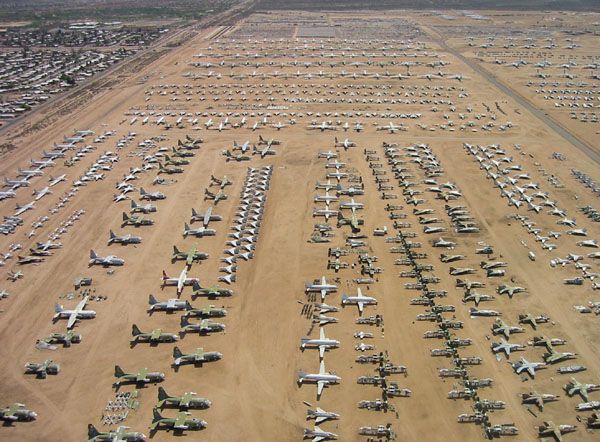
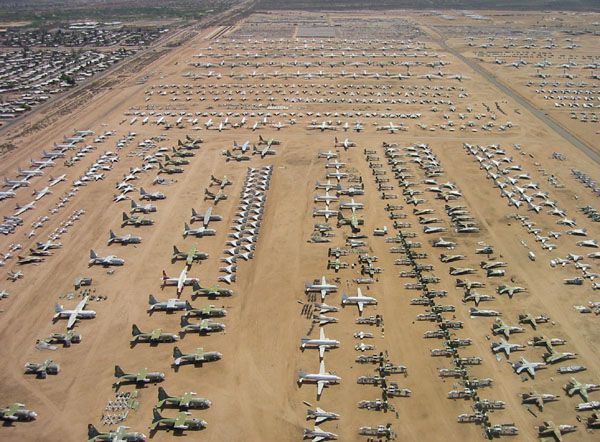
This is where the giants go to die. We are talking about the Mojave Air and Space Port, a sprawling patch of scorched earth in the California desert. To the untrained eye, it looks like a parking lot. But look closer. It’s a graveyard. It is a purgatory for the greatest machines ever built by human hands. Vast hulks of metal that once cost hundreds of millions of dollars, grounded by obsolescence, dragged out to the boneyard to be shot in the head like Old Yeller.
Their long, neat lines look a lot like the white tombs of fallen soldiers at Arlington cemetery. But there is no honor guard here. There are no flags. Just the relentless sun and the howling wind. They sit seemingly endless in number, waiting for the day they will be hacked open like sheet-metal piñatas to get at the valuable guts within.
The Aluminum Purgatory: Why Here?
Why do they bring them here? Why not just scrap them at the airport? It comes down to the dirt. The air. The heat. Mojave is distinct. The humidity here is almost non-existent. If you park a Boeing 747 in Florida or New York, the moisture in the air will turn it into a pile of rust within a few years. Corrosion is the enemy. It eats aluminum like candy.
But here? The dry desert air mummifies them. It freezes them in time. A plane parked here in 1990 looks almost exactly the same today as it did when the pilot killed the engines for the last time. This preservation is vital. It turns the boneyard into a suspended animation chamber.
Some of these birds are just sleeping. They are in “deep storage.” The airlines are holding onto them, gambling that fuel prices will drop or passenger demand will skyrocket, and they can pull these beasts back into the sky. Their windows are taped over with silver foil. Their engines are wrapped in protective Mylar, looking like baked potatoes ready for the oven. They are waiting for a call that might never come.
The Economics of Death
Let’s talk money. Because that’s what this is really about. It always is. When an airline goes bust, or a new model comes out that saves 2% on fuel, the old fleet is dead weight. Literally. You can’t just leave a jumbo jet on the tarmac at JFK; the parking fees would bankrupt you in a week.
So, they fly them to Mojave. The pilots who fly these one-way trips describe it as the most depressing flight of their careers. They land. They taxi to the dirt. They shut down systems that have been running for decades. And then they walk away. The plane becomes a ghost instantly.
The boneyard is simply rental space provided for airlines that no longer have an immediate need for their planes. It’s a giant storage bay, though one not all planes return from—some sit there for years in the baking heat, slowly roasting. The heat waves shimmer off the fuselages, creating mirages where it looks like the planes are moving. They aren’t. They never will again.
The Cannibals Are Coming
This is where it gets violent. Not every plane is here to sleep. Most are here to be devoured. The aviation industry calls it “parting out.” I call it cannibalization. It is a slaughterhouse logic. A whole airplane might be worth very little, but the sum of its parts? That is a gold mine.
Engineers swarm over the carcasses like ants on a dropped lollipop. They rip out the avionics—the brain of the plane. They tear out the landing gear. They unbolt the engines, which are often worth more than the rest of the fuselage combined. They dip in and out of their empty hulls to prize free delicate equipment, even whole rotundas of fuselage.
And then come the machines. Massive, hydraulic guillotines. We aren’t talking about guys with wrenches anymore. We are talking about heavy industrial crushers. Some meet their fate at the hands of giant machines which tear them to bits to expose their cabling, ducting, and inner wall electronics for recycling.
Have you ever seen a 747 get shredded? It screams. The metal twists and shrieks as it is ripped apart. It’s visceral. It feels wrong. These machines were designed to conquer gravity, to touch the edge of space, and now they are being turned into soda cans and window frames.
The Shadow Fleet: What Are They Hiding?
Now, let’s get into the stuff they don’t put in the brochures. Mojave isn’t just a commercial lot. Walk down the rows long enough, and you start to see things that don’t fit. Planes with no tail numbers. Planes painted matte black or stark white with no airline logos.
Internet theorists have been buzzing about this for years. This facility is suspiciously close to Edwards Air Force Base and the restricted airspaces of Nevada. You know the ones. The “Janet” airlines—the fleet of unmarked 737s that shuttle workers to Area 51—they operate in this region. Do their old planes end up here? And if so, what secrets are buried in those cockpits?
There are rumors of “black budget” prototypes being hidden in plain sight. If you want to hide a secret experimental aircraft, where is the best place? A guarded hangar? Maybe. or maybe you park it in the middle of a thousand other junk planes, throw a tarp over it, and let it blend into the “garbage.” It’s the perfect camouflage.
Urban explorers who have managed to get close (don’t try it, the security is military-grade) report strange vibes. Geiger counters ticking up near certain hulls. Logbooks left in cockpits with pages torn out. It makes you wonder what these planes were carrying before they were dumped here.
The Ghost Passengers
It’s not just the metal that’s haunted. Think about the energy inside these tubes. A commercial airliner carries millions of people over its lifetime. It sees honeymoons, tragic goodbyes, business deals, vacations, and nervous flyers praying to God during turbulence. That energy has to go somewhere.
Mechanics working the graveyard shift—stripping parts at night to avoid the blistering day heat—tell stories. They hear footsteps in the empty aisles above them. They hear call buttons dinging in planes that haven’t had a battery connected in ten years. Is it just the wind whistling through the cracks? Or is it the residual echo of millions of lives that passed through these aluminum tubes?
In the silence of the Mojave night, with the coyotes howling in the distance, it’s easy to believe the latter.
From the Boneyard to the Stars
There is a strange irony to this place. It is a place of death, yes. But it is also the birthplace of the future. The boneyard is just one part of the Mojave Air and Space Port, the same facility from which Richard Branson’s SpaceShipOne was launched into space.
Think about that contrast. On one side of the runway, you have the rotting corpses of the Jet Age. The 707s, the DC-10s, the L-1011s. The dinosaurs. On the other side? Scaled Composites. Virgin Galactic. Stratolaunch. The bleeding edge of aerospace technology.
They are building ships here that will take tourists to orbit. They are testing engines that defy conventional physics. And they are doing it right next to the graveyard. It’s a cycle. The old must die for the new to rise. The aluminum harvested from a scrapped Delta jet might literally be melted down and recast into a bracket for a starship.
The Environmental Time Bomb
We need to look at the ground. It’s not just dirt. It’s toxic. When you park a plane, you drain the fluids, sure. But you can never get it all. Hydraulic fluid. Skydrol. Jet-A fuel. De-icing agents. Over decades, seals crack. Gaskets rot. And the fluids drip.
It creates a chemical soup in the soil. Environmental agencies keep a close watch, but the scale is impossible to manage perfectly. These planes are bleeding out. Slowly. It’s a darker side to the recycling narrative. We like to think of it as “green” recycling, but the process of breaking down these leviathans is messy, dangerous, and dirty.
The Lost History of Aviation
Walk the rows, and you are walking through a history book that has been left out in the rain. You can spot the history of global economics just by looking at the logos on the tails.
You see the logos of TWA. Pan Am. Eastern. Airlines that once ruled the world, now reduced to fading paint on a rotting stabilizer. You see planes from countries that don’t exist anymore. You see the excess of the 1980s and the austerity of the post-9/11 era. It is all here, baking in the sun.
There are rare birds here, too. Planes that failed. Models that were built, flown for a year, and realized to be total lemons. They end up here, hiding their shame in the desert. The “white tails”—planes built for customers who went broke before they could even take delivery. Brand new, zero miles, sent straight to the scrap heap. It’s the ultimate waste of the industrial age.
The Final Resting Place?
Is this the end? For most, yes. But recently, a new trend has emerged. Movies. Blockbuster films love the boneyard. If you need a post-apocalyptic set, you don’t build it. You come to Mojave. You blow up a plane that’s already dead.
Music videos. Fashion shoots. There is a “ruin porn” aesthetic that is very trendy right now. The skeleton of a Boeing 747 is hauntingly beautiful. It’s structural art. So, these planes get a second life, not as transport, but as backdrops for our entertainment.
But eventually, the crushers come for them all. The aluminum is too valuable. The space is too limited. The cycle continues. The boneyard is a reminder that nothing lasts forever. Not the fastest jets, not the biggest companies, not the most advanced technology.
In the end, the desert wins. It always wins. It reclaims everything. Dust to dust. Metal to rust. The wind blows through the empty engine cowlings, making a low, mournful sound. It’s the song of the graveyard. And if you listen close enough, it might just tell you the future.
Originally posted 2016-03-17 16:28:19. Republished by Blog Post Promoter
![airplane-graveyard-3[1]](https://coolinterestingnews.com/wp-content/uploads/2012/07/airplane-graveyard-31.webp)