The Phoenix From The Flames: The Secret Story Behind Virgin Galactic’s Comeback Spacecraft
They say space is the final frontier. A silent, unforgiving vacuum. On October 31, 2014, that unforgiving nature became terrifyingly real.
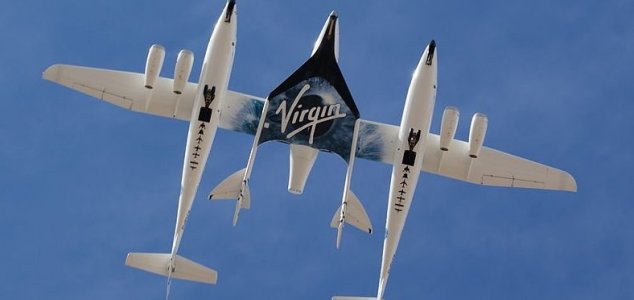
It was a Halloween morning in the Mojave Desert. The sky was a brilliant, endless blue. But on the ground, a dream was about to turn into a nightmare. Virgin Galactic’s SpaceShipTwo, the VSS Enterprise, was strapped beneath its mothership, WhiteKnightTwo, ready for another powered test flight. This was supposed to be another step towards making space tourism a reality for the masses. A playground for the rich, a dream for the rest of us.
But something went horribly wrong.
Thirteen seconds after igniting its rocket engine and detaching from the mothership, the VSS Enterprise disintegrated. It broke apart at 50,000 feet, scattering debris across the desert floor like metallic confetti from a funeral. One pilot, Michael Alsbury, was killed. The other, Peter Siebold, was miraculously thrown from the wreckage and survived, but with devastating injuries.
The dream was dead. The program was in ruins. Or was it?
Because just over a year later, out of those very same Mojave hangars, Richard Branson’s company prepared to roll out a new ship. A successor. A ghost built from the ashes of a disaster. The original news was quiet, corporate. A simple press release. But the story behind it is anything but.
What really happened that day over the desert? What secrets were baked into the carbon fiber of the new spacecraft? And was this a bold comeback… or a reckless rush back to the brink?
From Tragedy to Triumph: The Fiery Wreck of VSS Enterprise
To understand the comeback, you have to stare directly into the abyss of the failure. The VSS Enterprise was a marvel of engineering. It wasn’t a traditional rocket that shot straight up. No. It was a spaceplane, an elegant glider designed to be carried to high altitude and then released, firing its own rocket to punch through the thin atmosphere and touch the edge of space.
It was beautiful. It was audacious. And it had a secret weapon for its return journey.
What is the ‘Feathering’ System, and Why Did It Fail?
Getting up there is only half the battle. Getting back down is where things get truly dangerous. Re-entry is a violent, high-heat, high-stress event. The engineers at Scaled Composites, the company that built the ship for Virgin Galactic, came up with a genius solution called the “feathering” system.
Think of a badminton shuttlecock. No matter how you hit it, it always flips around and falls nose-first. The feathering system did the same for SpaceShipTwo. The entire tail section of the aircraft was designed to pivot upwards, creating immense drag. This made the ship incredibly stable as it fell back through the atmosphere, automatically orienting it without complex computer control or a pilot needing superhuman reflexes. It was simple. It was elegant.
And it was its Achilles’ heel.
The system was never meant to be activated while the rocket was still firing, pushing the craft forward at supersonic speeds. The aerodynamic forces were just too great. On that fateful day, the National Transportation Safety Board (NTSB) concluded that co-pilot Michael Alsbury unlocked the feathering mechanism too early. The ship wasn’t ready. The forces of physics took over, and the craft was torn to pieces.
The official story was human error. A tragic mistake. But in the world of high-stakes innovation, is it ever that simple?

Branson’s Billion-Dollar Bet: Doubling Down on a Shattered Dream
Imagine being Richard Branson. The celebrity billionaire. The face of adventure. Your entire brand is built on pushing limits, on succeeding where others fail. And now, your flagship space project is a smoking crater in the desert. A man is dead. The world is watching.
The critics came out in force. The dream was called a deathtrap. A rich man’s folly. Many expected Branson to quietly shutter the program, to cut his losses and walk away. They underestimated him.
Branson flew immediately to Mojave. He stood before the cameras, his face etched with grief, but his voice full of a defiant resolve. “Space is hard, but worth it,” he said. “We will not be deterred.”
Was this courage? Or was it ego? The line is often razor-thin. He had hundreds of millions of dollars on the line, not to mention the deposits of over 700 aspiring astronauts who had already bought a ticket to ride. Walking away meant failure on a scale he had never known. So he did the only thing he knew how to do. He doubled down.
While the NTSB investigators combed the desert for clues, a second SpaceShipTwo was already under construction. It was time to build a phoenix.
VSS Unity: The Secret Changes They Didn’t Want You to Know About
On February 19, 2016, Virgin Galactic wheeled out its new baby. It was gleaming, beautiful, and almost identical to the ship that had been destroyed. It would later be christened VSS Unity by none other than Professor Stephen Hawking, the brilliant mind who dreamed of floating in zero-g.
The company was tight-lipped about the changes. They talked about learning lessons and improving systems. But what did that actually mean? The official reports were buried in technical jargon, but the truth is both shockingly simple and deeply profound.
The Simple Pin That Could Have Saved a Life
The NTSB report pointed to a critical design oversight. While there was a warning light, there was no physical or software “lockout” to stop a pilot from unlocking the feathering system at the wrong time. It was like having a button to deploy a car’s airbag at any time, even when driving at 100 mph on the freeway. You just weren’t supposed to press it.
The biggest change made to VSS Unity was exactly that: a safeguard. A system that would physically prevent the feather lock handle from being moved until the spacecraft reached a safe speed and altitude. It was a simple fix. A mechanical inhibitor. The kind of thing you’d expect to be there from day one.
Why wasn’t it? Was it an arrogant oversight? A belief that their highly trained pilots would never make such a mistake? It’s a chilling question that hangs over the entire program. They didn’t just rebuild a spaceship; they had to rebuild trust. And they had to do it with the world’s most famous minds and wealthiest people waiting in line to get on board.
The Celebrity Waiting List: PR Gold or a Ticking Clock?
Let’s not forget who was supposed to fly on this thing. Stephen Hawking. Leonardo DiCaprio. Justin Bieber. Tom Hanks. A who’s who of Hollywood and Silicon Valley had tickets. This was Virgin Galactic’s greatest marketing tool. The ultimate endorsement.
It was also its greatest liability.
After the crash, every single one of those names became a walking headline about the potential danger. The unveiling of VSS Unity wasn’t just for the press; it was a message to them. A message that said, “We’re back. We’re safe. The dream is still alive.”
Hawking’s involvement was particularly powerful. A man confined to a wheelchair, who spoke through a computer, dreaming of the freedom of weightlessness. His faith in the project was a monumental vote of confidence. When he agreed to name the new ship, it was a PR masterstroke. But his failing health meant he was unable to attend the ceremony, a somber reminder of the fragility of human life—the very thing the 2014 crash had so brutally demonstrated.
The Ghost in the Machine: Internet Theories and Unanswered Questions
This is where the official story ends. But on the dark corners of the internet, on forums and message boards, the questions never stopped. When a billion-dollar prototype falls out of the sky, people talk. And the theories they spin are often more compelling than the sanitized corporate press releases.
Was It Really Just Pilot Error?
The “pilot error” explanation has always been a convenient way to close the book on complex accidents. But many pilots and aerospace enthusiasts were skeptical. Michael Alsbury was an experienced test pilot. He knew the machine inside and out. Why would he make such a fundamental mistake?
Some theories suggest he may have been disoriented. Or that a smaller, un-reported system failure caused a moment of panic. Could an instrument have given a false reading, tricking him into thinking they were further along in the flight plan than they were? The data recorders were recovered, but not every flicker of a gauge or every momentary distraction gets captured. We may have the data, but we’ll never have the full human experience of those final, terrifying seconds.
The Mojave Mystery: Sabotage and UFOs?
You can’t have a mysterious crash in the Mojave Desert without whispers of something more. Mojave is the backyard of places like Edwards Air Force Base and the shadowy Skunk Works. It’s a land of experimental aircraft and things that go bump in the night sky.
Did rivals want to see Branson’s project fail? In the cutthroat space race between billionaires—Branson, Musk, Bezos—industrial espionage and even sabotage are not entirely out of the question. A grounded Virgin Galactic would give Blue Origin and SpaceX a clearer field. It’s a wild accusation with zero proof, but in a game with stakes this high, you can’t rule anything out.
And then there’s the ever-present UAP (Unidentified Aerial Phenomena) question. Test pilots have long been on the front lines of reporting strange encounters in the sky. Could the VSS Enterprise have encountered something it shouldn’t have? Could the “pilot error” have been a panicked, evasive maneuver in response to an unknown object sharing their airspace? It sounds like science fiction. But a few years ago, so did a private company selling tickets to space.
A New Dawn or a Dangerous Game? The Future of Commercial Spaceflight
The rollout of VSS Unity in 2016 was not the end of the story. It was the start of a long, slow, and grinding second chapter.
It took another two years before Unity finally reached space for the first time in December 2018. And it wasn’t until 2023, nearly nine years after the crash, that it began its first fully commercial flights, carrying paying customers to the black sky.
The dream, it seems, did not die in the desert. It was reborn, stronger and with more safeguards. But the questions remain. Is this technology truly safe, or is every flight a roll of the dice? Is space tourism the dawn of a new, accessible era for humanity, or is it destined to be a fleeting, dangerous thrill ride for the one percent?
The story of SpaceShipTwo is a modern fable. It’s about ambition, tragedy, and the stubborn, often brutal, human drive to push higher and faster. The wreck of the Enterprise is a permanent scar on the history of private spaceflight, and the wings of Unity are a testament to the refusal to give up. Whether you see it as a story of inspiring resilience or terrifying hubris probably says a lot about how you see the future itself.