Our Solar System’s Darkest Secrets: The Silent Watcher, The Hidden Biosphere, and The Cosmic Crime Scene
You think you know the sky above your head? You look up and see the familiar moon, a few planets twinkling like shy diamonds, the endless black. It seems quiet. Predictable. Safe.
You’re wrong.
Our cosmic backyard is not a peaceful garden. It’s a chaotic, whispering place filled with riddles that defy our neat explanations. It’s a graveyard of lost worlds and a nursery for possibilities so strange they sound like science fiction. Mainstream science gives us tidy answers, but look closer at the data, at the anomalies they can’t explain, and a different picture emerges. A picture of objects that shouldn’t exist, of life hiding in the last place imaginable, and a mystery 4.5 billion years old hanging right over our heads every single night.
Forget deep space. The biggest secrets are right here. We’re going to pull back the curtain on three of the most baffling mysteries in our own solar system. Prepare to question everything.
1991 VG: The Alien Probe in Our Backyard?
November 6, 1991. Astronomer James Scotti at the Kitt Peak Observatory in Arizona is doing what he always does: scanning the heavens. He spots something. A tiny dot, just 30 feet across, moving fast. An asteroid, he probably thought. Nothing to see here.
But it wasn’t just another rock. This was different. This little object, designated 1991 VG, wasn’t behaving like any asteroid he’d ever seen.
It was its path that first raised the alarm. Most asteroids whip around the sun in weird, elliptical orbits, like a broken rollercoaster. But 1991 VG? Its orbit was shockingly similar to Earth’s. It was almost… shadowing us. It was in our lane, traveling in the same direction. That’s weird. Really weird.

Then came the second clue, and this one was a real bombshell. The object’s brightness was changing. Rapidly. It was flashing, pulsing with light as it tumbled through space. A potato-shaped asteroid tumbles, sure, but its brightness changes slowly, gradually. 1991 VG was flashing like a disco ball. This suggests it isn’t a solid, lumpy rock. It suggests something with flat, reflective surfaces. Something manufactured.
Something like a piece of machinery.
Deep Dive: Debunking the “Safe” Explanations
Immediately, scientists tried to find a simple answer. They always do. It’s their job to kill the mystery. But with 1991 VG, the easy answers just didn’t stick.
Could it be space junk?
This was the most popular theory. A spent rocket booster, maybe? A forgotten satellite from the Apollo era or an old Soviet probe? It’s the right size, and it would definitely be tumbling. Researchers poured over launch records from the 60s and 70s, looking for anything we might have thrown into a solar orbit that could be coming back for a visit.
They found nothing. Not a single rocket body or piece of space junk matched its trajectory. The math didn’t work. Nothing we launched could be in that specific spot at that specific time.
Could it be a natural asteroid after all?
The orbit alone makes this incredibly unlikely. For a natural object to end up in such an Earth-like orbit is a statistical nightmare. Possible? Maybe. But add in the bizarre light curve—the rapid flashing—and the theory crumbles. Nature doesn’t build things that way.
The Chilling Alternative: A Silent Observer
So if it’s not ours, and it’s not a rock… what’s left?
This is where the story takes a sharp turn into the unknown. Dr. Duncan Steel, an astronomer who studied the object, dared to voice the thought everyone was having. He proposed that 1991 VG could be an ETI probe. Extraterrestrial Intelligence. An alien probe.
But the theory gets even stranger. When they crunched the numbers and tracked 1991 VG’s orbit backward in time, they discovered something that sent a shiver down the spine of the astronomical community. It had made a close pass to Earth before. In the spring of 1975.
Think about that. It swung by for a look in 1975, completely undetected. Then it went back out into the dark, only to return for another pass in 1991. This wasn’t a random fly-by. This felt… deliberate. Was it gathering data? Was it a dormant sentinel, waking up every couple of decades to check on our progress?
The original post you read mentioned it might return in 2017. And it did. It made another pass through our neighborhood, but it stayed far enough away that getting a good look at it with our current technology was nearly impossible. It was like it knew we were watching this time. It came back, but it stayed in the shadows.
What is 1991 VG? Is it the ghost of an old Apollo mission we simply forgot about? Or is it something else entirely? A silent observer, patiently making its rounds, watching us from the darkness. It’s still out there. And it will be back.
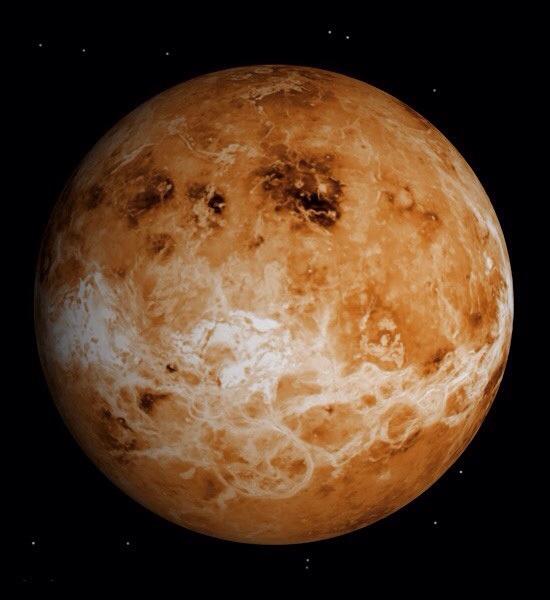
Venus: Finding Life in the Clouds of Hell
Venus. Earth’s twisted sister. A planet so hostile it makes Mordor look like a vacation spot. The surface is a furnace, hot enough to melt lead. The atmospheric pressure is over 90 times that of Earth, enough to crush a submarine like a soda can. The sky rains sulfuric acid. It is, by all accounts, a certified hellscape.
And it might be teeming with life.
No, not on the surface. That’s impossible. But we’ve been looking in the wrong place. The secret to Venus isn’t on the ground. It’s in the sky.

Travel about 30 miles (or 50 kilometers) up into the thick, yellow clouds. Suddenly, everything changes. The crushing pressure vanishes, becoming comfortably Earth-like. The blistering heat disappears, replaced by a pleasant, balmy temperature. In this slice of the Venusian atmosphere, the conditions are so shockingly terrestrial that you could theoretically float in a balloon wearing an oxygen mask and not much else. The ingredients are there. Water. Carbon dioxide. Sunlight.
It’s a potential paradise hidden inside an inferno. A biological Goldilocks zone.
Deep Dive: The Clues Hiding in Plain Sight
This isn’t just a wild guess. For decades, scientists have been seeing things in the Venusian clouds that they can’t explain.
The “Unknown Absorber”
For nearly a century, astronomers have noted strange, dark patches in the planet’s upper atmosphere. These patches, visible only in ultraviolet light, are enormous—some as large as continents. They move, they change shape, and they absorb a huge amount of solar radiation. What are they? No known chemical or geological process can explain them. But one thing on Earth behaves exactly like this: massive blooms of bacteria or algae in our oceans, absorbing sunlight for photosynthesis.
Could these dark streaks be colossal, floating colonies of alien microbes? A vast, planet-spanning ecosystem hiding in the clouds?
The Phosphine Bombshell
Then, in 2020, came the big one. A team of scientists announced they had detected something truly shocking in the Venusian atmosphere: phosphine gas. Why is that a big deal? Because on rocky planets like Earth, phosphine is almost exclusively a biosignature. It’s produced by microbes that live in oxygen-free environments, like swamps or the guts of animals. Find phosphine, and you’ve found a very strong hint of life.
The announcement electrified the world. Was this it? The proof we’d been waiting for?
The story then got complicated. Other scientists re-examined the data and questioned the findings. The signal was weaker than first thought, maybe it was just a data error. The debate still rages. Was it a false alarm, or a fleeting glimpse of an alien biology we scared back into hiding? The very fact that the most plausible explanation for the initial signal was *life* shows how seriously scientists are taking this idea.
Missions are now being planned. NASA is sending probes like DAVINCI+ and VERITAS to get a closer look. To sniff the air. To dive into the clouds and see what’s really there. We are on the verge of either confirming one of the greatest discoveries in human history, or crossing off the most tantalizing possibility in our solar system. The answer is floating just 30 miles above that acid-drenched wasteland, waiting for us.
The Moon’s Origin: Solving a 4.5-Billion-Year-Old Crime Scene
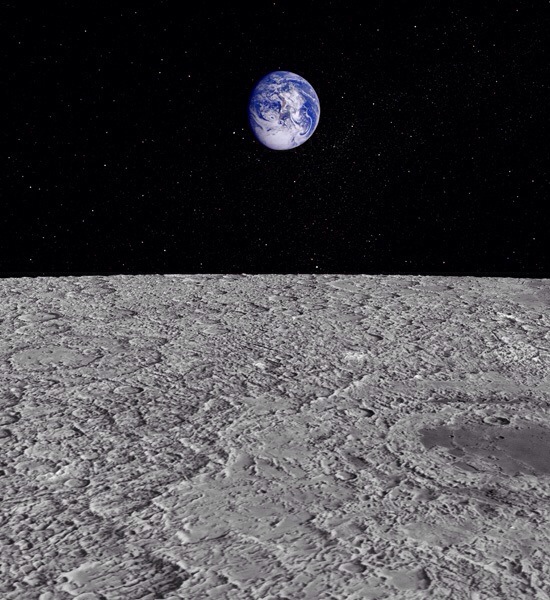
And then there’s the Moon. Our constant companion. It’s so familiar we barely even notice it anymore. We’ve been there. We’ve walked on it. We brought back rocks. We should know everything about it, right? Especially where it came from.
But we don’t. The official story of the Moon’s birth—the one you read in textbooks—is falling apart at the seams. It’s a tidy theory with one giant, gaping hole in it. The Moon, our closest neighbor, might be our greatest mystery.
The “official story” is called the Giant-Impact Hypothesis. It’s dramatic. It’s cinematic. About 4.5 billion years ago, when our Earth was just a baby, a Mars-sized planet named Theia came careening out of the darkness and smashed into us. The collision was world-shattering. A gargantuan cloud of vaporized rock and debris was blasted into orbit, which slowly, over millions of years, clumped together to form our Moon.
It’s a great story. And for a long time, it seemed to explain everything. But then we went to the Moon.

Deep Dive: The Case of the Missing Attacker
The Apollo astronauts brought back hundreds of pounds of lunar rock. When scientists analyzed these rocks, they expected to find the smoking gun for the Giant-Impact Hypothesis. Instead, they found evidence that blows the entire theory out of the water.
Here’s the problem, and it’s a big one. Every planet and large body in the solar system has a unique “isotopic fingerprint.” Think of it like a chemical DNA signature. The rocks on Earth have a specific mix of oxygen isotopes. Mars has a different mix. Asteroids from the outer solar system have yet another. They are all unique.
If the Moon was formed from a collision between Earth and Theia, it should be a hybrid. Its isotopic fingerprint should be a mix of Earth’s signature and Theia’s completely different signature. It should be obvious that two different bodies were involved.
But it’s not. The lunar rocks are chemical clones of Earth rocks. Their oxygen isotope signatures are virtually identical. Identical.
So where is Theia? How could a Mars-sized planet slam into Earth, create the Moon, and leave absolutely no chemical trace of itself behind? It’s like a cosmic hit-and-run where the suspect’s car magically vanished, leaving no paint scrapes, no broken parts, no evidence it was ever there. The math just doesn’t work. The official story of a collision is, right now, a crime scene with a missing culprit.
The “What If?” Scenarios Get Weirder
With the main theory on shaky ground, what’s left? The alternatives sound like something out of a pulp sci-fi magazine, but the failure of the Giant-Impact model is forcing scientists to consider them.
- The Fission Theory: Did a young, molten Earth spin so fast that it literally flung a blob of itself into space to become the Moon? It’s an old idea, but the physics are a nightmare. The spin required would be impossibly fast.
- The Capture Theory: Was the Moon a rogue world wandering through the solar system that was snagged by Earth’s gravity? Again, the orbital mechanics of such a perfect capture without one body shattering the other are astronomically unlikely.
- The Spaceship Moon Theory: And then there’s the fringe. The wild idea that refuses to die. Is the Moon artificial? Proponents point to strange evidence, like the accounts from Apollo seismometers that recorded the Moon “ringing like a bell” for hours after an impact, suggesting a hollow structure. Mainstream science has explanations for this resonance, but the image is powerful. Is the Moon a hollow, ancient megastructure? A giant base or ship parked in our orbit by a civilization long gone?
Probably not. But the fact that the most popular scientific theory has such a colossal, evidence-based hole in it means that nothing should be off the table. The object we see almost every night is a giant question mark. It’s a piece of a puzzle we can’t solve. It’s the evidence of a cosmic event that, by our own rules of chemistry, should have been impossible.
The universe isn’t just “out there.” It’s right here, taunting us with riddles. A silent watcher in an impossible orbit. A potential biosphere in the clouds of a toxic world. A constant companion with a secret past. The answers aren’t buried in ancient texts or hidden in distant galaxies. They are hanging right over our heads. The only question is… are we brave enough to keep looking?
Originally posted 2014-01-02 22:30:04. Republished by Blog Post Promoter
![20140102-232436[1]](https://coolinterestingnews.com/wp-content/uploads/2014/01/20140102-2324361.webp)