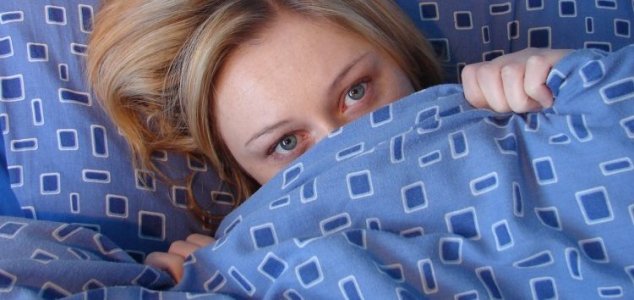
Stop what you are doing. Look at the clock. Are you tired? Do you feel guilty because you didn’t get your “mandatory” eight hours of shut-eye last night?
You have been lied to.
For decades, a massive industry—from mattress salesmen to pharmaceutical giants pushing sleeping pills—has sold us a very specific story. It goes like this: Once upon a time, before iPhones, Netflix, and glowing LED light bulbs, our ancestors slept in perfect, blissful harmony with the universe. They went to bed when the sun went down. They snored peacefully for nine or ten hours. They woke up refreshed, devoid of anxiety, and ready to hunt mammoths.
We are told that modern technology broke us. That we are a fallen species, corrupted by electricity.
But what if that entire narrative is complete garbage?

Our ancestors were no better at getting off to bed early. In fact, they were night owls just like you.
The Great Sleep Conspiracy
There is a crack in the foundation of modern health advice. We obsess over the “eight-hour rule.” It hangs over our heads like a dark cloud. If you sleep six hours, you are told you are dying. You are told you are aging faster. You are told your brain is rotting.
But a groundbreaking study out of the University of California has taken a sledgehammer to this myth. It suggests that our sleeplessness isn’t a modern curse. It is an ancient trait.
This isn’t just a minor correction. This is a total rewrite of human history. The study suggests that the “insomnia” you feel might actually be the natural, evolutionary state of the human animal. We aren’t broken. We are functioning exactly as we were designed to.
The Time Machine: Meeting the Ghost Tribes
To understand the truth, we have to leave the modern world behind. We have to strip away the Starbucks, the alarm clocks, and the streetlights.
Researchers Jerome Siegel and Gandhi Yetish didn’t just sit in a lab looking at surveys. They went into the field. They traveled to some of the most remote corners of the planet to find people who live today exactly as we lived 10,000 years ago.
They studied three specific groups of hunter-gatherers:
- The Hadza of Tanzania.
- The San of Namibia.
- The Tsimane of Bolivia.
These distinct groups are separated by thousands of miles of ocean and continent. They have no contact with each other. They possess different genetics and different cultures. Yet, they share one critical thing: they live pre-industrial lifestyles. No electricity. No iPads. No 9-to-5 grind.
If the “modern technology ruins sleep” theory was true, these people should be sleeping champions. They should be logging nine, maybe ten hours of deep restorative slumber every single night. They live in the “natural” world, after all.
So, what did the data show?
They sleep less than we do.
The 6.5 Hour Reality Check
Brace yourself. The average nightly sleep duration for these ancient-style hunter-gatherers was roughly 6.5 hours. rarely ever reaching seven. almost never hitting eight.
Let that sink in.
The very people who are supposed to be our biological blueprint—the gold standard of human health—are running on less sleep than the average stressed-out New Yorker.
“The argument has always been that modern life has reduced our sleep time below the amount our ancestors got, but our data indicates that this is a myth,” declared study author Jerome Siegel. His voice cuts through the noise of a thousand self-help books.
This revelation is earth-shattering. It implies that the “eight-hour” mandate is an arbitrary number invented by modern society, not a biological requirement dictated by our DNA. We have been stressing ourselves out, popping melatonin, and buying expensive blackout curtains to chase a ghost that never existed.
The Light Bulb Fallacy
Think about the last time you read an article about sleep hygiene. What is rule number one? “Avoid blue light.” “Turn off the screens.”
The logic seems sound. Our brains produce melatonin when it gets dark. Artificial light tricks the brain into thinking it’s still daytime. Therefore, Edison is the enemy. The light bulb destroyed our circadian rhythm.
But the UC researchers found something that contradicts this entirely.
The San, the Hadza, and the Tsimane do not go to sleep when the sun goes down. Sunset hits, darkness floods the savannah or the jungle, and… they stay up. They don’t have Netflix, but they have fire. They have community. They have tasks to finish.
The study showed that these tribes regularly stayed awake for more than three hours after sunset. They were socializing, cooking, repairing weapons, and telling stories. They were doing exactly what we do—hanging out.
The study suggested that the availability of modern lighting was not responsible for our changing sleep patterns because the traditional hunter-gatherers also stayed up after dark to complete the essential tasks needed to sustain their lifestyles.
“There’s this expectation that we should all be sleeping eight or nine hours a night and that if you took away modern technology people would be sleeping more,” said study author Gandhi Yetish. “But now for the first time we’re showing that’s not true.”
The Temperature Trigger: A Forgotten Biological Switch
If light isn’t the main trigger for sleep, what is? Here is where the mystery deepens.
The researchers noticed a strange pattern. It didn’t matter when the sun went down. What mattered was the temperature. The hunter-gatherers didn’t drift off until the ambient temperature began to drop significantly. And interestingly, they almost always woke up right when the temperature hit its lowest point of the night—usually just before dawn.
This suggests our biology is thermally regulated. We aren’t just solar-powered; we are thermometers.
In our modern homes, we live in climate-controlled bubbles. We set the thermostat to a constant 70 degrees. We wrap ourselves in heavy duvets (like the girl in the picture above). By keeping our environment at a static temperature, we might be confusing our internal biological clocks more than any iPhone screen ever could.
Maybe the reason you can’t sleep isn’t your phone. Maybe it’s your heater.
The “Biphasic” Sleep Mystery: Did History Lie Too?
This brings us to a massive debate in the alternative history community. You may have heard the theory of “Two Sleeps.”
Historians like Roger Ekirch have argued that before the Industrial Revolution, Europeans slept in two chunks. They would go to bed at dusk, sleep for four hours (the “First Sleep”), wake up for an hour or two to pray, read, or “socialize” with their spouse, and then go back for a “Second Sleep.”
Many believed this was the natural human state.
But here is the twist: The hunter-gatherers in this study did not do this.
The Hadza and the San slept in one continuous block, just like we try to do today. This creates a fascinating conflict in the historical record. If medieval Europeans slept in two chunks, but ancient African hunter-gatherers sleep in one, which is “natural”?
It suggests that human sleep is incredibly plastic. It adapts to culture, danger, and environment. There is no single “right” way to sleep. The medieval peasants adapted to their dark, cold hovels. The hunter-gatherers adapted to the dangerous, predator-filled night.
And us? We are adapting to the 24-hour information cycle.
The Insomnia Paradox
Here is the most mind-bending statistic from the study: Despite sleeping only 6.5 hours, despite sleeping on the hard ground, despite having no pillows or noise machines… these tribes have almost zero cases of insomnia.
They don’t toss and turn. They don’t stare at the stars wondering why they are awake. They don’t have a word for “insomnia” in their languages.
Why?
Because they don’t have “sleep anxiety.”
In the West, we have medicalized sleep. We track it with watches. We optimize it with apps. We stress about it. The moment we wake up at 3 AM, we panic. “Oh no, I’m going to be tired tomorrow. I need to get back to sleep NOW.” That adrenaline spike guarantees you will stay awake.
The hunter-gatherers view sleep differently. If they are awake, they are awake. They might stand up and stoke the fire. They might look out for hyenas. They don’t judge their sleep. They just let it happen.
What If You Are “The Watchman”?
Evolutionary biologists have proposed a stunning theory called the “Sentinel Hypothesis.”
Imagine a small tribe 50,000 years ago. If everyone falls into a deep, comatose sleep for eight hours at the exact same time, who watches for the lions? Who listens for the rival tribe creeping through the grass?
Nobody.
A tribe that sleeps in perfect unison gets eaten. The tribes that survived were the ones with variance. The teenagers stayed up late. The elderly woke up early. The light sleepers woke up at the snap of a twig.
Your inability to sleep through the night might not be a disorder. It might be a superpower. You might be the genetic descendant of the Watchmen—the protectors who kept the tribe alive while the others slept.
Society calls you an insomniac. Evolution calls you a hero.
Stop Fighting Your Nature
The implications of the UC study are liberating. It frees us from the tyranny of the “eight-hour” myth.
Our tendency to not get enough sleep at night is seemingly not an exclusively modern phenomenon. It is a human phenomenon. The disconnect isn’t between our bodies and technology; it’s between our bodies and our expectations.
We are trying to force a square peg (our varied, dynamic, evolutionary sleep patterns) into a round hole (the rigid, industrial 9-to-5 schedule). The stress of that mismatch is what makes us sick, not the lack of sleep itself.
So, the next time you find yourself awake at 2 AM, staring at the ceiling, don’t panic. Don’t reach for the pills. Remember the Hadza. Remember the San. You are simply doing what your ancestors did for thousands of years.
You are keeping watch.
The lights may have changed. The predators may have changed (from leopards to emails). But the rhythm remains the same. You aren’t broken. You’re just human.
Originally posted 2015-12-04 14:50:33. Republished by Blog Post Promoter