Home Unexplained Mysteries Modern Mysteries SHOCKING EVIDENCE HITLER ESCAPED GERMANY

SHOCKING EVIDENCE HITLER ESCAPED GERMANY

1
114

The Bunker Myth: Declassified Files Reveal Hitler’s Great Escape

You know the story. Everyone does. It’s been hammered into our heads since grade school. April 30, 1945. Berlin is a smoldering ruin. The Red Army is blocks away. Inside the Führerbunker, Adolf Hitler, the architect of a world war and unspeakable horror, takes the coward’s way out. He bites a cyanide capsule. For good measure, he shoots himself. His new wife, Eva Braun, joins him in a final, grim pact. Their loyal followers carry the bodies upstairs, douse them in gasoline, and set them ablaze in a shallow crater. The end.

It’s a neat story. A tidy ending to a messy, brutal war. The ultimate evil, erased from the world. Self-destructed.

But what if it’s a lie?

What if the most infamous man in history didn’t die in that bunker? What if the double-suicide was the greatest head-fake ever pulled? A meticulously crafted piece of political theater designed to stop the world from looking for a ghost. A ghost who was, at that very moment, beginning a long journey to a new life.

This isn’t just late-night internet chatter. This is a story pieced together from declassified FBI files. From eyewitness reports buried for decades. From the open admissions of the world leaders who supposedly defeated him. And from a single, damning piece of forensic evidence that blows the official narrative to smithereens.

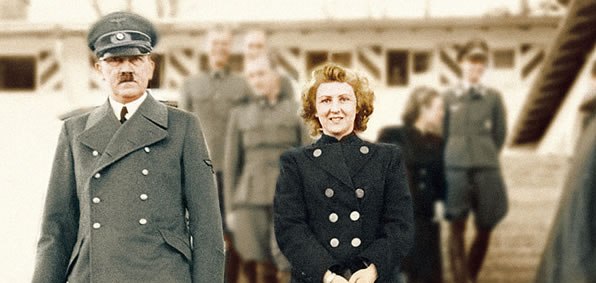
hitler-eva-braun

A Body of Lies: The Problem with the Bunker Scene

Let’s go back to that chaotic garden outside the bunker. The Soviets are the first ones on the scene. They secure the area. They control everything. They are the ones who claim to have found the charred remains. They are the ones who conduct the autopsy. They are the sole custodians of the physical “proof.”

But here’s the first giant red flag. There are no photographs of the bodies in the bunker. None. There are no photographs of Hitler or Braun after the supposed suicide. The only photos are of the burned, unrecognizable remains in the ditch. The Soviets never produced a single, identifiable body. Not one.

And the witness testimony? It’s a mess. A chaotic jumble of contradictory statements from terrified, shell-shocked Nazi officials desperate to save their own skin. Some heard a gunshot. Many others, who were just as close, heard absolutely nothing. The timeline shifts. The details warp. The only thing consistent is the inconsistency.

Think about it. The most wanted man on the planet is cornered. The world is waiting for confirmation of his death. And the best evidence we get is a handful of conflicting stories and a charred jawbone that the Soviets whisk away into the secrecy of Moscow’s archives? Something is profoundly wrong with this picture.

The Skull Fragment That Changed Everything

For decades, the story rested on that “proof” held by the Russians. They claimed to have Hitler’s jawbone and a fragment of his skull, complete with a bullet hole. Case closed. The Soviets had the evidence. The West, for political reasons, accepted their story.

Then came 2009.

The Russian Federation State Archive in Moscow finally allowed an outside expert to get a look. Nicholas Bellatoni, a respected archaeologist from Connecticut, was granted access to the supposed Hitler skull fragment. He was allowed to take DNA samples. The world held its breath. Finally, modern science would validate the history books.

The results were not just shocking. They were world-shattering.

The DNA proved, without a shadow of a doubt, that the skull fragment belonged to a woman. A woman under the age of 40. And further tests confirmed it wasn’t Eva Braun, either. For over 60 years, the cornerstone of the physical evidence for Hitler’s death—the very proof of the gunshot to the head—was a complete fraud. It belonged to some unknown woman.

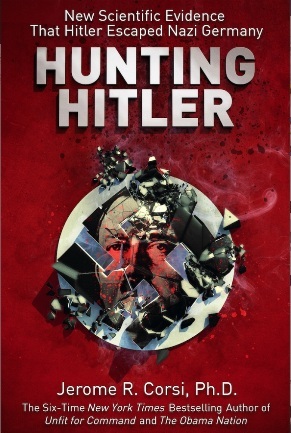
Jerome Corsi, author of the explosive book “Hunting Hitler,” saw this as the final straw. “What caused me to question Hitler’s suicide was Bellatoni’s DNA analysis that proved conclusively the skull fragments belonged not to Hitler, but to a 40-year-old woman unrelated to Eva Braun,” Corsi stated. It was the crack in the dam that broke the entire official story wide open.

cover-hunting-hitler

Whispers from the Top: Why Were the Victors So Doubtful?

If the evidence at the scene was so flimsy, surely the Allied leaders knew it, right? Oh, they did. And they weren’t quiet about it.

Joseph Stalin, of all people, was the most vocal. At the Potsdam Conference in July 1945, just months after the supposed suicide, he casually told U.S. officials that he believed Hitler was alive and had escaped. He suggested Spain or Argentina as likely destinations. This wasn’t a one-off comment. He repeated this belief multiple times to different diplomats. Why would the man whose army captured Berlin and controlled all the “evidence” publicly cast doubt on the official story?

It wasn’t just Stalin. General Dwight D. Eisenhower, the Supreme Allied Commander, also harbored deep suspicions. In 1945, he told the Associated Press, “There is every assumption that Hitler is dead, but not a shred of conclusive evidence that he is dead.” Years later, in 1952, he wrote a private letter stating, “We have been unable to unearth one bit of tangible evidence of Hitler’s death.”

Even the FBI took it seriously. Declassified documents show that J. Edgar Hoover’s bureau actively investigated sightings of Hitler in South America for years after the war. One file, dated September 21, 1945, details a report from an informant offering to disclose Hitler’s location in Argentina in exchange for political asylum. The FBI didn’t laugh it off. They investigated.

The leaders of the victorious nations, the very men who had access to the highest levels of intelligence, did not believe Hitler was dead. So why were we, the public, fed such a different, simpler story?

The Spymaster’s Gambit: Did America Help Him Escape?

This is where the story takes an even darker turn. An escape of this magnitude would require incredible planning and high-level assistance. It would require a network. And it would require powerful people looking the other way… or actively helping.

Enter Allen Dulles. A name you should know.

During the war, Dulles was the top spy for the Office of Strategic Services (OSS)—the forerunner to the CIA—operating out of Bern, Switzerland. From this neutral territory, he was in a unique position. Declassified records show that Dulles was engaged in secret back-channel communications with high-ranking Nazis as early as 1943. The official reason was to negotiate an early surrender to the Western Allies to prevent the Soviets from gaining too much ground. This operation was known as “Operation Sunrise.”

But what else was being negotiated in those secret meetings?

We know that after the war, U.S. intelligence agencies, including Dulles’s new CIA, actively recruited former Nazis. Scientists, intelligence officers, and military strategists were spirited out of Germany through networks called “ratlines.” The most famous of these was Operation Paperclip, which brought Nazi rocket scientists to America. The justification was simple: their knowledge was too valuable to let fall into Soviet hands. We needed them for the coming Cold War.

Corsi and other researchers argue that these ratlines didn’t just move scientists. They moved the worst of the worst. Men like Adolf Eichmann, the architect of the Holocaust, and Josef Mengele, the “Angel of Death,” used these routes to escape to South America.

So, here is the billion-dollar question: If U.S. intelligence was willing to save thousands of Nazi war criminals for their own strategic purposes, why not the biggest prize of all? Was Hitler’s escape the ultimate deal brokered by men like Allen Dulles? A way to keep the ultimate anti-communist icon in their back pocket, just in case?

It’s a chilling thought. A grotesque betrayal. But in the cold, cynical calculus of post-war espionage, was it impossible? Corsi argues it was not only possible, but probable. “The story Hitler and Eva Braun committed suicide was a cover story,” he says, “designed by U.S. intelligence agents at the end of World War II to facilitate the escape.”

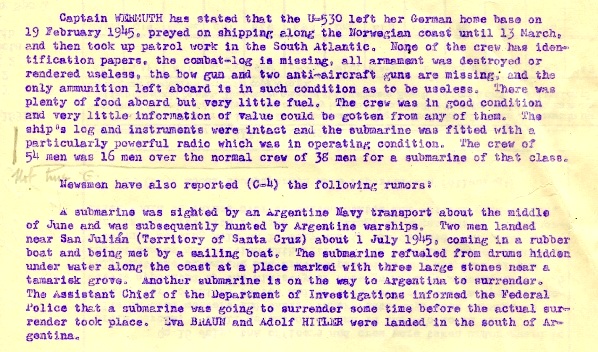
submarine-report

The Ghost of the Atlantic: The U-Boat Connection

If Hitler escaped, how did he do it? You can’t just walk out of a besieged Berlin.

The escape plan, according to researchers who have scoured naval records and intelligence files, was audacious. First, a secret flight from Berlin to a German-controlled airbase in Denmark or Norway. Then, a transfer to a submarine for the long, perilous journey across the Atlantic.

This isn’t pure fantasy. Consider the strange case of two German U-boats: U-530 and U-977. These submarines surrendered at the port of Mar del Plata, Argentina, not in May 1945 when the war ended, but in July and August. Months later. Their commanders claimed they had been wandering the ocean, not wanting to surrender to the British. It was an explanation so absurd that no one at the time believed it.

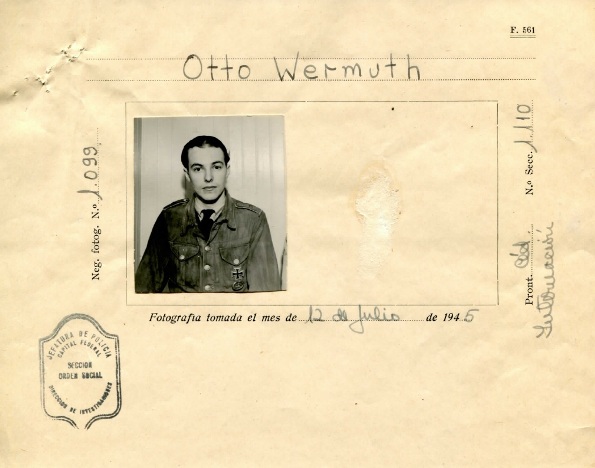
The commander of U-530, Otto Wermuth, was interrogated relentlessly. His logbook was missing pages. The crew had no identification. They claimed to have had no passengers, yet their food supplies were unusually depleted and there were signs of extra people having been aboard. The FBI file on the incident is thick with suspicion. Officials were certain the U-boat had been making clandestine drops along the desolate Patagonian coast before its formal surrender.

Was one of those drops a 56-year-old man with a recognizable mustache?

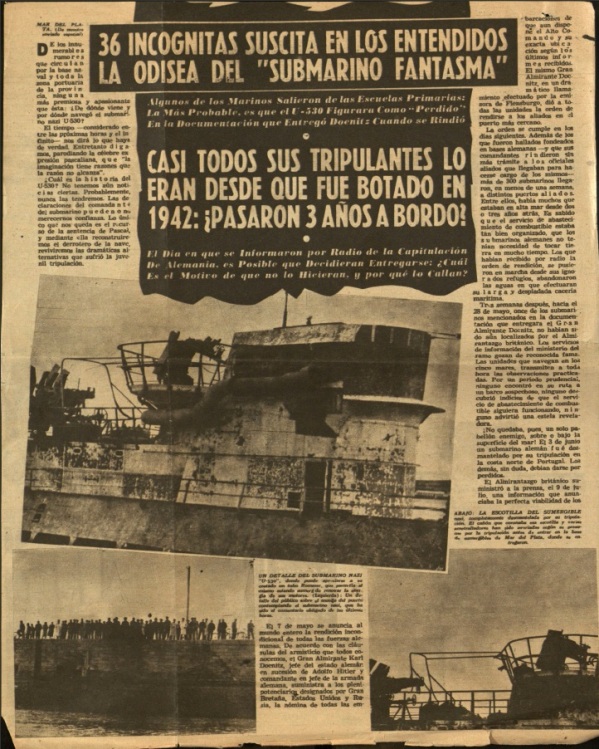
The Argentinean press certainly thought so. Local papers at the time were filled with stories and reports of a mysterious U-boat dropping off high-ranking Nazi officials. These weren’t fringe publications; they were mainstream newspapers reporting what local officials and citizens were seeing.

otto-wermuth

A New Life in the Andes

Argentina, under President Juan Perón, was famously sympathetic to the Nazi cause. It was the perfect hiding place. A vast, underpopulated country with a large German immigrant community and a government that would ask no questions. It became the primary destination for the ratlines.

For decades, whispers and alleged sightings of Hitler have emerged from the remote, mountainous region of Patagonia, especially around the idyllic town of San Carlos de Bariloche—a place so filled with German architecture it’s known as “Little Switzerland.”

Witnesses came forward over the years. A gardener who claimed to have worked at a secluded, heavily guarded estate. A waitress who served a quiet, German-speaking old man. One couple, in their book “Hitler in Argentina,” claimed they met and spoke with an aging Führer multiple times. Much of it is anecdotal, easily dismissed. But when placed against the backdrop of the faulty forensic evidence and the documented Nazi presence, it paints a deeply unsettling picture.

The legend persists because the pieces fit. The motivation to lie. The means of escape. The perfect destination. All the elements are there.

JPEG-8-HUNTING-HITLER-argentina-newspaper-U530-ARRIVES-ahora-July-14-1945-2

The Questions That Won’t Go Away

When you stand back and look at the whole picture, the official story seems far more fantastic than the escape theory. To believe the official story, you must accept that:

  • The Soviets found the body but took no clear photos and allowed no independent verification.
  • The key piece of physical evidence they kept—the skull fragment—was from the wrong person entirely.
  • Both Stalin and Eisenhower, leaders with access to all available intelligence, were somehow mistaken or lying when they expressed their doubts.
  • The mysterious late arrival of multiple U-boats in Argentina, months after the war, was just a coincidence.
  • The thousands of other high-ranking Nazis who successfully escaped to Argentina just happened to follow a path their leader was unable to.

Does that sound plausible? Or does it sound like a cover-up?

The official narrative is comforting. It closes the book on a monster. But the evidence points to a different, more terrifying epilogue. One that didn’t end with fire and bullets in a Berlin bunker, but with a quiet, peaceful death decades later in the shadow of the Andes.

History is written by the victors. But sometimes, the victors have reasons to lie. The history books tell you Hitler died in 1945. But the declassified files, the scientific evidence, and the lingering questions tell a very different story. A story that is far from over.

Originally posted 2014-01-30 23:34:09. Republished by Blog Post Promoter