The Annan Vampire: Scotland’s Forgotten First Bloodsucker
Forget everything you think you know about vampires.
Forget the capes, the castles in Romania, the gothic romance. The real story, the original nightmare, might be buried deep beneath the red soil of a sleepy Scottish border town. This isn’t a story from a Victorian novel. It’s a 12th-century horror show, a tale of a holy curse, a walking corpse, and a plague that could only be stopped by the most gruesome means imaginable.
This is the story of the Curse of Annan. And it’s more terrifying than Dracula.
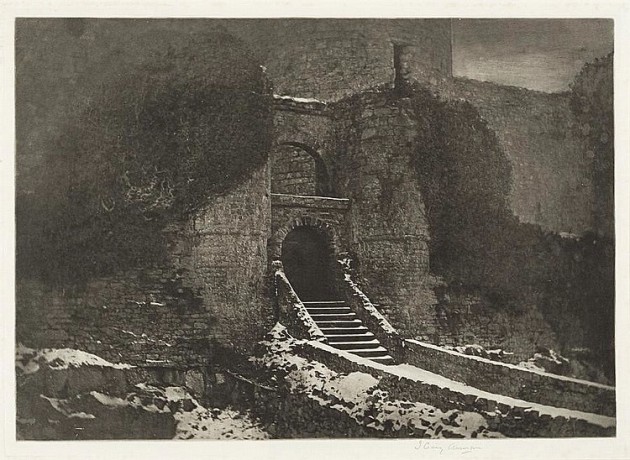
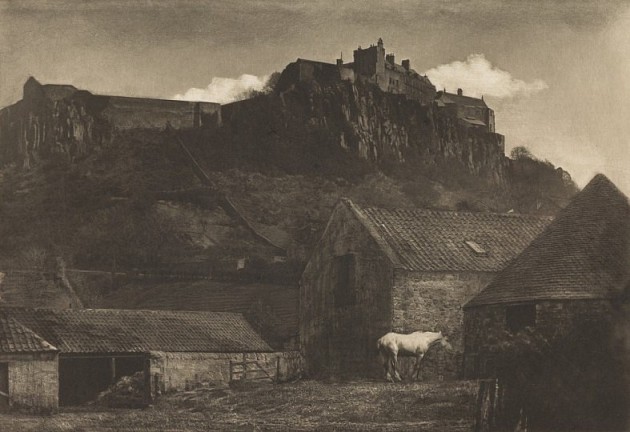
Our stage is set in the ancient royal burgh of Annan, a windswept town on the edge of Scotland, named for the river that snakes through its heart. For centuries, this wasn’t just any town. It was a seat of power. It was the stronghold of one of the most ambitious, ruthless, and legendary families in Scottish history: the Bruces.

Long before Robert the Bruce became a king and a legend, his grandfather, Robert de Brus, ‘The Competitor,’ held court here. He was the 5th Lord of Annandale, a man of immense power and influence, with a claim to the Scottish throne that burned in his blood. His castle, of which only whispers and earthworks remain, dominated the landscape. But power invites scrutiny. And in 1138, it invited a holy man who would change the family’s destiny forever.
A Saint’s Fury: The Birth of the Bruce Curse
The visitor was no ordinary priest. He was Maolmhaodliog ua Morgair, better known to history as St. Malachy O’More. The Archbishop of Armagh, a papal legate, a man said to perform miracles and see the future. He was, in short, one of the most powerful religious figures in the British Isles. When he spoke, kings listened. And when he was angered, Heaven itself seemed to take notice.
He was entertained at the Bruce castle in Annan, a fortress humming with the energy of power and ambition. During the feast, as wine flowed and stories were told, Malachy overheard the servants talking. A common thief, a robber, was scheduled to be hanged. A routine matter of medieval justice.
But Malachy, a man of God, was moved to mercy. He turned to his host, Robert de Brus—the chief lawman of the entire district—and made a simple request. Spare the man’s life.
Brus, eager to please his esteemed guest, agreed. Of course. The man would be spared. A promise was made.
The feast concluded. Malachy gave his thanks and his blessings, then mounted his horse to leave Annan behind. But as his party rode towards the edge of town, he saw something that stopped him cold. There, by the roadside, swinging gently in the breeze, was the freshly hanged body of the robber.
Brus had lied.
The promise, made to a man who walked with God, had been broken the moment his back was turned. The disrespect was absolute. The fury that erupted from Malachy was not that of a man, but of a divine instrument. He turned his horse around, faced the castle of Annan, and unleashed a curse. A chilling execration not just on Robert de Brus, but on his entire bloodline, and on the very stones of the town that had witnessed the lie.
The Bruce family felt the weight of that curse for generations. Even the great Robert the Bruce, the hero-king of Scotland, believed his agonizing battle with leprosy was no random sickness. He called it “the finger of God upon me,” a direct consequence of his ancestor’s treachery. After St. Malachy’s death in 1148, a fearful Robert de Brus paid for candles to be kept burning eternally at his shrine in Clairvaux, France. An attempt to buy forgiveness.
But it wasn’t enough. The curse had taken root. And it was about to birth something far worse than a king’s disease.
The Thing That Came from Yorkshire
The curse wasn’t a thunderclap; it was a slow-acting poison that seeped into the soil of Annan itself. Sometime after Malachy’s furious departure, a stranger appeared in the town. A man on the run, fleeing some “great wickedness” in Yorkshire. He was desperate. He sought sanctuary.
The Bruces, perhaps in a misguided attempt to show the generosity they had denied St. Malachy, took him in. It was a catastrophic mistake.
The man brought two things with him to Annan. The first was his wickedness, which he did not abandon. The second was the plague.
It started slowly. A cough. A fever. Then the tell-tale swellings. The man from Yorkshire was one of the first to succumb, dying in agony before being hastily buried in the local churchyard. Annan breathed a sigh of relief. But their nightmare was just beginning.
He didn’t stay buried.
Soon, terrified locals began reporting sightings. At first, they were dismissed as ghost stories, the fearful whispers of a plague-haunted town. But the sightings grew more frequent, more horrifying. It was the man from Yorkshire, his body already a “rotting corpse,” walking the streets of Annan in the dead of night. And he wasn’t alone. He was followed, they said, by “a horrible crowd of dogs,” snarling, spectral beasts that seemed to emerge from the shadows themselves.
Where the walking corpse went, the plague intensified. It was no longer just an illness. It was a malevolent force, spread by the breath and touch of the undead. Annan was dying. The town sent for priests, holy men who prayed and chanted, attempting to cleanse the suffocating evil. But their prayers felt hollow. The plague raged on, and the corpse kept walking.

Two Brothers, One Spade, and a Midnight Mission
Desperation breeds heroes. Or, in this case, it breeds two young men filled with grief and rage.
Inside the Bruce castle, a grim banquet was being held for the visiting clergy. The mood was somber, the air thick with the smell of incense and death. At one table, two brothers were talking. Their father had just been taken by the plague. Their family was shattered. Listening to the priests’ plans for yet more prayers, something inside them snapped.
This wasn’t a problem for prayer. This was a monster that needed to be killed. Again.
Fueled by a desire for revenge, they made a pact. They would rid Annan of this creature themselves. As the priests droned on, the two brothers slipped out of the castle, armed with shovels and iron-willed determination. They moved through the silent, terrified streets to the churchyard where the Yorkshireman had been buried.
Their plan was simple, drawn from the deepest, darkest corners of folklore. They would dig him up. They would dismember the body. And they would burn it to ash.
The digging began. The damp earth gave way under their frantic shovels. The air grew cold. The only sound was their ragged breathing and the thud of dirt on dirt. Then, a spade struck wood. The coffin.
A 12th-Century Vampire Autopsy
They splintered the lid and recoiled. The smell that hit them was wrong. It wasn’t just the stench of rot; it was metallic and thick. And the sight before them defied all logic.
The corpse was not gaunt or decayed as it should have been. It was the opposite. It had “swollen with much enormous corpulence.” Its face was a grotesque mask, “red and swollen above measure,” as if it were about to burst. The burial shroud he’d been wrapped in was shredded and torn, as if the bloated thing had been struggling to get out.
This was not a dead man. This was a vessel.
One of the brothers, his mind flashing with the image of his dead father, was overcome with a primal fury. He raised his sharp-edged spade high above his head and brought it down with all his strength, plunging the point deep into the corpse’s bloated chest.
What happened next is the core of the legend.
A tidal wave of blood erupted from the wound. Not a trickle. A torrent. A “huge issue” of dark, thick blood that gushed from the corpse, filling the shallow grave and soaking the brothers to their knees. It was, the chronicles say, more blood than ten living men could have contained. It was the blood of Annan’s plague victims. They weren’t looking at a corpse. They were looking at a parasite, gorged and fattened on the life of their town.
They knew, in that terrifying moment, that they had found their vampire.
Shaking with horror and adrenaline, they hauled the impossibly heavy cadaver out of the grave. They dragged it through the streets, a bloody slug trail marking its path, to the edge of town. They built a pyre. But they remembered the old tales, the whispers of how to truly kill such a thing. Burning wasn’t enough.
With a few deft, gruesome strokes of the spade, they hacked open the chest cavity and removed the heart. As they tossed the black, heavy organ separately into the flames, the entire corpse on the pyre was said to let out a great, shuddering sigh—a final, ghastly exhalation of stolen life.
The monster was consumed by fire.
And from that day forward, the plague in Annan stopped. It simply vanished. The curse, for a time, was broken.
The Annan Vampire vs. Dracula: Who Came First?
So, is this just a spooky piece of Scottish folklore? A local legend to tell around the fire? Not exactly. This story was recorded in the 12th century by a respected English historian, William of Newburgh, in his *Historia rerum Anglicarum* (History of English Affairs). He wasn’t writing fiction; he was documenting events he believed to be true, told to him by credible sources. He called these creatures “revenants,” but the description is unmistakable.
Think about the classic vampire tropes:
- Rises from the grave to terrorize the living? Check.
- Spreads plague or disease? Check. This was a common feature before the vampire became a seductive aristocrat.
- Is unnaturally bloated and ruddy with blood? Check. This is the classic description of the Slavic *vampir*.
- Must be destroyed by dismemberment and burning? Check.
- Must have its heart removed/destroyed? Double-check.
This account from Annan predates Bram Stoker’s *Dracula* by over 700 years. While Stoker may have found inspiration in places like Cruden Bay and the tales of Vlad the Impaler, the raw material for his monster—the blood-gorged walking corpse—was already a documented terror in the British Isles. The Annan case is one of the earliest and most detailed “vampire hunts” on record, anywhere.
Modern internet forums and mystery blogs have resurrected this chilling tale. Was it a misunderstood case of disease? Sure, premature burial and the natural bloating of a corpse from decomposition gases could explain *some* of it. But could it explain the torrent of blood? The sudden, miraculous end of a plague? The spectral hounds?
The Annan Vampire represents a more primal, more terrifying kind of undead. Not a charming predator, but a foul, pestilential parasite. A physical manifestation of a curse, a walking plague bomb that had to be physically torn apart and purified by fire.
So the next time you think of the history of horror, don’t just picture a castle in the Carpathians. Look to a quiet Scottish town on the banks of a river. A place where a bishop’s anger, a broken promise, and a bloody spade may have written the first, and most gruesome, chapter in a story that still refuses to die.