The Yellow Monster on the Square: Cracking Open the Secrets of the Lubyanka
Some buildings are just buildings. Brick, mortar, glass. They’re background noise in a busy city. And then there are other buildings. Buildings that breathe. Buildings that have a pulse. Places that have soaked up so much history, so much pain, and so many secrets that the very air around them feels heavy, charged with the ghosts of the past.
They call it the Lubyanka.
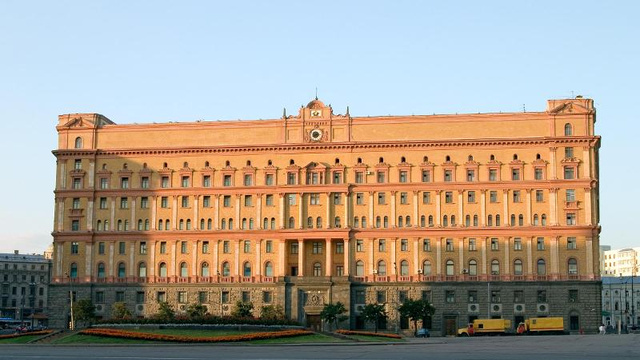
It sits in the heart of Moscow, a massive, imposing structure of yellow brick and granite trim, dominating Lubyanka Square. To a tourist, it might look like just another grand, old European building. An insurance company headquarters, maybe? A fancy ministry? And they’d be right. It was an insurance company headquarters. Once.
But that’s not what it’s known for. That’s not why people in Moscow sometimes cross the street to avoid walking too close to its walls. That’s not why its name is spoken in hushed tones from the darkest days of the 20th century to the shadowy geopolitics of today.
Because this building became the iron heart of the Soviet security state. The headquarters of the Cheka. The NKVD. The KGB. And today, the FSB. It is the most famous secret police headquarters on Earth. A place where history was not just recorded, but brutally rewritten. Where lives were erased. Where the truth went to die.
This isn’t just about a building. It’s about a machine. A machine designed for one purpose: to crush dissent, extract information, and maintain absolute control. And we’re going to pry the lid off it.
From Insurance Policies to Iron Fists
You have to appreciate the irony. Before it was a place of terror, the Lubyanka was a place that sold peace of mind. Built in 1898, it was the home of the All-Russian Insurance Company. Its beautiful neo-Baroque facade was designed to project stability, wealth, and security. You came here to protect your family’s future, to secure your property against disaster.
Then came the revolution.
In 1917, the world turned upside down. The Bolsheviks seized power, and in the chaotic, bloody aftermath, they needed an instrument to enforce their new order. A sword and a shield for the revolution. They created the Cheka—the All-Russian Extraordinary Commission for Combating Counter-Revolution and Sabotage. A mouthful, right? They needed a leader as ruthless as their mission. They found him in Felix Dzerzhinsky. “Iron Felix.” A man who famously said their work required “a cool head, a warm heart, and clean hands.” Two out of three wasn’t bad, they figured.
In 1919, the Cheka commandeered the old insurance building. The symbolism was potent, if unintentional. A place that once protected private property now became the headquarters for a regime dedicated to destroying it. The grand offices that once housed insurance brokers were converted into interrogation rooms. The secure vaults that once held financial assets now held something far more valuable: secrets. And soon, people.
A Tour You Never Wanted to Take
What did it look like inside? The public saw the grand entrance. The powerful facade. But for those unlucky enough to be dragged through its doors, the world shrank to a series of corridors, cells, and rooms from which few ever returned the same.
The building itself is a maze. Over the years, the Soviets didn’t just occupy it; they consumed the entire block, absorbing adjacent buildings, connecting them with hidden passages, and building upwards and downwards. The original structure is just the face of a much larger, more monstrous complex.
The real horror began below ground. The infamous Lubyanka basement. It wasn’t a medieval dungeon with chains and racks. The Soviets were pioneers of a different kind of torment. A more… bureaucratic kind of horror. The cells were small, clean, and soundproofed. Some were “standing boxes” where you couldn’t sit. Others were “dog boxes” where you could neither stand nor lie down. The true weapon was psychological.
Imagine it. You’re arrested in the dead of night. The Black Raven, the infamous black NKVD car, pulls up. You’re taken to Lubyanka. You are stripped of your name and given a number. You are placed in a cell where the lights are never, ever turned off. Sleep deprivation was rule number one.
Then came the interrogations. Not in some dungeon, but in a simple office. A man behind a desk. He’s polite. He offers you a cigarette. And then he begins. For hours. Days. Weeks. The “conveyor belt” system involved a team of interrogators working in shifts, questioning a prisoner around the clock until they broke from sheer exhaustion, confessing to anything and everything. Spying for the British. Plotting to kill Stalin. It didn’t matter if it was true. The machine needed a confession to close the file. The signature was all that mattered.
Laboratory 12: The Poison Factory in the Attic?
If the basement was for breaking bodies and minds, the upper floors held even darker secrets. Whispers have persisted for decades about the specialized labs hidden within the Lubyanka complex. The most notorious of these is the place they called “The Chamber.” Or Laboratory 1, Laboratory 12, or the “Kamera”—the name changed over the years, but its purpose remained chillingly consistent.
This was the poison factory.
According to defectors and leaked reports, this was a top-secret toxicological lab run by the secret police. Its mission? To create poisons that were colorless, odorless, and utterly untraceable. Poisons that could mimic a heart attack or a stroke. Chemicals that could be administered with the tip of an umbrella, a puff of gas from a pen, or a simple handshake.
Think that sounds like something out of a spy movie? Think again.
They allegedly tested these concoctions on prisoners from the basement—the “expendables” whose files were already marked for termination. A dose in their soup, a spray in their cell. The scientists would observe, take notes, and refine their formulas. It was state-sponsored murder disguised as medical research.
Modern internet sleuths and historians draw a terrifyingly straight line from the legends of Laboratory 12 to events that have dominated recent headlines. The assassination of Bulgarian dissident Georgi Markov in London in 1978, poked with a ricin-tipped umbrella. The radioactive poisoning of former FSB officer Alexander Litvinenko with Polonium-210 in 2006. The nerve agent attack on Sergei and Yulia Skripal in Salisbury, England, in 2018. The methods have evolved, but the playbook feels disturbingly familiar. Does the spiritual successor to that poison lab still operate within the Lubyanka’s orbit? It’s a question that keeps foreign intelligence agencies up at night.
The Ghosts in the Machine: Famous Prisoners of Lubyanka
A building like Lubyanka is defined by the people who passed through it. Not the guards or the interrogators, but the victims. The list is a who’s who of 20th-century Russian culture and history.
The great writer Aleksandr Solzhenitsyn, whose experiences there would form the backbone of his monumental work, *The Gulag Archipelago*, was processed through Lubyanka. The poet Osip Mandelstam was interrogated here before being sent to his death in the camps for writing a poem critical of Stalin.
But perhaps the most enduring mystery is that of Raoul Wallenberg.
Deep Dive: The Wallenberg Enigma
Wallenberg was a Swedish diplomat, a hero. During World War II, posted in Budapest, he used his diplomatic status to save tens of thousands of Hungarian Jews from the Holocaust. He issued protective passports, set up safe houses, and literally pulled people off trains bound for Auschwitz. He was a real-life Schindler.
In January 1945, with the Red Army “liberating” Budapest, Wallenberg was arrested by the Soviets. He was accused of being a spy for the Americans. An absurd charge. He was transported to Moscow and taken directly to the Lubyanka.
And then… he vanished.
For years, the Soviets denied they had him. Then, in 1957, they abruptly changed their story. They produced a document claiming Wallenberg had died of a heart attack in his cell in Lubyanka back in 1947. Case closed, they said.
Nobody believed them. Why wait ten years to announce it? Why was the death certificate so obviously forged? Over the decades, other prisoners released from the Gulag reported seeing or hearing about Wallenberg long after his supposed death. Some claimed he was still alive in the 70s or even the 80s, transferred from prison to prison, his identity a closely guarded state secret.
What really happened to him? The theories are endless. Was he killed during an interrogation that went wrong? Did he hold some secret the Soviets couldn’t afford to let out? Or did they simply lose him in their own monstrous bureaucracy, a man without a name in a system that specialized in erasing them?
The truth about Raoul Wallenberg almost certainly lies in a rotting file folder, deep in the archives of the very building where he was last seen alive. A secret the modern FSB is in no hurry to reveal.
The Lubyanka Today: A Modern Face on an Old Monster
The Soviet Union is gone. The KGB was disbanded and rebranded. A statue of its founder, “Iron Felix” Dzerzhinsky, that once stood proudly in front of the building was torn down by protestors in 1991. But the Lubyanka remains.
It is now the headquarters of the FSB, the main successor to the KGB. The lights are still on. The cars still come and go. And while the mass arrests of the Stalin era are over, the building remains a powerful symbol of state control. It’s a constant, silent reminder of the power of the “organs” of state security.
A small museum to the KGB now occupies part of the building, a heavily sanitized and state-approved version of its history. You can see old spy gadgets and celebrate the “heroic” intelligence officers of the past. It mentions nothing of the basement cells, the executions, or the millions of lives destroyed by the organization it glorifies.
In recent years, there has been a recurring, deeply divisive debate in Russia: should the statue of Felix Dzerzhinsky be returned to its pedestal in the square? For some, he is a symbol of order and a strong state. For others, he is the architect of the Red Terror, a mass murderer. The fact that this is even a debate tells you everything you need to know about the shadow the Lubyanka still casts over the nation.
What If The Archives Were Opened?
This is the ultimate question, isn’t it? The biggest “what if.” What if, by some miracle, the archives of the Lubyanka were thrown open to the world? Not the curated, redacted files they occasionally release, but everything. The whole ugly truth.
What would we find?
Would we finally learn the real story of Wallenberg? The full, unvarnished truth of Stalin’s purges? Details on Soviet involvement in dozens of world events that we only have theories about?
Conspiracy forums light up with the possibilities. Would we find a file on Lee Harvey Oswald, who defected to the USSR before supposedly killing JFK? Would we discover the fates of the “lost cosmonauts,” the rumored pilots who died in secret space accidents before Yuri Gagarin’s famous flight?
The secrets in that building could rewrite the history books of the 20th century. They could expose networks, compromise individuals, and shatter the foundations of the official stories we’ve been told for generations. And that is precisely why they will almost certainly remain locked away. Because the Lubyanka was never just a prison or an office. It was, and is, a guardian of a particular version of reality.
The yellow brick facade isn’t just holding up a roof. It’s holding up a narrative. It’s a wall between the past and the present, between the official story and the terrible truth. And it is very, very good at keeping its secrets.