Home Weird World Strange Stories Scientists record two dolphins ‘chatting’

Scientists record two dolphins ‘chatting’

0
57

The Underwater Files: Are They Plotting Against Us?

Dolphin conversation mystery

Dolphins are keen conversationalists. But that is the understatement of the century. It’s like saying the Grand Canyon is a decent hole in the ground or that the sun is somewhat warm.

For decades, we’ve looked at the ocean and seen fish. Food. Vacation spots. But we’ve been looking at it all wrong. We haven’t been looking at a swimming pool. We’ve been staring at a civilization. And for the first time in recorded history, we have the smoking gun. A conversation. A real, honest-to-god chat between two entities that are definitely not human.

Scientists in Russia didn’t just hear squeaks. They heard sentences.

This changes everything. If they are talking, what are they saying? And more importantly, do they know we are listening? Buckle up. We are going deep into the blue abyss to figure out if we are sharing this planet with a species smarter than we are.

The Karadag Tape: The Evidence We Can’t Ignore

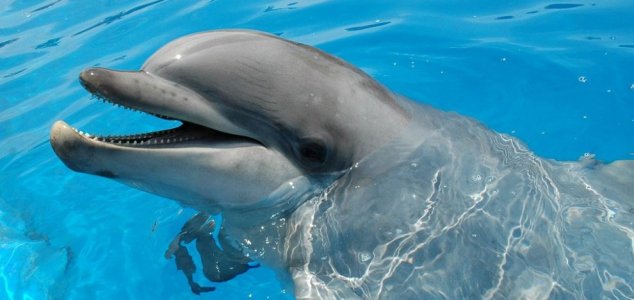
Let’s set the scene. It’s the Karadag Nature Reserve in Feodosia, Russia. A place steeped in history, right on the edge of the Black Sea. This isn’t SeaWorld. This is serious science. Two Black Sea bottlenose dolphins, Yasha and Yana, are swimming in their pool. They’ve been together for a long time.

For years, the mainstream narrative was simple. Dolphins make noise. They click to find fish (echolocation). They whistle to say “I’m over here!” It was biological. Instinctual. Basic.

But Dr. Vyacheslav Ryabov, a lead researcher who wasn’t satisfied with the “dumb animal” theory, decided to do something different. He built a special microphone. A hydrophone so sensitive, so advanced, it could pick up the microscopic nuances of dolphin pulses that the human ear—and standard equipment—would miss completely.

He dropped the mic in. He waited.

What he found shattered the glass ceiling of biology.

Polite Society in the Deep

Yasha and Yana weren’t just screaming over each other. Animals usually interrupt. Dogs bark over other dogs. Birds chirp in a chaotic mess. Humans? We interrupt each other constantly. Watch any cable news segment. It’s a disaster.

But not Yasha. Not Yana.

The recording showed something chillingly civilized. Yasha would speak. A series of clicks, pulses, and whistles. Complex stuff. Then, silence. Yana listened. She waited until Yasha was completely finished. No interruption. No talking over him.

Only when Yasha stopped did Yana reply. She constructed her own series of pulses. Different frequencies. Different timing.

“Essentially, this exchange resembles a conversation between two people,” Dr. Ryabov explained. But he went further. He dropped a bombshell.

“Each pulse that is produced by dolphins is different from another by its appearance in the time domain and by the set of spectral components in the frequency domain.”

Translation? These aren’t random noises. They are words.

The “Phoneme” Theory: Cracking the Code

Let’s break down the science without the boring lab coat stuff. In human language, we have “phonemes.” These are the building blocks of sound that make words. The sound “b” or “th” or “k.” On their own, they mean nothing. Put them together? You get “Hamlet.” You get the Declaration of Independence. You get the recipe for lasagna.

Ryabov found that the dolphins were using individual pulses like phonemes. They were stringing them together into clumps. Words. Then they strung the words together. Sentences.

“In this regard, we can assume that each pulse represents a phoneme or a word of the dolphin’s spoken language,” Ryabov noted.

Think about the implications here. This suggests grammar. It suggests syntax. It suggests that Yasha can tell Yana about something that happened yesterday, or something that might happen tomorrow. Abstract thought. Time travel via language.

Most animals live in the “now.” A dog is happy because the ball is here *now*. A cat is mad because the bowl is empty *now*. If dolphins are using sentence structures, they could be discussing philosophy, math, or the structural integrity of their pool.

The Alien Connection: Why NASA is Watching

Here is where it gets weird. Really weird.

Why do we spend billions of dollars building radio telescopes to listen for aliens on Mars or Kepler-452b, when we have a non-human intelligence (NHI) right here in our backyard?

Many conspiracy theorists and alternative historians have long pointed to the “Cetacean Nation” theory. The idea is that dolphins and whales aren’t just animals; they are the other dominant intelligence on Earth. Maybe an older one.

Dr. Ryabov’s conclusion supports this heavy idea: “This language exhibits all the design features present in the human spoken language, this indicates a high level of intelligence and consciousness in dolphins, and their language can be ostensibly considered a highly developed spoken language, akin to the human language.”

Akin to human language. He said it.

The John Lilly Experiments

We have to look back at the 1960s. A mad genius named John C. Lilly built a house in the U.S. Virgin Islands that was half-flooded so he could live with dolphins. He was funded by NASA. Yes, that NASA.

Why? Because NASA knew that if we ever met aliens, we wouldn’t know how to talk to them. The dolphins were the test run. If we couldn’t communicate with a brain-heavy, social, oxygen-breathing creature on Earth, we had zero chance of talking to little green men.

Lilly got deep into it. He gave dolphins LSD (it was the 60s, remember). He tried to teach them English. The results were… controversial. Strange. The project was shut down, and the records were largely buried or laughed off as hippie nonsense.

But the Russian recording proves Lilly was on the right track. The dolphins *were* talking. We were just too arrogant to learn *their* language. We wanted them to speak English. Typical humans.

The Holographic Language: Seeing with Sound

Here is a modern theory that will melt your brain. Some researchers believe dolphin language isn’t just “audio.” It’s visual.

Dolphins use echolocation. They send out sound, it hits a fish, bounces back, and their brain creates a 3D image of the fish. They “see” with sound. We know this is true.

But the new theory suggests that when Yasha talks to Yana, he isn’t just saying the word “fish.” He might be projecting the 3D acoustic holographic image of the fish directly into her brain.

Imagine if, instead of saying the word “pizza,” I could beam the taste, smell, and look of a slice of pepperoni directly into your mind. You wouldn’t just hear me; you would experience what I am experiencing.

If this is true, their language is infinitely superior to ours. We clumsy humans have to use clumsy words to describe a sunset. “It was pink and orange.” Boring. A dolphin could just “sing” the sunset to his friend, and his friend would see it.

No wonder they don’t interrupt each other. They are watching movies in each other’s heads.

The Military Industrial Complex of the Sea

We cannot ignore the location of this recording. Russia. The Black Sea.

Both the Soviet Union and the United States ran massive, top-secret combat dolphin programs during the Cold War. This isn’t fiction. This is fact. They strapped mines to them. They trained them to stab enemy divers with needles filled with compressed CO2. They used them to guard nuclear arsenals.

The facility in Sevastopol (Crimea) was ground zero for this. When Russia annexed Crimea in 2014, one of the first things they secured was the military dolphin center. They didn’t care about the tanks; they wanted the dolphins.

Are Yasha and Yana descendants of these soldier-spies? Is their “conversation” purely natural, or have they been genetically or behaviourally modified by decades of military experiments?

Some whistleblowers claim the military programs never stopped. They believe the dolphins became too smart. That they started resisting orders. If Dr. Ryabov is right and they have high consciousness, imagine the horror of being a pacifist dolphin forced to carry a bomb. It’s a moral nightmare.

What Are They Hiding?

Exactly what the two dolphins were saying to one another remains unknown. And that is the scariest part.

Are they complaining about the water quality? Are they telling jokes? Or are they passing along oral history about the time the “dry-walkers” (us) came and ruined the ocean?

If they have a language, they have a history. They have myths. They have legends.

Maybe they are discussing the magnetic pole shift. Animals sense magnetic fields way better than we do. Maybe they are warning each other about the coming cataclysms that we are too busy looking at our phones to notice.

The “Personhood” Problem

If this Russian study holds up, we have a major legal problem. If an entity has a complex language, self-awareness, polite conversation habits, and names… that’s a person.

Legally, “personhood” is usually reserved for humans. But if dolphins fit the criteria, then keeping them in tanks is kidnapping. forcing them to do tricks is slavery. Eating tuna caught in nets that kill dolphins is murder.

The world governments do not want to acknowledge this language. It would destroy the fishing industry. It would close every marine park. It would force us to draft a “Declaration of Rights for Cetaceans.”

So, the mainstream media ignores it. They run a cute story about “squeaky dolphins” and move on to the weather. But we know better. We saw the data.

The Final Verdict

Dr. Ryabov’s study is a beacon in the darkness of our ignorance. “Their language can be ostensibly considered a highly developed spoken language,” he said.

We are not alone. We never were. While we search the stars for intelligent life, it’s been swimming alongside our boats for millennia, probably laughing at our primitive wooden ships and our clumsy verbal languages.

Next time you see a video of a dolphin, look into its eye. There is someone in there. And right now, they are talking about us. The only question is: When will we be smart enough to build the Google Translate for Dolphin? And will we like what they have to say about the human race?

The ocean is deep. The secrets are deeper.


Originally posted 2018-03-29 06:07:33. Republished by Blog Post Promoter

Originally posted 2018-03-29 06:07:33. Republished by Blog Post Promoter