The Mystery That Was Hiding in Plain Sight
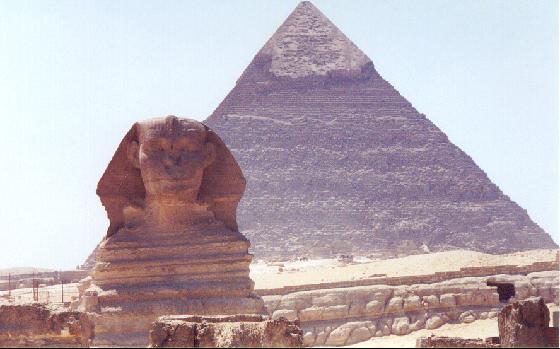
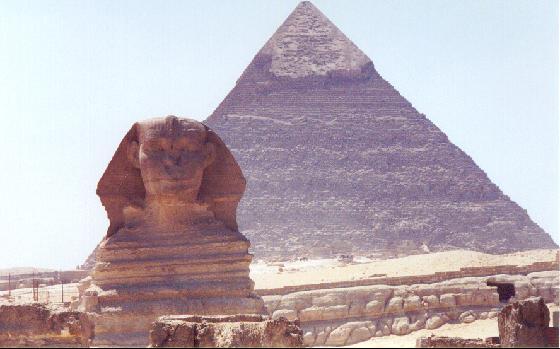
Look at the image above. Really look at it.
For centuries, millions of tourists, conquerors, and archaeologists have stood on the Giza Plateau, craned their necks upward, and marveled at the sheer, impossible size of the pyramids. They snap a photo. They ride a camel. They go home.
But they miss the biggest clue of all.
For generations, we were told these were just tombs. Grandiose, ego-driven piles of limestone built by Pharaohs terrified of death. We were told the layout was somewhat random, or dictated by the terrain. But does that make sense? The ancient Egyptians were master mathematicians. They were obsessed with precision. They aligned their temples to the sun with laser-like accuracy. So, why, when you look at the three main pyramids from the air, does something feel… wrong?
Two of them are massive. Perfectly diagonal. But the third one? The Pyramid of Menkaure?
It’s tiny. It’s significantly smaller than its brothers. And more frustratingly, it’s offset. It breaks the perfect line. It sits slightly to the left.
For years, this drove perfectionists crazy. It looked like a mistake. A planning error. A budget cut in the ancient world.
But engineer and Egyptologist Robert Bauval didn’t see a mistake.
He saw a map.
The Engineer Who Looked Up
Robert Bauval isn’t your typical dusty academic. He’s an engineer. He thinks in terms of blueprints, structural loads, and site planning. When he looked at those aerial photos of the Giza Plateau in the 1980s, his brain didn’t register “tomb.” It registered “schematic.”
His breakthrough didn’t happen in a library. It happened under the night sky.
Bauval realized that the ancient Egyptians didn’t just care about the earth. They were obsessed with the Duat—the realm of the dead, the star-filled night sky where the soul would travel. And the most important constellation to them wasn’t the Big Dipper. It was Orion.
Orion was associated with Osiris, the god of rebirth and the afterlife.
Bauval looked at the three stars that make up Orion’s Belt: Alnitak, Alnilam, and Mintaka.
Boom.
Everything clicked. The stars aren’t in a straight line either. Two are bright and aligned. The third one, Mintaka, is dimmer and offset slightly to the left. The layout on the ground at Giza wasn’t a mistake. It was a mirror.
As Above, So Below
This is the core of the “Orion Correlation Theory.” The three pyramids are a terrestrial map of the three stars of Orion’s Belt. But it gets weirder. Much weirder.
If the pyramids represent the belt stars, what represents the Milky Way?
Look at a map of Egypt. The Nile River flows alongside the pyramids. Now look at the sky. The Milky Way flows alongside Orion. The Egyptians were recreating heaven on earth. They were building a star map on the ground so precise, so massive, that it could be seen by the gods themselves.
But here is where the story shifts from “interesting archaeological theory” to “history-shattering conspiracy.”
The Time Machine: Why 10,500 BC?
Stars move. It happens very, very slowly, but over thousands of years, the constellations drift. This is called the precession of the equinoxes. Think of the Earth like a spinning top. As it spins, it wobbles. One full wobble takes about 26,000 years.
This means the sky you see tonight is not the same sky the Pharaohs saw.
Bauval used computer software to rewind the skies. He wanted to know: When did the pyramids on the ground perfectly match the stars in the sky?
He cranked the clock back. Past the Roman Empire. Past the Greeks. Past the accepted building date of the pyramids (around 2,500 BC).
At 2,500 BC, the match was okay, but not perfect. The angles were slightly off.
He kept going back.
The numbers finally locked in at a specific date: 10,500 BC.
At that exact moment in history, the three stars of Orion’s Belt were at their lowest point in the sky (the meridian), directly over the southern horizon, matching the layout of the pyramids perfectly. And the Milky Way appeared to “vertical” itself, aligning with the Nile.
This is a massive problem for mainstream historians.
The “Impossible” History
According to every textbook you read in school, 10,500 BC was the Stone Age. We were hunter-gatherers. We lived in caves or temporary huts. We had just figured out how not to get eaten by saber-toothed cats. We definitely were not capable of moving 200-ton limestone blocks or aligning massive monuments to fractions of a degree.
So, we have two options:
- Coincidence: The Egyptians built the pyramids in 2,500 BC, and by sheer, blind luck, they accidentally arranged them to match the sky of 8,000 years prior.
- Legacy: The Giza Plateau was planned, laid out, or perhaps even built by a civilization that existed in 10,500 BC—a civilization that history has forgotten.
Bauval suggests that the Giza site isn’t just a burial ground. It’s a marker. A clock. It’s pointing to a specific time, screaming at us to pay attention to that date.
The Star Shafts: Guns Pointed at the Galaxy
It doesn’t stop with the layout. The Great Pyramid itself is a machine.
Inside the Great Pyramid, there are narrow shafts leading from the King’s and Queen’s Chambers. For years, archaeologists dismissed these as “air shafts” (though they don’t actually open to the outside in some cases, so the mummies would have suffocated if they needed air). They aren’t for ventilation.
They are telescopes without lenses.
Bauval’s research highlighted that these shafts were targeted like sniper rifles at specific stars. The southern shaft of the King’s Chamber pointed to—you guessed it—Orion (Osiris). The northern shaft pointed to Draconis.
But again, the alignments only work perfectly if you look at the sky from long, long ago.
The Sphinx and the Age of Leo
If the pyramids connect to Orion, what about the Sphinx?
The Sphinx is the ultimate riddle. Mainstream Egyptology says it was built by Pharaoh Khafre around 2,500 BC and has his face. But have you ever noticed how tiny the head is compared to the body? It looks… wrong. Like a human head carved out of a much larger, older lion’s neck.
Many alternative researchers, including Bauval, argue the Sphinx was originally a full lion. And this brings us back to the star clock.
In the epoch of 10,500 BC, on the vernal equinox, the sun rose in the constellation of Leo the Lion.
Imagine standing on the Giza Plateau in 10,500 BC just before dawn. You are facing East. The Great Sphinx (in its original lion form) is also facing East. As the sun breaks the horizon, the stone lion on the ground is looking directly at its celestial counterpart—the Lion in the stars.
It’s a perfect celestial lock.
This suggests the entire Giza Plateau is a unified monument designed to mark the Age of Leo. If true, the Sphinx could be thousands of years older than we are told. This aligns with the geological evidence brought forward by Robert Schoch, who found water erosion on the Sphinx enclosure—rain weathering that could only have happened when the Sahara was a lush, wet jungle (which, again, was thousands of years before the Pharaohs).
The Sleeping Prophet: Edgar Cayce’s Vision
Now, let’s get weird.
Before satellites, before computer modeling, and before Robert Bauval, there was Edgar Cayce.
Known as the “Sleeping Prophet,” Cayce was an American mystic in the early 20th century. He would go into a trance state and dictate information on health, future events, and ancient history. He is one of the most documented psychics in history.
Decades before Bauval was even born, Cayce made a specific prediction about Egypt.
He claimed that refugees from the lost continent of Atlantis migrated to Egypt and built the Sphinx and the Great Pyramid to preserve their records. He stated, quite specifically, that this happened around 10,500 BC.
Sound familiar?
The Hall of Records
Cayce didn’t just give a date. He gave a location. He said there is a “Hall of Records” buried underground. A secret library containing the history of the lost world, advanced technology, and the truth about human origins.
He said the entrance lies beneath the right paw of the Sphinx.
For years, people laughed. But in recent decades, ground-penetrating radar and seismic surveys have detected anomalies—hollow spaces and rectangular chambers—deep beneath the Sphinx’s paws. The Egyptian authorities have strictly forbidden any digging there.
Why?
What are they afraid of finding? If Bauval’s math matches Cayce’s visions, we are looking at a convergence of science and psychic phenomenon that is hard to ignore. Bauval suggested that if these records exist, they would change everything. They would prove that we are not the first advanced civilization on this planet. We are a civilization with amnesia, walking on the ruins of giants.
The Green Sahara: The Lost Origin
So, where did these builders come from? If the Egyptians of 2,500 BC inherited this site, who were the ancestors?
Most recently, Bauval has shifted his gaze from the stars to the sand. He has been investigating the deep Sahara desert.
Today, it’s a wasteland. But 10,000+ years ago? It was a savannah. It was green. It was full of lakes, giraffes, and people.
In a remote area known as Nabta Playa, deep in the desert, archaeologists found something startling: “Mini-Stonehenges.” Stone circles. Complex calendar circles aligned to the stars. These structures predate the pyramids by thousands of years.
Bauval believes these “Black Genesis” people were the forefathers of the Pharaohs. They were the star-gazers. When the desert dried up, they migrated East toward the Nile, bringing their star-maps, their religion, and their engineering knowledge with them.
They didn’t just appear out of nowhere. They carried the torch of a lost epoch.
Why Does This Matter?
You might ask, “Who cares if the pyramids are older? It’s all ancient history.”
It matters because it rewrites the story of us.
If the Orion Correlation Theory is correct, the Standard Model of history is broken. It implies that human civilization is not a linear climb from caveman to astronaut. It suggests history is cyclical. Great civilizations rise, reach incredible heights, and are wiped out by cataclysms, leaving only stone monuments and myths behind.
The Giza Plateau might not be a tomb. It might be a message in a bottle, cast into the sea of time, waiting for us to be smart enough to read it.
Are we finally reading it?
About Robert Bauval
Robert Bauval was born in Egypt in 1948, giving him a lifelong connection to the mysteries of the sand. He spent years working as a construction engineer in the Middle East, which gave him the practical lens through which he views ancient structures. In 1989, he published the study that started it all, proposing the Orion Correlation Theory.
His first book, The Orion Mystery, became an international bestseller and sparked a massive debate that rages to this day. While mainstream Egyptologists (like Zahi Hawass) often attack his theories, they have never been able to fully debunk the mathematical precision of the alignments. Bauval continues to write and research, currently working on Sirius Rising, which tracks the influence of the star Sirius (the goddess Sopdet) and its critical role in the rebirth cults of the ancient world.
Watch the video below to see the alignment explained visually. It will blow your mind.
Originally posted 2016-04-24 04:28:08. Republished by Blog Post Promoter