Friday, May 15, 2026
HomeWeird WorldSpaceRussian Moon Base

Russian Moon Base

Russia’s Secret Moon Base: The Forgotten Plan to Conquer the Lunar Frontier

Forget what you think you know about the space race. The history books tell you it ended with a handshake in orbit and a flag planted in the lunar dust. A neat, tidy story.

But what if it never stopped? What if it just went… quiet?

Back in 2013, a strange and powerful whisper echoed out of Moscow. It was a statement, buried in the news cycle, from a man named Lev Zelyony, the director of the Russian Academy of Sciences’ Space Research Institute. He spoke of a “piloted outpost on the Moon.” A Russian base. A permanent foothold on another world.

Then, silence. The story faded, dismissed as post-Soviet bluster, a fantasy from a nation grappling with its budget. The world moved on.

But we didn’t forget. Here, we follow the breadcrumbs. We connect the dots. Because that 2013 announcement wasn’t the end of a story. It was the beginning of a chilling, high-stakes chess match for the future of humanity, played out in the silent darkness of space. Was it just a dream? Or was it a declaration of a secret war for the Moon?

The 2013 Bombshell: A Ghost from the Kremlin

Let’s rewind the clock. The year is 2013. America’s Space Shuttle program is a museum piece. NASA astronauts are hitching rides on Russian Soyuz rockets to get to the International Space Station. For a steep price, of course. For a moment, it looked like Russia held all the cards in low-Earth orbit.

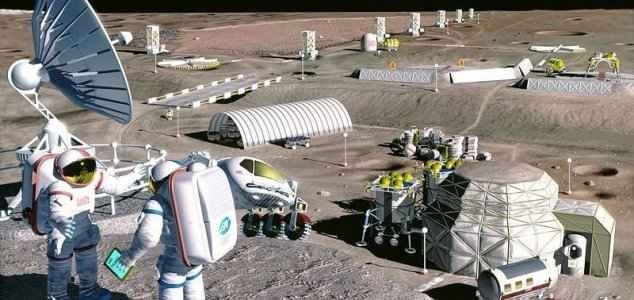
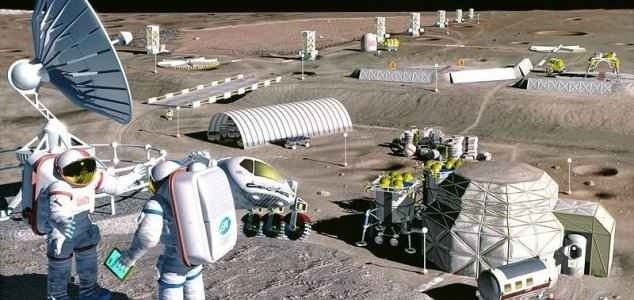
It was in this climate of renewed Russian confidence that the plan surfaced. A plan not just to visit the Moon, but to stay. To build.

20131202-200447.webp

“Our nearest task within the limits of the planning horizon is the construction of a piloted outpost on the Moon,” Zelyony stated, a quote that should have sent shockwaves through every Western intelligence agency. “A working group was recently set up at the order of Roscosmos’s head Vladimir Popovkin.”

This wasn’t some fantasy artist’s sketch. This was a director at the Russian Academy of Sciences, talking about an official working group. Orders from the top. They were serious. They were drawing up the blueprints.

They even identified the biggest monster they’d have to slay: radiation. With no atmosphere and no magnetic field, the Moon is constantly bathed in a lethal storm of cosmic rays and solar radiation. Zelyony knew it. “Long-duration missions on the Moon could only be possible in special shelters, most probably under the lunar surface,” he admitted. They weren’t just thinking about a flag and footprints. They were thinking about digging in. Hiding. Surviving.

But why? Why pour billions of rubles into such a dangerous, audacious gamble?

The Silent War: Why a Moon Base is the Ultimate Prize

To understand the obsession with a lunar outpost, you have to understand that the Moon isn’t just a dead rock. It’s the most valuable piece of strategic real estate in the solar system. It’s the high ground, the treasure chest, and the symbol of ultimate power, all rolled into one gray, dusty ball.

Deep Dive: Helium-3, The Fuel of Gods

Listen closely. This is the part of the story that sounds like science fiction, but it’s terrifyingly real. For centuries, the surface of the Moon has been bombarded by the solar wind, which has deposited a rare isotope in the lunar soil: Helium-3.

Here on Earth, it’s incredibly scarce. On the Moon, there are millions of tons of it.

So what? Helium-3 is the key ingredient for clean, safe nuclear fusion. The holy grail of energy. It’s a non-radioactive fuel that could, in theory, power our entire planet for thousands of years without producing toxic waste. The nation that controls the Moon’s Helium-3 controls the Earth’s energy future. Period. It’s an energy monopoly that would make oil barons look like street-corner merchants. A Russian base, even a small one, could begin the process of mining, refining, and claiming the richest deposits for Moscow.

The Ultimate High Ground

There’s a simple rule in warfare: control the high ground. The Moon is the ultimate high ground. A base there isn’t just a science lab; it’s a military fortress hanging over the head of every other nation on Earth.

Imagine a surveillance platform that can see almost everything, all the time. Imagine a launchpad that requires far less energy to send ships and weapons deeper into the solar system, or even back towards Earth. Online forums have buzzed for years about “Rods from God”—dense tungsten projectiles dropped from orbit, hitting targets with the force of a tactical nuke but with zero fallout. Now, imagine that concept launched from the Moon. Unstoppable. Undeniable.

A lunar base is a checkmate move in the game of global dominance.

The Ghost in the Machine: What Really Happened to the Plan?

So if the stakes were so high, where is Russia’s moon base? What happened between that bold 2013 declaration and today? The official story points to predictable hurdles. The kind of boring, real-world problems that kill grand dreams.

But the official story is never the whole story.

Deep Dive: The Radiation Nightmare

Zelyony wasn’t kidding about the radiation. It’s a killer. On a long-duration mission, an astronaut’s body would be shredded at a cellular level. Cancer risks would skyrocket. Brain damage. It’s a slow, invisible death sentence.

Their solution—building underground—is brilliant and monstrously difficult. You can’t just take a shovel. You need massive, radiation-hardened boring machines. You need to find stable locations, perhaps within the colossal lava tubes that are theorized to exist beneath the lunar surface. These are natural caves, some potentially large enough to house a city, shielded by dozens of meters of solid rock. Finding them, accessing them, and building inside them would be an engineering challenge on a scale humanity has never attempted. Did Russia secretly develop this technology? Or did they stare into the abyss of the problem and realize they weren’t ready?

Deep Dive: The Money Pit and the Political Freeze

Building a moon base would make the Apollo program look cheap. We’re talking trillions, not billions. And just a year after the 2013 announcement, Russia’s world changed. The 2014 annexation of Crimea triggered crippling international sanctions. The Russian economy, heavily reliant on oil and gas, took a massive hit. The ruble tumbled.

Suddenly, a multi-trillion-ruble moonshot seemed less like a strategic priority and more like a fever dream. The grand plan was quietly shelved. At least, that’s what we were told. Was the economic crisis a convenient excuse to take the project into the dark? To move it from a public ambition to a black-ops program?

The Plot Twist: The Dream Is Not Dead

For years, the Russian lunar dream seemed to be in a deep freeze. But in the shadows, new alliances were being forged. The game was changing again. And Russia was making a new move.

The Dragon and the Bear: A New Lunar Axis

This is the modern chapter. The one happening right now. Unable to fund its lunar ambitions alone, Russia turned to the one global power with the cash, the technology, and the shared ambition to challenge the West: China.

Together, they have announced a joint project. The International Lunar Research Station (ILRS). It sounds scientific and collaborative. It is anything but. It is a direct competitor to the US-led Artemis Accords, which has brought together dozens of allied nations for a return to the Moon. We are now witnessing the battle lines being drawn for a two-bloc cold war in space. The ILRS is the resurrection of Russia’s 2013 dream, but this time with a dragon’s treasure chest to fund it.

Their roadmap is aggressive. Robotic missions throughout the 2020s to scout locations. Construction to begin in the early 2030s. A permanently crewed base by 2036. The old Russian plan is back, and it’s bigger than ever.

Whispers and Failures

Even before the joint plan with China solidified, Russia kept trying. They launched a series of probes, the Luna missions, to get back to the lunar surface. The most recent, Luna-25 in August 2023, was meant to be a triumphant return, the first Russian landing since the Soviet era. Instead, it spun out of control and smashed into the lunar surface.

The public saw it as an embarrassing failure. A sign of a decaying space program. But others see something different. A sign of desperation? A rushed attempt to get *something* to the south pole—the rumored location of water ice and prime real estate—before anyone else? What if the crash wasn’t just a malfunction, but the result of pushing experimental technology too hard, too fast?

What If They Succeeded in Secret?

Now we venture into the deepest part of the rabbit hole. What if the public failures and the grand new alliances are just a distraction? A brilliant piece of misdirection.

What if the 2013 plan never actually stopped? What if it just went dark?

The far side of the Moon is permanently hidden from Earth. It’s the perfect place to hide a secret. No prying telescopes. No amateur radio listeners. For decades, online sleuths and conspiracy forums have pointed to strange, fleeting satellite images, momentary signal disruptions, and unexplained seismic data from the Moon. Most are dismissed. But what if one of them wasn’t a glitch?

Imagine a small, clandestine outpost, burrowed deep into a crater on the far side. Not a sprawling city, but a listening post. A staging ground. Operated by a skeleton crew or even fully automated, powered by a small nuclear reactor. From there, Russia could monitor all of Earth’s orbital traffic, test secret weapons systems, and begin the slow, methodical process of robotic resource extraction without anyone on Earth ever knowing.

It sounds insane. But is it any more insane than a nation spending trillions to put a man on the Moon for a few hours just to plant a flag? The logic of a cold war is not our logic. It’s a game of shadows, paranoia, and gaining every possible advantage, no matter the cost.

The 2013 announcement from Roscosmos wasn’t just a forgotten headline. It may have been the most important strategic declaration of the 21st century, hidden in plain sight.

As the rockets of the Artemis program and the Chinese-Russian ILRS prepare to fly, we are told they are racing towards an empty moon. A silent, barren world. But as they prepare to land, they might be asking themselves a chilling question: Are we sure we’re going to be the first ones there?

Amit Ghosh
Amit Ghoshhttps://coolinterestingnews.com
Aloha, I'm Amit Ghosh, a web entrepreneur and avid blogger. Bitten by entrepreneurial bug, I got kicked out from college and ended up being millionaire and running a digital media company named Aeron7 headquartered at Lithuania.
RELATED ARTICLES
- Advertisment -

Most Popular

Recent Comments

Warren Pan Abbott on The legend of the Devil Monkey !
chris davies on The McPherson Tape Mystery
Reed Reedly on ET has Internet!
Bea Houseoffashion on Proof Of Time Travellers – Gallery
Marcus2012 on ET has Internet!
Reed Reedly on ET has Internet!
LaughsAtConspiracyNuts on The 9/11 Conspiracy – Myths and Facts
Alex Sliverman on Did the ancients fly?
Doctor Wholigan on Time Traveler in 1938 film
chris davies on The McPherson Tape Mystery
Archie1954 on 10 secret UFO hideouts
chris davies on Ghosts of flight 401
Marcus2012 on ET has Internet!
jason Macdonald on Proof of Time Travel? – China
chris davies on Long-Lost Pyramids Found?
Reed Reedly on ET has Internet!
Milkman on Connected Universe
Tenmiles on Baigong Pipes Mystery
Simon Foster on Sirius – The Documentary
From the 1st April on 2013 – Alien Contact date ?
SkyWatcher on Is ET ignoring us?
I Come From The Future on Obama to make UFO Alien disclouser soon ?
Just another person on 2013 – Alien Contact date ?
Malcolm Windowcleaner on The strange case of Rudolph Fentz
Mason Servio on Strange Things on Mars
Marke Wisdom Seeker on What will we find as arctic melts?
Andrea A Elisabeth Levyne on Aliens Captured in Varginha, Brazil
Mitch Grouyeki on Amazing Space Shuttle pictures